direct mail, Education, Science

Measuring Up

Eratosthenes is a giant for me.  Let me explain why.  Just yesterday we received a generous direct mail offer of a trip around the world if we would subscribe to a new credit card. I am sure that’s what they meant, because they promised 25,000 miles on our favorite airline.

I immediately opened our atlas to plan a possible itinerary with our new found gift. That’s when I realized the brilliance of this scheme. You see, leaving O’Hare Field and traveling in an easterly direction for 25,000 miles would mean I would be landing at, yes, O’Hare Field.  No need to leave at all!

Which brings me to the real point: 25,000 is a darn nice number to describe the earth’s circumference. It’s easy to remember, and best of all, it’s miles, not kilometers. Or hectares, or microns or centipedes.

Of course, the ancient Greeks measured the earth’s circumference in “stadia”. Without getting wordy, let’s just say that the measure was related to athletic competitions and stadiums, and was around 500 feet. For instance, “I bet that minotaur will eat the slave before he’s run 500 feet around the stadium.”

Anyway. What is fascinating is that Eratosthenes calculated the earth’s circumference back in 240BC.

eratosthenes 2

One summer solstice, at high noon, he was staring down a well in Aswan, Egypt.

For you geography buffs, Aswan is located on the Tropic of Cancer. The sun was directly overhead, and he noted that there was no shadow on the walls of the well.

ancient well

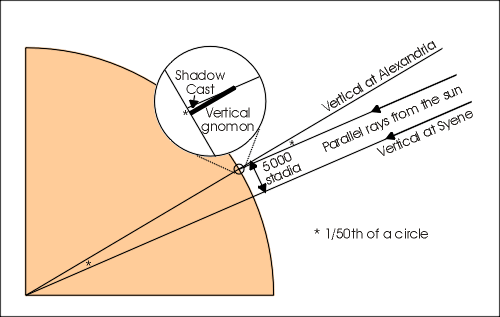
The germ of an idea came to him.   He already knew the earth was round, and concluded that a well several thousand “stadia” away would have a shadow, due to the curvature of the earth. So a year later, at noon on summer solstice, he told an associate to get to the well in Alexandria which was way to the north.

diagram of circumference

Sure enough, the well cast a prominent shadow, and in fact, it was 7.2 degrees off perpendicular.

Now stick with me on this. Alexandria was 500 miles to the north, or a lot of stadia for you classicists. Because that distance created a 7.2 degree tilt, a full circle of 360 degrees would be 50 times as much (50 x 7.2), or 25,000 miles for Eratosthenes. Turns out he was only off by 2%!

And 2,300 years later– we still get lost going to the post office with GPS.

The icing on the cake here is that Eratosthenes knew there were exactly 5,000 “stadia” between the two cities. How? Because he had measured this countless times by riding a camel between them.

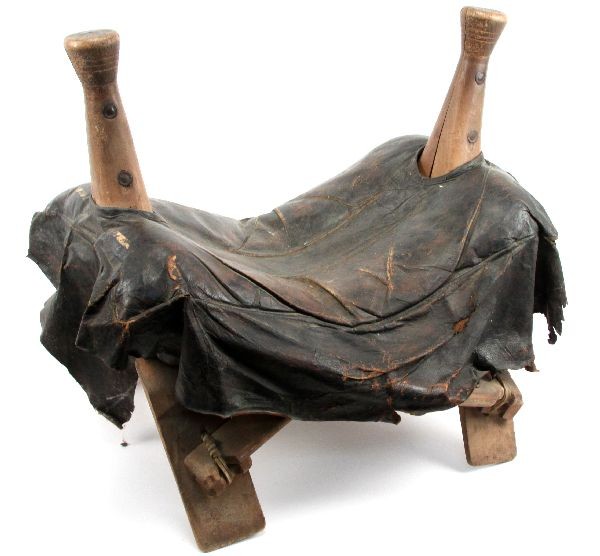
antique saddle

You don’t see that kind of persistence any more. Nor such compassion for his ride. Writing his memoirs, he confessed “I needed to give Falafel a break after these journeys, so I would dismount, and go on foot outside the city gates.”

It turns out Eratosthenes preferred to speak in miles, too, explaining: “I’d walk a mile for a camel.”

So: I am back to my mailbox looking for a new offer. I have not given up on the 25,000-mile pitch. But will I need a saddle?

Camel_PB

Standard
Economics

Breezy Money

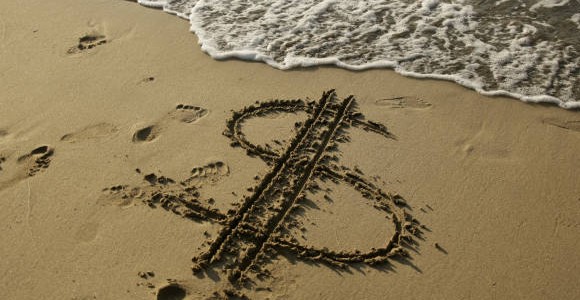
Following up on my amazement yesterday about the glut of wind farms…the whole thing about wind farming is that it looks so easy. Like dew worm farming. Or mushrooming. You just put up a fan, and the wind blows it, and a little machine turns it into electricity. And it’s free! Almost growing wild on the beach.
beach-money

Like many, I was so enchanted with the concept of getting easy money that I did some figuring –not my strong suit– but I calculated that if I had just one of these giant wind turbines, say the 250-footer, I would have a 2- megawatt wind farm. A megawatt turns out to be a thousand kilowatts, and just to explain it in terms you understand, a 100 watt bulb costs about 55 cents up at ACE Hardware, and it’s good for a 1,000 hours they say.

incandescent-light-bulb

Rounding that all up, I stood to pull in about $43,000,000 per year, before taxes. Mind you, there are no taxes because the government is subsidizing the whole thing for me.

Actually, I may have that slightly wrong. On good authority, I learned my new turbine would really cost $3,500,000.

If I borrowed the money from friends, my operating costs, maintenance and loan interest would work out to $290,000 per year. Which is, admittedly, more than I am making now, so I am really interested in selling one of these contraptions to somebody else.

But nevertheless, once it’s all in place, it is guaranteed to deliver 5,260 Megawatt Hours of power per year. I am just thinking about the batteries I am going to purchase to hold all that electricity. When all is said and done, my cost to produce a Megawatt hour is around $55. That’s like, only 100 lightbulbs, which I can handle.

When I whittled this down to Kilowatt hours, which I know is more comfortable for you, it’s a measly 5-1/2 cents each.

Awesome, right? Now you’re up for it, I can feel it.

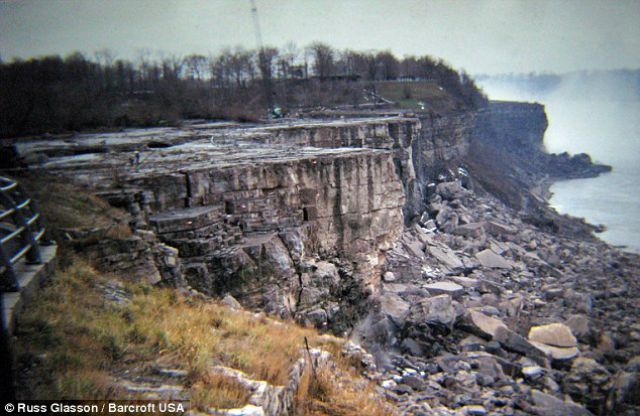
This is where it gets interesting though. I looked at the latest ransom note we received from Commonwealth Edison, and they are only demanding 4-3/8 cents per Kwh. Hah! No wonder they can’t make any money! If they sold my wind farm product, they could shut down Niagara Falls, and still be in the black by Tuesday.

american-falls

Niagar Dry

As a practical business person however, I am doing nothing at this time, pending sage advice from my accountant who is allowed one phone call a week.

If you are eager to get in on this, but looking for something a little more in your income bracket, there is a company out there now, Southwest Windpower, which is installing back yard wind turbines faster than you can say “Oklahoma” .

Their Skystream 3.7 goes for $12-$14,000, and they are flying –haha– off the shelves.

Myself, I am forever teetering on the innovative edge. I am preparing a personal, hand-powered turbine. This one is all natural, 100% environmental, multi-directional, and can be used on the calmest, or windiest of days without pause.

Slick Whimmy

See, I told you this would be easy.

Standard
Environment

Spinning Out of Control

Propeller hatSomething’s popping up across the countryside, and soon, may be in your backyard too.

The other day we were driving down the eastern shoreline of Lake Huron in Ontario. There you will find the expanse of this beautiful blue lake on your right, and on your left, neat farms, lazily dotted with beef and dairy cattle.

Every few miles, a small village slows you down to see its church and store. Cheese factories are frequent. This is beautiful countryside, and it is continuously freshened with the breezes off the lake.

Breezes? Well, maybe more like gales– wild currents that rake across the backs of those cows, tear shingles off the church roof and blow underwear off the line. And it’s those constant winds that have sparked a well-meaning thought: “Let’s fly kites!”

Well, actually, no. Rather “Let’s put up a 250-ft high tower with a giant fan on it and make electricity. For free!!”

Between the villages of Brucedale and Underwood we sighted over 100 of these gargantuan wind turbines from the road, spinning briskly in Lake Huron’s weather system. wind-farm The turbines are quite magnificent. Sleek, gently contoured to catch the wind, painted a non-committal gray, they spin over the heads of the cows, and any humans who care to look up. By the way, parachutists, look down, too.

Trouble is, we realized that this oddity was taking hold, not just of the passerby’s curiosity and amusement, but of the local community’s real estate.

Imagine the legions of turbine sales reps trudging up dusty farm lanes, rolling out a snappy presentations on kitchen tables and mapping the landscape with these money makers. “Gee honey, you know we have a spot right behind the rose trellis out back.”

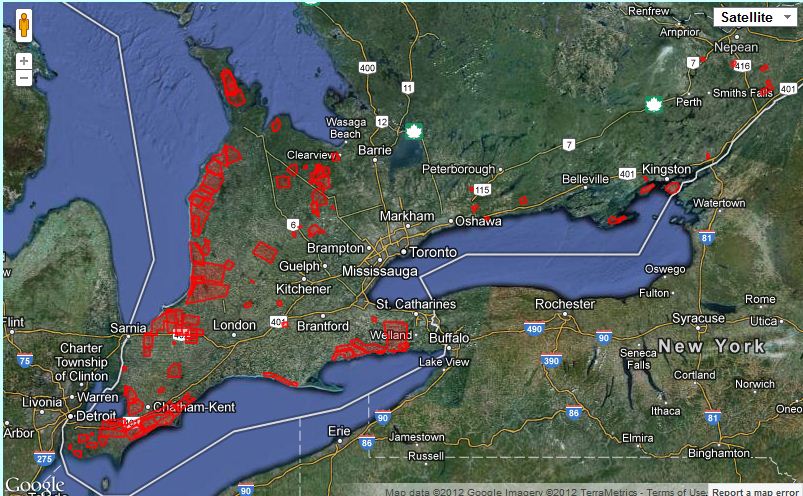
Now look at this wind farm map of southwestern Ontario and you are painfully reminded of a poison ivy rash you had as a kid. Ontario Windfarms

Wind farms contribute less than 4% of all US energy. Yet this prickly, twirling forest on Lake Huron dominates over 90% of the skyline.

I guess that’s okay as long as it’s not in my soybean field, right? It just seems to me that we took a couple of generations to rid ourselves of TV antennas perched on every roof in town. TV Antennas

And now, we marvel as the horizon is sliced into gusty shreds by giant butter knives.

Odd turn of events, isn’t it?

Standard
Marketing

Let Me Get This Call

A decade ago, we registered for the Federal Do Not Call service.   Happily, as forecast, the telemarketing calls stopped almost completely.    One downside was we no longer knew when to sit down to eat, because they no longer called us at dinner time.   As one could expect, nearly everyone registered for DNC.   Recent counts total in excess of 72% of all Americans’ phone numbers were registered.   Incidentally, you can tell when a government program IS popular, because everyone flocks to it.  Kudos to the team who put that website together, unlike the poor mopes who have spent gazillions to operationalize HealthCare.Gov.  So far, it would appear that their Do Not Call listing is working fine.

But ours no longer does.  That titanium-hard walled fortress surrounding our phone number has been breached, and we are now more popular than Bieber, Kardashian and PizzaHut all rolled into one.  The phone rings, starting around lunch time, and continues into the early evening, with the periodicity of a school yard alarm announcing classes, recess, and potty breaks.  And when we pick up, the pitch is always the same: a pause, followed by a recorded voice stating, “Hello.    The FBI reports significant growth of home invasions…” or “Hello.   This is the last warning we can provide about your bank account…”   or “Hello.   Triffids can reduce the value of your home…”.

I used to look forward to the telemarketers in the early days of DNC.    I could actually speak to the poor schlep on the line, and advise him that he was incurring a possible Federal felony charge with fines of not more than $5,000, and then listen as the line went dead.

But it is not like that any longer.   The telemarketing gurus figured out the perfect tactic.   Fire the schlep, and use a robot.   Give it a shameless pitch that goes on longer than an outraged legal beagle like me can wait.   Avoid identifying yourself or your brand.   Then, close the pitch with options to (1) Have a person call me back.   And when that happens, there’s no way to complain, because I asked for it!  (2) Remove me from the calling list.  At which time I will be removed from the 6pm rotation to the 9pm wave of follow up calls next day.

The fact is, the DNC program has successfully registered just about anyone but a dead voters’ list in Chicago.   As a result, there is no way the Feds can keep up with the complaints, even if we knew who to complain about.   In 2011, there were 2,200,000 complaints filed.    I wouldn’t be surprised that the complaint line number is on DNC too.  “We’ll get right on it!”

So as a last desperate step, I went to http://www.donotcall.gov .   Monkeys may have designed this site.    Or chickens with disabilities.   No Federal logos or impressive eagles nor any U.S. FCC or FTC seals.    I imagine a t-shirted hacker sitting in his mom’s basement waiting for the next registrant.   The home page cautioned me about tele scammers and other hazards of the phone world, and then offered to take my name, email address and up to three of my phone numbers.  Really?   I could not do it.   The whole act of supplying this contact info to a government department seemed like setting down a bowl of red meat in the lion’s cage.

Instead, I have developed a failsafe strategy.    It required changing our voice mail greeting, but I doubt any one would be disappointed with the new instruction.   “Hello.   Congratulations, you have successfully reached HealthCare.Gov.  Please hold.”

Standard