
In my research for ‘Fish & Whiskey‘ I learned just what a devilish work place Lake Erie could become. It is beset by capricious and powerful gales which rile the waters. Waves can reach ocean-like heights that would topple any small craft like children’s toy boats in a bath tub.
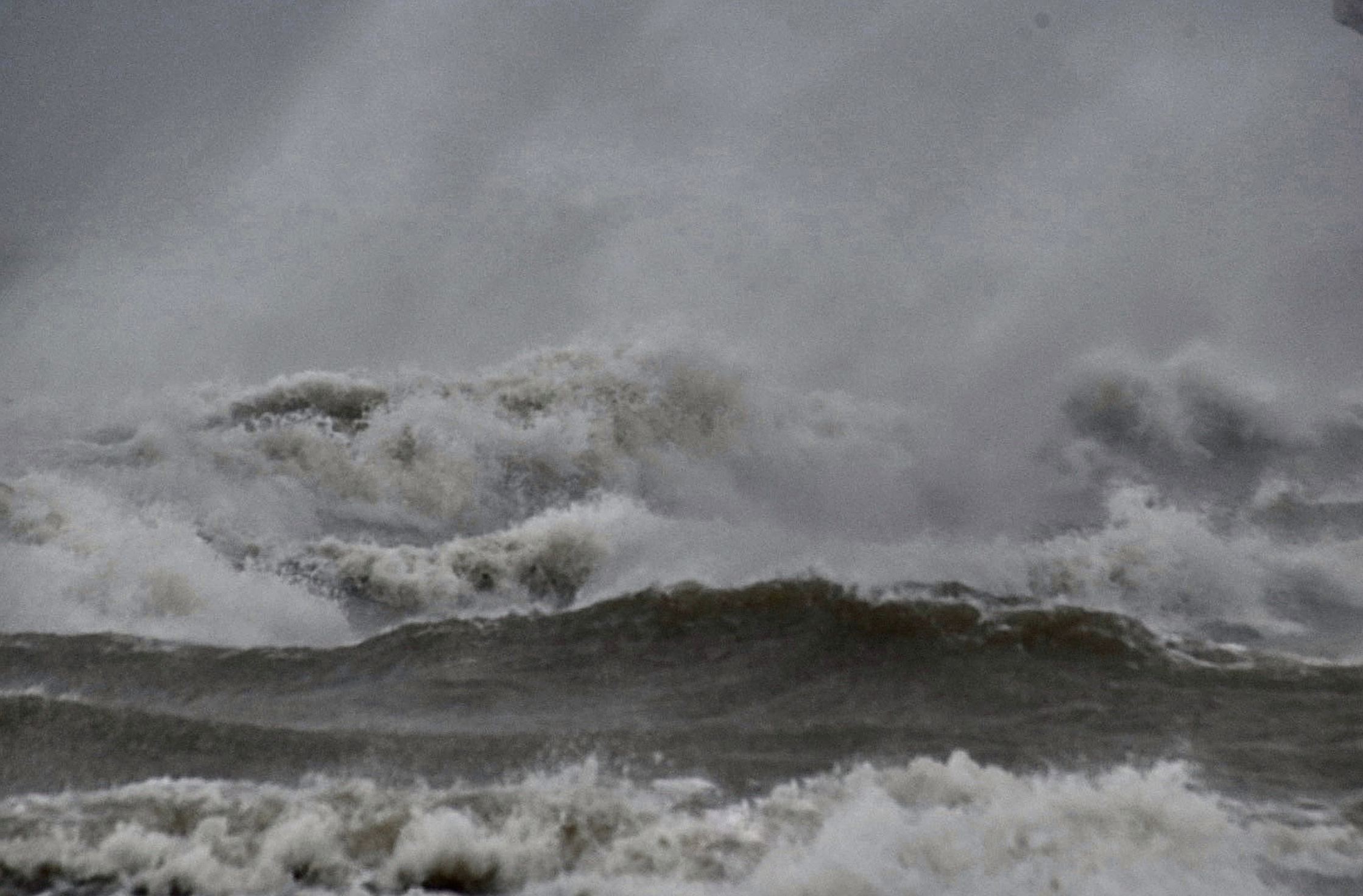
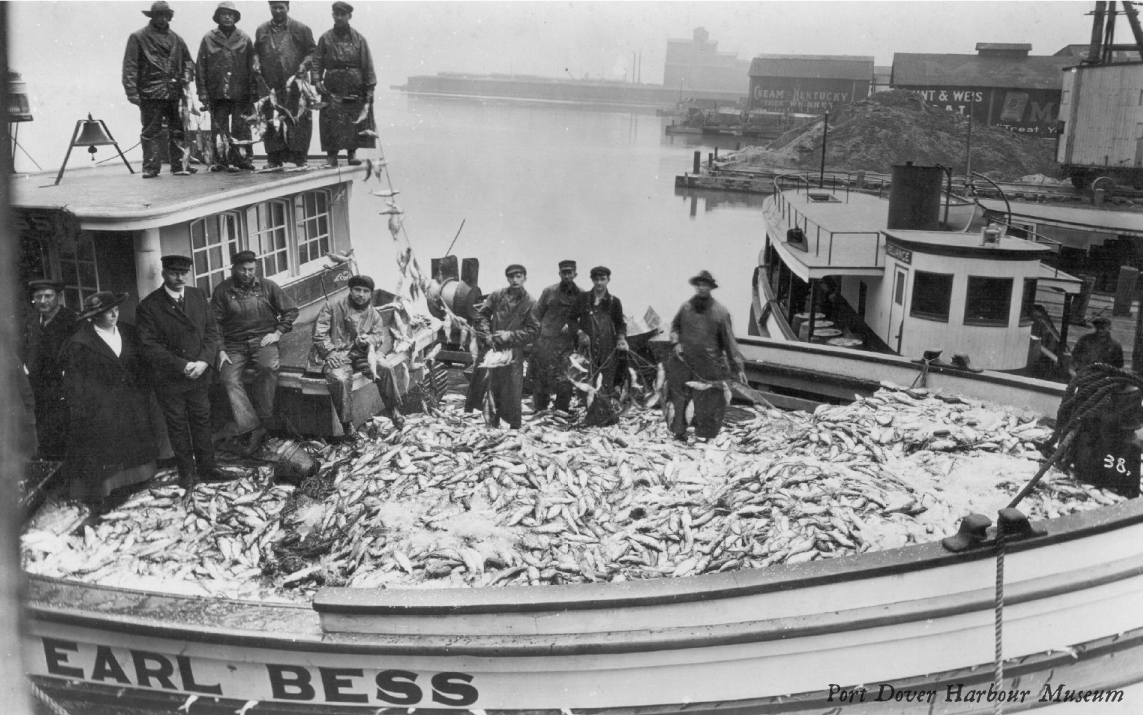
Despite that, fleets of fishing tugs would venture out on to the lake in search of fish, bringing home tons of herring, walleye, whitefish, perch and bass. The men and occasionally women who made those forays into the fog, rains and winds did so to maintain a livelihood that was as stable and familiar as any landlubber’s.
In the 1920s however, two unanticipated events occurred, colliding together to bring the fishing life to a sudden halt. First, the fresh water herring catch disappeared. Not overnight, but within a decade, the catch had plummeted from 40,000,000 pounds in a year to barely a million. Fishing communities all along the shores of Lake Erie reeled under the loss. The capital investment in boats and machinery, nets and equipment was unsustainable. The loss of income deprived family dinner tables of food.
Second, the governments of Canada and the United States stumbled into a confused tangle of laws that prohibited alcohol from the general populace. While temperance and prohibition were on the radar, no one had foreseen the real menace of alcohol restriction: organized crime.
Within a year of the passage of the laws to prohibit alcohol, many fishermen had transitioned from setting and lifting nets to making cross-lake, night-cruises laden with cases of whiskey, gin and beer. An insatiable demand for booze in America drove the price of a 40-ouncer from $3 up to $15. This profit bailed the fishing industry out. But more importantly, it brought the Mob in. Gangs in Detroit, Hamilton, Toronto, and Buffalo organized impenetrable networks and shipping lanes to deliver an estimated hundred million gallons of illegal booze annually, from 1920 all the way to 1933.

One of the principal conduits was from Norfolk County’s shores to Erie Pennsylvania, just over 40 miles away. To get there, Lake Erie had to be calm, free of coast guard, hijackers, and daylight. That was not always the case.
What facilitated this industry was the Canadian federal government’s allowance for Canadian distillers and brewers to continue their work. Ironically, while the local populations were not allowed to possess or purchase alcohol, the factories were encouraged to produce it.
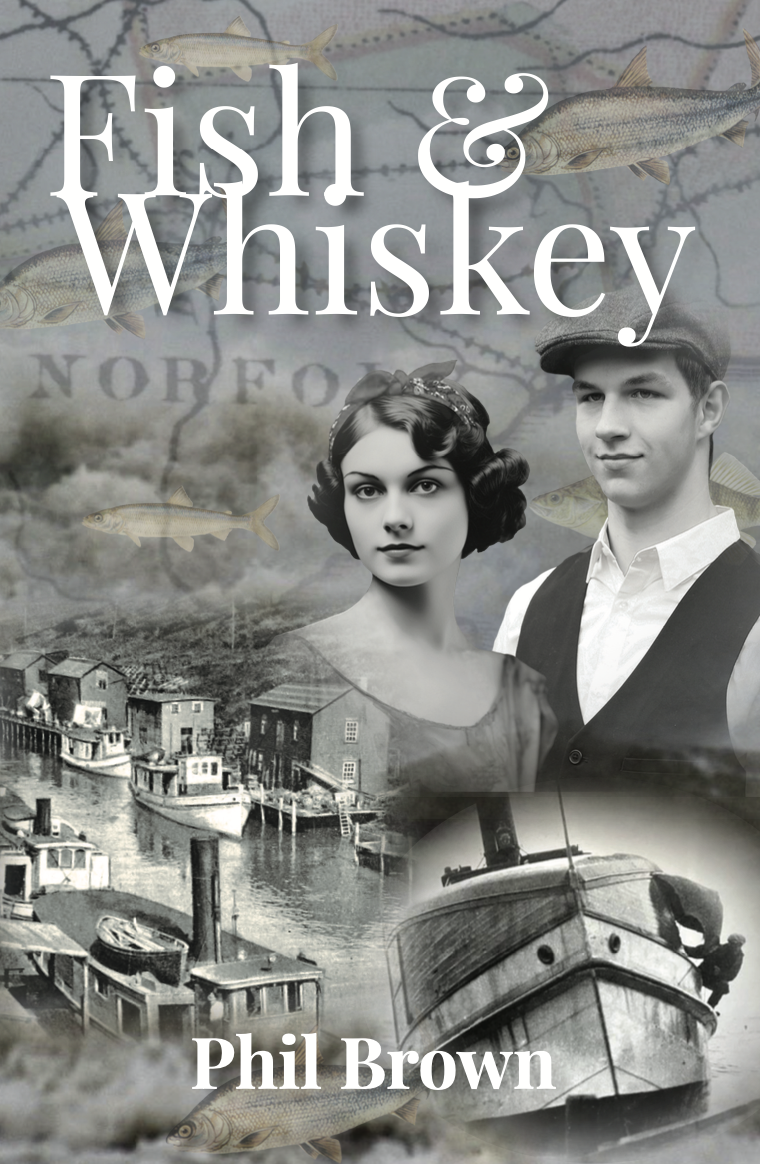
‘Fish & Whiskey‘ is the story of a small town in Norfolk County, and its residents who learned to cope under the new drinking laws, the unruly laws of nature, and the ascent of violent crime. In the midst of this, Joey and Belle are a young couple who navigate the new terrain while they learn more about each other, and themselves.
You can get your copy of Fish & Whiskey on Amazon anywhere the company has a presence. I enclose the Canadian link and the American link for your convenience.
Enjoy!
