adventure, Culture, Romance

Leaner, Meaner and Faster

One of my most fascinating discoveries in researching the Prohibition days of Norfolk County was the building of the ‘Grey Ghost’.

It was literally 100 years ago that small lakeport communities along Lake Erie’s Ontario shore were forced to transition from commercial fishing to other sources of income.

Turtleback Racey, courtesy of the Port Dover Harbour Museum

Not all fishermen, but many, resorted to delivering shipments of whiskey and beer. The primary vessel was their main asset, the Turtleback fishing tug. That is, until the Grey Ghost appeared.

Turtlebacks are gill-netting fish tugs. They got their name for the box-like construction that covered the hull of the boat. The canopy shielded the crews and their fish from the punishing effects of sun, wind and cold. The tugs themselves weighed anywhere from fifteen to thirty tons, stretched thirty to fifty-plus feet, and their cruising speeds, around eight to fifteen knots.

HMCS Vigilant patrolled Lake Erie

These vital statistics put the tug, and its crew, in fairly even competition with the US Coast Guard, and Canada’s own revenue cutters. Those large navy boats were armed and armoured, and could cruise between 10-15 knots.

Rum-running was a risky, but respected sideline opportunity for some fishermen. When not being pursued by the law, both in Canadian and US waters, the midnight mariners also had to beware of hijackers. Those gangs were the nautical arms of organized crime. Not surprisingly, they had contacts in Detroit, Chicago, Hamilton, Montreal and New York. What bubbled up from these associations was a radical concept: the speedboat.

‘Patricia’ built by Gambles Shipyard, Port Dover, Ontario. ~Courtesy Port Dover Harbour Museum

The Grey Ghost was a steel-hulled, low profile, armoured delivery boat powered by one, or two aircraft engines. It was sinister in appearance, and undeniably designed to race across the lake waters undetected. Its Liberty-12 engines were army surplus. Ordered up during World War 1, the engines were originally intended to be installed in army planes that flew over Europe.

The Liberty-12 changed the rum-running business.

The Liberty-12 was a V-twelve-cylinder engine with an aluminum block. It had enormous power for lifting a biplane into the air. Who guessed it should power watercraft as well? While some tugs were still coal-fired steamers, the majority had moved to diesel. Gasoline was powerful, but dangerously flammable.

Along the Atlantic seaboard rum-runners had experimented with installing these engines in the steel speedboats. A fully-laden Grey Ghost could carry as many as fifty cases of liquor. When loaded, it could streak across the waters at speeds approaching fifty knots, over 90 kph. Today’s replica would be the monstrous, multi-coloured cigarette boats that roar along the urban shorelines of the Great Lakes.

Suffolk County Historical Society, Riverhead, NY

The Grey Ghost’s advantage was timeliness and escape. No one saw it coming, and no one could catch it. This enabled smugglers to elude the clutches of the US Coast Guard and Canada’s revenue cutters, and to do it in broad daylight. Multiple deliveries in a day. It ruled the waves until the coast guard itself launched its own speed boats, well into the waning days of Prohibition.

The USCG fleet, including speedboat lower left.

The Grey Ghost was a winning solution for rum-runners, but understandably, it had some drawbacks. First, it traveled over the water, not through it, and if the seas were not calm, it was a bone-jarring ride. Second, it was noisy. Even with submarine mufflers engaged, the ride was so noisy that by the time it arrived, everyone was alerted. Third, and not to be ignored, it was so noisy it could scramble the brains of its drivers.

But that was the risk of rum-running. For all the excitement and story, get a copy of Fish & Whiskey, and see how two young lovers, Joey and Belle, survive the time. I include an American and Canadian Amazon link for you!

Enjoy!
Fish & Whiskey in Canada

Fish & Whiskey in USA

Standard
adventure, Culture, Legal, Romance

Rough Water, Tough Drink

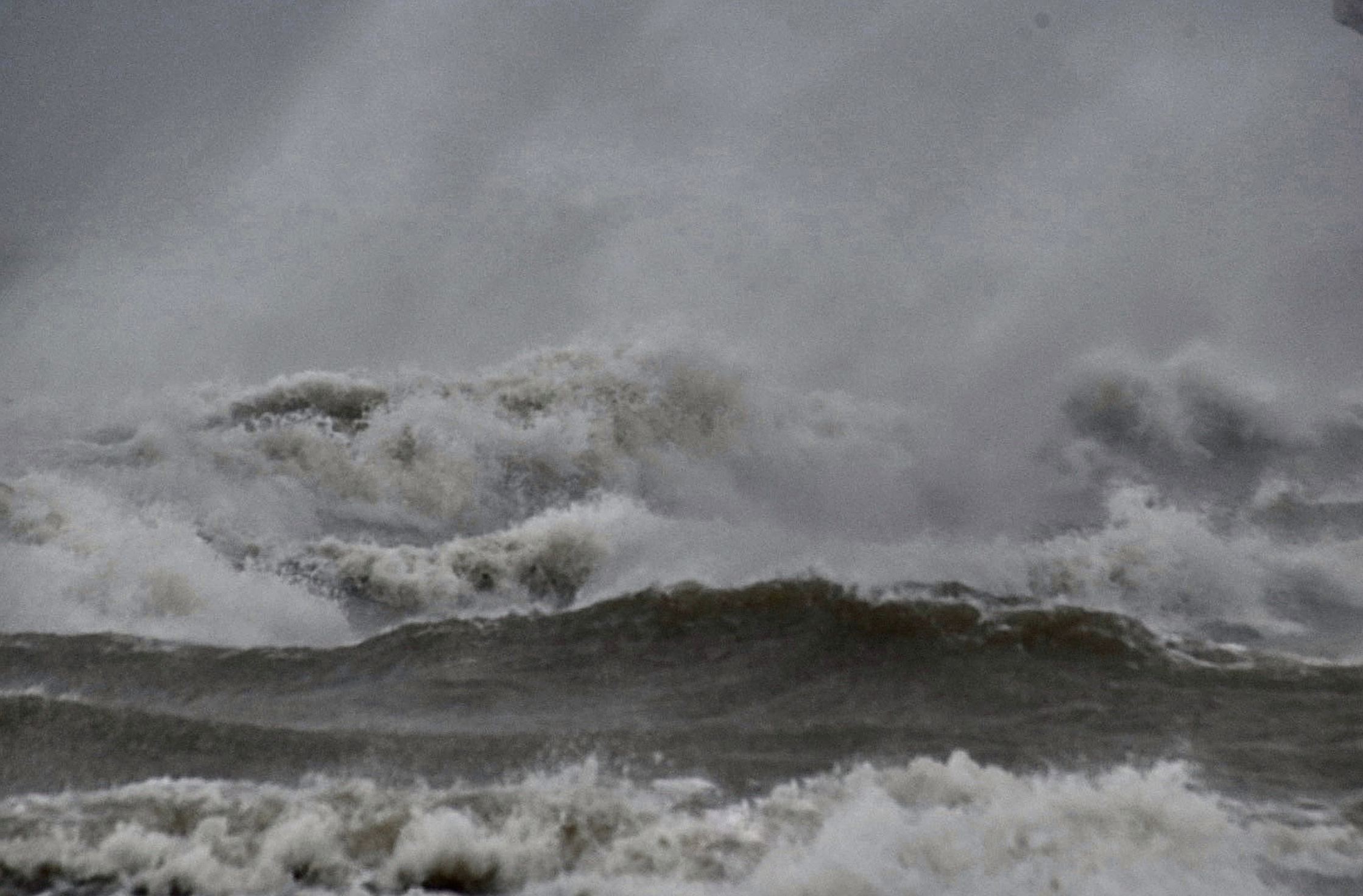
In my research for ‘Fish & Whiskey‘ I learned just what a devilish work place Lake Erie could become. It is beset by capricious and powerful gales which rile the waters. Waves can reach ocean-like heights that would topple any small craft like children’s toy boats in a bath tub.

Lake Erie’s Angry Moments

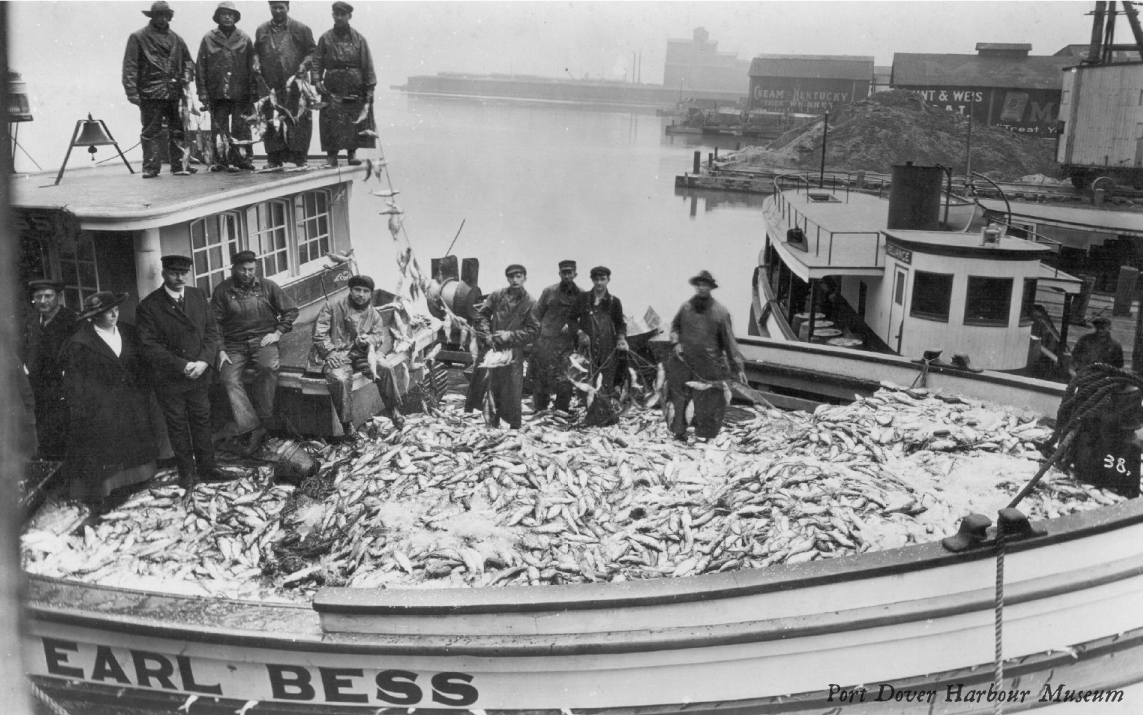
Despite that, fleets of fishing tugs would venture out on to the lake in search of fish, bringing home tons of herring, walleye, whitefish, perch and bass. The men and occasionally women who made those forays into the fog, rains and winds did so to maintain a livelihood that was as stable and familiar as any landlubber’s.

In the 1920s however, two unanticipated events occurred, colliding together to bring the fishing life to a sudden halt. First, the fresh water herring catch disappeared. Not overnight, but within a decade, the catch had plummeted from 40,000,000 pounds in a year to barely a million. Fishing communities all along the shores of Lake Erie reeled under the loss. The capital investment in boats and machinery, nets and equipment was unsustainable. The loss of income deprived family dinner tables of food.

Photo courtesy Port Dover Harbour Museum

Second, the governments of Canada and the United States stumbled into a confused tangle of laws that prohibited alcohol from the general populace. While temperance and prohibition were on the radar, no one had foreseen the real menace of alcohol restriction: organized crime.

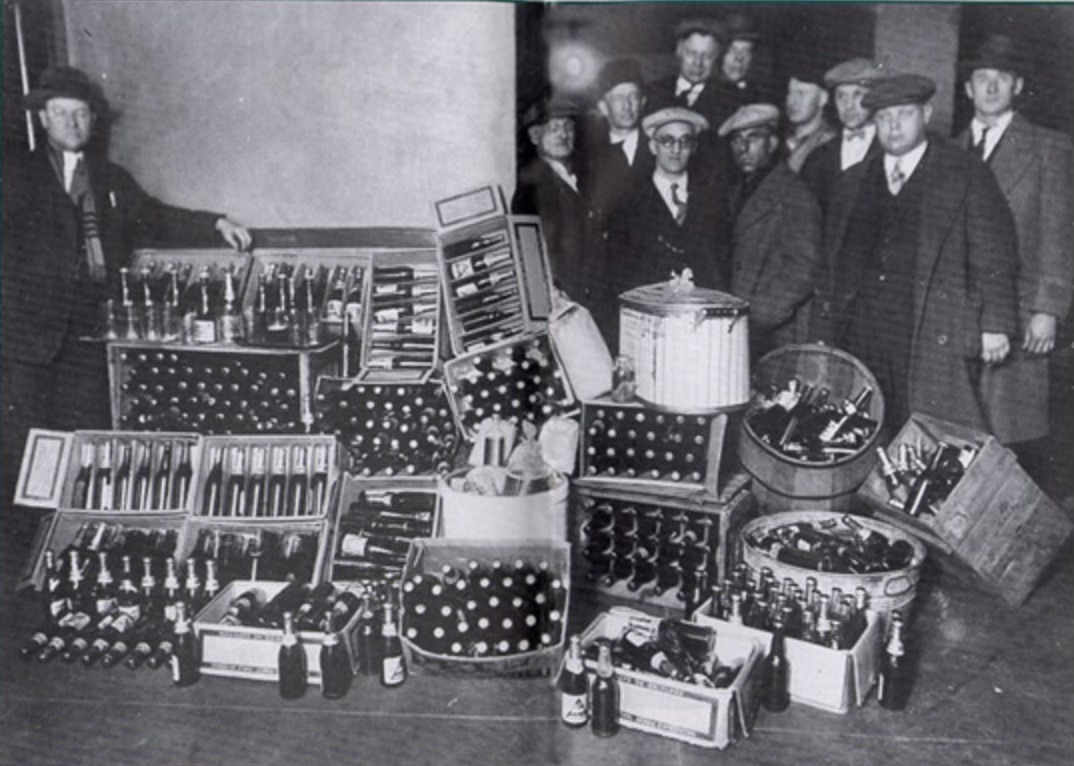
Within a year of the passage of the laws to prohibit alcohol, many fishermen had transitioned from setting and lifting nets to making cross-lake, night-cruises laden with cases of whiskey, gin and beer. An insatiable demand for booze in America drove the price of a 40-ouncer from $3 up to $15. This profit bailed the fishing industry out. But more importantly, it brought the Mob in. Gangs in Detroit, Hamilton, Toronto, and Buffalo organized impenetrable networks and shipping lanes to deliver an estimated hundred million gallons of illegal booze annually, from 1920 all the way to 1933.

Lake Erie’s Path To Riches, courtesy Ted’s Vintage Art

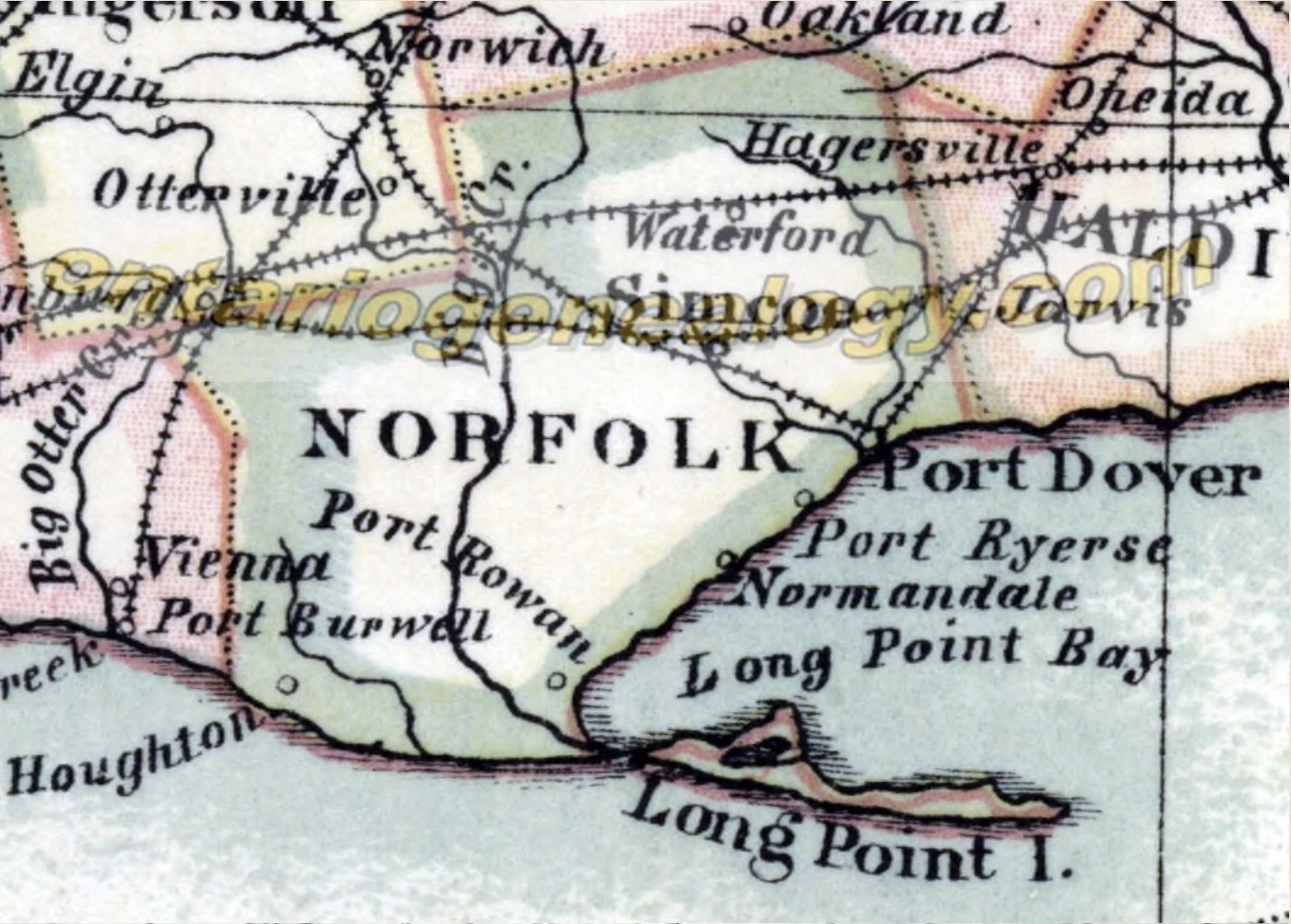
One of the principal conduits was from Norfolk County’s shores to Erie Pennsylvania, just over 40 miles away. To get there, Lake Erie had to be calm, free of coast guard, hijackers, and daylight. That was not always the case.

What facilitated this industry was the Canadian federal government’s allowance for Canadian distillers and brewers to continue their work. Ironically, while the local populations were not allowed to possess or purchase alcohol, the factories were encouraged to produce it.

At Amazon Now!

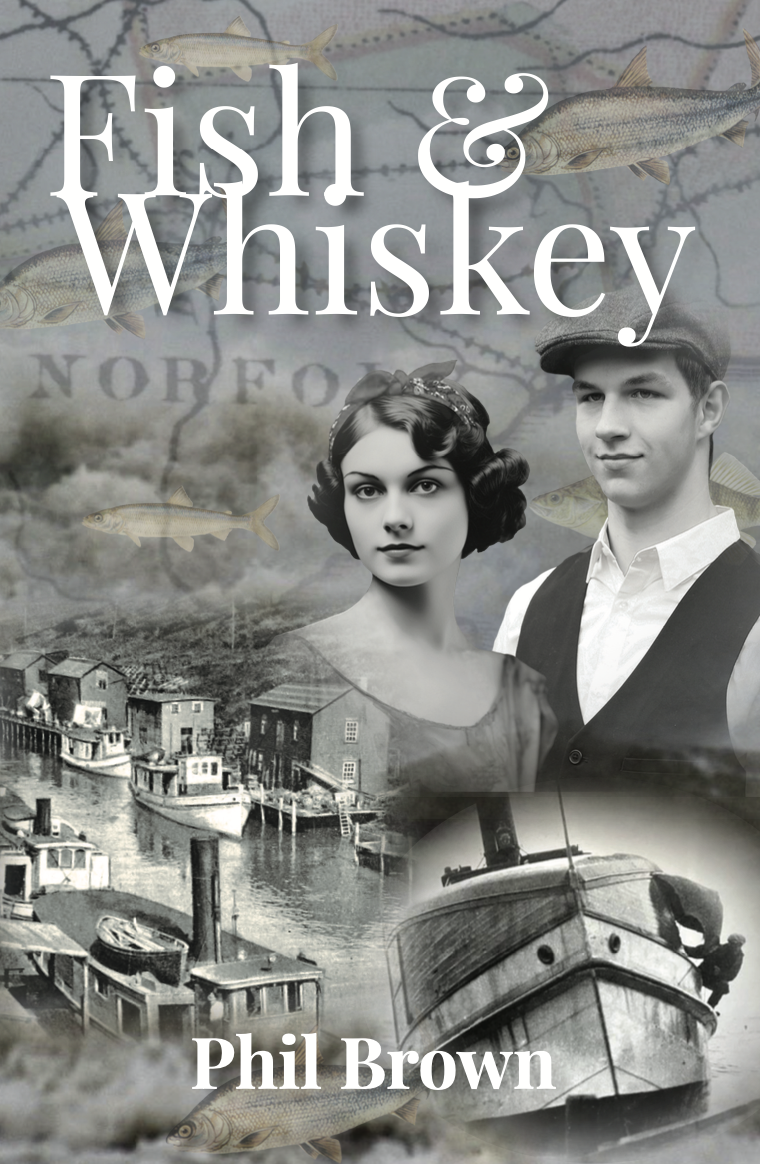
Fish & Whiskey‘ is the story of a small town in Norfolk County, and its residents who learned to cope under the new drinking laws, the unruly laws of nature, and the ascent of violent crime. In the midst of this, Joey and Belle are a young couple who navigate the new terrain while they learn more about each other, and themselves.

You can get your copy of Fish & Whiskey on Amazon anywhere the company has a presence. I enclose the Canadian link and the American link for your convenience.

Enjoy!

Standard
adventure, Romance

Fish & Whiskey

Sounds like a weird combination? Sort of a Baltic Sea appetizer? I apologize for my absence; I just finished my fifth book, whose curious title is above.

“Fish & Whiskey” came into being as the result of picking up an old book my parents had given me nearly fifty years ago. Harry B. Barrett wrote “Lore & Legends of Long Point”. It is a charming collection of stories and myths about the historic and scenic Long Point peninsula which juts out into the middle of Lake Erie. Ancient communities lived and hunted on this sandy, marsh-laden, mystical spit of land . Along its shores, the fishermen of Norfolk County had netted for their catch for hundreds of years.

Most intriguing however was Barrett’s tales of bootleggers and rum-runners who shipped millions of gallons of illegal liquor from Norfolk to Erie, Pennsylvania for thirteen wild, risky and profitable years. It led me to investigate further, and before long, I had dug into a story about the Prohibition years, and how the fishermen and communities along the Norfolk County shores participated in a trade revolution of mammoth proportions.

Fish & Whiskey is the fictional story of a small harbor town called Riverport. The year is 1925, Prohibition is in effect, and the town is reeling from the collapse of the fresh water herring catch.

The fish nets are coming in empty. The only recourse is to smuggle illegal booze into the U.S. To complicate issues, organized crime on both sides of the border are muscling in to Riverport with deadly ramifications.

Joey and Belle are two young lovers In the middle of this maelstrom of trouble. They wrestle with the circumstances, as best they can, all the while, exploring their mutual attraction.

The story is revealing of the times, and is told to keep the pages turning. Events occur, decisions are made —with consequences— and the tale concludes with a surprise and ironic ending.

You can find Fish & Whiskey on Amazon. I include two links, one for Canada, and one for the U.S.

Enjoy the read, and let me know what you think! I especially appreciate your review on Amazon!

Standard