direct mail, Economics, Marketing, Media

Awakenings: What Happens When USPS Cuts Prices

Spoiler Alert: This Is All About Direct Mail Math

It was not a well publicized announcement, 10 days before Christmas, that the USPS will most likely cut the price of a first class stamp by 2 cents, April, 2016.  That’s a 4% cut!

Whether the consumer figures out that a letter will mail for only 47 cents is a question, but for the direct mail community, the news is big.

First of all, direct mailers don’t talk cents. They communicate in thousands. (‘000’s.) A 2-cent drop in mail cost is worth $20 per thousand pieces mailed.

Hopefully the marketing folks at USPS have now awakened to the merciless mathematics of direct mail. In the civilian world, when we experience a cost of living increase, we suck it in, or look for a raise in pay to compensate.

In direct mail however there is a brick wall facing an increase in mailing costs.   The reality is, mailers don’t manage by total program cost. Rather, they manage by cost per response.

For instance, if a charity spends $1,000 to mail 3,000 letters, it is because they expect to get a 2% response…60 donations, at a cost of $16.66 each.

That cost per response (CPR) is bedrock..an anchor around which all other budgeting decisions are made. So when the USPS issues a 1% increase in postage, the CPR goes up, which is unacceptable.

The Story Behind The Story

When the post office raises its prices, we experience the inelasticity of direct mail performance, because mailers must preserve that cost per response.  The only way to do that is to spend less on something else, and that is exactly what happens: smaller envelopes, fewer pages, cheaper paper, less ink, for example.

The bogeyman in this reduction process is that the cheaper the package, the lower the response, which drives up the cost per response again!

The end game option in this vicious circle is to cut out lower responding markets, by mailing fewer pieces, and diverting funds to other direct media.

None of this helps the USPS.

Mail Trends 2008-2015 Prove The Point

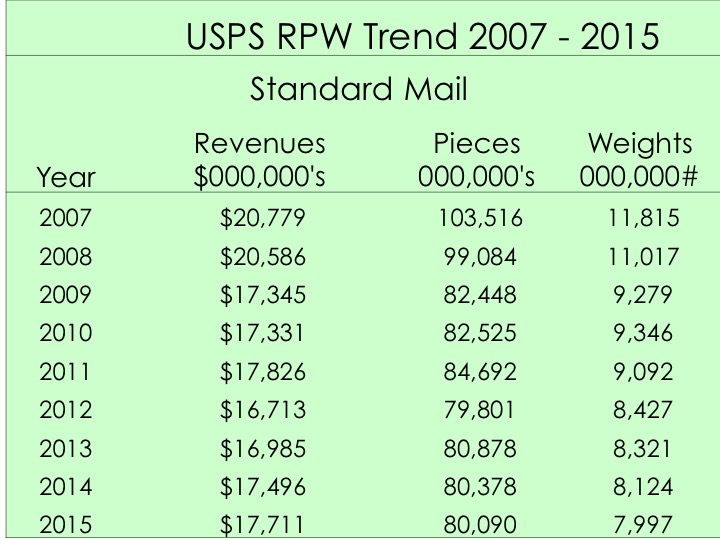
In 2007 the USPS delivered 104 billion pieces of direct mail, its highest performance in a 240-year history.  Next year, the U.S. economy had a collapse, and there was a 4.3% drop in direct mail.  In 2009, there was another drop of 16.8%, eroding 21 billion pieces over two years.
Slide1

From 2007 to 2015 Direct Mail volume shrank 24 billion pieces.

Revenues likewise fell from $20.8 B in 2007 to $17.3 in 2009.  $3.5 billion dollars–gone.  Looking for cash, the USPS raised its prices nearly 13% from 2006 to 2009.

The bottom line is that the USPS has held direct mail revenues in the $17 B tier ever since, with three more price hikes from 2009 all the way up to 2015.  Its actual revenue per piece has gone up from 20 cents to 22 during that time.  Direct mail volumes have stabilized around 80 billion pieces, down 23% from its stellar 2007 year.

What You Don’t See

Slide2

Revenue per piece grew 10% while weights decreased 13%.

While the USPS has been able to weather the economic storm, the quality of mail has deteriorated.   In 2007 the average piece weighed 1.83 ounces.   In 2015 that shrank to 1.60 ounces, a 13% decline in paper, ink, pages and envelope.  More post cards, fewer envelopes, fewer flats.

The irony in this is that the USPS is actually earning more money for every ounce delivered: 11 cents in 2007, versus 13.8 cents in 2015, a 25% increase.

The Good News

A 4% reduction in postage in 2016 may not mean much to the consumer, but to the direct mailer, it opens the door to better creative, design, and production.  These lead to better response, lower cost per response, which drives up mail volumes.  Whew!

This price cut is good, good news.

PS: Kudos to you for getting through this important math lesson!  Please share.

PPS: You can check all the numbers by reviewing the USPS Revenues, Pieces and Weights report which they faithfully publish very quarter.


Standard
direct mail, Economics

All That Glitters

IMG_3733

The solid gold gift pack. Gotta open it.

Our mailbox opened this morning to present a gorgeous golden Flat from Veterans of Foreign Wars.

It is highly improbable that the recipient of this gilded kit would toss it in the bin without at least checking to see if there was a $10 dollar bill waiting inside, too.

Just might have been too, considering the total payload we discovered:
-12 Christmas cards and envelopes

IMG_3739

12 Christmas cards and envelopes, a big offering.

-1 gift bag

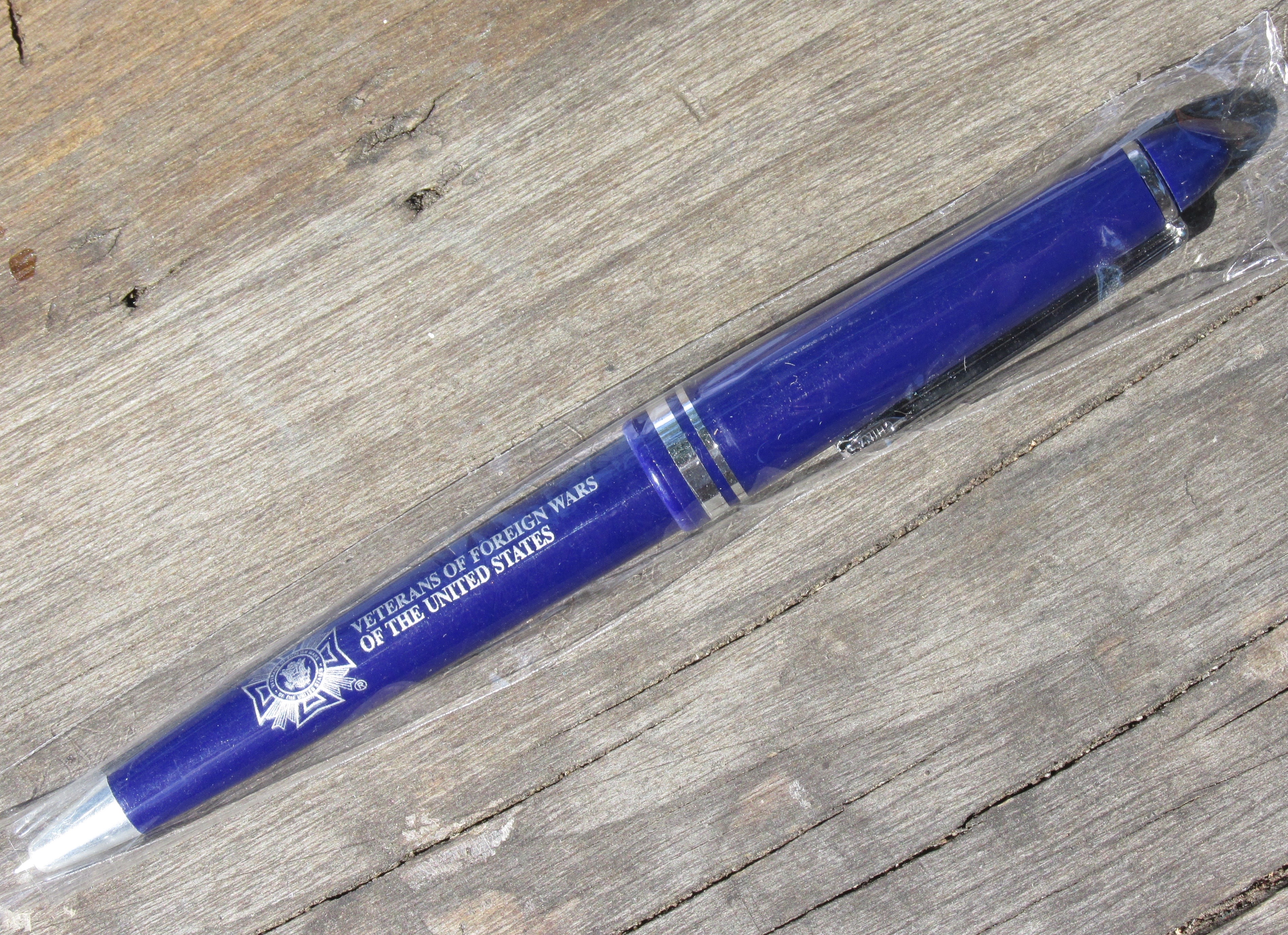
-1 pen

-1 calendar card

-1 set of gift & address labels

Of course, there was also a letter/donor form and BRE.

But two unusual items cropped up.

IMG_3749

The gift bag, big enough for a ham sandwich.

First, the headline alerted us: WOUNDED VETERANS ARE IN CRISIS.

If you are at all disposed to the plight of these warriors, as countless Americans are, you are going to open this labeled treasure chest to see what the crisis is.   Foreclosure on the home?   Withdrawal of benefits?   Family disintegration?   What is the crisis?

IMG_3735

Crisis: a powerful set up.

Inside, the letter launches in to a completely different train of thought: “When we began sending out these free special edition Christmas cards and other gifts, people said we were crazy.”  Only three paragraphs later do they mention the main focus of their cause: the wounded Veteran.

Version 2

The non sequitur: handwringing debate about cards.

While this may seem nitpicking, the golden rule of good headlining is to pay it off.   VFW brings the reader to the edge of their seat, and then chats away on the frivolity of costly free gifts.  Crisis takes a back seat.

The second wrinkle is more about economics, and a good lesson is taught here.  This 6.8-ounce kit probably cost $2-$4 dollars each, all in.   Conventional marketers would roll up their eyes, cross themselves and close the garage door before spending that kind of money, especially when the response might not break 5%.

IMG_3743

Labels and stickers, a fitting complement.

But what if it does?   The real question is, what’s the average gift, and how long before it pays itself off?

So assume for a moment this scenario:

Mailed 10,000 at a cost of $40,000.  700 donors, at a cost of $57.14 each. Response, 7%.  $17,500 in gifts.  Average gift, $25.

IMG_3751

Cello-wrapped pen.. not since Time magazine!

What does VFW have? 700 new donors at a net cost of $32.14 each.   What are the odds that over the next five years, the group will turn in another $100,000 through renewal mailings, bequests and planned giving?   Pretty good, actually.

Version 2

This compliant disclosure gives pause to the reader.
It’s all speculation, of course.   For some background on VFW’s fundraising success, check their website for its latest financials.   Total gifts, $66.8 million, fundraising expenses, $25.6 million.  Roughly 2.6/1.  By comparison, its major competitors turn in gift/fundraising ratios of 3:1 up to 7:1.

The challenge is knowing in advance what the numbers can, and need to be.  Here is a formula worth knowing–witnessed by a fly on the wall of VFW, where for a fictional moment, you are now working.

Budgeted Cost per Piece

Your boss went sideways over the cost of the Gold Lame’ package.  Piqued, she said the gross cost per response can’t exceed $32.14.  You blurt out,

“But that’s the net cost on our Vanilla kit.   Gimme a break.”

“Give you a break? I have to explain this gold cadillac to the board.   If it doesn’t beat Vanilla, I will be back in community service, and you will be on the phones while you are licking envelopes.   Got it?”

IMG_3745

Gifts up to $500. If you don’t ask…

So you have a ceiling: the cost per response must not exceed $32.14.   Historically, you have generated a 3% response on the Vanilla conventional mailing format.   The all-in cost of the Gold Lame’ must not exceed $32.14 times 3% = $0.964 each.

Impossible.  The vendor stares through you with crocodile eyes.  Three bucks without postage, he grins.

But you feel strongly about Gold Lame’.  Your all-in piece cost totals $3.75.  Divided by the boss’s ultimatum, $32.14, you need 11.67% response.   Phew.

At this point, you wake from this disturbing nightmare.   Will Gold Lame’ quadruple Vanilla response?   We may not know, but at least you know the formula to weigh the risk.

Remember: ($ piece cost) / ($ response cost)  =  % response

Now, back to our piece.

  1.  Fix the headline to set up the letter, or change the letter to pay off the headline.
  2. A bold choice of cards: an unabashedly Christmas theme.  Just make sure your list is of that persuasion.
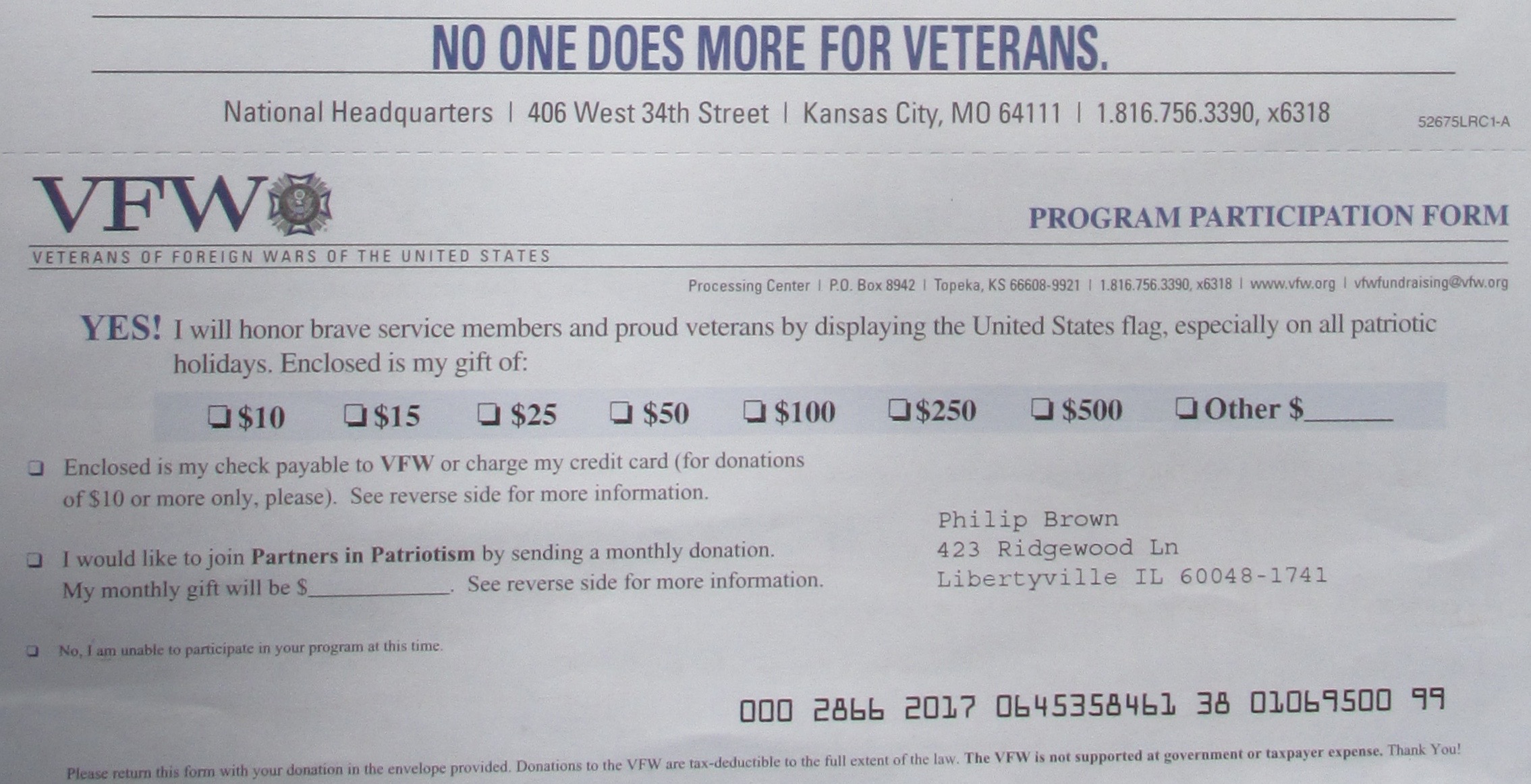
  3. The donor form offers 8 gift choices, from $10 – $500.   Good!
  4. Lastly, the prepaid BRE is worth it.   Whole campaigns can falter for want of a postage stamp.
  5. Mail it.   Whatever the response, whatever the gift, if you don’t test, you will never know.

Lastly, find a good quote to share with your boss, something like Teddy Roosevelt’s, “better to have failed while daring greatly than to live with those cold and timid souls who have neither known victory nor defeat.”

A little wordy, but it may work.


Standard
direct mail, Economics, Marketing

USPS: The Report Nobody Sees

The USPS has published its quarterly Revenues, Pieces and Weights report (RPW) and some trends for both optimists and pessimists will start you thinking.  First off, understand that the post office doesn’t observe the normal calendar year, so the numbers shown here are normalized to January-December.

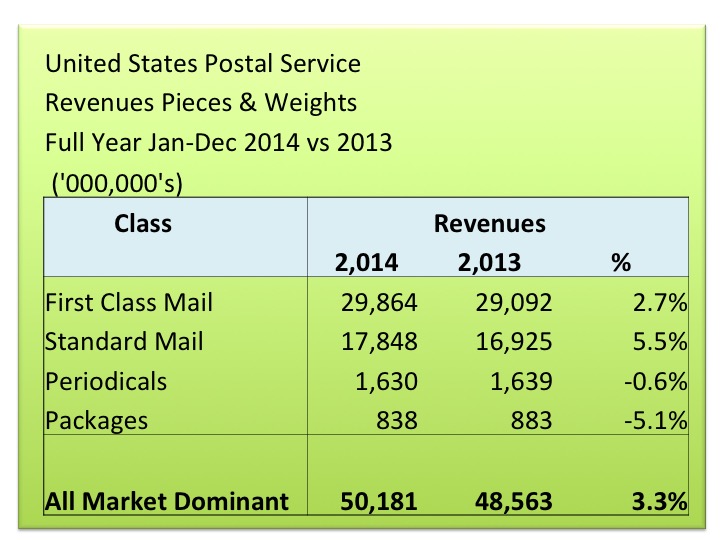
Revenues for the year, up 3.3% Slide1
First Class Mail, which includes all the bank statements and financial releases, plus personal letters and cards saw a 2.7% increase in revenues.   Pretty good, considering that the class took a 5% increase in price.

Standard Mail which is entirely promotional and non profit mail boomed 5.5%.   If nothing else, this is an indicator that the market was ready to invest in Direct Mail.

Periodicals revenues were flat, indicating the continued effect of online access to reading material.   Parcels were down as a result of a drop in media and library mail.

Pieces down, virtually flat -0.7% Slide3

The big win for the USPS was its ability to bag an increase in pricing without a significant drop in pieces.   In 2014 the post office delivered 152 billion pieces of mail, magazines and parcels, down a billion… but what’s a billion?   Fundamentally, piece count is the physical evidence: choosing to mail hard copy versus an alternative, such as email.

Drilling in to the numbers, Standard Mail grew a billion pieces, or 1.7%.   As can be expected, First Class dipped 1.5 billion.   Interesting, in Q4, which includes Christmas, volumes were up in all FCM categories except for single cards and letters.   Despite our best hopes, the Christmas season didn’t materialize on the kitchen tables of America as stacks of holiday greetings mail.

The most worrisome segment of the pieces category is Periodicals, which illustrate the rapid decline of magazine mail, the real victim of web communications today.  Periodicals dropped 4.7%.

Tonnage down 3.2%

Slide4While pieces are down slightly, the total weight hauled took a big dip: 500 million pounds or 250,000 tons.  For the record, the USS H.W. Bush Super Carrier weighs 100,000 tons.  Can you imagine losing 2-1/2 aircraft carriers in the mail?

But to the point, while mailers only backed off mailing pieces by 0.7%, they were much more careful to lower the weight of each package.   So the USPS still walked as many routes as last year, but their trucks didn’t use as much gas.

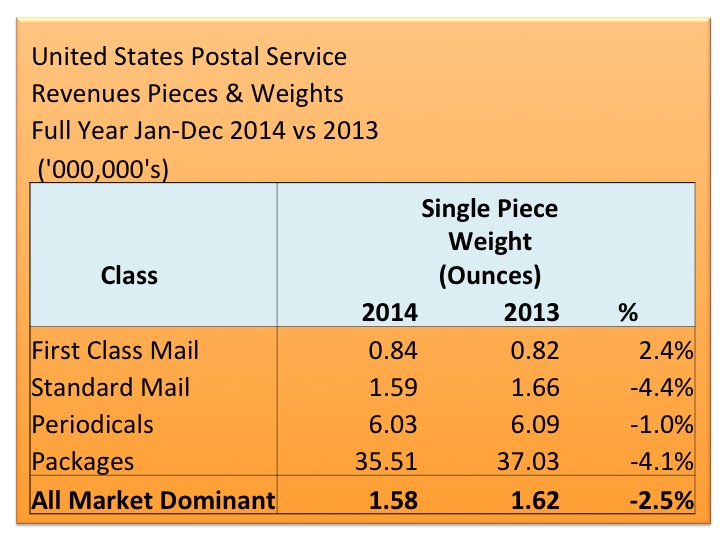
Slide5The drill down shows that Standard Mailers lowered their kit weights by 4.4% to 1.59 ounces on average.   Given that the postage is the same for up to 3-plus ounces, it is likely that printing costs drove down the weights.   That, and fewer Flat-sized kits.

Periodicals dropped 1%, which translates to fewer page counts, and less advertising.  Parcels and packages were down to 2-1/4 pounds.

Only First Class mailers upped their weights.

The Cost of A Stamp Up 4.1%

Slide6First Class postage took a real price increase of 5%, and watched its volumes decline 2.2%.

Standard Mailers took a 4.2% increase and grew their volumes 1.2%.   This is a clear indication that Direct Mail is enjoying the effect of its financial results in the market place.

Only Packages saw a price decrease, which spelled a slight increase in volume.

What’s Next?

We’ll see how the postage increase affects volumes and revenues after April, 2015.   Mean time, it’s a safe bet that Direct Mail is headed in the right direction, and may ultimately be the driving force in USPS revenue stability going forward.

Kudos to the USPS navigating its way through these changing times.   If you would like to see the RPWs they are available here…  http://about.usps.com/who-we-are/financials/welcome.htm

If you have a question, comment or observation about this report, let me know!


Standard
direct mail, Economics, Marketing, Thank You

Ten Reasons You Should Thank The USPS

Teddy StampWe are all cheesed that the USPS is looking for a 1.97% increase in postal rates.  But before we run to our social media to complain, let’s open the envelope.  What are we getting?

1.   Door-to-door, pick-up and delivery.   Not only does a real person come to your home to deliver mail, but they are charged to pick it up, too.   Beats driving downtown.   And they do this 6 days a week.

2.   Equal representation.   The USPS is probably the only government institution which situates an office based on population density, rather than political handouts.  For sure, it’s the only federal presence in your community that isn’t there to administer laws and levy taxes.

3.   Legal authority.   A USPS postmark is an official seal, and when your letter is in the system, it’s a completed act.

4.   Jobs.   The USPS employs over 600,000 people.   It’s also the network that directly supports another 1.3 million people who use the mail to make a living, according to the Direct Marketing Association.

5.   The Grid.   There are 142,000,000 delivery addresses in the United States which are visited daily by the mail person.   The USPS grid is like a vast capillary system that beats nationwide, touching the most distant extremity.

6.   Innovation.  Maybe hard to believe, in the face of digital networks, but the USPS has refined and streamlined delivery to the point that it is cheaper to mail a letter today than it was 10 years ago.

7.   Protection.   Your mail is protected by federal law.   The space inside your mailbox is federal property.  The blue boxes situated across your community are safety deposit boxes, in effect.   Drop your mail, and it’s secure in the system.

8.   Culture.   What other government body continually picks new designs to celebrate on the face of a stamp?   Rock stars, writers, artists, scientists, athletes, discoverers… and they are BIG stamps too!

9.   Resilience. Despite a whirlwind of communications technology advances, the USPS still has cache, delivering nearly 500 million pieces a day.   When was the last time you saw a public phone booth?

10.   Fiscal control.   Yes, it has a $5 billion budget deficit.   Works out to $8,333 per employee.   The federal government has a $483 billion budget deficit.   $112,013 per federal employee.   In the bigger scheme of things, go figure.

Nobody likes price increases, but it is a sure thing that the USPS has done leagues more work to control costs than any of its government cousins.  In light of its value, can you really complain?

By the way, the price of a first class stamp remains at 49-cents after the hike.   Good anywhere in the nation.  Buy a bunch, they’ll last forever.

Standard
direct mail, Economics, Marketing

How You Make Personalization Pay Off

Boystown CALENDAR HANGER

A 24-page color calendar, replete with country roads, cabins, barns, flowers and birds…lots of birds.

Personalizing a mail piece comes with expense. You are about to see the motherlode.

Gracing the letter with the reader’s name is one thing, but it’s quite another to match that to the envelope. For the fully committed direct marketer, there are personalization payoffs, and Father Flanagan’s Boystown shows us how.

Boystown Envelope

An outer envelope promising lots, and delivering, too.

BoystownBooklet Bird Jan

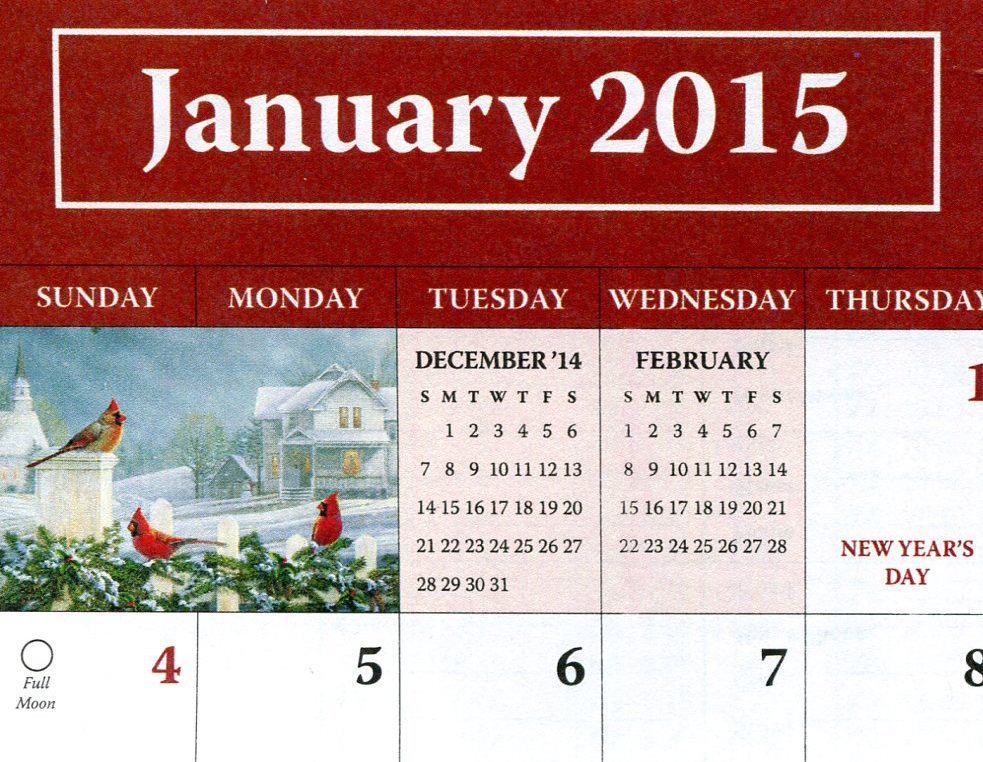
January.. from the 36-pager booklet, with more birds…growing in numbers.

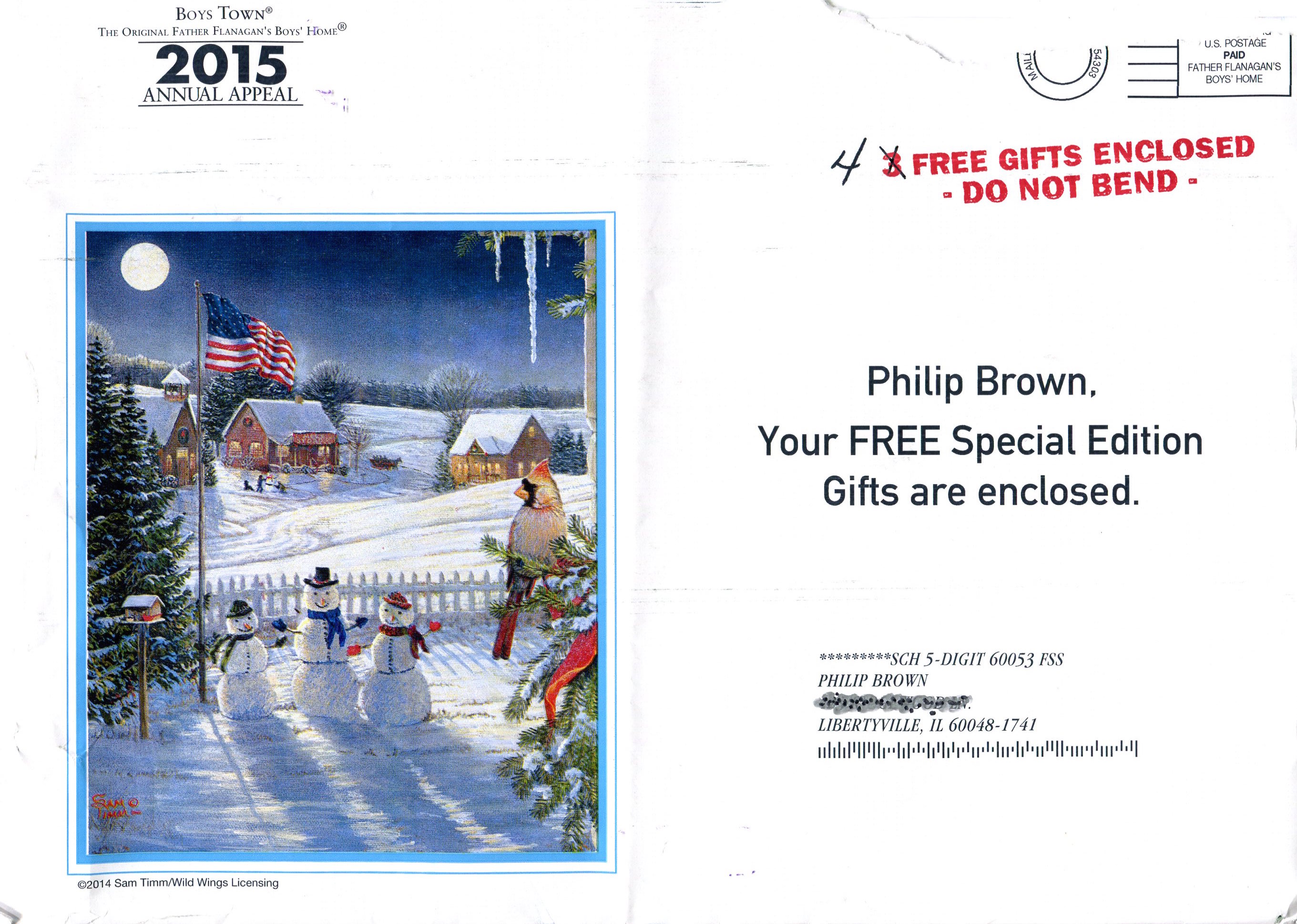
Just before Christmas we received a 9 x 12 envelope from Boystown announcing their 2015 appeal. The donor acquisition kit weighs about a third of a pound, which is huge. The outer envelope calls out, by name, that FREE Special Edition Gifts are enclosed.

“Free Gifts” is right. They send three calendars: a 24-page hanger for the wall, a 36-page purse calendar booklet, and an 8-1/4 x 10-3/4 calendar card.

Boystown    color labels

The color label sheet. High quality and keepable.

The whole collection is covered in Sam Timm nostalgia art: winter ponds, chimneyed log cabins, old trucks, old boats, old canoes and birds…. enough birds to awaken Alfred Hitchcock one last time.

Boystown    028VGF Calendar

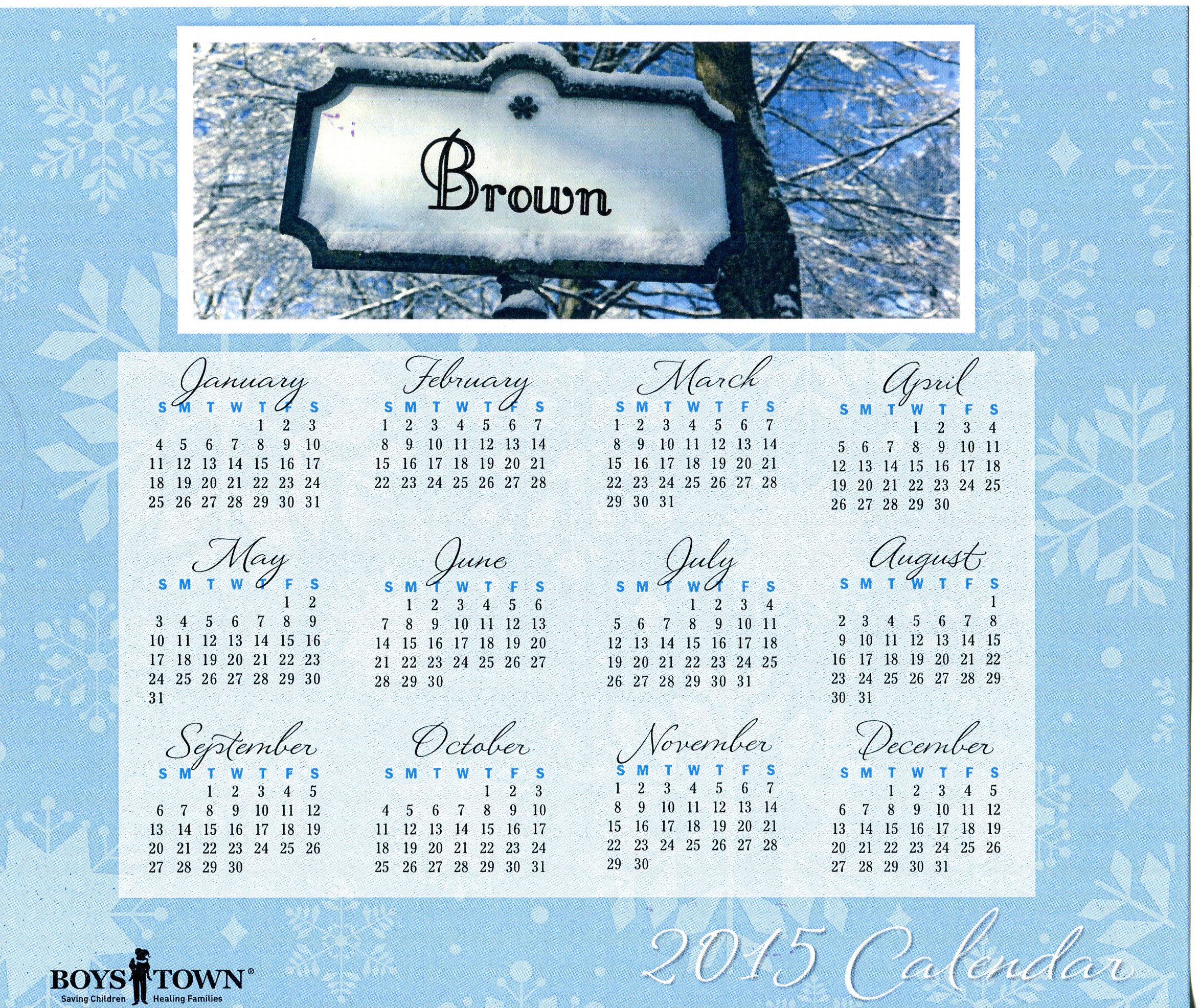
Another calendar, this one with a stylized street sign.

But the overwhelming effect comes from the personalization. Father Flanagan has managed to personalize 8 pieces in this whopper kit: the envelope, the letter, the reply form, the reply envelope, two sets of very nice address labels, a certificate and a calendar card.

Boystown  Certificate

It’s only an acknowledgement, but hey, it’s framable.

Over the top maybe?

Boystown Johnson Box

A Johnson Box, personalized and tinted, captures the gist.

Not really. Remember, good direct mail is designed to be indispensable.   It is extremely difficult to throw out a kit when your name is woven into its making so admirably.   The proof: this is a control package, or very similar to past controls. So it is working.

What’s the math that supports this?

The kit itself probably cost around $1.80. Postage for a 6-ounce Flat at non profit rates is actually a bargain, add another 30-cents. Total cost in the mail, probably $2.25 after adding list and processing.  This is a guess, only, having not spoken directly with Boystown.

Boystown Gift Certificate

Individualized gift certificates, one of three.

Now, the hard part: getting paid. Assume the average gift is $15. To break even, we need a 15.0% response. ($2.25 divided by $15.00 = 15.0%)

And the really hard part: they probably won’t get 15.0% response.   More likely, they might achieve 8-10%.   Let’s say 10%.  So given that, every response came at a cost of $22.50 ($2.25 divided by 10% = $22.50).

Boystown Donor Closeup

A strategic gift choice, Goldilocks-style. Let’s go for $15.00!

Is a new donor worth $22.50?   The answer is, “yes”!

By Father Flanagan’s 2012 financial report, they derived nearly $5 for every dollar spent in fundraising.  A very acceptable payback according to industry standards.  By the numbers above, the new donor will continue to give over time, well in excess of $113.00.

Boystown B&W Close Up revised

A set of stylish B&W labels in case I don’t want to give away the birds.

BoystownBangtail Reply

Personalized donor form and reply envelope. Note the QR code for tracking!

Again, this analysis is my perspective only, but a donor will continue to give to a worthy cause, especially one as well branded as Boystown.   And not only will they give today, but some will most assuredly make bequests after passing to keep the institution providing its valuable service.

So personalization plays a big part in winning support, and the savvy marketers at Boystown have done their jobs well in making it pay for their cause.

Thanks for hanging in to read all those numbers!   FYI, Boystown provided nearly $192 million in services in 2012, and in 2013, served 122,000 children and families across America.

Standard
direct mail, Economics, Marketing

AAA Goes Flat Out

AAA 2014-12-02 803

The door opener!

Want to know what stops just about anyone when they open their mailbox?

No, not a boxing glove. Instead, it’s a flat.   No, not a flat tire.   A flat-sized mailing piece.

AAA 2014-12-02 800

The 10 x 12 Flat. Size counts in direct mail.

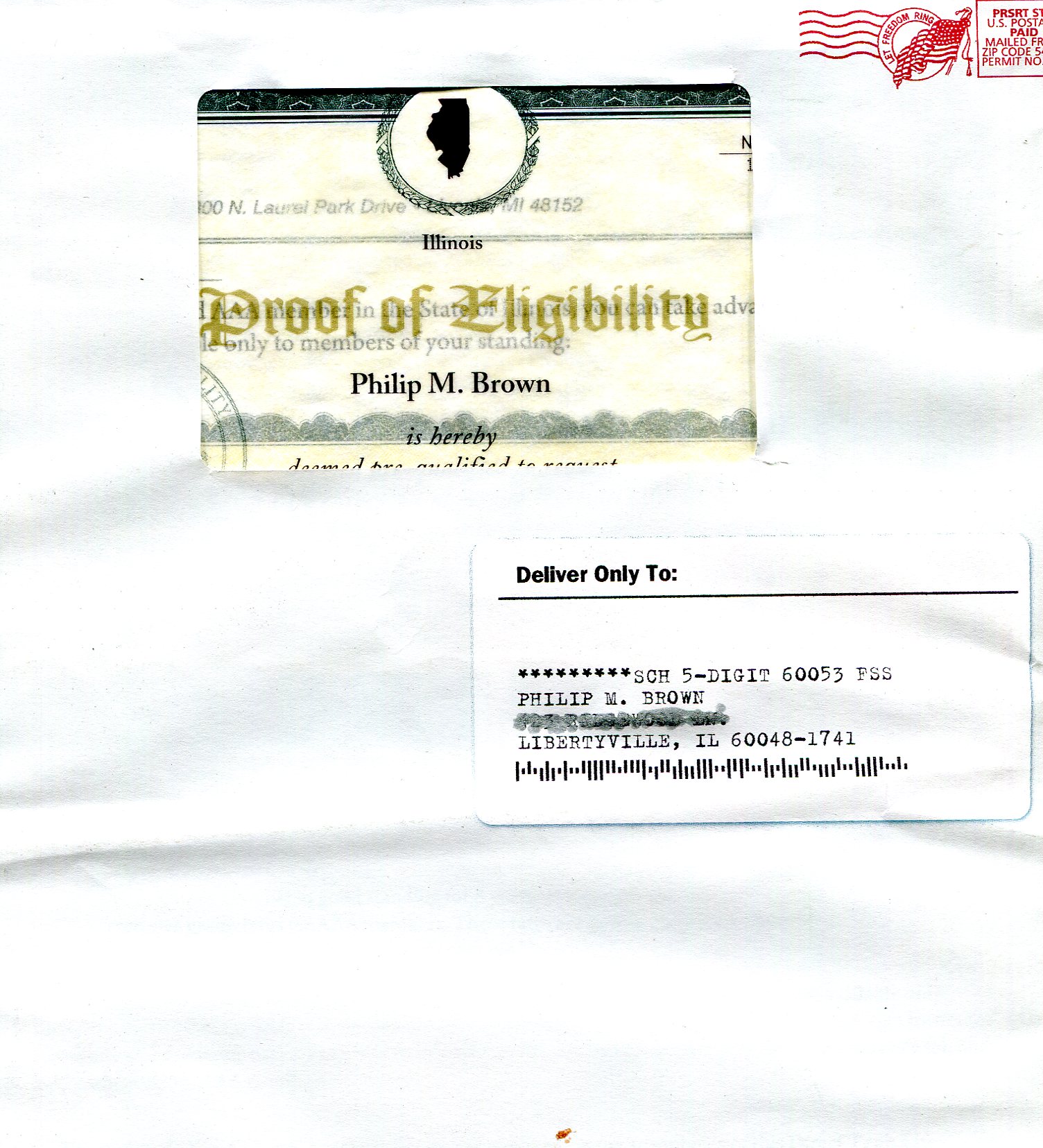
So it is that I opened our mailbox to be confronted by a certificate-sized 10″ x 12″ envelope. Front and center, in portrait orientation, is an open window. As I peak through I see my name, in bold, printed below a 40-point, gothic type proclamation: Proof of Eligibility.  The State of Illinois is symbolically positioned above.

This manifest is shielded behind a thin sheet of parchment. My reaction? Better open this now.

I am not that naiive, I know this is a solicitation. But still, eligible for what?   Nomination? Higher taxes?  Bronzing?

AAA 2014-12-02 Label copy

A beautiful label… applied on a slant, with raised shading, is actually printed, not real.

As it turns out, it is the AAA Life Insurance Company, who has decided to give me a second chance to insure my remaining days.  Or until the age of 80, when all bets are off.

These are the same folks who sent along a policy kit a few months back.    That one was a flat too: a “fulfillment package”.   Presuming I am ready to sign up, it is essentially a welcome kit.   Regrettably, and unknown to AAA, I am disqualified from obtaining coverage due to a shady past.   So I deferred.

AAA 2014-12-02 eagle copy

The official seal of eligibility.

The reason I highlight the new kit is to point out the allure and attraction of the envelope.  “Proof of Eligibility” is vague.   But when it is presented so elegantly, it works.   How many of your incoming direct mail summons use parchment?   40-point Gothic?   Not much I am guessing, since the Sheriff of Nottingham died.

The design strategy of this AAA kit is to get opened.   My bet is that better than 90% of the recipients do open it.   It is irresistible.

From there, the internals have to carry the freight.

The big question you should be asking is why spend the extra postage– probably 15 cents– to send an over-sized envelope?

AAA 2014-12-02 802

The letter under the parchment, complete with filigree.

Do the math.   In a standard #10 envelope, the kit, list and assembly would cost about $250/m.   Postage, another $200/m.   Total, $450/m.

Now lay the papers flat, and place them in a big envelope instead.   Let’s say the production is cost neutral, but adding $150/m flat postage has just increased overall cost by 33%.

The bottom line in direct mail: raise your production cost 33%, you must increase response 33% too.

So if the small envelope garnered a 1% response, the flat needs 1.33% to stay in the game.

From personal experience, I know this is achievable, and judging from AAA’s use of flats before, it’s probably not unusual for them either.

AAA 2014-12-02 Eligible copyBy the way, what was I eligible for?  Discounted premiums as an AAA member.


Thanks for reading!   Never pass up the opportunity to go “big” in a mailing piece.   The cost may frighten you, but usually higher response will cover it.

Standard
direct mail, Economics, Media, Politics

Found: The Hidden Miracle in the USPS

Spoiler Alert: This Is A Good Story About Numbers
Every year the media touts the headline that the United States Postal Service lost another few billion dollars. Politicians get huffy. The digerati are quick to call the funeral home.

But in fact, the USPS has accomplished an amazing business coup in its mail delivery management.

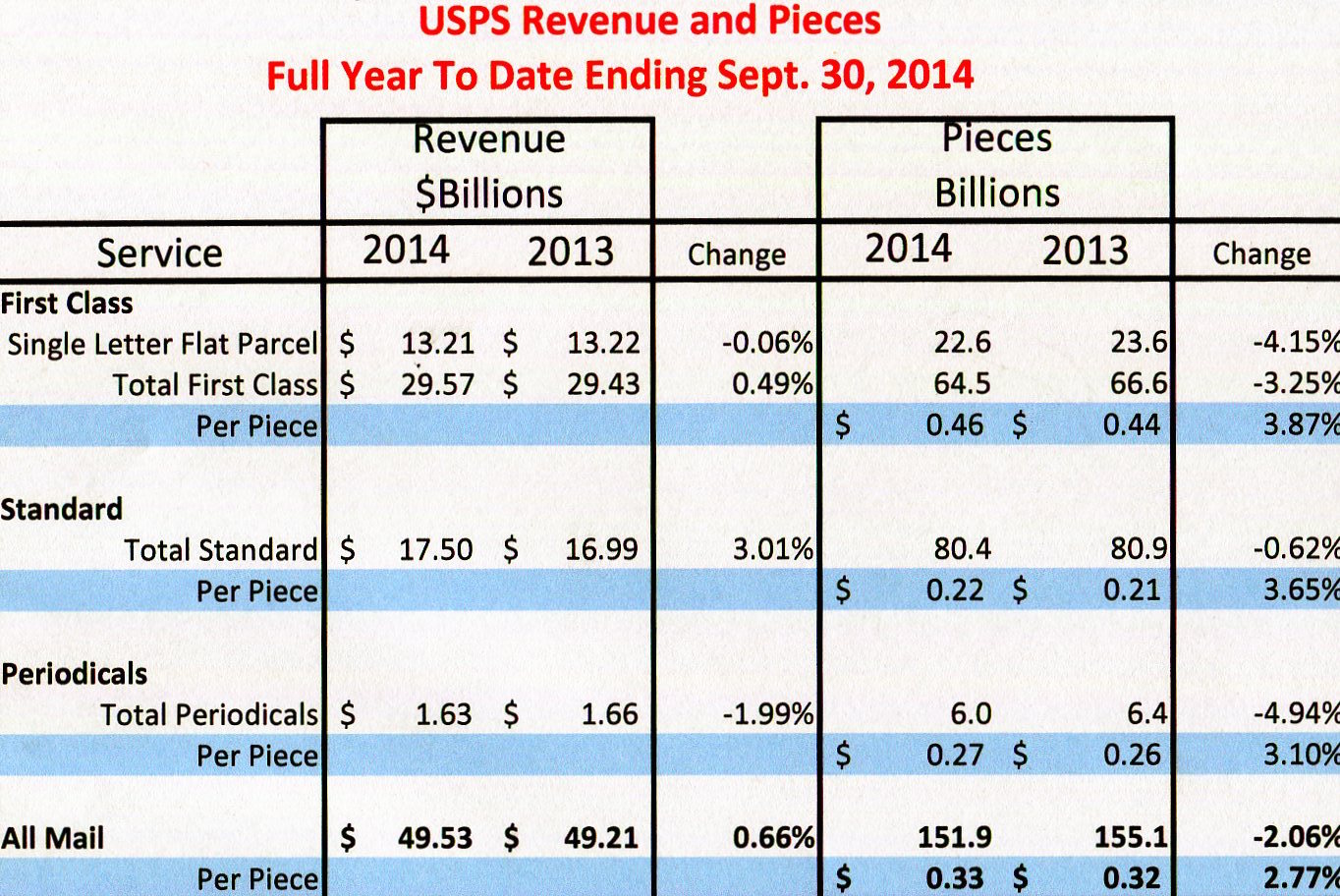
First, look at the current “bad news” available in the latest Revenue, Pieces and Weights report* for USPS full year 2014.   Figure 1 gives some highlights.

Fig.1.  2014 revenues were up 0.66% while volume fell 2.06%

Fig.1. 2014 mail revenues were up 0.66% to $49.53B while mail volume fell 2.06% to 151.9B.

Mail volumes decreased from 2013 to 2014. A 2.06% decrease to 151.9 Billion pieces. “Pieces” include letters, parcels, magazines and flats. The shrinkage may be attributed, if you wish, to a blended increase in price (postage) from 32 cents to 33 cents per piece. A 2.77% increase. But it probably has more to do with society’s use of email.   We would just as soon email Gran a singing birthday gift card as send her a parcel.

Dig deeper and we find that First Class volume shrank 3.25% while actual revenues increased 0.49%.

Postage per piece went up 2 cents, or 3.87%

What we know about mailing economics is that there is no elasticity. When postage goes up, volume goes down.

This is the fundamental truth of direct mailers. They maximize performance through testing list, offer, format and copy. The best performance becomes the economics benchmark. So when Standard Postage goes up 3.65%, we expect some mail to drop out, which it did: 0.62% less.

Amidst The Bad News, A Twinkling of Brilliance

November 14, the USPS presented its preliminary financial results to the Board of Governors. It declared a $5.5 billion loss in income. That made headlines. What was not picked up however, was its mail operations performance. You see, its operations income was $1.4Billion profit.

What that means is that the USPS moved nearly 152 billion pieces across the country to over 140 million addresses, six days a week, and did better than break even. What was the all-in price per piece to the mailer? 33 cents.

2004 Eye Opener

Now lets look at the real miracle of the USPS by comparing 2014 with 2004.

Ten years ago, it delivered 206 billion pieces for $65.87 billion.

Cost back then? 32 cents each.

Not bad! A one-cent increase in 10 years. Despite a 26% decrease in economies of scale, its performance eroded only by a penny.

Surviving The Ravages of Inflation and Restructuring

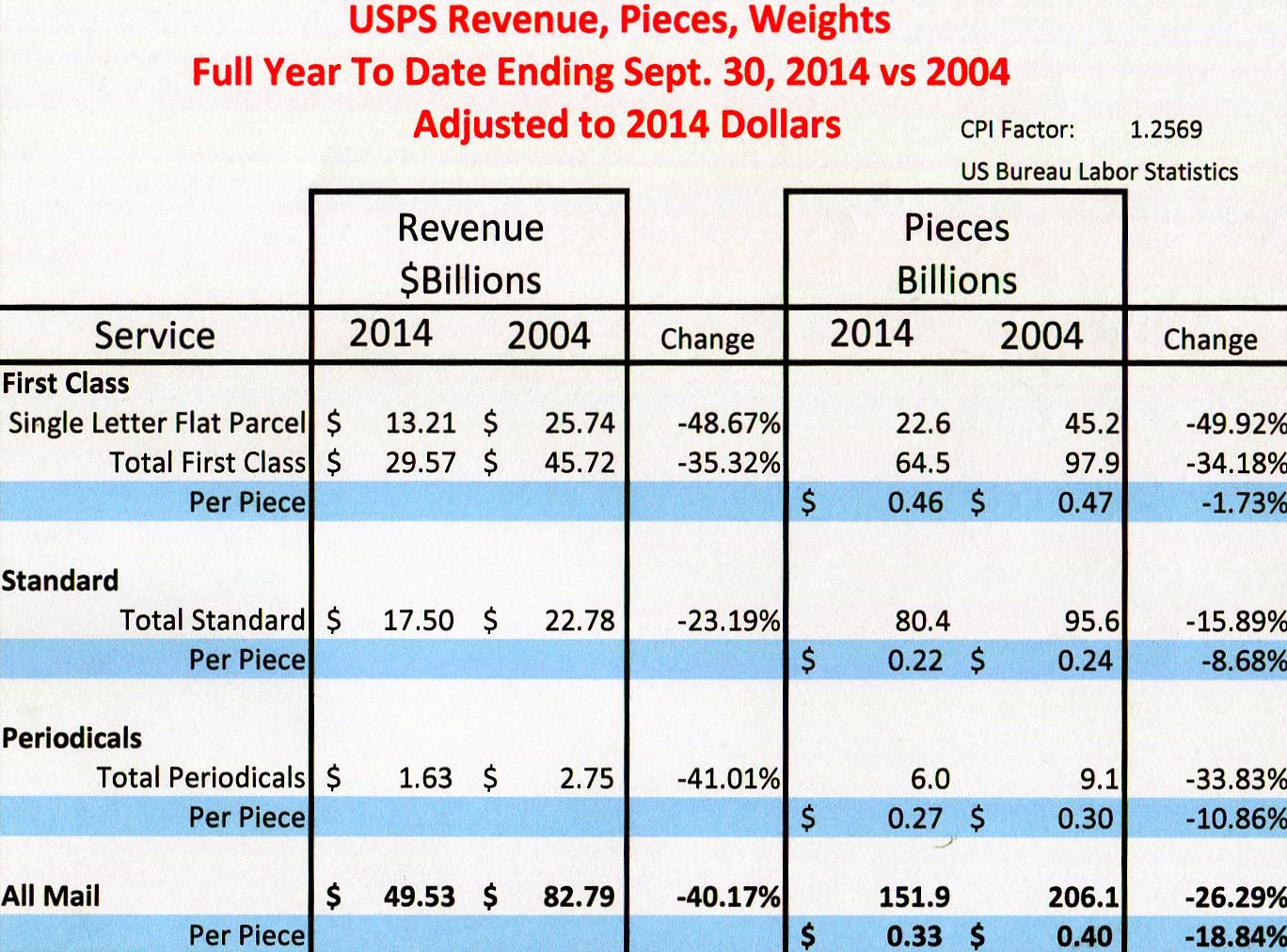
This does not begin to recognize the efficiencies the USPS has managed to achieve in the last ten years however. It disregards the massive cutbacks in volume, and the inexorable devaluation of the dollar. Look at the 2004 figures when they are expressed in 2014 dollars.  See Figure 2.

Using 2014 dollars it cost 40 cents to a mail apiece in 2004, versus 33 cents today.

Fig.2  Using 2014 dollars it cost 40 cents to a mail a piece in 2004, versus 33 cents today.

According to the US Bureau of Labor, we have experienced a 26% increase in prices. In other words, it takes $1.26 today to purchase what $1.00 would buy in 2004.

Applying the CPI to USPS figures then, we find that in 2004, it cost 40 cents to mail a piece, versus 33 cents today.

Standard Mailers would pay 24 cents in 2004 versus 22 cents today. First Class mailers would pay 47 cents, versus 46 cents today.

Magazines: 30 cents then, 27 cents now.

USPS: Economic Movement of Value

This government agency may have its critics.   The oracles may claim that mail is antiquated.   But they can hardly explain how well the post office has learned to distribute real property coast to coast at ridiculously low cost to the consumer.   Email and Internet may be instantaneous, but they both lack the credibility of hard copy delivered under government seal.

It can be said that mail is slow, but it maintains its cache because it is trusted.   We need to acknowledge the effort that the USPS has expended to bring us that service.


*The Revenue Pieces and Weights Report: http://1.usa.gov/1A8wEj1

Standard
Economics

11 Ways To Avoid Paying Your Bills — A Reminiscence

In a previous corporate life, I worked for one of America’s most well known and longstanding brands in the financial sector.

We once used the following pamphlet as an advertising specialty for the company’s pre-eminent and trusted commercial collection division.    This one-pager was a distillation of the numerous, incredibly brazen dodges companies would use to avoid paying a bill.

I lack the original direct mail piece, and would love to have it, and to credit the creator. It’s brilliant.

Instead, I am sharing my memory of it with you, for a chuckle:

11 Ways To Avoid Paying Your Bills

1. Always wait for the third past due notice, and then write and ask why you never received an invoice.
2. Next, ask for an itemized account. When it arrives, write back and say that’s not what you wanted at all.
3. Don’t ignore sales taxes. These give you unlimited scope for delay. For instance, if they charge sales tax, advise them your purchase order said you were tax exempt. Never mind that there was no purchase order. And if they don’t charge tax, why not?
4. Always ask for the invoice to be broken into two installments for accounting purposes. Then get somebody else in accounting to start the process all over by asking why there are two bills?  And then only pay one.
5. Send a check with figures not matching words. When they call, ask them to return the check. Send a new one, but don’t sign it.
6. Mail back a copy of the invoice, and staple the torn corner of a check to it. They will turn their department upside down looking for your check. When they call back, tell them you will check with your bank.
7. Tell them you will need two signatures, and the co-signer is on a world cruise with someone in their company for two months.  Discretion suggests keeping this quiet.
8. Send a check for the exact amount, but made out to a fictitious company. When they call you back, tell them you will check with the other company.
9. Ask for a breakdown of labor and materials. When you get it, insist that the numbers are reversed.
10. Tell them that all of their invoices have been seized by the Department of Commerce, as part of a nation-wide investigation.
11. Finally, insist that you already sent them a check, and fax a copy of a previous cancelled check. When they track that down, they will ask for new check. Mail them the fax.

There you have it! As I said at the outset, this is from my written notes, copied from the original, author unknown. If you can track that person down, please let me know, and I will credit them.

And of course, this is my reminiscence of a tongue-in-cheek direct mail piece, by no means a recommendation or endorsement.

Mean time, pay your bills.

Standard
direct mail, Economics, Environment

Zapped: How Your Utility Saves Energy

ComEd 2014 -06 273 doubleCommonwealth Edison is craftier than you might think, compared to the traditional image of the big, dumb, power company.

We are used to receiving their monthly ransom note.   It is comprehensive in detail, reducing our extravagant lifestyle to bar charts that rise and fall with every change in the weather.  But beyond the normal appeal for money, we now receive a separate Home Energy Report.

The statement has no billing or stern demands.   Instead, it reports how your household is doing compared to the neighbors.   ComEd 2014 -06 barsThat’s right, compared to the igloo on your left whose roof is sooted with burnt whale oil.  Or to the right, your very private neighbor who has lights blazing in the basement, around the clock.

ComEd 2014 -06 270 SmileyOur report gave us a couple of smiley faces.    In the energy world, happiness is about abstinence, and we have aced, barely on the grid at all.

The report said in essence: “Compared to 100 close-by neighbors you are living the life of Scrooge in the dark; you must be cold at night, and survive on canned food and powdered eggs, since you don’t have a fridge, let alone AC.   P.S. Have a nice day.”

Careful review of this colorful, and highly personalized report reveals that the news comes from a company called Opower.

Not to be mistaken for, or associated with a day-time talk show queen, Opower serves some 93 utility companies across the U.S., Canada and globally.   It ingests and assembles all energy usage information to create report cards for over 32 million households.

ComEd 2014 -06 270LinesAt first, this looks like an unnecessary expense, adding to our monthly bill.  It turns out however, that peer pressure is a powerful motivator.   Opower’s reporting service has reduced electrical energy usage by 4 billion kilowatt-hours since inception.     That is roughly one-third of your average nuclear power plant’s yearly production.

So why does Com Ed benefit from cutting output?   ComEd 2014 -06 SavingsAnd why spend extra money generating reports to reduce utility billings?  Because building new plants to meet energy demand is very, very expensive, and guess who is paying for them– us.   It further turns out that Com Ed’s customer satisfaction rates have bumped up since the reports started.   Consumers are educated and empowered (haha).

The darker side of the energy reports is the growing suspicion about our 100 neighbors.   I think they are having more fun.


If you enjoyed this, or know someone who would, be sociable, share!  Thanks for reading.


Standard