Culture, Environment, Government, Politics, Wildlife

If A Tree Falls In The Forest

fullsizeoutput_3666

The woods that colored our view.

This past October has been a searing lesson in keeping one’s antenna up. The teachable moment was the watching of a highly efficient logging crew cut down a thousand or more trees from the lot across the road.

The clear cut was requested by the church which owns the land, and it was approved by the village after due inspection.

You see, where we live we have a village administration which has pretty strong rules about keeping up appearances. You can’t just cut down a tree unless it’s sick, damaged, or dangerous, and if so, you need a permit first.   I used to think too much government is a rein on individual freedom, but this set of rules is a good one.

img_0089

This old gentleman looks forward to a questionable future.

It turns out that the church is in the mood for selling the land for development. The challenge was to make the parcel more attractive, and to that end, counseled with its lawyers to build a case for removing a wilderness of 60-year-old trees.

The trees in question were part of an abandoned tree nursery. Fifty-five  years ago, they were planted 10 feet apart, and do you know what happened? The owners gave up the business, and Mother Nature took over.

In fitting out her arboreal family, she attracted a host of wildlife, from deer, coyote and other furry creatures, complemented by boisterous flocks of birds who populated the tree tops with a chatter of music all day.

fullsizeoutput_3664

20,000 motorists enjoyed this view every day.

Meanwhile, the trees matured to their full 5-story height, and spawned a wilderness of jungle under the canopy.

img_6908

Not a winner: this tag identifies a tree that didn’t make the cut, ironically.

The critters loved it; the church not so much.

Then about a year ago, a developer sniffed out a golden opportunity to build a settlement of new homes on the property, and before long, a deal was made. The developer became the authorized agent for the church to get the trees removed.

fullsizeoutput_3545

Every summer and fall a corn grower leased the land for this harvest.

The new agent petitioned the village government, pointing out the church’s liability if, God forbid, a tree might fall down and clobber a hiker foraging in the woods for morels. It hadn’t happened in 50-plus years, so odds were likely that the jig would soon be up.

With detailed, supporting testimony from professional arborists hired by the developer, and then double-checked by the village’s own arborists, and ultimately inspected by the mayor, the village gave the okay to axe the forest.

Each offending tree was tagged, and given a C.V. page in a three-ring binder. 2,500 candidates were put on the rolls, and 38 were deemed salvageable.

The news finally broke when the local reporter headlined an article on the pending clear cut. Then, and only then, did the public wake up.

fullsizeoutput_3713

The loggers, like good executioners, did their job swiftly, and well.

But sadly, too late!

fullsizeoutput_36ed

A 57-year-old bleeds a story for the arborist.

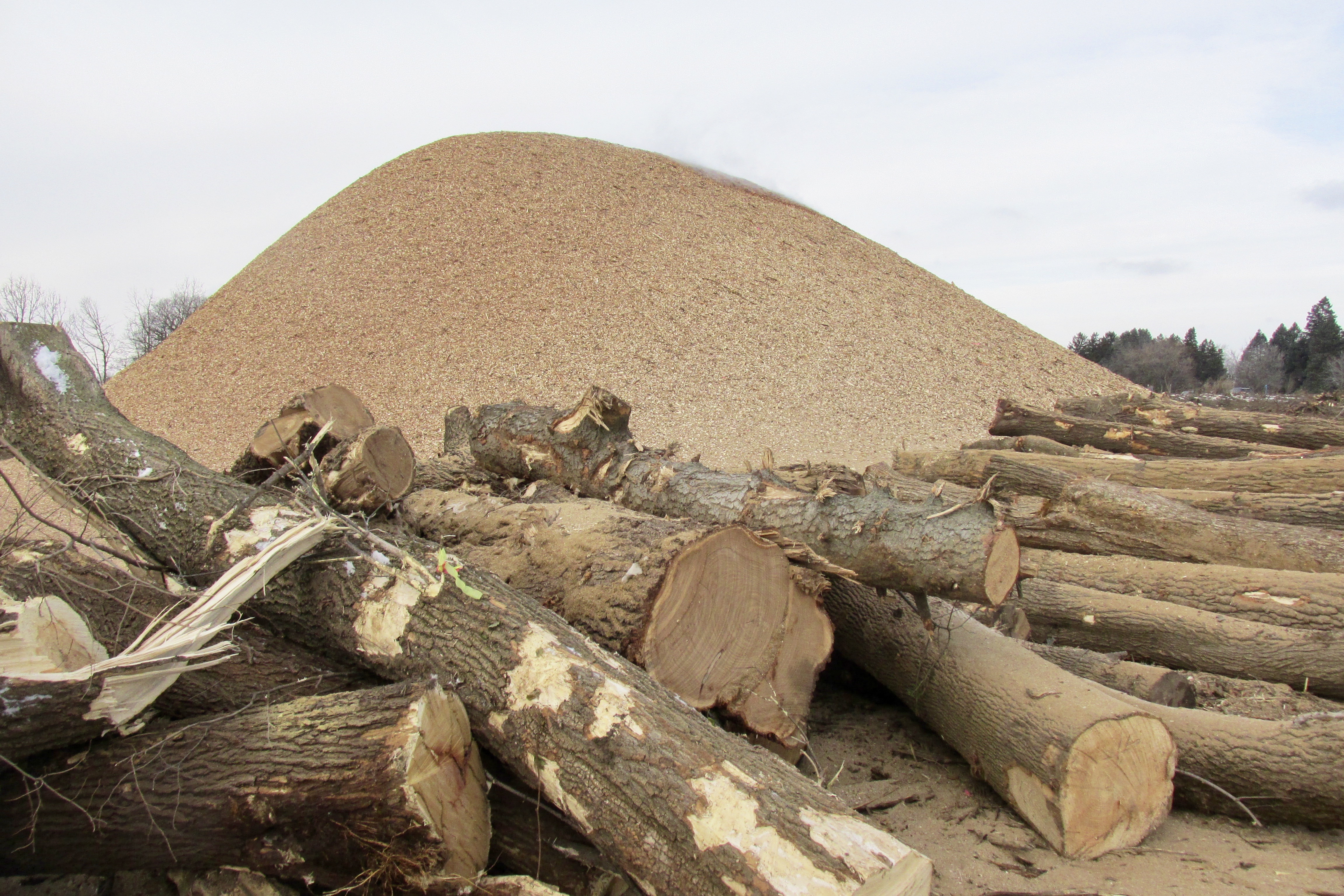
In November the heavy machinery came in, and in a matter of a few days, decimated the woods which had pleased passers by for decades. Today, there is a giant mountain of chipped wood on the lot, over 20 feet high, and enough to fill the village swimming pool three times over.

fullsizeoutput_36eb

Three winners. 38 trees survive the cut.

I mentioned passers by.   Approximately 20,000 motorists pass the woods every day. Year after year the woods have been the backdrop to the driver’s view on a seasonal corn crop that has graced the parcel forever, accented by a colorful palette of leaves each fall.

One day it’s there, the next, it’s gone.

Driving north today we see a sodden battlefield of tree stumps, roots and tangled branches, exposing fresh, grainy wood under torn bark and up-ended logs.  A water tower overlooks the scene, never before visible from the road.  Behind that, the once sheltered golf course now presents a naked 20-foot-high wire fence used to catch wild golf balls.

fullsizeoutput_3836

The new view. Passers by witness the harvest, and drive on, chastened.

As we drive by, our eyes are drawn to the carnage, and then we avert our gaze in disgust.  The sight is sickening.

One wonders if the village will have the gumption to direct the church to clean up the stubble and make it pleasant, minimally, just to keep up appearances.

Though the word “development” is attached to every discussion about the deforestation, we are assured by the village that the decision to remove the trees is not connected to any housing proposal.

fullsizeoutput_3843

This row of trees is no longer a threat to the hiker.

The questionable proposal to crowd up to 147 houses on the parcel of land is nebulous.  Despite the best drawn plans, it has earned no approvals for re-zoning, plats or building.

In the face of the public’s nausea over the decisions to date, the development may never appear, or perhaps hover in limbo indefinitely.
fullsizeoutput_383d

2500 trees, reformatted.

Meanwhile, the steam and fumes of fermenting wood chips fill the air with a bitter tannic scent that drifts across our neighborhood.

The lesson we have learned from this smoldering string of events is that despite our best wishes, bad things happen if we don’t pay attention.   To that end, there is an aggressive interest among the population to watch what’s going on down at village hall.


While all the time, we grieve, and get on with it.


Thanks for reading! Please take a moment to share this with your friends. 

Standard
Economics, Environment, Government, Science

There’s No Hot Water

Shower

Shower time: the best moment of the day.

Thankfully, the EPA is taking a closer look at us in the shower.

It turns out that the Environmental Protection Agency has made the important decision to fund the University of Tulsa, which will study the showering practices of America’s hotel guests from sea to shining sea.

Boarding house lineup

“There’s an alarm clock in the sink. Hit it when you’re out.”

Their goal is to develop an app which will monitor our shower usage when we are nipping out to the local hotel for a relaxing sojourn in the tub.

According to U of T, hotel guests are using in excess of 17 gallons of water for a shower. Their proposal: we should limit the wash to 15.5 gallons.

Basically, cut a minute off the most important moment of the day.

"You're kidding me.  I just got here!"

“Already? And you want a tip?”

They report this is easily accomplished by turning off the shower while we are lathering.

Tulsa engineers suggest we can further reduce wasted water by taking “navy showers”, i.e.. freezing buck naked in the stall waiting for warm water.

accounting

“You know, this could run into money!”

Apparently, the U of T engineers are working on an app that will monitor shower water usage by room, and transmit the data, real time, to the hotel’s accounting department.  The proposed objective here is to modify guests’ shower behavior.

May we also suggest more group showers?   It used to be that Mrs. Jones’ boarding house filled the tub once, and from there, we all lined up for a dunk like kids.

"Not a chance.  I just got here."

“Not a chance. I just got here.”

Wisely, the U of T engineers have not proposed twosomes to save water, as the likelihood of less shower time is imaginatively remote.

There is a logical extension in the offing, and that is to enlist the services of outside peer-scoring agencies like the renowned OPower company which has quite successfully modified electrical and natural gas usage.

"With all due respect, your numbers suck, big time."

OPower: “We suggest you skip the conditioner.”

Using meter readings from over 60 million households nationwide OPower has delivered energy savings pushing 5% and more, while simultaneously improving utility company satisfaction ratings.

OPower’s reports provide comparative peer group scores, and also offer energy saving tips to the consumer.

Cowbiy Tub

“Time’s up Jarrod. Ranch boys are lined up waiting’ on ya.”

We can see this as a no-brainer in the hospitality industry, where consumers can receive regular reports on their shower usage at the local hotel, or the inn down the road in the next town.

After a few report rotations it would be no surprise if shower usage shrank considerably.

No doubt, the hotel’s satisfaction ratings will skyrocket too.

Standard
Economics, Environment

Gassed: How Our Utility Co Turns Down The Heat

Odds are, if you get a gas bill, you are also getting a report card in the mail too.

      "Loser!"

             “Loser!”

Our gas company mailed us a Home Energy Report for last month, telling us how we stacked up against our uproariously wasteful and spendthrift neighbors.

Turns out: WE are worse than them.

It is a sad reality that I respond to competitive taunts, and right now, our gas company is yanking my chain.

You see, they previously sent us a report for last winter.   It had a little smiley face–which really is smirking–that says “GOOD”.

But I know what it’s thinking: “LOSER!”

"Good maybe, but not great."

“Good maybe, but not great.”

Beside Mr. Smiley is a bar chart that highlights our “Efficient Neighbors” in green. These are the raucous ones last New Years Eve that roasted a quarter steer on the gas grill while they played Marco Polo in a mammoth hot tub.  They have 9 kids, two washing machines and a greenhouse.

"With all due respect, your numbers suck, big time."

“With all due respect Mr. Brown, your numbers suck, big time.”

Then the report shows a longer blue bar — which is bad–that is entitled “YOU”.  In bold.

So I am now energized (hah hah) to understand how our humble little household can possibly respond to this blatant miscall.

I wonder if the gas company is playing with me.

There was once a TV movie in which a dad and his son fill up the neighbor’s gas tank every night to listen to him brag about his car’s great mileage.    Then after a few weeks, they siphon gas out every night to hear him complain about the guzzler he is driving.

Is there a prankster somewhere in the seventh floor of an office building in Chicago who is twiddling with my score, just to see how I react?

dr-zhivago-datcha-600

                                               “Just check that thermostat again.”

Worse yet, maybe they are not playing tricks at all.   Maybe our modest ranch is actually a gas-guzzling super nova.  A galactic black hole sucking energy into a cosmic chimney.

That might account for the drafts.

I am going to give the gas company the benefit of the doubt for the moment.   When I investigated the source of these reports, I learned that they come from a company called Opower.

There is a lab-coated millennial there who is modifying my “demand response behavior” while flipping through Hunger Games.

Essentially, Opower has placed my house on a giant leader board with about 50 million other households, and lo and behold, we are not on the top of the list.

Dinner at our neighbors.

Dinner at our neighbors.

I’d like to see the hermit who is.  Probably dressed in yak skins and eating his fish raw.

To their credit, however, they have shamed enough people in the last few years to reduce natural gas consumption nearly 2%.

And what is more confounding, improved consumer satisfaction ratings for the gas company by 5 points!

Talk about a world upside down.   Running against the natural order of things.

Our new HVAC guy, en repose.

Our new HVAC guy, en repose.

I am not beaten though.   I will climb that list.   I will lay down a 2-foot-thick blanket of moss in our attic.   Line the windowpanes with hay bales.   Wrap the basement in a giant Snuggie and remove the furnace.

Better yet, I will hang out with our neighbors.

Thanks for reading!  If you get these reports too, I feel for you.   But they are actually a pretty useful tool.   Unless you live in the woods.

Standard
Agriculture, Environment, Science, Wildlife

Something’s Rotten in Seattle

IMG_6888

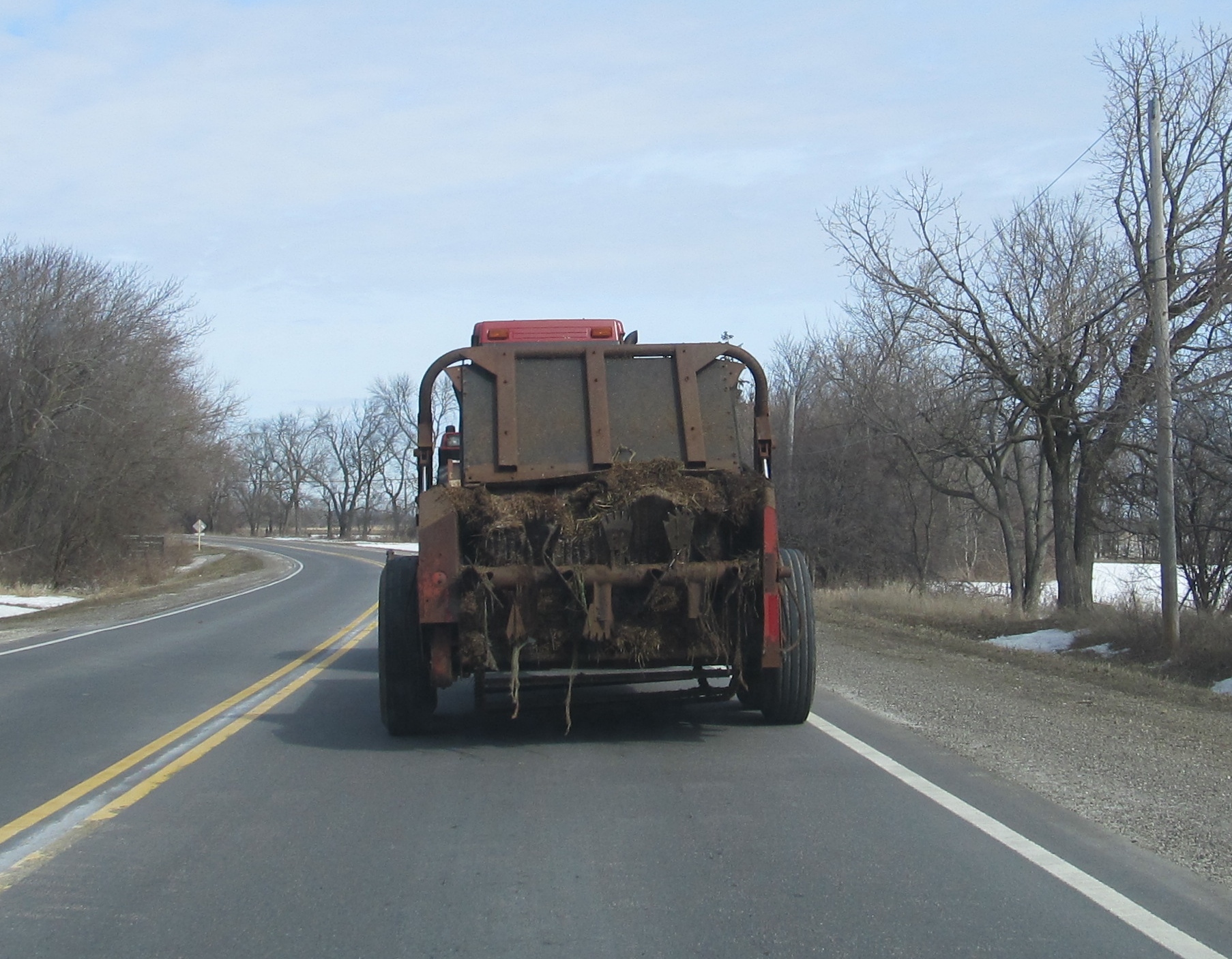
Spreading good everywhere.

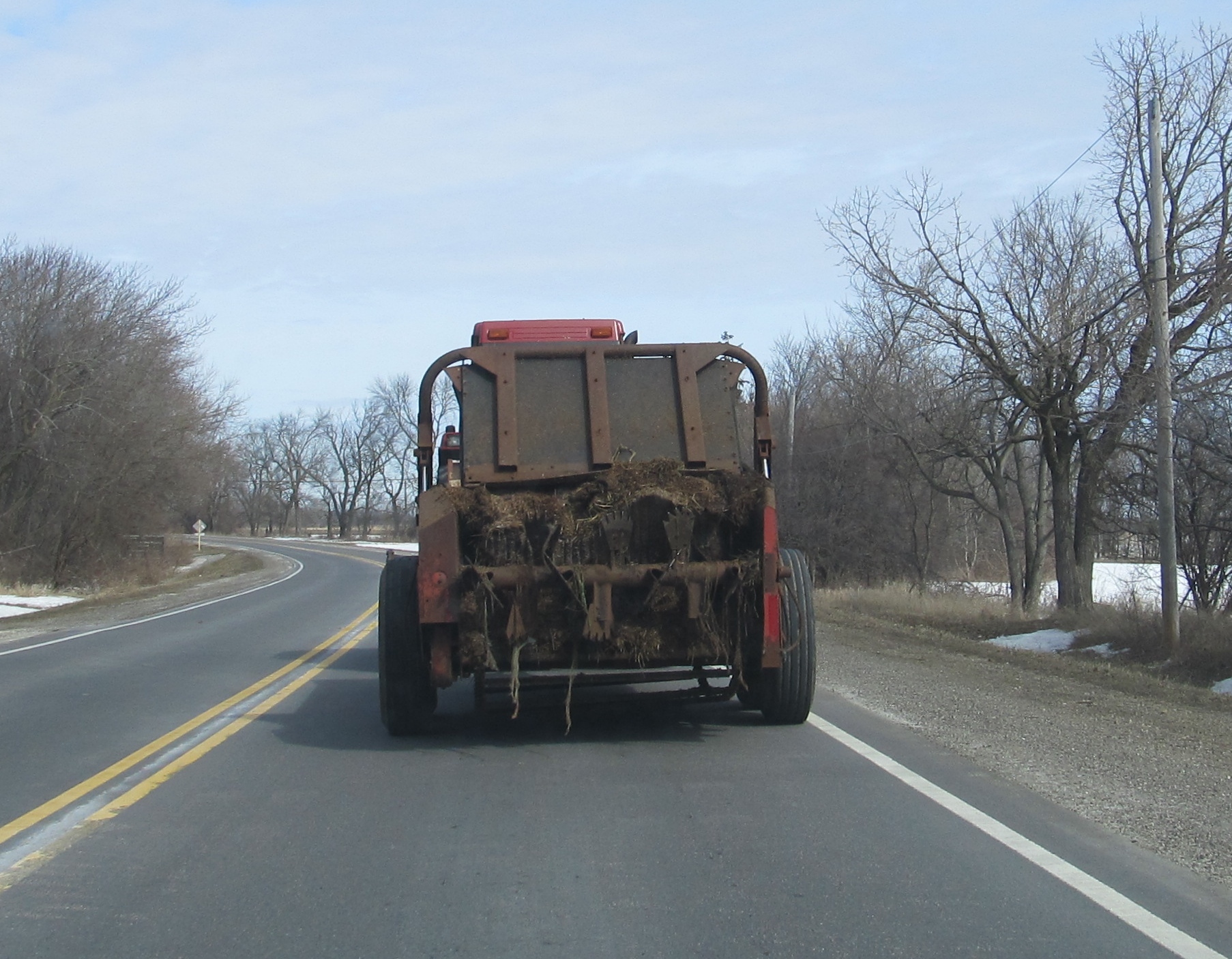
My dad and I are driving down backroad south of Delhi on a warm spring morning.   In the air is the unmistakeable bouquet of fresh manure, wafting up from a newly treated acre just upwind.  “Smell that?” asked my Dad as he leaned his head out the window, “That’s the scent of profits!”

fragglerock_03

Gogo and Wembly consult Marjory on composting, Fraggle Rock.

Compost is one of nature’s small gifts to those of us who wish to take it.  Bagging up potato peels.   Separating lemon rinds from swizzle sticks.  Throwing eggshells and coffee grounds into a bucket under the sink.

And any kid has to wonder, “when are they going to ask me to take that outside?”

The Korsts, a Dallas, Oregon couple composted their entire consumable garbage for a year after removing all recyclables.  Turns out their actual “garbage” filled a shoebox.   For a year!  Meanwhile the compost heap quietly bubbled and burped in their back yard.  No newscast has yet reported that they have gone missing while detectives are following up some promising leads next to the tomato rows.  But we wait to see.

Today, composting is de rigeur.  Ask the virtuous and self-denying citizens of Seattle who just this week accepted a composting by-law.   Simply stated, compost-eligible items may not exceed 10% of their weekly garbage pick-up.  In other words, “if it rots, keep it.”

seattle council

Seattle City Council hash it out.

The city council opened up this can of worms in July with city ordinance 124313.  It requires the frugal and resourceful residents  to reduce recyclable contents in landfill garbage to less than 10%.

Two months later, still not satisfied with the purity of their garbage, city council expanded the 10% cap to compostable matter.  From now on, that leftover duck a l’orange goes under the Spiraea bush in the back yard.

The motive behind this cleansing is to reduce landfill waste.   It turns out that Seattle was shipping 300,000 tons of garbage to a site in eastern Oregon annually.   Remember the Korsts?

bags

Bags to go: we love ’em but we hate ’em.

Today consumers are whipsawed by legislation over garbage.   Just east of us, Torontonians are thrilled that the 5-cent tax on grocery bags has been repealed by city council.

In this instance, the “single-use” plastic bag definition ran into a legal shredder.   Lawyers argued that once home, using the flimsy bag to hold garbage was a multiple use, and therefore acceptable.

Landfill-382150

The sweet smell of success!

You may remember Toronto has had its share of political low days.   One of its good days is the 2010 cessation of trucking over a million tons of garbage to a Michigan landfill site every year.

And farther east, in Ottawa, the citizenry of Canada’s capital were presented with a training video for folding their newspapers.  Why?   To line their wet garbage bin.  There’s government at work for ya.

Which brings me to my main interest: the business of composting.   In my world, if it’s vegetable, it’s compostable and… it’s profitable.

2014-04-23_14-53-21_6

Modest contributions: raw materials.

To that end, I happily walk broccoli stems, corn husks and wilted flowers out to a pile in the side yard that is the resting place for last year’s Jack ‘o’ Lantern, the weekly grass clippings, and all of the neighborhood’s fallen leaves.

Within this melange of produce there hustles a busy community of worms, sow bugs and centipedes.  They are quietly chomping, digesting and extruding high grade fertilizer.   Behind them, a trail of microbes are further breaking the matter down to its fundamental parts.

Canadian Nightcrawler

A hard, loyal worker. His rings indicate seniority.

While they seemingly toil without cease, I have learned that the earthworm follows regular hours.   A New York State College environmental paper reveals that it takes 8 hours for a worm to digest a meal, head-to-toe as it were.   And the output?  Anywhere from 2%-44% of its weight.

The scientists who made this finding also report that the optimum population density for earthworms is about 8 one-ouncers per cubic meter.   I know that my compost heap does much better than that.   Judging by the cafeteria lineups, I have a high density worm farm in operation.  Don’t tell PETA.

2014-04-23_14-52-10_154

Rich, dark goodure.

The compost pile delivers the richest, loamy soil every spring and fall.   In the spring, I transport bushels of the black mulch to our garden.  There, it caps the ground, surrounds the new flowers, stifles the weeds and holds the water.

IMG_0695

Compost delivers!

In the summer, I used another 20 bushels of compost to plant 11 rose bushes.   They are bursting in bloom continuously.

In the fall, I’ll dump another load of compost to cover over the roses and the mums, keeping them insulated until next spring.

Total cost: zero.

My hat is off to the noble and frugal citizenry of Seattle.  But my thanks is to Dad making his point on that early spring morning.

Thanks for reading!   You can “like” this on Facebook, Twitter, LinkedIn and Tumblr.   Be social and share!


Standard
direct mail, Economics, Environment

Zapped: How Your Utility Saves Energy

ComEd 2014 -06 273 doubleCommonwealth Edison is craftier than you might think, compared to the traditional image of the big, dumb, power company.

We are used to receiving their monthly ransom note.   It is comprehensive in detail, reducing our extravagant lifestyle to bar charts that rise and fall with every change in the weather.  But beyond the normal appeal for money, we now receive a separate Home Energy Report.

The statement has no billing or stern demands.   Instead, it reports how your household is doing compared to the neighbors.   ComEd 2014 -06 barsThat’s right, compared to the igloo on your left whose roof is sooted with burnt whale oil.  Or to the right, your very private neighbor who has lights blazing in the basement, around the clock.

ComEd 2014 -06 270 SmileyOur report gave us a couple of smiley faces.    In the energy world, happiness is about abstinence, and we have aced, barely on the grid at all.

The report said in essence: “Compared to 100 close-by neighbors you are living the life of Scrooge in the dark; you must be cold at night, and survive on canned food and powdered eggs, since you don’t have a fridge, let alone AC.   P.S. Have a nice day.”

Careful review of this colorful, and highly personalized report reveals that the news comes from a company called Opower.

Not to be mistaken for, or associated with a day-time talk show queen, Opower serves some 93 utility companies across the U.S., Canada and globally.   It ingests and assembles all energy usage information to create report cards for over 32 million households.

ComEd 2014 -06 270LinesAt first, this looks like an unnecessary expense, adding to our monthly bill.  It turns out however, that peer pressure is a powerful motivator.   Opower’s reporting service has reduced electrical energy usage by 4 billion kilowatt-hours since inception.     That is roughly one-third of your average nuclear power plant’s yearly production.

So why does Com Ed benefit from cutting output?   ComEd 2014 -06 SavingsAnd why spend extra money generating reports to reduce utility billings?  Because building new plants to meet energy demand is very, very expensive, and guess who is paying for them– us.   It further turns out that Com Ed’s customer satisfaction rates have bumped up since the reports started.   Consumers are educated and empowered (haha).

The darker side of the energy reports is the growing suspicion about our 100 neighbors.   I think they are having more fun.


If you enjoyed this, or know someone who would, be sociable, share!  Thanks for reading.


Standard
Environment

Concrete Distraction

On a summer trek to the woods of Northern Ontario, motoring up Highway 11, over the precambrian granite shield, we can sense how long the winters drag on.   Just look at the flood of crafts and doodads for sale in the front yards of those determined  households which are buried in the snow and dark for 6 months.

bed_sculptured_chainsaw_carving_Kenai_King_opt-850

A long winter’s creation, courtesy The Dreamer’s Woods, LLC.

But having an entertaining hobby is the first defense against going crazy and running out on the ice naked in February.  Maybe January.   Ask the locals.

lg_Bear_bench_chainsaw_carvings.jpg

For sitting and thinking. ~ The Dreamer’s Woods, LLC.

From the first snowflake in October, to the last icicle dropping from the roof in May, hands and minds are busy sawing, cutting, weaving, hammering, gluing through the night, and day, building up an inventory of items for passers-by to snap up in July.   And there they are: windmills, concrete statuary, chain-saw-sculpted grizzly bears, log benches, gnomes, rockers, adirondack chairs, silhouettes, trellises, all for sale.

A fish hawk's cozy cabin overlooking the trout pond.

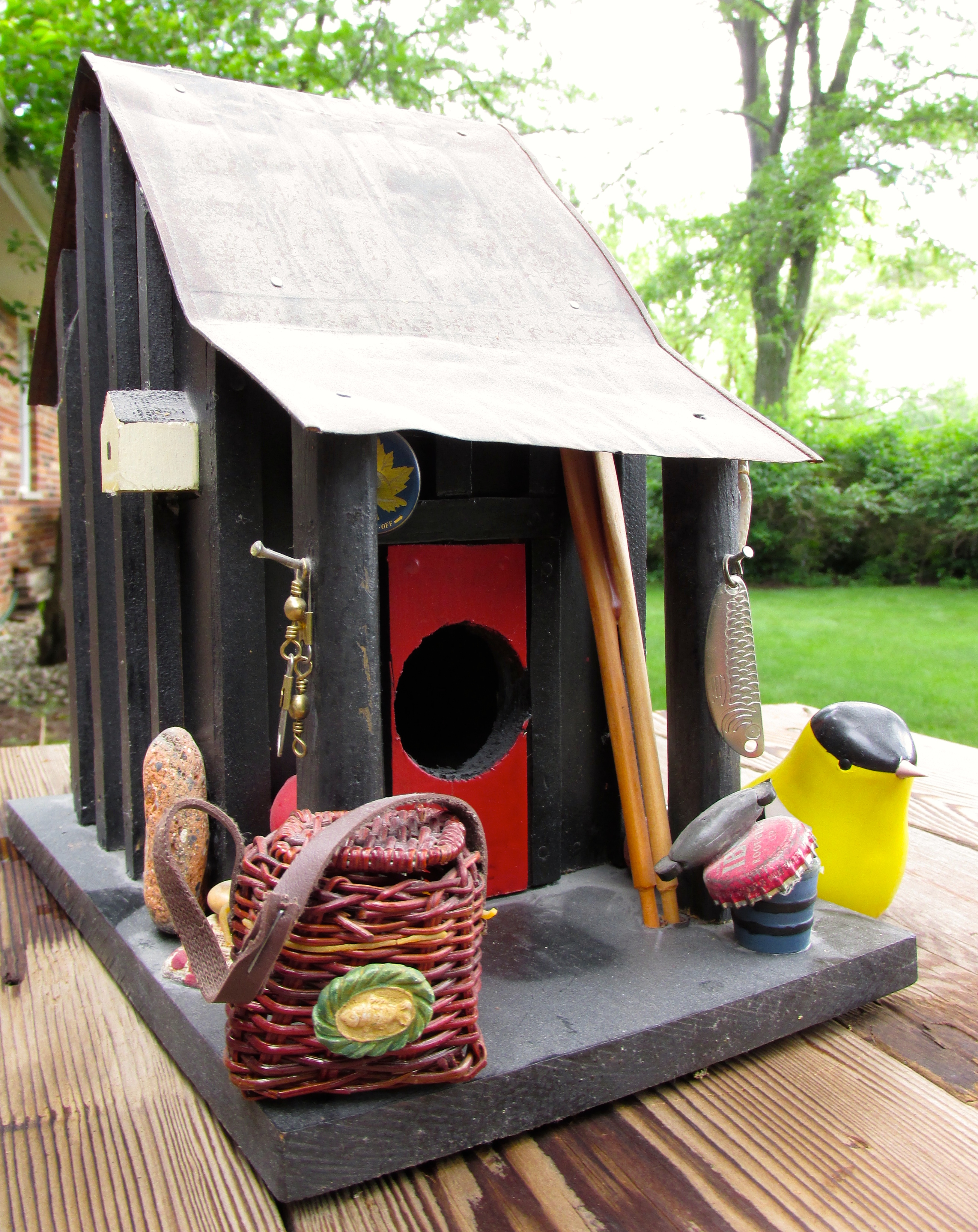
A fish hawk’s cozy cabin overlooking the trout pond.

We passed a front yard covered in aviary merchandise under a sign that read: “Bird Bath and Beyond”.  Envision an over-crowded trailer park for birds, and you get the picture.   Further imagine that this yard has a border collie just to steer off the spring flocks looking for a place to nest.

Of course, there is great satisfaction in building clever objects out of native materials.    And you don’t have to live in the sub-arctic to take on an insanity-diverting hobby.

IMG_0165

Instant fossils. Good for a 1,000 years.

With that in mind, I am sharing with you my afternoon’s delight in making garden stepping stones.

If you want an inviting pathway through your garden, these concrete leaves are a sure thing.   What’s more, they are uniquely shaped, easy to make, and cost about a dollar each.

IMG_0162

The infamous burdock. Thistles only a goat could love.

The primary design is the leaf off of a burdock weed.    You see these bushy plants everywhere, and they are best known, and disliked, for their insidious burrs which sprout in the fall, usually ending up embedded in your kid’s sweater.   But catch them in early June, and you have a design source for your stepping stones.

Get a 50# bag of ready-mixed concrete.  It costs about $8.00.   Find a flat surface, about as big as the kitchen table.  Avoid doing this inside your home, unless you lay down a shower curtain or drop sheet first.   Don’t choose the kitchen table.   You need a garden trowel.   And a bucket to mix the concrete.  Maybe a wheelbarrow.   Do not consider a child’s swimming pool.


Burdock leaves-- the bigger the better.

Burdock leaves– the bigger the better.

Obtain about 7-8 burdock leaves. Big ones. Lay them on the flat surface, vein side up, topside down.    Spray a little PAM on them.  Mix up the concrete, and when it is a heavy mush, ladle it onto the leaves, about 1-1/2″ thick.   Smear the concrete towards the edges with the trowel, maintaining the thickness.  Follow the shape of the leaf.  Use the trowel to clean up the edges so that they are smooth, with no gravel blobbing out.  Let the concrete set over night.   Sprinkle water on it the next day to help it harden.

The fun part: patty cakes that won't spoil.

The fun part: patty cakes that won’t spoil.

96 hours will deliver indestructible concrete that would support your neighbor’s pet holstein grazing on your petunias.

When the concrete is cured, lift up the stone, and peel off the leaf.   Voila!   Stepping stone!

IMG_0167

Once cured, these steps are your pathway.

And by the way, you now have a new trade, and are ready to live in the  snowy dark for 6 months of the year.


Thanks to Mary Shelley who started me on this, long ago.  Feel free to share!

Standard
Environment

Signs of Spring

RNWR_red-winged_blackbird_01-06-09We have all had enough of winter.  By the way, the “winter from hell” is an oxymoron at best.  This winter is straight from our polar vortex, which we should not confuse with our solar plexus, and other such constellations.

Anyway.

I know for sure that Spring is coming.   It first teased us when we saw the high afternoon sun, glinting off a trickle of melted ice in the gutter by our driveway.   I know Spring is not far off because stepping out of a restaurant in Lake Geneva, Wisconsin this weekend, I caught a warm blush of west wind pushing through the parking lot.   IMG_6888And with it came the subtle, sweet bouquet of a farmer’s work recently done, spreading a fresh batch of manure on his field, maybe 4 or 5 miles away.

Driving along a backroad through the country there was a torrent of snowmelt running down the ditch beside us.  Two boys, not more than 10 years old, were in their boots, up to their ankles, coaxing a small plastic boat over a waterfall and into the next pool below.

That was yesterday.

Today I know that Spring is coming because of a flock of robins perched on every branch of our crab apple tree, plumped up in the 20-degree weather, breasts to the sun, squinting out across the yard, looking for anything edible as the snow recedes from the lawn.

And that lawn?   I haven’t seen it since Thanksgiving.   It is brown, and matted down, and I will have to get it aerated for sure.  Time to pull out that direct mail piece from Spring Green, and get my discount order in.

It is surely Spring because we bought two packs of flower seeds: morning glories and butterfly catchers.

Trellis.1Tomorrow I will head back to Lake Geneva and buy a trellis to frame up our clematis.   This vine is a robust flowering cornucopia, and has a couple hundred stems shooting out of the ground.   They are brown and dead right now, but like a true perennial it will sneak up on me one day, and explode with a hundred more shoots.  The trellis will be in place in time.   By July there will be a thousand purple and magenta flowers hanging off that ironwork.

I put a roof rack on the station wagon to bring home another trellis.   This will be a longer, wider one that supports the morning glories.   IMG_5792Last summer they burst into a flood of brilliant blues, purples and pinks, like a daily chorus of trumpets that attracted all manner of birds and bees to their place on the back fence.  This year will be even more spectacular with the new frame.

I know it’s Spring because I filed my Federal taxes.   You know, I love getting a refund.  taxes-412-274I never begrudge sending a printed return to some PO Box in California.  While e-filing may be more efficient, it also opens the door to audits.   My philosophy is to bury ’em in paper right off the bat.  So I did, with 1.38 pounds of it.  Enjoy the read!

Spring is coming because the trees sense it.   The maple across the road has a vague rust hue on its topmost branches.   The willows along the highway have brightened their cold branches to a warm yellow.

Most significant, a few hours ago I was standing on the deck out back, and overhead I heard a red-winged black bird trill out a call to the frozen marsh behind our house.    Even though the robins got together earlier, that may have been to vote in a new leader after the current one convinced them to stay all winter.

But when the black bird piped up, I knew Spring will be close behind.

Hope you are seeing the signs too!    Thanks for reading.  Be sociable, share below!

Standard
Environment

Bring It On!

Is this winter over yet?   I hope not.   We just bought a new snow blower.

Shovel 694

Born to shovel by hand.

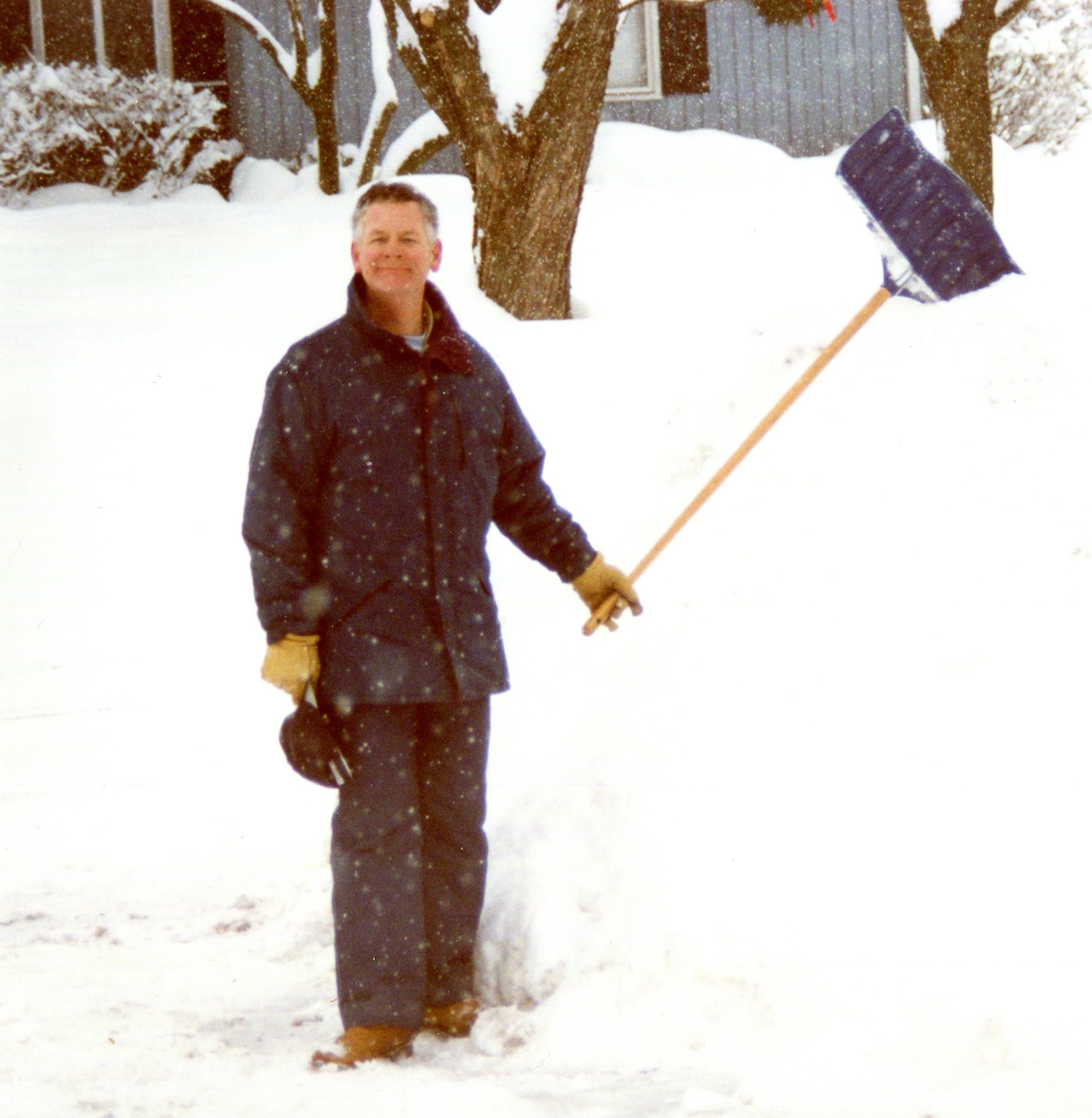
I admit to being a shovel-Luddite.   Maybe even a snoglodyte.   Since our first sidewalk and driveway, I have happily moved a near-biblical glacier of ice, snow, salt and sludge with an aluminum spade or a plastic pusher in my cold, gloved hands.

Meanwhile, in the last two decades, snow blowers have roared along our street like stock cars.   Every garage has given up a place for the machines to park, and drip a puddle of oil and slush, from December to March.   And while my neighbors  festooned the street with animated, white plumes of snow, I continued to pump away at the shovel like John Henry, determined to beat the machine.

Kens Blower 695

The neighbors take to the streets.

My late adopter attitude has been a source of discomfort for my snow blowing friends.   With every winter blast, they individually had to debate helping me, or not.   And if they did run their 16-hp chain-driven, double-augured  tank up my sidewalk, were they committed to follow up with each new dusting?
Then last June, our kind neighbor Angela gave me her snowblower.   Not out of charity mind you, no.   But because the family was moving to southern California where they were more likely to need a dump truck equipped with a fire hose and back hoe.   I fell for their ’97 Toro CCR 2000 like a ton of salt.   This cute little red machine had snorted and gobbled up snow under Angela’s operation for years.

This was a gateway moment.   The Toro had a new, loving home.   And I had a new toy.

Snow house 696

The little Toro kept up the pace.

As you are now much aware, we have had a spectacular winter so far, and my adopted Toro has trimmed, cleaned, and swept sidewalks far beyond our borders– great fun!    What’s more, the neighbors are now settled down.   They are at ease because I have joined the 21st century with internal combustion.   They no longer worry about me embarrassing them with a heart attack. They start their engines, and I start mine.

Until last night.    Threatened with another polar vortex, I brought out the Toro for a quick clean-up.   This is a gratuitous testimonial for the little engine–  it eats snow like a Zamboni on Jet-A fuel.    So with another blow-out on the way, I primed the machine and pulled on the starter cord.

IMG_6466

Like all good plans, they change.

The cord ripped right off its mount with a loud sproing.   I held in my hand, 12 inches of frayed nylon string.   The machine lay still, like death.

Meanwhile, snow was blowing across the street a la Zhivago.

Without a minute to spare, I hustled the Toro into the back of our car and rushed over to Ray’s Small Engine Repair and Lawnmowers.   Ray runs a tidy, bright shop.   Out front he has a display of snow blowers– bright red machines, shiny, ready and eager.    In the back, he runs a repair shop.

In a separate room he has a collection of old, used machines.   They looked like a gang of bar-fighters, waking up in jail after a long bumptious night.  Not a good sign.

I came in to get mine repaired.   But after what now seems a very brief discussion Ray convinced me that the shiny, new  black 22-inch, 8hp Murray was the way to go, complete with electric start.    It turned out that my little machine was 17 years old, and as Ray summed it up, its time had come, “just like the cicadas.”

IMG_6465

Bring on the snow!

I pointed out that the Toro was only “5” in snowblower years.   “Maybe so but look on the bright side, you won’t be back for another 17 years, by which time this new baby will cost $3,000.   And there may not be any snow… so take it now and get your licks in!”

And here I am, standing in the driveway, staring at the sky, hoping for snow.    The east coast is buried under another 100-year blizzard.   In Chicago, the forecast is maybe 1-2 inches.   Hardly enough to crank up the new Murray.

I’ll get out my shovel.

Thanks for reading!   If you have ever been in the same position waiting to take on Mother Nature, now you know how I feel, or how Lieutenant Dan felt sitting on the mast of Forest Gump’s shrimp boat.    Please share the story, and feel free to “follow” Riper Conditions !

Standard
Environment

Spinning Out of Control

Propeller hatSomething’s popping up across the countryside, and soon, may be in your backyard too.

The other day we were driving down the eastern shoreline of Lake Huron in Ontario. There you will find the expanse of this beautiful blue lake on your right, and on your left, neat farms, lazily dotted with beef and dairy cattle.

Every few miles, a small village slows you down to see its church and store. Cheese factories are frequent. This is beautiful countryside, and it is continuously freshened with the breezes off the lake.

Breezes? Well, maybe more like gales– wild currents that rake across the backs of those cows, tear shingles off the church roof and blow underwear off the line. And it’s those constant winds that have sparked a well-meaning thought: “Let’s fly kites!”

Well, actually, no. Rather “Let’s put up a 250-ft high tower with a giant fan on it and make electricity. For free!!”

Between the villages of Brucedale and Underwood we sighted over 100 of these gargantuan wind turbines from the road, spinning briskly in Lake Huron’s weather system. wind-farm The turbines are quite magnificent. Sleek, gently contoured to catch the wind, painted a non-committal gray, they spin over the heads of the cows, and any humans who care to look up. By the way, parachutists, look down, too.

Trouble is, we realized that this oddity was taking hold, not just of the passerby’s curiosity and amusement, but of the local community’s real estate.

Imagine the legions of turbine sales reps trudging up dusty farm lanes, rolling out a snappy presentations on kitchen tables and mapping the landscape with these money makers. “Gee honey, you know we have a spot right behind the rose trellis out back.”

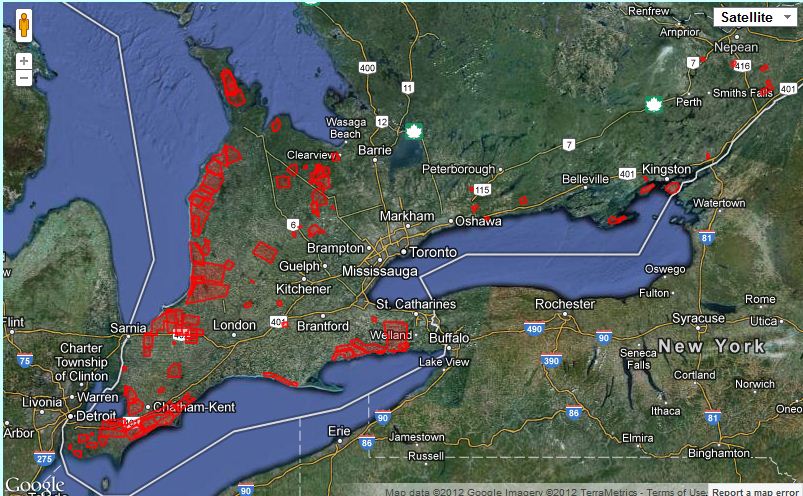
Now look at this wind farm map of southwestern Ontario and you are painfully reminded of a poison ivy rash you had as a kid. Ontario Windfarms

Wind farms contribute less than 4% of all US energy. Yet this prickly, twirling forest on Lake Huron dominates over 90% of the skyline.

I guess that’s okay as long as it’s not in my soybean field, right? It just seems to me that we took a couple of generations to rid ourselves of TV antennas perched on every roof in town. TV Antennas

And now, we marvel as the horizon is sliced into gusty shreds by giant butter knives.

Odd turn of events, isn’t it?

Standard