In spring, a young man’s fancy turns to…testing.
It’s a sure sign that Spring is on the way. The March issue of Golf magazine arrived, and after the most dismal stretch of dull weather in recent memory, the green pastoral images of fairways and beach-like bunkers beckon irresistibly.
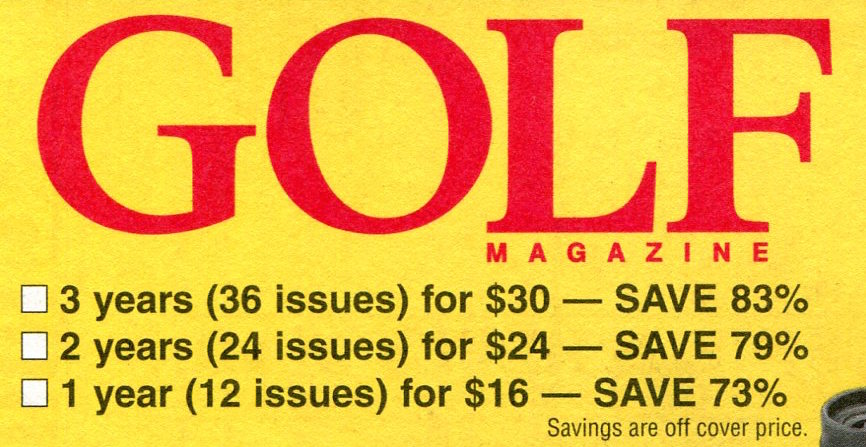
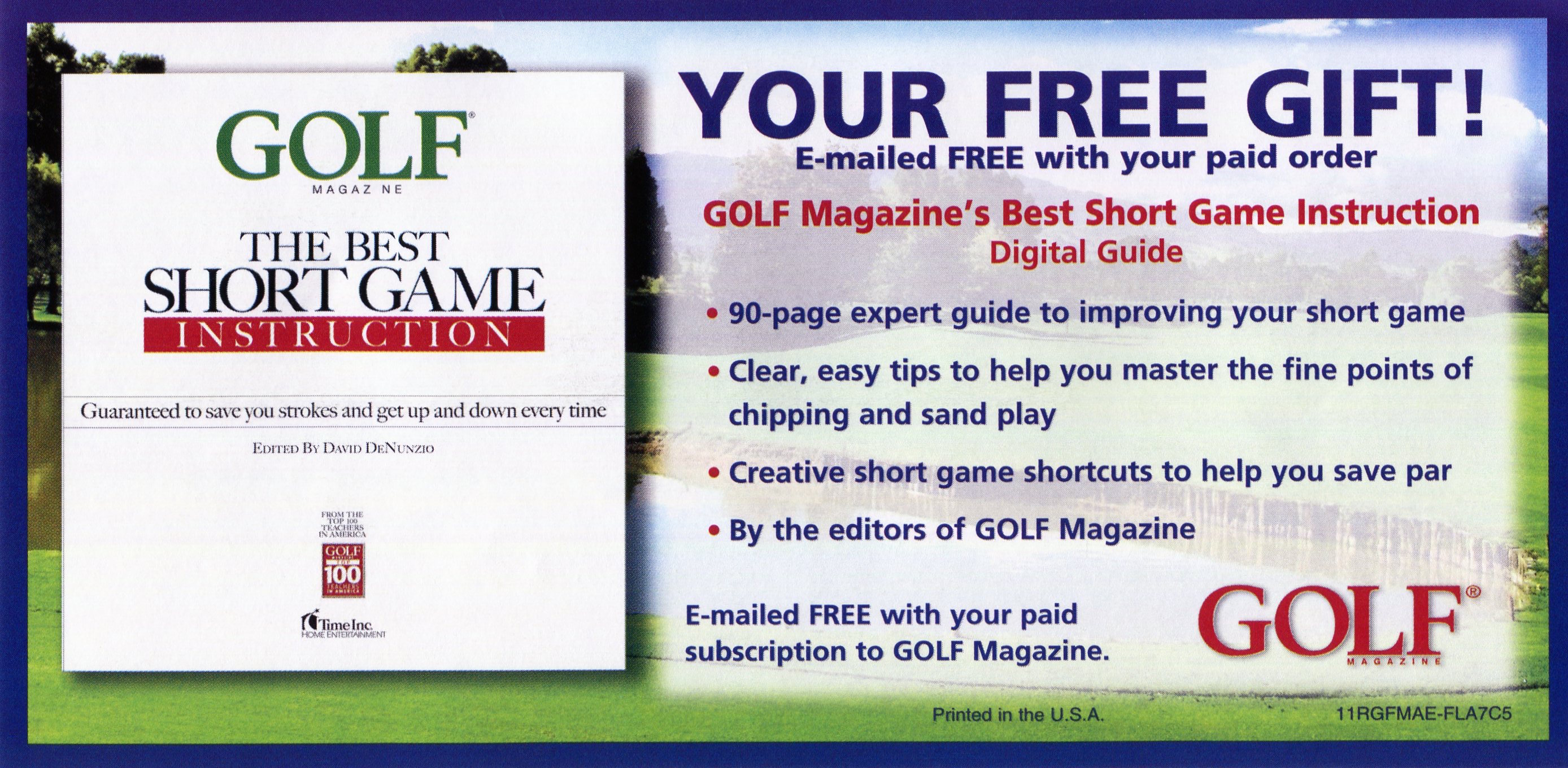
But among those pages floats another stimulant. Golf blew in 4 different subscription order cards. These 4 x 5-1/2 reply cards exemplify the art of mail-order merchandising.
One would ask, why do we need any cards? I am already a subscriber!

It’s all in the numbers.
True, for the longest time I used to let my subscriptions expire so that I could re-up and get the free gift. In the past our home was filled with calculators, phones, binoculars, hats, world maps and globes… all manner of stuff with somebody else’s logo on them. Not only did we like the goo-gaws, but it was fun to get them in the mail.
But Golf’s four order cards demonstrate the great science of offer testing. And there is practical beauty in that: when you understand what excites the buyer’s brain, you make more money.
Analysis
Each of the cards has exactly the same deal. One, two or three years for hefty discounted pricing off of newsstand. With each, the same gift premium is offered: a “Golf Distance Finder”.
I couldn’t use the distance finder. It would be perennially set at “Too Far” with only occasional gauging at “Fat Chance”.
Anyway, the cards are all different. The result of long, worried debates in Golf’s conference room about how to best wring a dollar out of a new sub, there are four gradations. Each effort targets a different dark corner of the golfer’s bunkered mind.
Card One: It’s blue, with giant GOLF titling. In simple fashion it provides the basic deal with a mention of the discounts off newsstand price.

For the unassuming and habit-driven: “yep, sure, whatever.”
A small un-captioned picture of the gift is featured with, “yours free”. This card is the control sample, and wins or loses on brand loyalty. Ideally suited for the unassuming, doubtless, committed player.
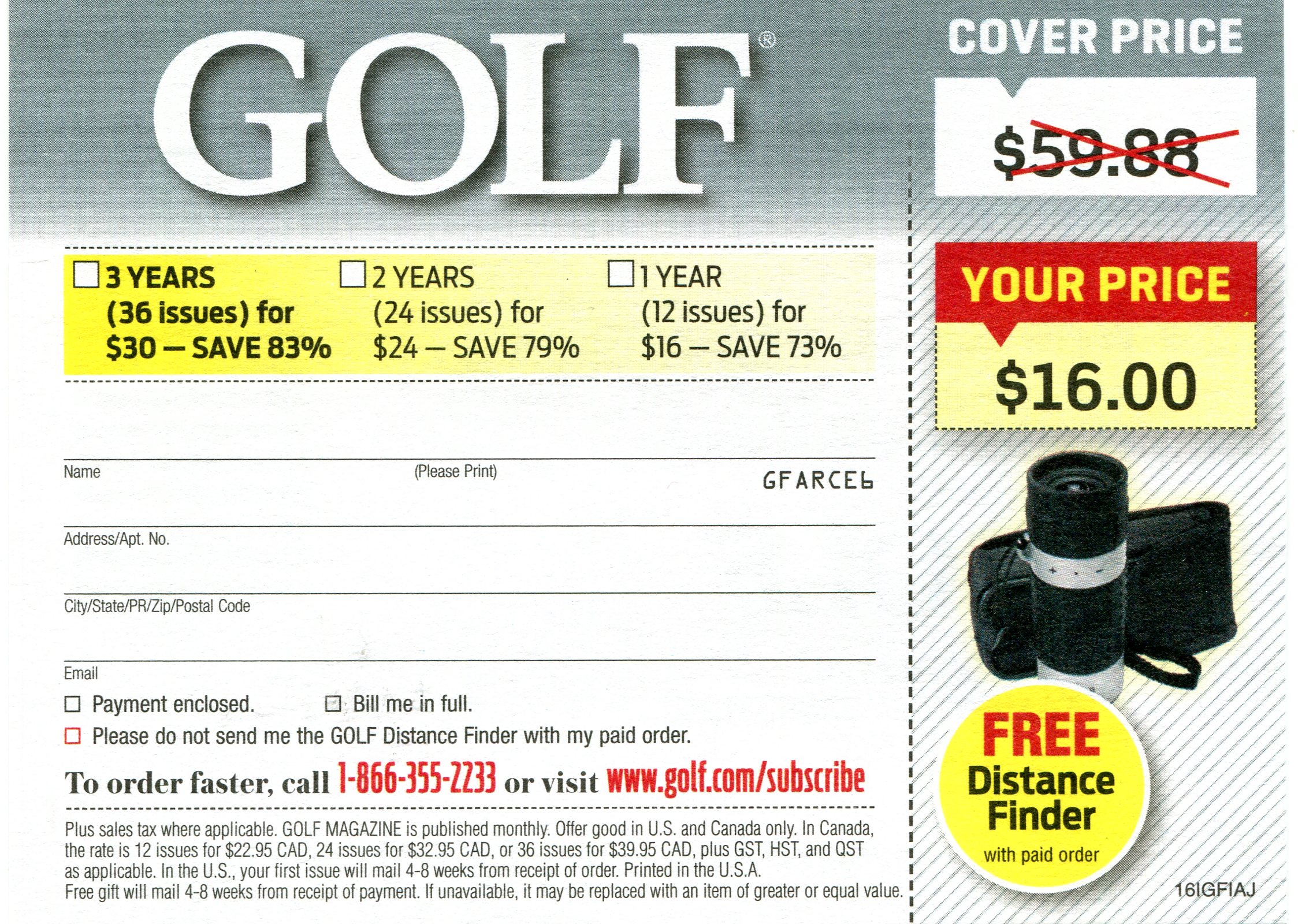
Card Two: It’s grey, with a smaller GOLF title, same deals but highlights “Your Price $16.00”. Understanding that some may not know what the gift is, “FREE Distance Finder” is inserted below the picture.
“I may never hit the green, but I can see Jupiter.”
This card is for the cash-strapped grinder who is figuring one year is just long enough to suspend the inevitable realization: golf is just a good walk in the wilds ruined. Or they figure $16 bucks is the right price for a telescope.
Card Three: It’s powder blue and screams to the wealthy and permanently, irrevocably, hopelessly optimistic, driven player: “Tomorrow will be a better day and the BEST DEAL! is a 3-year commitment.”

“This will be my year. Well, maybe, then again, sometime in my lifetime.”
The distance finder is featured, but it’s the 83% discount that grabs.
Card Four: This is the gutsy guarantee card. “Lower Scores. Lower Price.” is for the duffer who has journeyed through four painful levels of acceptance and will now admit they couldn’t hit a basketball with a broom in a closet.

“This year I will not tear up my score cards.”
They figure literature, technology and a little learnin’ might be the answer. If that still turns out to be a whiff, then they are ready to go for the money refund.
Results
At the end of the test, which could go on longer than the season, the Golf sales department will look at the results for each card, which got the most orders, which deal worked best for each card, which got the most email addresses, and which got the most money up front.
This is not a double eagle fantasy for statisticians. Rather, the results of this inexpensive test will predict which offer is worth rolling out in other media with the promise of the highest return on investment.
While solo direct mail may be proud of a $20 cost to get a new subscriber, the numbers may dictate that direct mail is still stronger than web display ads, email or simple on-page advertising. Knowing which deal is strongest can shave a few pennies off acquisition cost.
Long ago, we used to puzzle over the best offer: “buy one get one free” vs. “two for the price of one” vs. “50% off”.
It isn’t easy, but you can test.
Thanks for reading! Direct marketing tests are a way of life, and you never know when a new angle won’t build your margins unexpectedly. I swing at the ball with the same giddy optimism.