Science

Right On The Money

It’s tough keeping up with the Bank of Canada.   First, they killed the dollar and gave us the Loonie.   Then they snuffed the two dollar bill, and gave us the “Toonie”.   Last spring the penny was thrown under the bus.   Now they are printing rubber money.

IMG_6345

Counterfeiters are shaking their engraving tools in high dudgeon as shiny, new polymer-based bills are flooding the market.   Now, chemical manufacturers like DuPont are trying their hand at the dark art of making dough.

The new bills are a sandwich of tin foil, gum wrapper, scotch tape, plastic and bumpy print.   Perfect for vending machines.   I have studied these  $5, $10, $20, $50 and $100 bills that pad the pockets of millions of unwitting but happy Canadian consumers.   Here’s what you need to know to stay in the money:

1.   They aren’t rubber.   They are biaxially oriented polypropylene sheets.   This radical development stops many counterfeiters.   If youse can’t say it, youse ain’t making it.

2.   They are water resistant.   That is, you can easily wash them.

floating_money_02

This is especially helpful in the cash and carry business where laundering money has always been challenging.   Incidentally, in a spirit of helpfulness, the Bank’s website provides instructions on cleaning blood off of currency.

3.   They are printed with metameric inks.   Of course, that means that their colors change under different types of light.   Under certain lights, like neon, they may disappear completely.

4.   They are durable.   Lab testing determined the bills are good to use in temperature ranges of -75’C to +140’C (-103’F to 284’F) so you can take them to the Moon.   Mars is iffy (cold) and Venus is out (blazing hot).

5.    They are environmentally friendly.   You can recycle these bills.   Do not throw them into your wet garbage.

6.    They float.   In the unlikely event of a water landing, you may clutch your wallet or handbag with the full faith and confidence that the Bank will keep your head above water.  A standard suitcase full of 100’s will support you comfortably.

runes

7.    Security: they have secret codes.   You can only see these codes if you are a Hobbit or are familiar with ancient runes.   Safety warning: the Bank’s website cautions against holding the bill up to the sun or a laser light to find the codes as your eye will turn into a molten glob of cheese.

Polymer bank notes have progressed through years of development.   An early version was created by Dupont.   But, a rookie error:  the ink smudged so badly that the banks said “maybe you can line your bathroom walls with it, but not our pockets.”

So taking the hint, Dupont decided to cut their losses, tossed in their hand and took their product home.

IMG_6343

They named it Tyvek.

Thanks for reading!   If you liked this let me know, and by all means, feel free to share it.  I’d like that too!

Standard
direct mail, Marketing

Are You For Real?

SantaLetterText-776x1024“You have to write letters to get them,” said my 5th grade teacher as she drilled us on formatting.    What a drag.    At the uncomfortable age of 10 we had no one to write, let alone anything to say.

So it’s ironic that over half a century later I exit from a successful business which is all about writing good letters.

In direct mail, the letter is the backbone of building a personal relationship.  Avid consumers are enchanted by letters from their favorite gardener, doctor, hunter, dress maker, shopper, financier, teacher, traveller and coin buff  frothing over the latest gadget, find, or technique.

It’s no wonder direct mail grew astronomically through the back half of last century and into this one.    We were guaranteed to receive a letter at least once or twice a week with important news from somebody we knew, and who knew us, from far away, like Terre Haute, Fort Wayne, Franklin Center, Troy, West Babylon or Battle Creek.

But the bloom pales, if it doesn’t fall right off the rose if we discover that the writer doesn’t exist.    I was stunned when I learned that Readers Digest’s Carolyn Davis was just a beautification project — a makeover from “CD” for the Credit Department.

Betty Crocker in the Witness Protection Program

Betty Crocker in the Witness Protection Program

Carolyn was just my first commercial heartbreak.    I only recently learned that Betty Crocker, the lady who guided my mother through countless birthday cakes and blueberry muffins is a complete phony.   Never existed.    Isn’t even an anagram for an NSA operative named Cory Berckett… clandestinely stealing philo recipes while posing as a dishwasher.

Martha Logan modeled on Beth Bailey McLean

Martha Logan modeled on Beth Bailey McLean

The charade continues.   Martha Logan, who managed the Swift meat kitchen for a generation never existed, though at least she was a pen name for the real Beth Bailey McLean.

Ms. McLean was born in Superior Wisconsin in 1892 and knew her bacon.   But Swift’s ad agency apparently wasn’t satisfied with her creds.  They invented their own version of Martha Logan to broadcast from the Swift radio studios on Chicago’s WLS.

The Radio Martha Logan

The Radio Martha Logan

This new Martha had a photo portrait, and was reared and educated in Illinois, homeland of a long tradition of phonies.

Still, there’s one more fictional character, Beatrice Cooke.

Beatrice Cooke, queen of cream.

Beatrice Cooke, queen of cream.

She was the majordomo for Beatrice Foods, formerly the Beatrice Creamery Company, founded in 1894 in no, don’t say it, Beatrice, Nebraska.  That’s right, there never was a whiff of a Beatrice in that company unless she was lactating in a stable outside.   Adding the final insult, Beatrice moved to Iowa in 1905.

Which brings me to a quandary today.   On impulse, I made a donation to Wikipedia.   Totally guilt-ridden, I felt better after giving them a measly $10.    In response, I received a Thank You letter from Sue Gardner, executive director of Wikimedia Foundation.

Well, this wasn’t a Thank You letter.   It was a THANK YOU letter.  555 words, 14 paragraphs, 49 lines and 3337 keystrokes.   I winced in embarrassment.   Imagine dropping a few pennies into the Salvation Army bucket, and the bell ringer chases you down the crowded street crying thanks, before tackling you around the knees and blubbering all over your $900 cashmere wool coat.

scroogeMs. Gardner saw my paltry $10 funding the sum total of all world knowledge sought by countless individuals, and she began to describe the dire circumstances of each of them.

She concluded: “On behalf of the Wikimedia Foundation and the half-a-billion other Wikipedia readers around the world: thank you.”   

This was a “loaves and fishes” moment.   I did not guess my $10 would go that far.

Truly though, her letter did its job.   I have to return to Wikipedia, and I will no doubt double down on my charity.

But now I wonder– is she really there?

https://donate.wikimedia.org

Standard
Economics

A Nickel For Your Thoughts

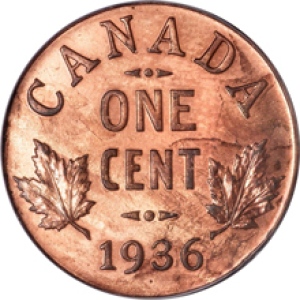
penny-1936-7877445Our neighbor nation to the north– those hardy, conscientious folks who are the first line of defense against the arctic chill lost a battle this past spring.    The Canadian penny was removed from the endangered species list, and officially extinguished, i.e.. it is extinct.

The argument against its survival was that it cost more than it was worth.  Which is a stunning confession to be made by any government official anywhere.

But there you have it.   The upside is that every child in the nation will now learn the important arithmetic of rounding up and down to the nearest five cents.   There is the clever, political subtlety that the Canadian government did not eliminate “cents”.  It is still legal to use a cent: talk about it, write it, or include it in important bank interest statements.   Retailers can still charge you cents, but you will pay according to nickels.  The penny is the ghost on the sales counter that haunts all transactions.   Everyone senses its presence, but it can’t be seen.

The move has rocked the net worth of the country.   According to the Royal Canadian Mint, there are 35 billion pennies at large in Canada.    About $10 per person.    Turns out there are nearly 19,000 tons of pennies stashed away in cans, desk drawers, pants pockets and chesterfields which have been devalued by a factor of two.   You thought you had a jar of $12 bucks in pennies?  Nonsense.   You have enough copper and zinc for a Venti Frappuccino.  

Where this new found economy takes us, is to another government agency in on the conspiracy: the post office.    Canada Post has announced its new plan to modernize and overhaul the postal system.   This includes raising the price of a single first class stamp to $1.00.    A buck!  Unless you purchase stamps in bulk, when you will only have to pay 85-cents.    See how that works?   No pennies!!

lady letterbox

Compounding this elaborate pricing strategy is the plan to curtail household delivery.   Before long, Canada’s mail will be delivered to a community box at the end of your street.   This will precipitate two additional behaviors.  First, neighbors will have to speak to each other when they visit the box.  Second, they can remove the riveted, burnished steel “No Junk Mail” signs from their doorsteps.

junk.letterbox

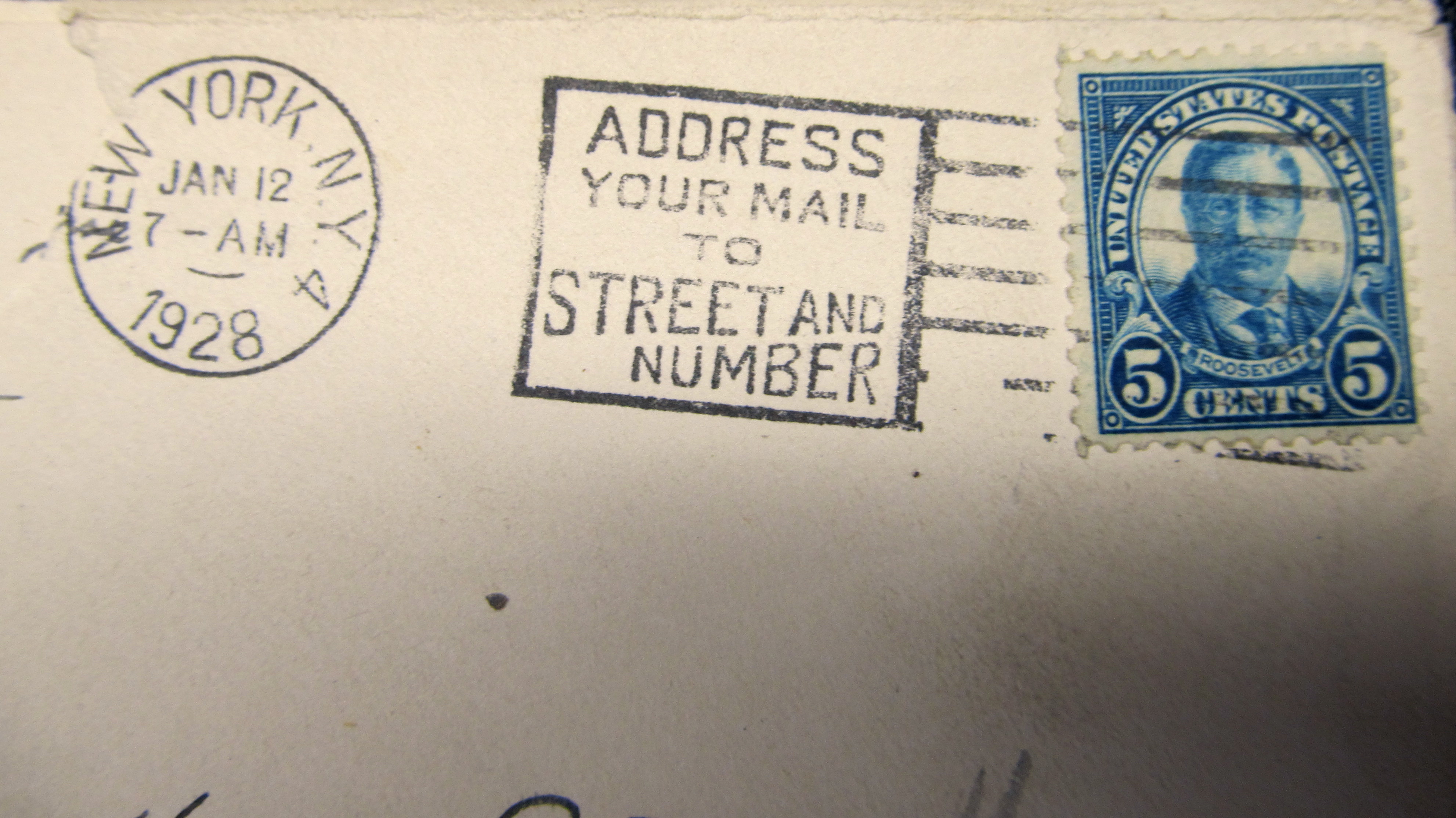
Truthfully, the United States Postal Service has a similar history of thriftiness.   They too decided that the customer should share in the work of delivering the mail.   In 1928 they thrust the responsibility of addressing onto the back of the writer!   No longer was it acceptable to merely place your aunt’s name on the envelope.   The USPS unilaterally demanded a street address and number.   Another typical example of  heavy-handed government.  Added to that insult was the price of a stamp: 3 cents.

IMG_6200And if you couldn’t find the pennies, you had to round up to a nickel.

Standard
Science

Stringing Me Along

twinkle lightsNo doubt you have your lights up.   The annual ritual of hanging Christmas lights started about seven minutes after Master Bradford cleaned the last buffalo wing off the Thanksgiving plate in New Plimouth, in 1621.   Since that very day we, as a reasoning people, have been asking ourselves why we get sucked into buying more of those little twinkle lights every year.

These insidious strings have over 100 small, incandescent bulbs stuck in little sockets like poison darts.   At the store they appear smartly  packaged in plastic frames, efficiently coiling 25 feet of 3-ply electrical cord.   The bulbs are lined up like little glass medical phials, waiting to be plucked from their beds.   There is even a bonus packet containing a blinker bulb which, when engaged, turns the whole string into a tawdry window display for an all night pizza stand.

Lynch House.jpg

And the price for this residential street weapon: dirt cheap.    So it’s not hard to throw a couple more strings into the shopping cart during the weekly trip to ACE Hardware.   The rationale behind the purchase is that this year we are really going to show that supercilious twit across the street how we can tart up our roof gutters, window frames, mail box and chimney wreath better than him any day, hands down.

Which gets to the nut of the problem.   Once the tangle of a thousand lights has been festooned across every stationary object on our front yard including the lawnmower, we turn on the power.   Just like the movies, three strings don’t fully light.   150 bulbs are freezing dead black, at the top of the crabapple, and wrapped in and around a downspout.

string of lights

They worked fine when we tested them in the garage.  The act of hanging however has a terminal effect   I’m sorry–  I can’t begin to explain this many-layered pun to you.

It is the conundrum I repeatedly face: how can a civilized and sophisticated species like ours invent machinery that can create such elegant packaging, but can’t get the blinking (sorry) lights to work??

Christmas Lights

Anyway, moments before the recycling truck came rumbling down our street yesterday, I salvaged the three “dead” strings from the bin, and took them back to the basement.    I threw them onto the workbench like a bushel of seaweed–  this green tangle of plastic, copper and glass spikes.   I plugged in a set, and fingered down the glowing string until I came to the block of 50 dead lights.

Then I did something radical, and unwittingly logical.   Unplugging the string, I cut the dead block of lights off with my pliers.   Plugged the string back in, and the first 50 bulbs lit up, with no spray of sparks or numbing jolt up my arm through the back of my head.    Encouraged, I cut the the other two strings, and smiled at my thriftiness.   I had three strings of lights, shorter, but working.

Getting braver, I wondered if I could save the three dead strings too.   A little more tricky, I attached a new plug to one of  the severed strings.   Flying on one wing now;  metaphorically, driving 60 miles an hour into a fog bank.    I plug this string into the wall, but the lights don’t go on.   In fact, all the lights go out.   Not on the string, but in the house.

Uh-oh.

I am pretty sure that the circuit breaker in the darkest part of the basement hiding behind a curtain of cobwebs will be switched off, and if I am quick, I can get it back on.    This is not the problem.   The real challenge is to re-set the clocks:  the stove clock, the microwave clock, the alarm clock and then endure a 7-minute blackout on the TV waiting for our beloved cable company to resume its flow of NCIS re-runs.   And then–  to reset my ears.   They have been pinned by my better half, the lady who grudgingly allows me not quite enough rope to hang myself on a daily basis.

This year, I am going to let “Sparky” across the street have his moment in the glow of 18,000 lights.   With any luck, the electric company will make him a “preferred customer”, and send him to Niagara Falls to take notes.

Mean time, I am going to ACE.

Standard
direct mail, Marketing

DAV Makes The Numbers

I just received a mailing from the Disabled American Veterans, whose organization I frequently support.

DAV's Mailing to Past Donors

DAV’s Mailing to Past Donors

The mailing piece is illustrative of the investment DAV makes to raise money for their many services provided to America’s injured war vets.  If you have never received a DAV piece, you have not seen the abundance of gift stuff frequently mailed to potential as well as loyal donors: greeting card sets, bookmarks, calendars, and beautifully crafted address labels.   There’s nothing “junky” about a DAV appeal letter.

IMG_6191

46 cents postage, courtesy of DAV

What struck me about this recent letter was the inclusion of a reply envelope which was already paid with 46-cents of stamps.

Claiming austerity, most fundraisers ask you to provide your own postage.  Instead, DAV pays the bill.   Does it seem contradictory to you?   Or does it make perfect sense?   My guess is that providing the postage is a tactic to increase response, not necessarily the gift amount.   In other words, if a donor normally gives $10, the prepaid return postage tactic doesn’t get more dollars per donor, but it gets more donors: those folks who won’t allow 46 cents to go to waste.  And it’s unlikely many stamps get steamed off.

But here is where it gets interesting: what direct mail manager is willing to put their job on the line by suggesting they add 46 cents to the cost of every fundraising letter they send out the door.   “Are you nuts, or just plain stupid??” suggests their boss, popping TUMS once a minute.

“Riskophilic” may be the proper term.    Daring.  Or canny.  A little bit of math may reveal the truth.

You can look at DAV’s 2012 annual report which shows some numbers worth bragging about.  They earned $97 million in direct mail donations at a cost of $32 million.   Basically, for every dollar spent in direct mail they received 3 dollars in return.   The 3:1 ratio is pretty consistent every year, and by the way, their fundraising cost is only 19% of all their expenses, which is quite acceptable.

Anyway.  The letter I received had 5 Christmas cards and envelopes, a disclosure sheet, a letter, outer envelope and reply envelope.   With outgoing postage, I figure the kit was worth 75 cents in the mail.  $750/m.    Add an additional 46 cents, and you are at $1.21 for one piece of mail.   Multiply that by 100,000 and you have college tuition at Northwestern.

However: increase your cost by 60% and you need to increase revenues by 60%, to keep that 3:1 ratio.   Sounds challenging?   Just about miraculous is how I would define it.   You don’t get swings like that.  But the beauty of direct mail is that you can test it both ways, with and without the extra stamps.   Clearly, the test proved  positive, in a good way, so the DAV is keeping the USPS afloat while making money for its vets.

There’s more at work though.   That crazy manager also has another equation in his or her head.   It answers the question: how much revenue with every piece mailed?   If each piece costs $1.21, then each piece must earn $3.63 in donations.  3:1, right?    But only if DAV gets 100% of the people to respond.   What if only 15% of the people respond?   Then a $3.63 donation won’t cover the ratio.     Now the gift changes, and here’s the revealing equation: $3.63 divided by 15% response.   $3.63/15% = $24.20.   The average donation must be $24.20.

IMG_6190

The “ask” starts at $7.00.

Hmmm.  Look at the donation form on the letter.   DAV is asking for “$7… $10… $15…  or more”.  Whoa!   What if everyone just gives $7 dollars?    Well, again, this is what gets tested, and DAV is pretty confident that a $7 gift is acceptable.   My hunch is that if each gift is at least $7.00, DAV just about breaks even.   How’s that figured? Well, divide the piece cost by 15% response.   $1.21/15% = $8.07 average gift required to break even.  $7.00 is close.

Fortunately, my bet is that people give a lot more.   Without having any direct knowledge of DAV’s results, I can only guess that the scenario is something like what I have described.    And if it is anywhere close, DAV has some very good writers, and some very generous donors.    And some very deserving vets.

A salute to all of them!

Standard