Culture, Government, Politics

How Do You Like Your Eggs?

We don’t, as a social strategy, plan ahead to get involved in every thing that is beyond our comfort zone. We just want to live our lives. In local politics, that can be hazardous.

Once, a young couple were the parents of an infant boy, who from his first appearance in the world, never uttered a sound. Not a peep.  They worried over his silence as he grew into a young scamp. He had friends at school and played with the others, but without a murmur from his lips.

A long progression of doctor visits in those early years were fruitless. Specialists shook their heads, and told his despondent parents, “We don’t know what ails him, we are sorry.”

One morning, as his mother stood beside him at the kitchen table, he picked up his knife, and cracked his customary 5-minute egg. The yoke splashed out of its shell and onto the plate.

All at once, he exploded, “What the…?? What is this??”

Shaking his dripping fingers at the plate, staring at his mother, he spat out, “I can’t eat this! Look at the yoke! It’s all runny and gooey. The egg’s cold, and the toast is all soggy…yikes.. this is..this is… yucky, Mom!!”

His mother, at first shocked, stepped back, and then hugging her son, she beamed and looked up to the ceiling, and cried, “It’s a miracle! You can speak! Thank merciful heavens!”

Then she looked tearfully at her boy, and sobbed, “It’s wonderful! I am so overjoyed with happiness! What happened to you??”

The kid looks up, shrugs and says, “Well, up until now everything’s been okay.”

This may be a hyperbolic analogy of our times, but it certainly illustrates our typical lifestyle: as long as everything’s okay, leave it alone.

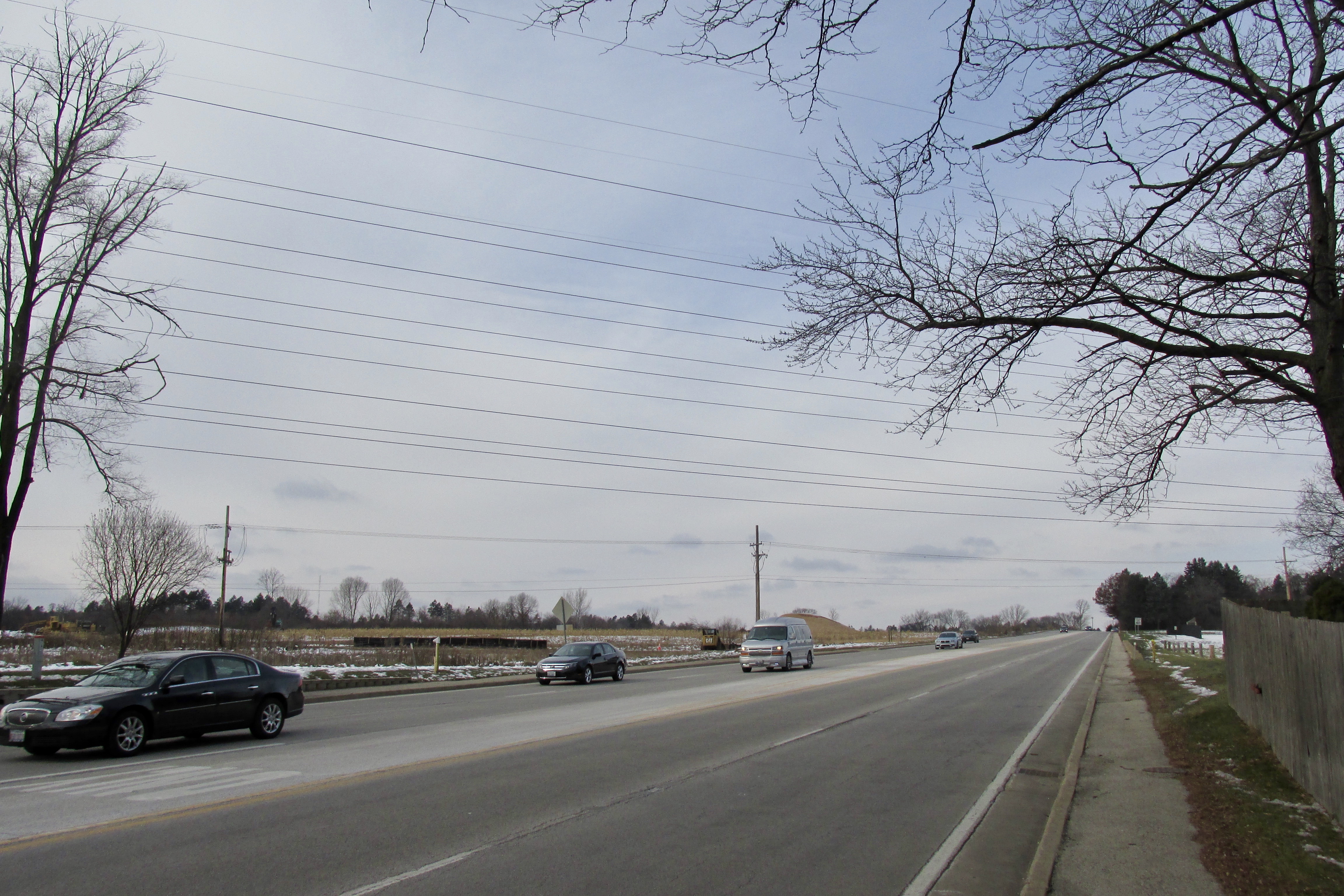
The continued public dialogue over the troubling, denuded 40-acre parcel of land that sits within our view is a good example of how we can be divested of our comfort zone.  And perhaps just in a nick of time.

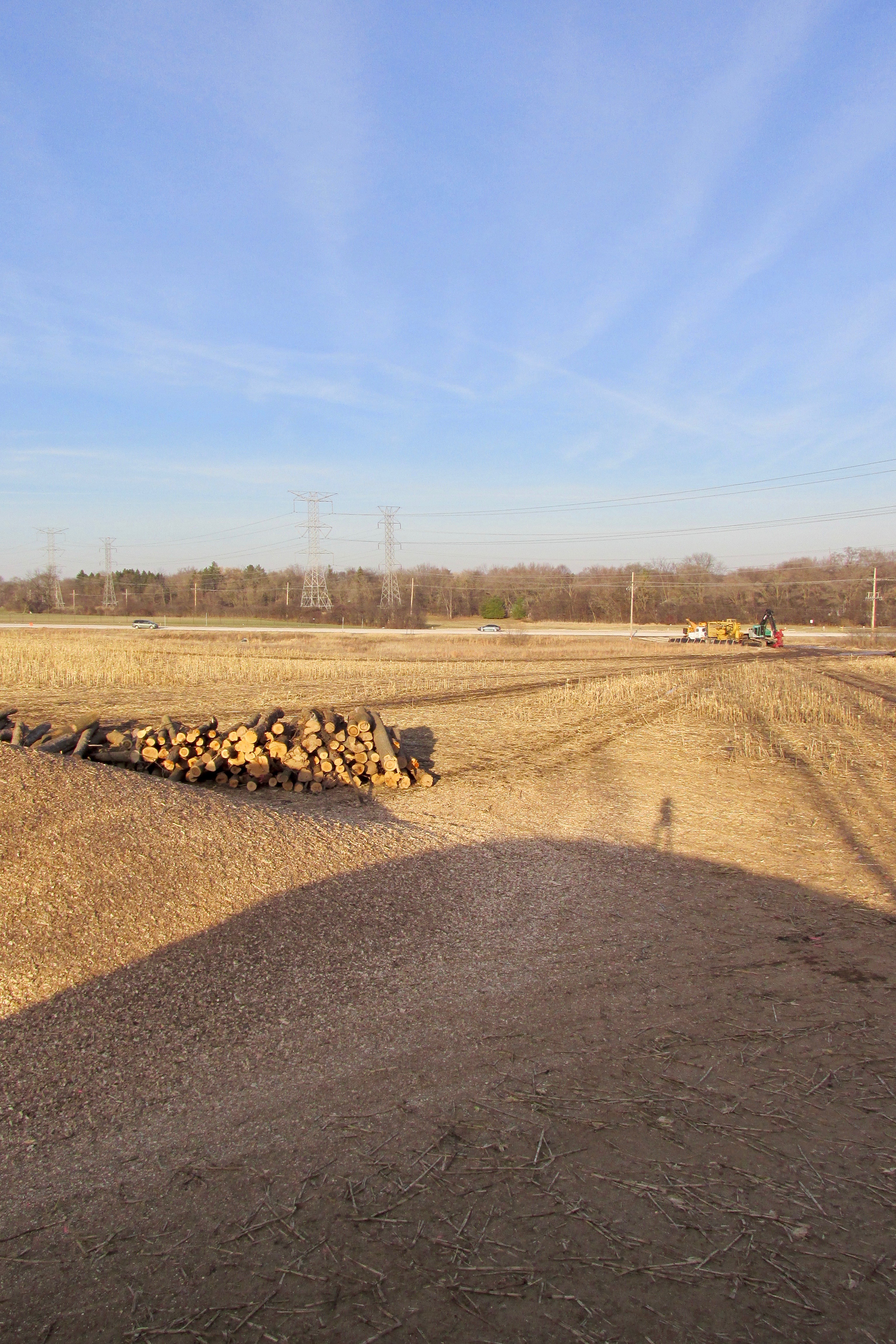
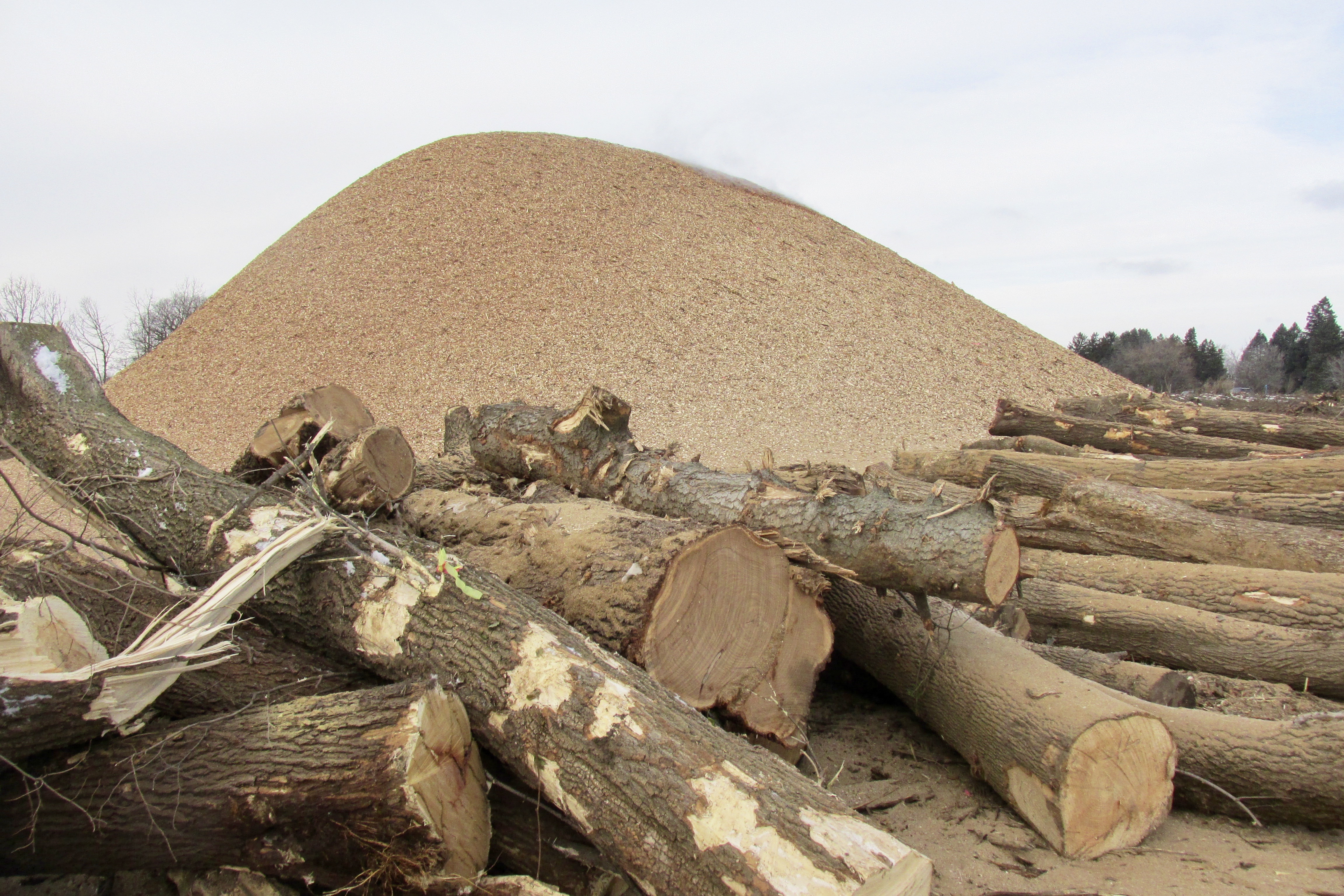
After living for 27 years within the forest shadows of the sunsets over the property, we woke up one day to find the woods gone, and loggers carting away the trees in wood chip containers.  With the blessing of our village government, too.  Only then did I realize I should have spoken up earlier.

Regardless of my regrets, I now pay much more attention to those events that happen outside my daily environment, and in the process, extend my comfort zone to include them.

I suspect it is like that for many of us.


Thanks for reading!  I hope you too are mindful of how things pass us by without much ado, and how they often present themselves later in startling poses.  Thanks for sharing! 

Standard
Culture, Government, Politics, Thank You

Small Town Choices

img_4363

The bridge in the park at Butler Lake. Early freeze.

You know you live in a small town when people drop by without calling first.

Tuesday morning a smiling lady appeared at our door presenting a mardi gras King Cake. She explained it was thanks for speaking up at our town hall meeting.

A couple days before that we found a handwritten note in our mailbox from a gentleman a couple blocks away wishing for good luck.

This morning another note came the same way, saying thanks.

fullsizeoutput_3865

148 “lock and leave” homes for those just passing through.

The cause of these overt gestures is the disturbing proposal to plop 148 homes on 15 acres of a 40-acre parcel of recently cleared land at the edge of our pretty little town.

We call it a Village, which is kind of habit in these parts, but it’s a real town, not a little collection of thatched roof cottages with small people running around in leggings and buckled shoes.  Over 20,000 people live here.

Anyway, because of the collective rejection of the idea, we formed a group of residents in the Village to make our case for stopping the development.

I won’t bore you with the politics.

What I do want you to appreciate though is the essential goodwill of the people who live here, and who love our little town.

img_0986

Lunch in the park, on a sunny Friday.

We moved here 27 years ago.  It was a corporate move, and we had the benefit of shopping around the far north suburbs of Chicagoland.  Our first obligation was interviewing three school principals, each who presented their school’s achievements.   One school had computers in every room, which was pretty special in 1990.  Carpeted hallways.    Another school was brand new, and shiny.

2014-06-13_14-12-45_734

School’s out and the midway comes to town.

The third, was older, but in the center of our little town, bordered by a ball field, festooned with flags, and shaded by ancient maples and oaks.  As the vice principal marched me around the classrooms, the students all smiled and helloed.  It was a very warm May morning, and as we marched through the heat of the second floor, I offered, “Guess there’s no air conditioning?”  He bounced back, “Nope.  Isn’t it great?”  Rugged, smiling enthusiasm.

img_1266

Canopied streets and open space set the tone.

I have for years thereafter said that moving here was the best decision we ever made.  On the July 4th weekend when the moving trucks pulled away from our new home, two of the neighbors’ kids brought over a plate of cookies to welcome us.

A couple of years ago, after a car demolished half of our house, a lady from blocks away appeared at our door one day with a gift card from Panera’s.  She said, “I just wanted you to have this, and hope that you are okay.”  A complete stranger, but not really, in the greater sense.

img_3966

One very dog-friendly town, these two await their family in the Homecoming Parade.

For sure, the schools are great.  Top-tier nationwide, the high school is launch pad for our next generation of leaders.  The junior schools are our pride and joy.

But beyond that, our little town is a hive of busy optimism, set on a picturesque palette of heritage buildings, generous parks, a network of lakes, streams and wetlands, and threaded with neat roads and lanes through open, treed neighborhoods.

img_1172

Two young parade watchers celebrate the downtown alley.

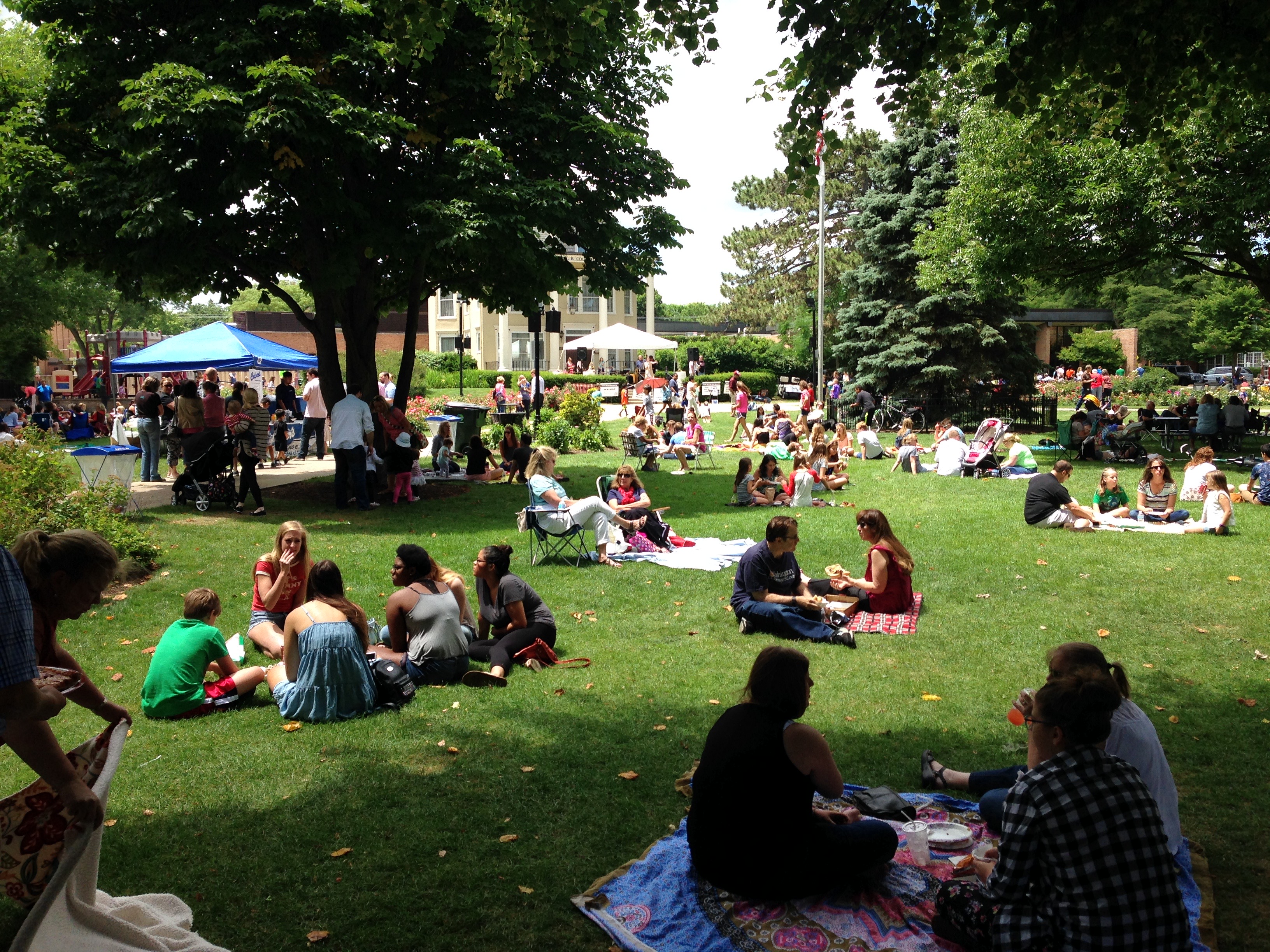
In the summer the town square is thronged with picnickers and market vendors.  In the days leading up to Christmas, Santa is taking last minute orders, and come the end of school, there’s a pretty spectacular fairground set up with horrendously noisy and garish rides.  A great venue for kids to escape for a while as summer approaches.

Even though there are 5-lane roads quartering the Village, its geography exudes community: a oneness of safety, children, exceptional schools, careful planning, well-being and promise.

I mentioned the goodwill of the folks who live here.  Many came to the town hall meeting last week and in front of a couple hundred neighbors, gave passionate testimony in defense of their small town.

img_1183

The village’s architecture is preserved and treasured.

One lady made a simple statement, but with profound meaning.  Before her, the discussion had recalled the past,  and how developers had walked away from our village to build their shopping mall in a neighboring community.  Another developer took its plans for a millionaire’s subdivision complete with golf course to another neighboring village.

Clutching the mike with both hands, she said, “We chose this village to live in because of its character.   We didn’t lose the shopping mall.  We didn’t lose the golf community.  We simply chose not to develop, and not to have them.  They aren’t what our Village is about.”

The debate on whether the 148 dwellings will materialize will continue.  They are described as low maintenance, “lock and leave” buildings for the travel and retirement set.

In the mean time, we’ll still be here, and the front door is open.


Thanks for reading!  I hope you will share this with your friends who also treasure the small town.


Standard
Culture, Environment, Government, Politics

Trouble In The Back Forty: How We Got To Here

January’s public hearing on the 40-acre development up on Butterfield attracted a sometimes reasoned but also fiery rejection to the idea. The authorities went away ruffled and straightening their ties. The public filed out, quietly fuming, and baffled.

Bafflement prevailed because the question was asked how we ever came to this point: a 148-unit, high density housing development on the site of a recent clear-cut of over 2,000 60-year-old trees. The flames came from a few who castigated the developers and planners alike for taking advantage of the Village rules and a complacent, uninformed and trusting public.

So what happened?

The ground started to move in 2009 when the Archdiocese of Chicago signaled to the Village that they wanted to develop 97 acres of open land at the east end of St.Mary’s Lake. The Village looked at its Comprehensive Plan map and noted the parcel was drawn and zoned as Institutional Building, (IB).

Every smart village government has a Plan. This blueprint provides guidance to control against undesirable development. Our Plan had reserved the 97 acres for church buildings.

The Church however saw housing: affordable housing for Libertyville’s younger families. In a deftly cadenced move that any professional card shark would have applauded, the Church suggested to only develop the northern section, about 33 acres nearest Butterfield Road. South of that, another 7 acres of woods would be “untouched” and the bottom 57 acres would be left institutional. They asked that the 33 acres be redrawn as Residential.

Following two meetings and a lot of questions about Planned Development housing, traffic volumes, safety, isolation, tree preservation, housing affordability, open space and the wisdom of an unscheduled, redrawing of the Plan to suit the Church, they voted.   The Plan Commission went 5/2 in favor, April 2010.  The Village Trustees gave it a green light too.   33 acres were redrawn on the Plan map as Residential, and 7 acres left as Institutional.

However, the entire 97 acres are still today zoned Institutional Building.  While the Plan gives guidance, it’s the zoning which is law.

Only years later did the Church find a developer who would be happy to buy the land if they could build nearly 200 homes on the 33 acres, and take the 7 acres of woods south of the development site as well.

The developer quickly began to design the site, and eventually reduced the residential count to 148 single family dwellings, 3 & 4 bedrooms,  2,000-2,900 square foot, two-story units on tiny, fenced lots.  The designs didn’t comply with residential zone codes, but because they are a Planned Development, they got a pass.

Meanwhile the soft sell on the development commenced as multiple sets of beautiful drawings were dropped off at the Plan Commission office, with the Village Trustees, the engineering and public works departments, as well as the police, fire and the many other committees who need to vet the process.

Unfortunately, the public didn’t get wind of the proposal until a registered letter was sent to a few souls who lived within 250 feet of the site, net of any roads.  A public hearing in September hosted a small crowd of residents who, scratching their heads, asked what the heck was going on.

Even then, the public didn’t fully understand what was about to happen.

The Church, now very much on a roll, authorized the developer to get Village permission to remove 2,500 trees on the property.   After considerable expense and due diligence, the Village Trustees approved the logging on October 10.  By Thanksgiving, the trees were gone, authorized with a site development permit.

Yet no approval had come from the Village to re-zone, let alone develop the site.

The next Plan Commission meeting was postponed until January 9.  With time to study the proposal, it became clear to many that the development was off color.

Many emotional, esthetic issues entangle this debate, but high above them is the reality of traffic congestion, child safety, school crowding and Butler Lake pollution.

In addition to these challenges, the developer is attempting to sell very expensive homes to buyers who will have tenuous and dangerous access to and from their neighborhood.   The stark reality is that there is no convenient way to turn into the site, and nightmarish opportunities to exit.  A deal killer for the rational homeowner.

The Church has been suspected perhaps of disconnecting the site from Libertyville if we kibosh the deal.  Rumors run rampant that the land will host high rises, fast food stores and muffler shops if we were to lose the land to the neighboring village.

The probability of that happening is remote because none of the developer’s challenges go away.    In fact they are compounded by very expensive infrastructure needs and delays statuted in Illinois law.

So we now find the issue coming to a head with a February 27 vote:

  1. To re-draw the Plan map to include the 7 wooded acres as Residential;
  2. To re-zone all 40 acres from Institutional to Residential;
  3. To get a plat of the subdivision;
  4. To grant a special use permit to build a Planned Development;
  5. To develop a concept for the Planned Development.

The Village Trustees painted themselves into a corner back in 2010, but have had to wait 7 years for the floor to dry.  Whether they can find a solution to the conundrum is a toss-up.

Rest assured that the public is now paying attention.

Standard
Culture, Environment, Government, Politics

Warning, Sign Ahead

img_7562

The sign, like fine print, hints at bad news.

In Libertyville we are looking up every few moments to see what else has happened.

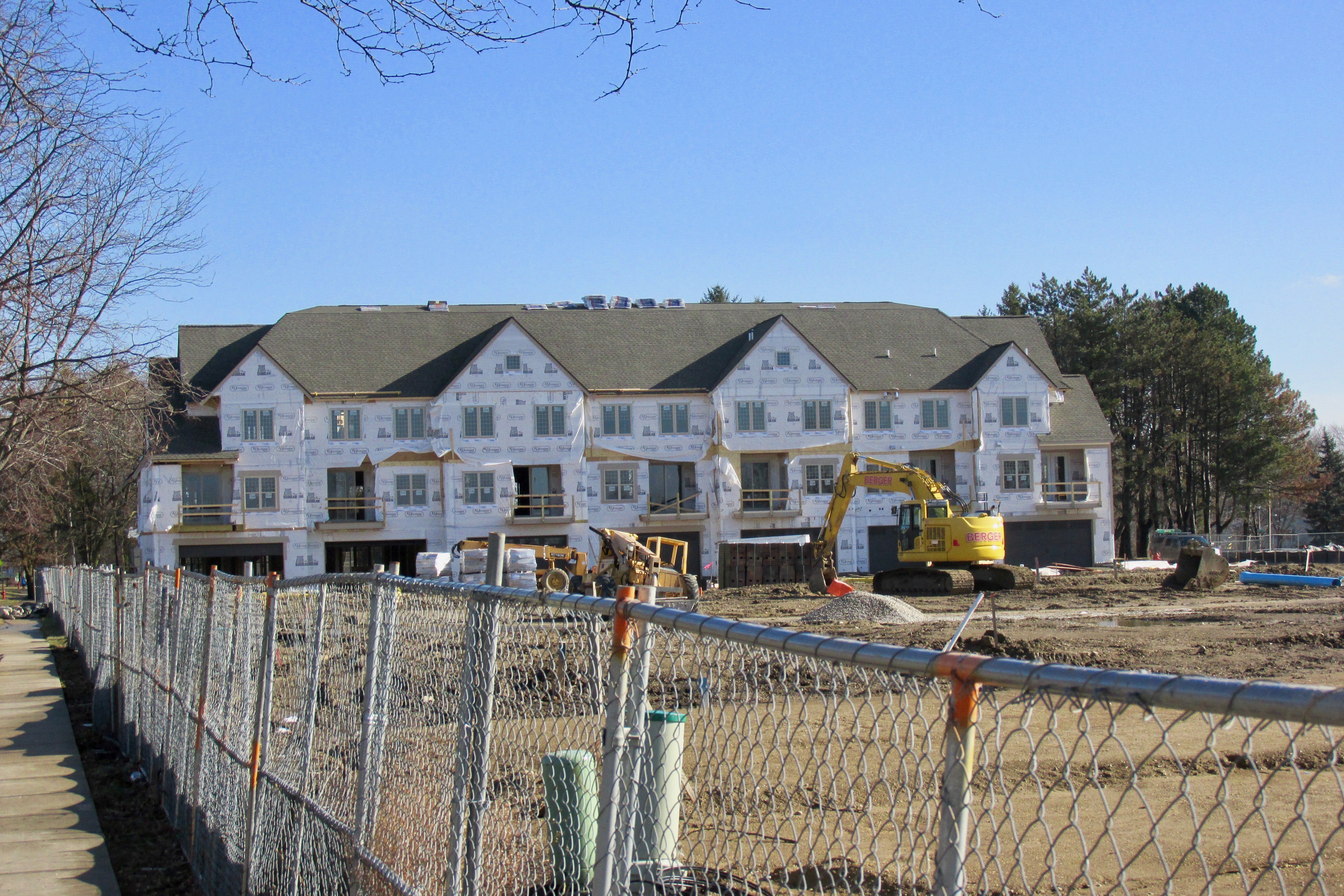
Last summer, without much ado, a sign was posted on an old playing field on the north side.    A little time later, a huge scraping of topsoil appeared, mounded like a two-story pyramid of dark chocolate.  It was soon iced with a frosty mantle of green weeds.   Five condo buildings are soon to follow.

img_7551

The new view from the treetops, sort of.

On the west side, a sign went up announcing a hearing about a corn field bordered by a tangled, but mature stand of 60-year-old trees. By October, the trees had come down. The plan calls for 148 homes.

Further south, another sign announced a hearing for a modest development of 19 houses over a small parcel of land and wetland.

Meanwhile there is a sign in front of the train station.   It’s the site for a multi-residential complex that will make rail commuting an adventure in the future. Some 150 units will be in place to hear that lonesome whistle blow, as some 46 trains roll by every day.

img_7555

Winchester: one up, and four to go.

All of these signs are caused by the popularity of a Village which has every reason to be proud. Founded in 1882, it was a remote outpost for Chicago travelers heading to Milwaukee.

Today it is a thriving, pretty town of 20,000 souls in the country, home to the #1 school district in Illinois, and #2 nationwide. It has a bustling main street that sees 23,000 cars daily, but still offers free two-hour parking on both sides, to visit the big-windowed, filigreed stores selling everything from $30,000 motor cycles to $10 hair cuts.

img_0986

Lunch in the park, in front of the Cook home.

In the Village Center,  residents lounge in a treed park hosting a vibrant, manicured rose garden, summer band concerts, lunches on the lawn, Thursday market and the view of a picturesque antiquity, the city father’s mansion now restored as a public museum.  Hungry for knowledge? The library is right there.  Just plain hungry? The Village lists over 70 restaurants and bars.

We are at the center of a giant societal magnet: everyone wants to live here.  And that is the challenge.  How do you keep that small town feel that brought you here 5, 25, or 75 years ago?

16114544_10210235586460173_5889575746604854179_n

Another housing plan, neatly drafted.

Fortunately, we have considerable oversight.  The Village has a Plan which is the blueprint for planned growth.  It has a commission that executes the Plan, and that includes sub commissions that monitor appearance and zone codes.  Hardly a tree goes down or a roof goes up that doesn’t get a committee say-so first.

Still, none of these measures and controls work if we, the residents, don’t read those pesky little signs.  Like fine print, they often signal bad news.

fullsizeoutput_3aa7

School Street an urban success: asking for over $1,000,000.

The trouble is, the signs keep popping up, like Village-sponsored graffiti, and our only choice is to pay attention.  Which can be a full time job.

The Village Hall posts a schedule of committee meetings.  There is at least one meeting every night, virtually all year.  If one is diligent, the meetings could be met, except that the school boards have their monthly meetings too, so it’s difficult.

station-square

Downtown: the Metra station gets a makeover.

Meanwhile, the developers move in, longstanding property holders look to reap their reward, and the borders of our Village are eroded and pushed, like impacted molars, causing pain with every new sign.

We can’t stop progress.  But we need to trust our Planners and Trustees to watch out for us.  In return, we do need to show up when those signs pop up.

As the saying goes, “if you don’t go to the meeting, the meeting doesn’t go your way.”

The next Public Hearing for the Butterfield proposal is February 27th, at the high school, 7pm.

Thanks for reading!  If you want to keep informed by the Village of new meeting agendas, click here.

Please share!

Standard
Culture, Environment, Government, Politics, Wildlife

If A Tree Falls In The Forest

fullsizeoutput_3666

The woods that colored our view.

This past October has been a searing lesson in keeping one’s antenna up. The teachable moment was the watching of a highly efficient logging crew cut down a thousand or more trees from the lot across the road.

The clear cut was requested by the church which owns the land, and it was approved by the village after due inspection.

You see, where we live we have a village administration which has pretty strong rules about keeping up appearances. You can’t just cut down a tree unless it’s sick, damaged, or dangerous, and if so, you need a permit first.   I used to think too much government is a rein on individual freedom, but this set of rules is a good one.

img_0089

This old gentleman looks forward to a questionable future.

It turns out that the church is in the mood for selling the land for development. The challenge was to make the parcel more attractive, and to that end, counseled with its lawyers to build a case for removing a wilderness of 60-year-old trees.

The trees in question were part of an abandoned tree nursery. Fifty-five  years ago, they were planted 10 feet apart, and do you know what happened? The owners gave up the business, and Mother Nature took over.

In fitting out her arboreal family, she attracted a host of wildlife, from deer, coyote and other furry creatures, complemented by boisterous flocks of birds who populated the tree tops with a chatter of music all day.

fullsizeoutput_3664

20,000 motorists enjoyed this view every day.

Meanwhile, the trees matured to their full 5-story height, and spawned a wilderness of jungle under the canopy.

img_6908

Not a winner: this tag identifies a tree that didn’t make the cut, ironically.

The critters loved it; the church not so much.

Then about a year ago, a developer sniffed out a golden opportunity to build a settlement of new homes on the property, and before long, a deal was made. The developer became the authorized agent for the church to get the trees removed.

fullsizeoutput_3545

Every summer and fall a corn grower leased the land for this harvest.

The new agent petitioned the village government, pointing out the church’s liability if, God forbid, a tree might fall down and clobber a hiker foraging in the woods for morels. It hadn’t happened in 50-plus years, so odds were likely that the jig would soon be up.

With detailed, supporting testimony from professional arborists hired by the developer, and then double-checked by the village’s own arborists, and ultimately inspected by the mayor, the village gave the okay to axe the forest.

Each offending tree was tagged, and given a C.V. page in a three-ring binder. 2,500 candidates were put on the rolls, and 38 were deemed salvageable.

The news finally broke when the local reporter headlined an article on the pending clear cut. Then, and only then, did the public wake up.

fullsizeoutput_3713

The loggers, like good executioners, did their job swiftly, and well.

But sadly, too late!

fullsizeoutput_36ed

A 57-year-old bleeds a story for the arborist.

In November the heavy machinery came in, and in a matter of a few days, decimated the woods which had pleased passers by for decades. Today, there is a giant mountain of chipped wood on the lot, over 20 feet high, and enough to fill the village swimming pool three times over.

fullsizeoutput_36eb

Three winners. 38 trees survive the cut.

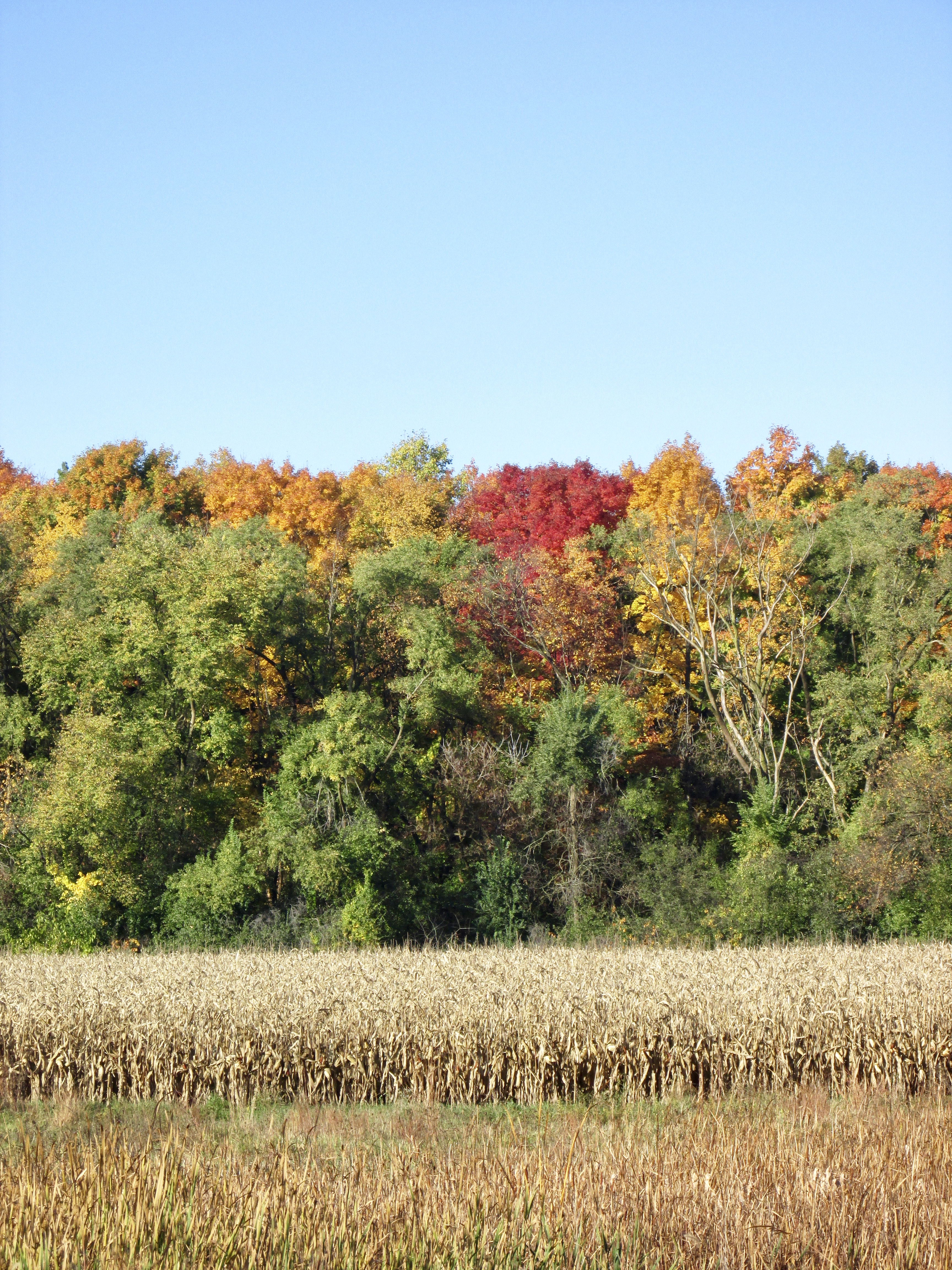
I mentioned passers by.   Approximately 20,000 motorists pass the woods every day. Year after year the woods have been the backdrop to the driver’s view on a seasonal corn crop that has graced the parcel forever, accented by a colorful palette of leaves each fall.

One day it’s there, the next, it’s gone.

Driving north today we see a sodden battlefield of tree stumps, roots and tangled branches, exposing fresh, grainy wood under torn bark and up-ended logs.  A water tower overlooks the scene, never before visible from the road.  Behind that, the once sheltered golf course now presents a naked 20-foot-high wire fence used to catch wild golf balls.

fullsizeoutput_3836

The new view. Passers by witness the harvest, and drive on, chastened.

As we drive by, our eyes are drawn to the carnage, and then we avert our gaze in disgust.  The sight is sickening.

One wonders if the village will have the gumption to direct the church to clean up the stubble and make it pleasant, minimally, just to keep up appearances.

Though the word “development” is attached to every discussion about the deforestation, we are assured by the village that the decision to remove the trees is not connected to any housing proposal.

fullsizeoutput_3843

This row of trees is no longer a threat to the hiker.

The questionable proposal to crowd up to 147 houses on the parcel of land is nebulous.  Despite the best drawn plans, it has earned no approvals for re-zoning, plats or building.

In the face of the public’s nausea over the decisions to date, the development may never appear, or perhaps hover in limbo indefinitely.

fullsizeoutput_383d

2500 trees, reformatted.

Meanwhile, the steam and fumes of fermenting wood chips fill the air with a bitter tannic scent that drifts across our neighborhood.

The lesson we have learned from this smoldering string of events is that despite our best wishes, bad things happen if we don’t pay attention.   To that end, there is an aggressive interest among the population to watch what’s going on down at village hall.


While all the time, we grieve, and get on with it.


Thanks for reading! Please take a moment to share this with your friends. 

Standard
Culture, Government, Media, Politics

A Note To My Canadian Friends

Leading up to the final election results today I have received a pretty consistent flow of commentary through social media and the occasional conversation that suggested perhaps we have all gone nuts in the land of milk and honey.

Since this morning, I have been presented with sound bites of disdain, disgust, and some pithy, intellectual thoughts about the decline and moral decay of America.

The latest was a clipping from the New Yorker “An American Tragedy” with my friend’s comment, “A sad day…”

First of all, let me say, I totally get it.

It is extremely difficult to swallow the language, the rude, boorish nature of the President-elect. But before we blame the winner, we need to ask why such a perceived lout could still mop up the electoral college with such surprise and certainty.

It reminds me of a story the late Art Buchwald told a gathering of we Canadian direct marketers back in the ’80s. This was a luncheon of about 200 business folks at the Boulevard Club alongside Lake Ontario in Toronto.

Buchwald, columnist from the Washington Post, was introduced after lunch to give a few comments. Like a good speaker, he started with a story. Buchwald was about 70 years old at the time and had a dry, gravelly voice that tumbled words out of a mouth you’d swear was filled with marbles.

He was recounting his conversation with the cabbie who drove him downtown from the airport. “I said to the driver, ‘I love coming here. The people are nice. The streets are clean. The architecture is superb. What a wonderful city!’ The driver looked in the rear-view mirror and said, ‘You wouldn’t say that if you lived here.’ ”

The punch line drew lots of laughs predictably.

But you can say the same thing about the view from inside the U.S. today.

By the way, Garden Collective, a Toronto ad agency put together a wonderful 2- minute piece about, “America You Are Already Great“. Watching it on TV, I was speechless, with a lump in my throat, overwhelmed by the kind and complimentary upbeat tone of the message. It was a warm, nice message.

It reflected well on a population which has elected a young, progressive, educated, well spoken, photogenic and popular leader named Trudeau. We Americans can only be jealous, political ideology aside.

But when the verdict is that today was a “sad day” in the United States, let’s be sure why.

Undoubtedly, the election of a person who may personify “bully”, is hard to stomach. I am sure that the nose plug counter at the voting booths cleared its inventory faster than Cubs shirts in one day.

The question is, how many voting Americans picked the winner because they like mysogyny, crudeness, xenophobic language and gratuitous swagger. Not many, I’ll bet.

The reason they held their nose and checked the box is because it has already been a sad day–sad for many years.

Trump won his votes because of the raw facts: only 62% of the U.S. workforce has a job. 45 million Americans are below the poverty level. 43 million Americans live on food stamps.

There are twice as many tax-payer funded civil servants as there are manufacturing employees.   Our enemies disrespect us, and our allies don’t trust us.

We have a $365 billion trade deficit with China, and a $20 trillion national debt, exacerbated by a limitless annual budget deficit.

The economy has poked along at a 2% growth rate annually, for 8 long years.  We are engaged in a middle-east conflict that seems to have no end, with heavy weights like Russia and China picking a piece of the pie.  The icing on the cake: a $12 billion payment to Iran for a nuclear arms deal.

Today there are 61 million immigrants in the USA, myself included, and approximately 25% of those are here illegally, absorbing their share of welfare, medical, educational and social services.

While the numbers may lead to numbness, they add up to a diminution of happy times.  And they have done so for at least 8 years, perhaps longer.  So for a family which is struggling today, to hear the same promises again from the same mouths as the past, the pot finally boiled over.

We all depend upon the media for our news.  And it is the mass media focused on their one dimensional narratives on Obama, Trump and Clinton that have glossed over the very real problems which exist in the U.S. today, leaving you the viewer to wonder how could Americans could elect such an impossible choice for President?

We have been manipulated by pollsters, pundits and reporters who just didn’t see what was happening at street level.  And then in a moment of surprise that only Wile E. Coyote could express, they ran off the cliff.

So I get your disappointment.

I know you are hurt inside that America voted as it did.  But don’t blame it on the electorate.  The numbers are a record– over 120,000,000 made it to the polls, and split the vote like a giant slab cake right down the middle, with just a few crumbs left over on one side.  But hopefully you won’t call out every other American as the stupid one.

More likely, they are holding their breath, like me, and hoping that this sea change, continental shift, tectonic grinding will really change things, and for the better.

In the mean time, thank you for your goodwill and take advantage of a huge dollar exchange advantage: it is a great time for us to visit Canada.

Thanks for sharing!  And don’t stop coming south, we love to see you.


Standard
Culture, Thank You, Thanks

Really, thanks!

matt-writing

A time of civility…

What is it about people today that writing to say “thanks” is too much work?  It seems the least one can do in return for a gift, a dinner, a night out, a sales order, or a visit.   Here is the story of one thank you worth noting.

My frustration is really a hat tip and compliment to NBC’s Today Show host Matt Lauer. You may have seen his visit to the blooming Shinola factory in Detroit.

There, dedicated folks are building a little industry in journals, greeting cards, thank you notes, day planners and personal calendars.

Mr. Lauer’s interest in Shinola is twofold. First he is supporting entrepreneurial growth in one of the toughest and long abandoned districts of Detroit.

detroit-edison-assembly

Detroit Edison Academy students

The streets are bordered by broken homes and derelict factory buildings. Homeless denizens still occupy the corners of doorways.

Despite that, there is The Detroit Edison Academy, an elementary school nearby where uniformed children are taking on the challenges of learning and self reliance with optimism.

matt-high-fiving

Matt Lauer cheers on the D-E kids.

Lauer’s gift to the school are the profits derived from Shinola’s sale of his personalized product line.

All part of the comeback process for urban Detroit.

Lauer’s other pursuit is the rebirth of the hand written note.

shianola-watch-production

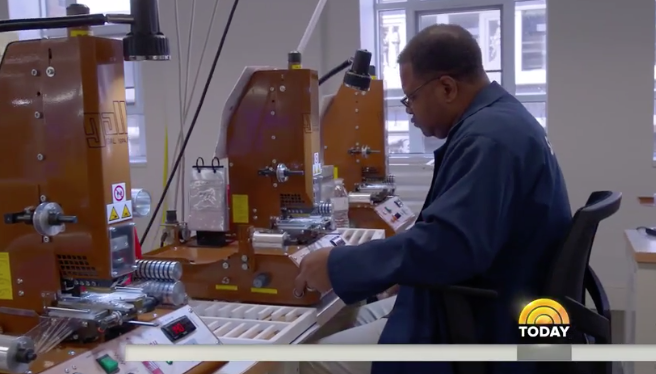
Technician building the Shinola watch

“Everything today is digital. I like to live in an analog world, which takes one back to a time of civility when people took out a piece of paper and a pen to say “thank you.”

matt-lauer-the-shinola-line

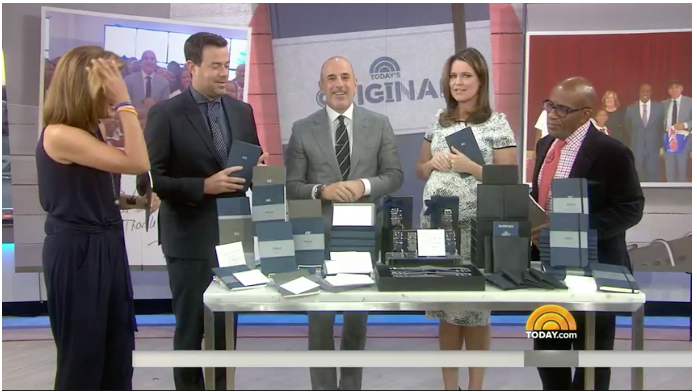
Matt and the Today Show crew viewing his personal line of Shinola journals. Profits go to Detroit Edison Academy.

Shinola’s Detroit product line extends beyond leather and linen covered booklets to precision watches. The combination of the two products appeals to an array of sophisticated and enlightened consumers.

The production lines are the breeding ground for devoted, and motivated workers clad in smocks and dust free head covers.

saying-thanks-to-matt

The D-E students present Matt with their hand written cards of thanks.

Lauer is hooked on the booklets and journals. Clutching one he testifies, “There is the joy of hanging onto something that doesn’t ring, beep, or send you a tone.”

Detroit Edison Academy looks like an oasis in the middle of an urban desert. Its hallways are clean and bright, and teeming with good looking, tidy kids on their way to a better future.

matt-lauer-card

“Let’s never forget the personal touch! Thanks for helping,”

They cheer Matt later for his support, and in a presentation, thank him with a bounty of hand written cards.

Lauer is overcome. “Thank you. This means so much to me. I am one of those believers who still write someone a little note… when was the last time you went to a mail box and found a letter that was addressed to you? Isn’t it a special feeling?


Thanks for sharing!  You can watch this really cool video of Matt’s visit here.

Standard
Culture, Mystery

Shoeless

img_0007

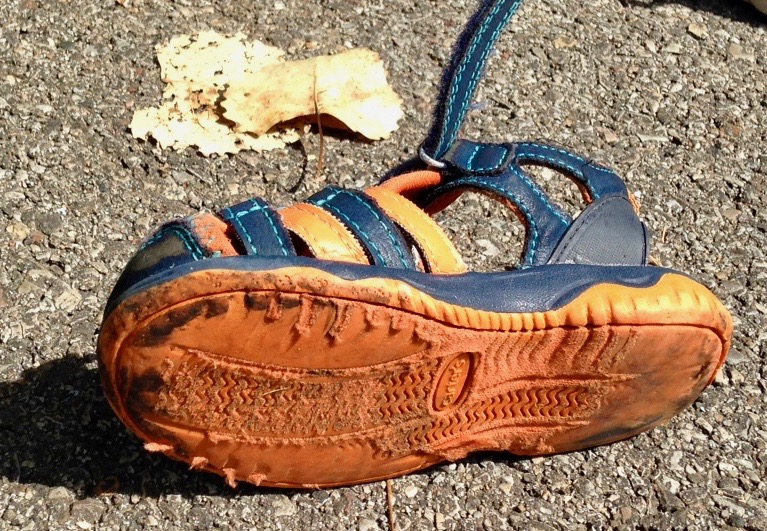
Size 2, left by the roadside.

Late July, as the heat of the summer gets bogged down in humidity from the Gulf, a small child’s shoe appears on the side of the highway by our home.
It resides sole down in the gutter, separated from its partner.

How many times do you see one shoe on the roadside, and wonder how it can be alone? Where is its completing half? You imagine scenarios where the owner opened the door of their car on the roadside to change shoes, pulled off one, and then thinking better of it, closed the door and pulled away half shod.

Miles down the road, or perhaps at the next rest stop, the owner owns up.    They only have one shoe, so dumps the other. Given the choice of using a garbage can or not, they place the shoe on the sidewalk, maybe in the hopes of completing someone else’s broken pair, or more manipulative, to puzzle the casual observer.

Like me.

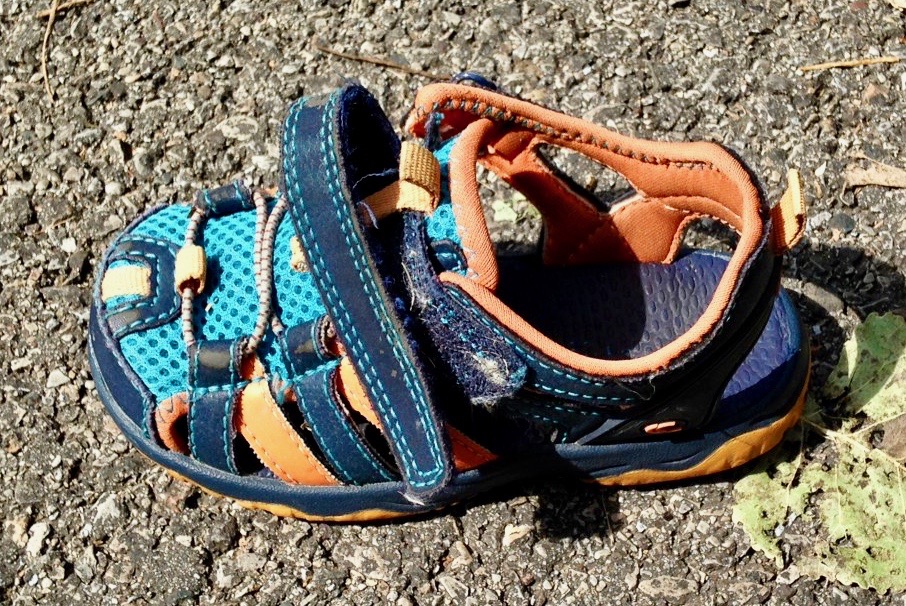
But back to the blue and orange size 2 sandal. It’s surrounded by gravel and twigs, and passed by approximately 20,000 cars a day.
A half mile up the road, its other half sits in the center lane of the highway.
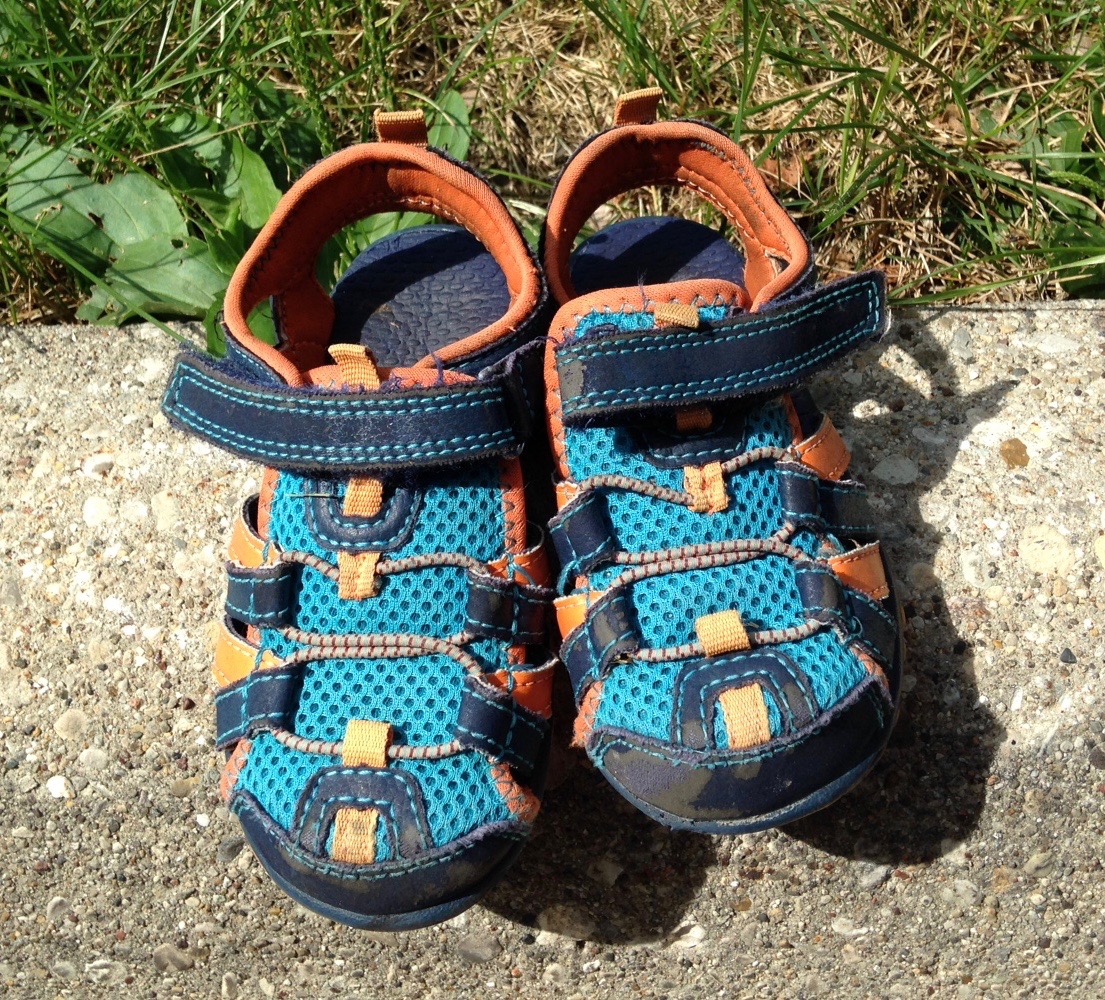
img_0003The story clarifies. This is a pair of children’s summer sandals that departed a speeding car. Northbound, considering the placements.
The most likely explanation is that the shoes never made it beyond the trunk lid, or the roof of the car when the owner’s family left home, or the beach.

I admire their construction: tidy miniaturized engineering, with Velcro for fast escape.

Once in Kauai I had doffed my runners at the beach, and after a dunk in the Pacific walked back to the car barefoot, waiting for the wet sand to fall off my feet. I placed my shoes on top of the car while loading chairs and picnic supplies back into the car. In a moment of moral abandon, I stepped into the driver’s side and decided to drive the one mile trip home, barefoot.
Held up at a bridge along the way, the car behind us honked their horn and pointed to the roof. Doh!!

So it could be that a distracted mom or dad had likewise left the shoes on top of the car, and they blew off along the way.
It’s a tidy explanation.
Another possibility is that the child who was wearing the shoes took them off inside the car, and pitched them out an open window. A little difficult considering the belted seats kids ride in, but still possible.

img_0001

A quite serviceable pair of wheels. Pre-owned.

Then again, it could be that the child’s spiteful sibling removed the shoes and did the deed, in revenge for an earlier insult from the owner. Who knows?

But what remains is the mystery of no recovery.
In our young child-rearing days everything had an accountability for completeness. Count the Jenga before they went back into the can. Check under the couch for errant Lego pieces before packing it away. All the riders in their places on the Fisher Price School bus before it went onto the shelf.

How is it that a mom or dad didn’t wonder about the missing shoes?
Our oldest boy, at the age of 3 had a worn out pair of wing tips that he enjoyed every day. He loved those shoes. If bedtime hadn’t been preceded by a bath, he would have worn those loafers under the covers.

One day we announced that his feet were too big, and he needed new shoes. He absolutely refused to give them up. Stonewalled us, and it was only after I promised that we could keep them that he accepted a new, bigger pair.

He loved those old shoes so much we elected to plant them in the garden. A little fatherly humor: I said, “we’ll just heel them in here, and we’ll grow a shoe tree.”

img_0129

Small, plump little dusty feet once wore these.

Went right over his head.

But the lesson remains, that small children become attached to shoes as keepsakes, and it puzzled me that no parent had come back to retrieve the shoes.
After all, there they were, a half mile apart on the same road. What would it take to stop?
Realistically, it isn’t safe to stop, so perhaps the parent, one of the 20,000 which pass by everyday closed their eyes to the daily reminder that their child’s clothing was lying there in full view, and they were powerless to change it.

August passed by, and just before Labor Day my obsession with the separated pair overwhelmed me. Riding my bike down to shoe #1, I picked it up when there was a pause in traffic.
The shoe was in pretty good shape. Maybe a little worn on the bottom.  Heavy duty blue nylon webbing on a da-glo orange rubber sole. It was tethered by a Velcro tab. At the time I flashed back to long ago, and imagined a tanned, slightly dusty, fat little foot occupying such a sandal.

Next I pedaled back to its mate about three blocks away. That one was resting on the yellow striped line of the middle lane, also in clear view of 20,000 motorists through July and August.
Now I had a pair of child’s sandals. Presentable condition, hardly used.
My thought was to place the two together on the curb. Perhaps then the owner could recognize the gesture of a stranger, and stop to pick them up, joyfully reuniting the shoes with their owner after a two month loss.

img_0127

Cast aside in fun, or forgotten?

Instead of the curb however, I hung them on a nail in our fence. A few yards beyond was a cut out in the road where a car could exit, and stop safely. A quick jog to the fence, and the shoes would be in the car again, the starting point of their summer time escape.

Since Labor Day, by rough estimate, 1,000,000 cars have passed the shoes. No one has stopped to bring them home.
I wonder, daily, why not?

My best hope is that the original trip was unique. That car and its young passengers have never chosen the same route since. My next best guess is that the owner has driven by and weighing the effort of retrieval against the usefulness of a pair of summer sandals in October has resolved to abandon the pair.
My thoughts don’t want to venture a third possibility.

What I have decided is that before the snow flies, I will take down the shoes from their nail, and give them to the local shelter. They will be worn again, hopefully by someone who will cherish them for their comfort and character.  They’ve been on the road.

Thanks for reading and sharing!  This pair of shoes has been on my mind for months.

Standard
Culture, Sports, Wildlife

Paddles Keen And Bright

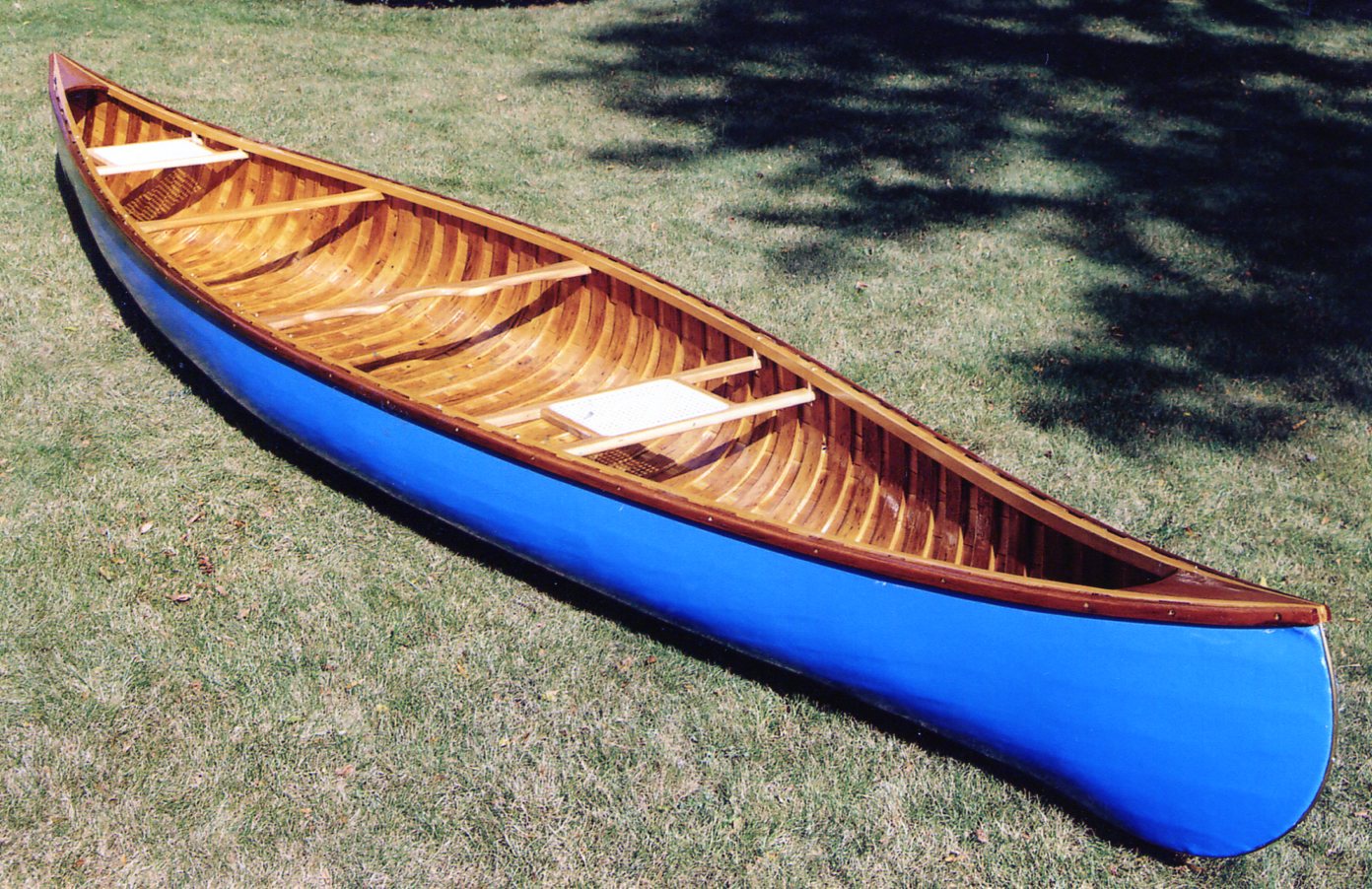
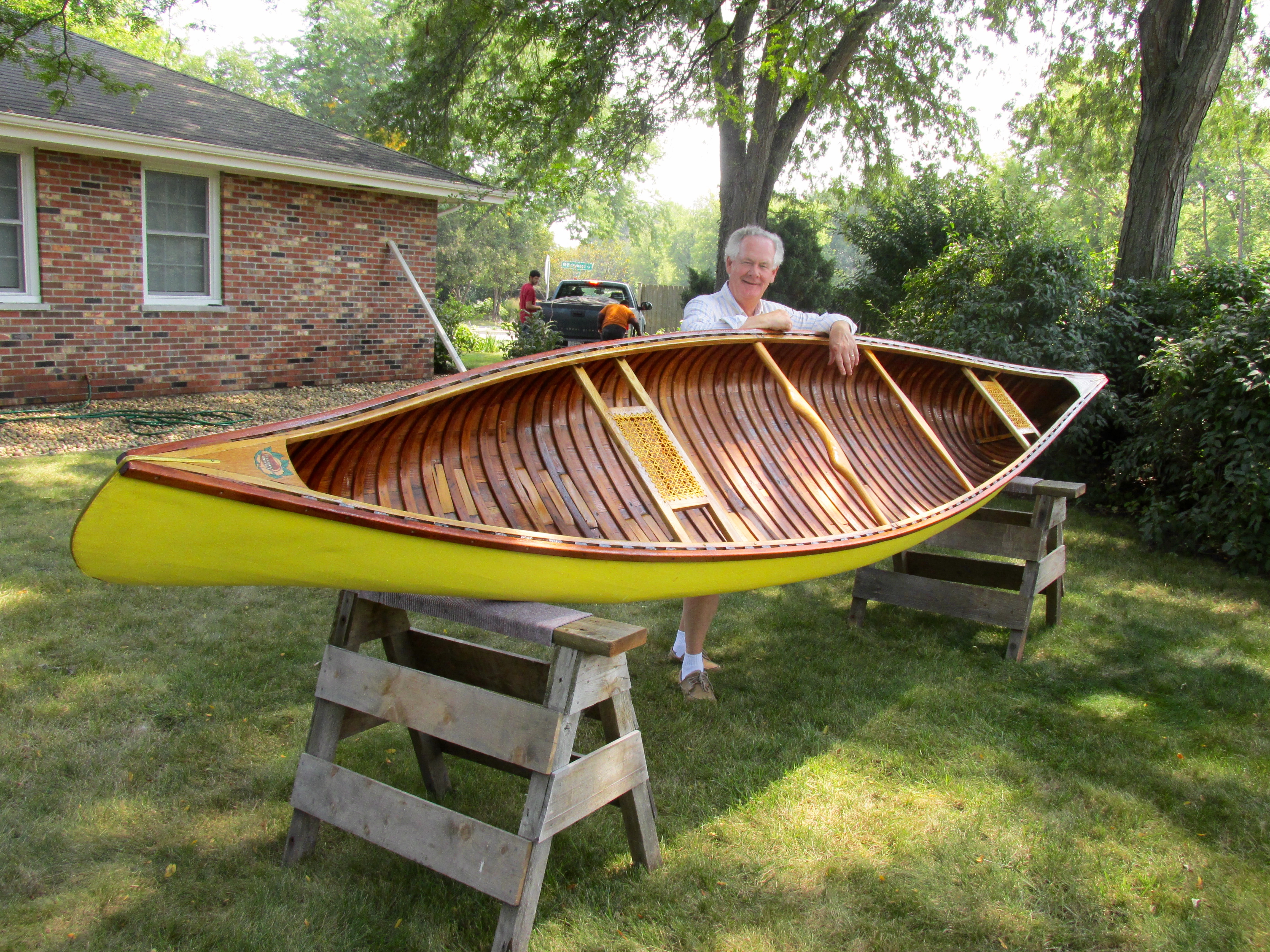
We have a fleet of canoes.  It was never planned that way, but nevertheless, fate, good fortune and the wish of one man made us canoe mavens.

Freight Canoe Honda

A typical sight along the summer roads of Ontario.

Just last week our son rescued one from the shaky rafters of a rustic, ancient boathouse on a lake in eastern Ontario.

The craft in question is a Chestnut brand Prospector with v-stern. It is a super-wide 16 feet feet long, and has a transom that could host a 3hp outboard if required.

IMG_0011

The Chestnut Prospector known as “Pickle” by our grandchildren.

Our grandchildren call it the Pickle, because it’s green. The Pickle is the last of three canoes which my late father-in-law bestowed upon his three daughters, fulfilling a wish that spanned over half a century.

Chestnut Canoes were an iconic boat company headquartered in Fredericton, New Brunswick.  It went under in 1979, victim of changing tastes.

1982 Canoe421

1983– Mabel’s Tremblay loaded down with our young family.

The class of canoe is cedar-canvas. That is, a cedar rib and plank hull, over which canvas is stretched and bound into place. You will find modern canoes made out of fiber glass, and the truly exotic craft are made from pure cedar strip.  Last summer we lifted a carbon-fiber canoe with two fingers.   It weighed 14 pounds.

In the heyday of cedar-canvas canoes, it was common that most cottages in eastern Canada had a canoe, or were in sight of one off their front dock.

2015 243

Camp was our training ground, and today it commissions at least one war canoe, seen above in their brochure.

Truly a Canadian legacy, the canoe today is still seen on the tops of vacationers’ cars speeding along the highways all summer long. But more often, you will see kayaks.  Hard fiberglass, ultra light, in hues of red and yellow.

When not on the road, or in the water, canoes are habitually found in the rafters of boathouses and garages, nation-wide. Which is where we have two, right now.

The Big Idea

1996 235

1996–Our boys ponder a launch of our Pal Chestnut off the front point of the cottage.

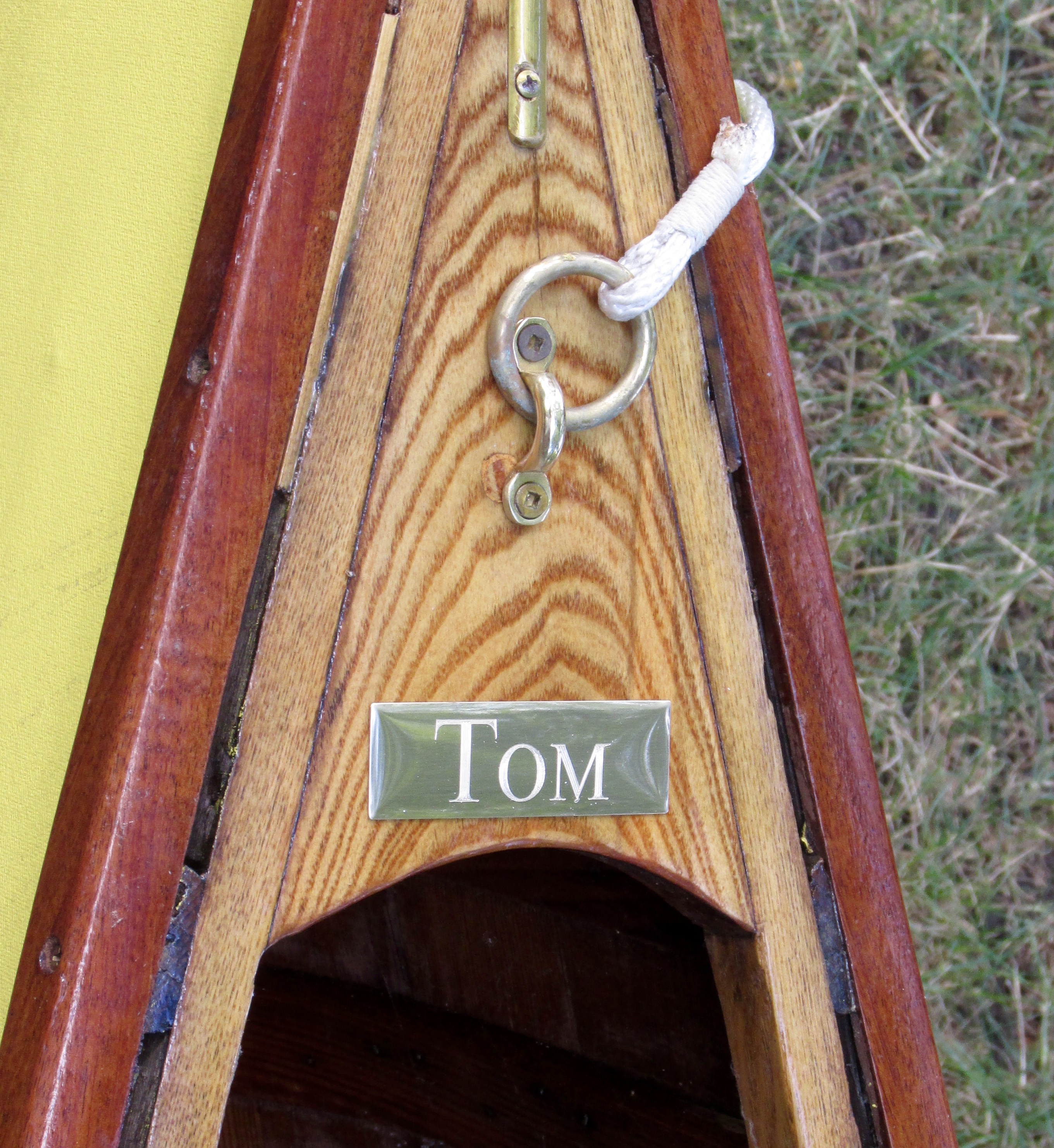
Tom Hamilton is my wife’s Dad, and from the time of his youth he had been an outdoorsman. Very much into camping and fishing, Tom enjoyed no greater release than to glide among the ripples of a quiet northern lake, trolling a lure in search of a hit from a bass or muskie. If he couldn’t experience that first hand, he was intent on passing the thrill along to his daughters.

So they went to camp.
1950 Hamilton702 copy

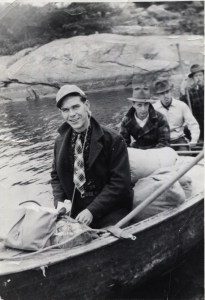
1950– Tom took his team to camp to build cabins. Here they are arriving in “Tough”, a war canoe.

The YMCA summer camp of our youth was built by service groups, in one of which Tom was a member. After WWII, he spent springs and summers cobbling together cabins, docks and dining hall for generations to enjoy.

The waterfront was well stocked with Chestnut canoes, donated by wealthy benefactors.

The skills regimen at our camp focused on canoeing and out-tripping. The requisites were quite firm for campers to canoe and out-trip.
1989 237

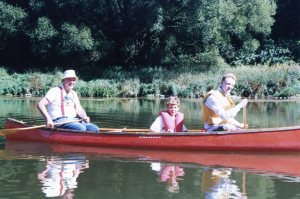
1989– Tom with his grandson and friend paddling the Grand River in his Pal, “Hochelaga”.
IMG_1099

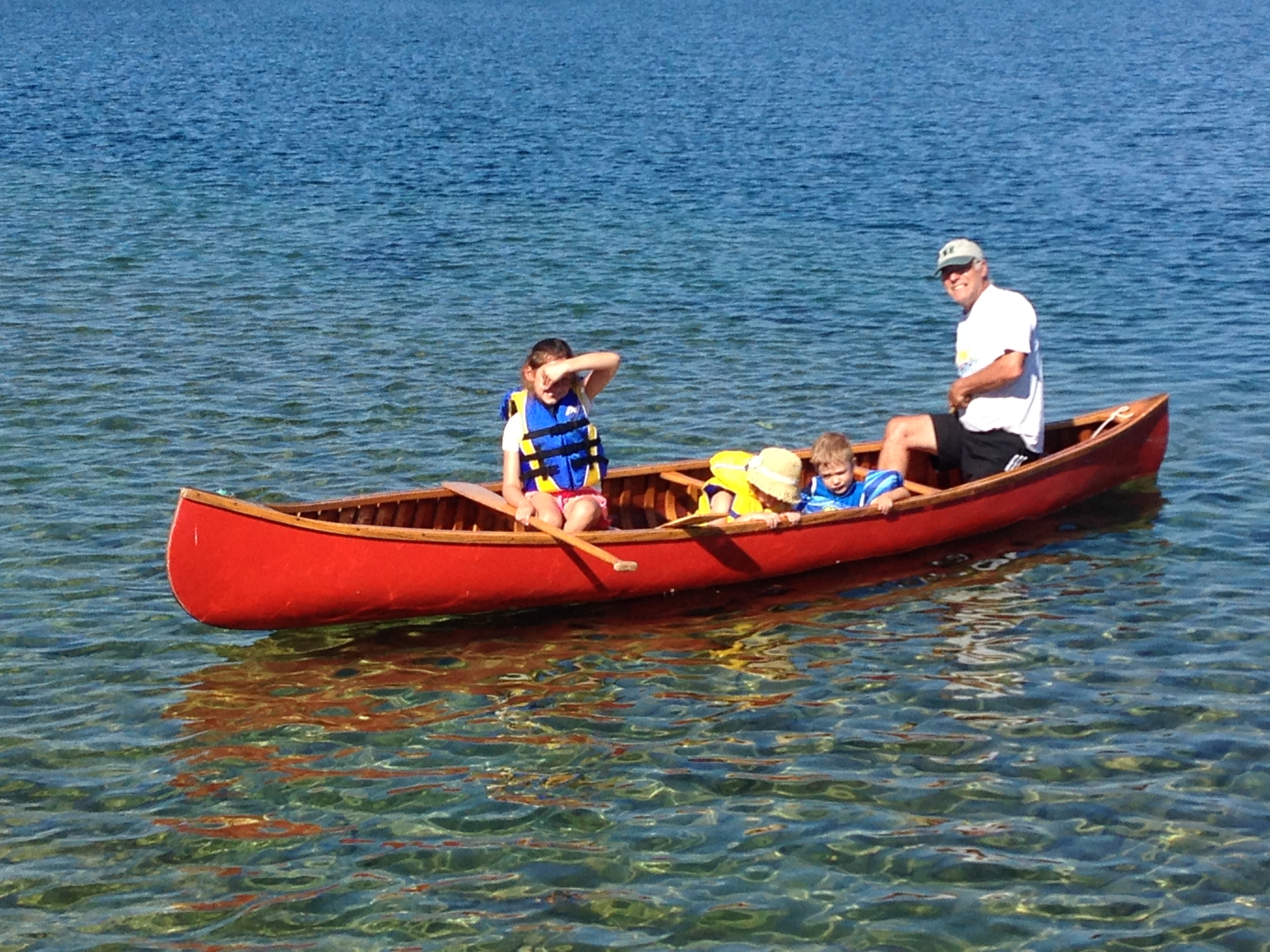
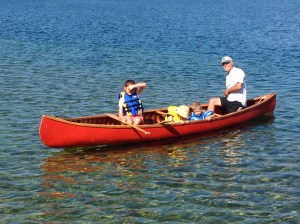
2016– Tom’s Hochelaga now carries three great grandchildren on the Bruce Peninsula.

We graduated from Tenderfoot to Tribesman, Brave, Chieftain, and Chieftain Expert. A fully-fledged canoeist was eligible for out-tripping when they had mastered bow, stern, portage and solo.

The strength test was to hoist a canoe onto one’s shoulders, unassisted, and portage it about a quarter mile. The canoe weighed around 80 pounds, which doesn’t sound like much until you are swinging it over your head in one move.  The ultimate test was to paddle a “Figure 8” without changing sides.

1989 238

The beauty of river canoeing is to enjoy sights unseen from the highway. Grand River, Ontario.

This was the environment Tom treasured, we were raised in, and not surprisingly, it generated tremendous self confidence and pride. The dividend was paddling these sleek, quiet craft on waters through valleys of forest and granite, easily gliding up to wildlife unaware at any bend in the shoreline.

Among Tom’s three daughters, we have 5 cedar-canvas canoes.
2003 245

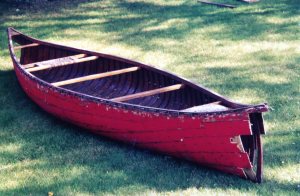
2001–Mabel’s Tremblay under total rebuild. The red paint bled through an earlier canvas.

When he retired in 1985, Tom searched classified ads, read marina bulletin boards, and probably pestered a few motorists who were transporting a canoe, and eventually acquired three beauties.

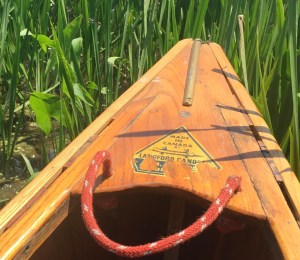
They are all in Ontario. Mary’s Chestnut (a Pal model) canoe resides in a bay by her cottage on the Bruce Peninsula.   Bonney’s Langford is beside the Mississippi River in Pakenham, and Jane’s Prospector “Pickle” is just returning from a week on Silent Lake.

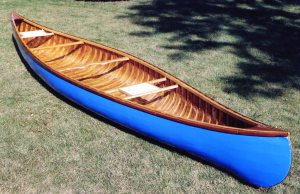
Many years before Tom hatched his acquisition plans, I had a well-travelled canoe given to me by a veteran cottager on our lake. Her name was Mabel Stearns. Her canoe was made in eastern Canada, around 1951.   I think it is a Tremblay.
2003 244

2003– Mabel, all spiffed up, trim and pretty.

It looked pretty rough. Coated in layers of chunky blue and green paint, it had dirty brown, peeling varnish coating its ribs and gunwales, and a hole in its bow, attributed to a fast speeding bullet.

Like most older canoes that live outdoors, its decks were crumbling and rotted from years of storage on the ground.
IMG_8482

Bonney’s Langford among the rushes in Pakenham, Ontario.

We were nevertheless thrilled to have the canoe, and that fall we put on a new canvas, reinforced the bow and stern stems, and painted it red. Not a professional job, but sufficient for the time being.

A couple years after that, in 1981, Tom found a red Chestnut Pal looking for a new owner, and convinced me to buy it from a childhood friend of his for $100.  For me, that was considerable, but at the time, a Pal retailed for $800 or more. This canoe was also broken, and I forthwith re-canvassed it, and painted it yellow.

The reconditioned canoes went to our cottage and traded places a couple of times when a more serious attempt was made to give them a worthy overhaul.

IMG_3657

2015– My $100 Pal after a major overhaul, complete with mahogany gunwales.

Ultimately, we sold our cottage, which is a not uncommon phenomenon in Ontario where tax law makes inheritance of family cottages a costly consideration.

While we enjoyed the convenience of the cottage’s stable location, we now appreciate the canoe for its portability to other lakes and rivers.

IMG_6259

2016– Tom takes his place on the Chestnut.

As a result, the Pickle has visited Silent Lake and awaits its next trip, now likely next year.  Mean time it rests dry in storage outside Toronto.

And our $100 Chestnut has been on numerous lakes and rivers before taking up residence behind our house.   Mabel hangs from the garage ceiling, waiting for her next outing.

For me, the pleasure in all of this has been the fulfillment of Tom’s wish, that the canoe stays front and center in our family.

It has done that, and more so.


Thanks for sharing our canoe story!  “Paddles Keen And Bright” is lifted from a Canadian canoeing song, written by Margaret Embers McGee.  The song is sung as a round, a supposed assist for paddlers.

My paddle’s keen and bright, 
Flashing like silver,
Follow the wild goose flight, 
Dip, dip and swing.

Standard
Culture, Entertainment, Music

Hall, Oates, And A Soundtrack That Won’t Quit

Hall& Oates

The kids in leather, and launched.

We missed Hall & Oates the first time around, but 40 years later they paid us back with a superb performance in Toronto in June.

Years ago, the music of this creative duo crept into our consciousness with Blue Room’s rendition of “Every Time You Go Away” in Planes, Trains and Automobiles.

Little did I fathom at the time that he had covered this wistful piece from one of the truly great composing partnerships of the 70s and 80s.

IMG_1157

The tiny Apple Nano: 1200 songs in a Saltine.

Still unaware of Hall & Oates, I next captured “One On One” on my Apple Nano about 4 years ago.

Buying the Nano was an awakening long overdue.  I was looking for a storage device to hold some music that I was collecting: a couple lost decades of 70s-80s Pop melodies that I had shunned during my Folk and Classic Country years.

One day I was in Best Buy when I asked a helper,

“How many songs can I get on this little Nano?”   It was about the same size as a Saltine cracker, but sturdier.  Its black crystal hinted at deep, magical powers.

She answered, “About 1200.”

I laughed, “I don’t know 1200 songs!”

Four years later we have 957 cuts on the Nano, which include about twelve from our happiest discovery: Hall & Oates.

That evolved when I was given a publicity CD at a Direct Marketing Association trade show.  ULine, a container company–you know, “boxes”— somehow concluded that a free CD of 15 H&O cuts in a ULine-branded sleeve was a good giveaway item to promote itself to mail order companies.

H&O_5571

The Molson Amphitheater on a warm evening by the lake.

Not knowing who Hall & Oates were, I stuffed the CD into a drawer and didn’t retrieve it for a year or so.  One day I popped it into a player, and heard the iconic “Out of Touch” composed by John Oates.

My wife perked up when she heard “Kiss On My List”,

“I love that song!  Who is this?”

“It’s Hall & Oates.  You know them?”

“Nope, but I love this song.  What else is on the CD?”

With that we rolled through their top hits repertoire, and pinched ourselves several times as we knew these songs, but had never connected the composers.

IMG_5567

An enthused Hall & Oates fan arrives early.

The upshot is twofold.   First, we needed to get to a Hall & Oates concert.  Second, we now recognized ULine as a brand of… boxes.  That learning process took about 5 years, but I hope some advertising manager somewhere is having a small vindicating shiver, a frisson, right now, much to their puzzlement.

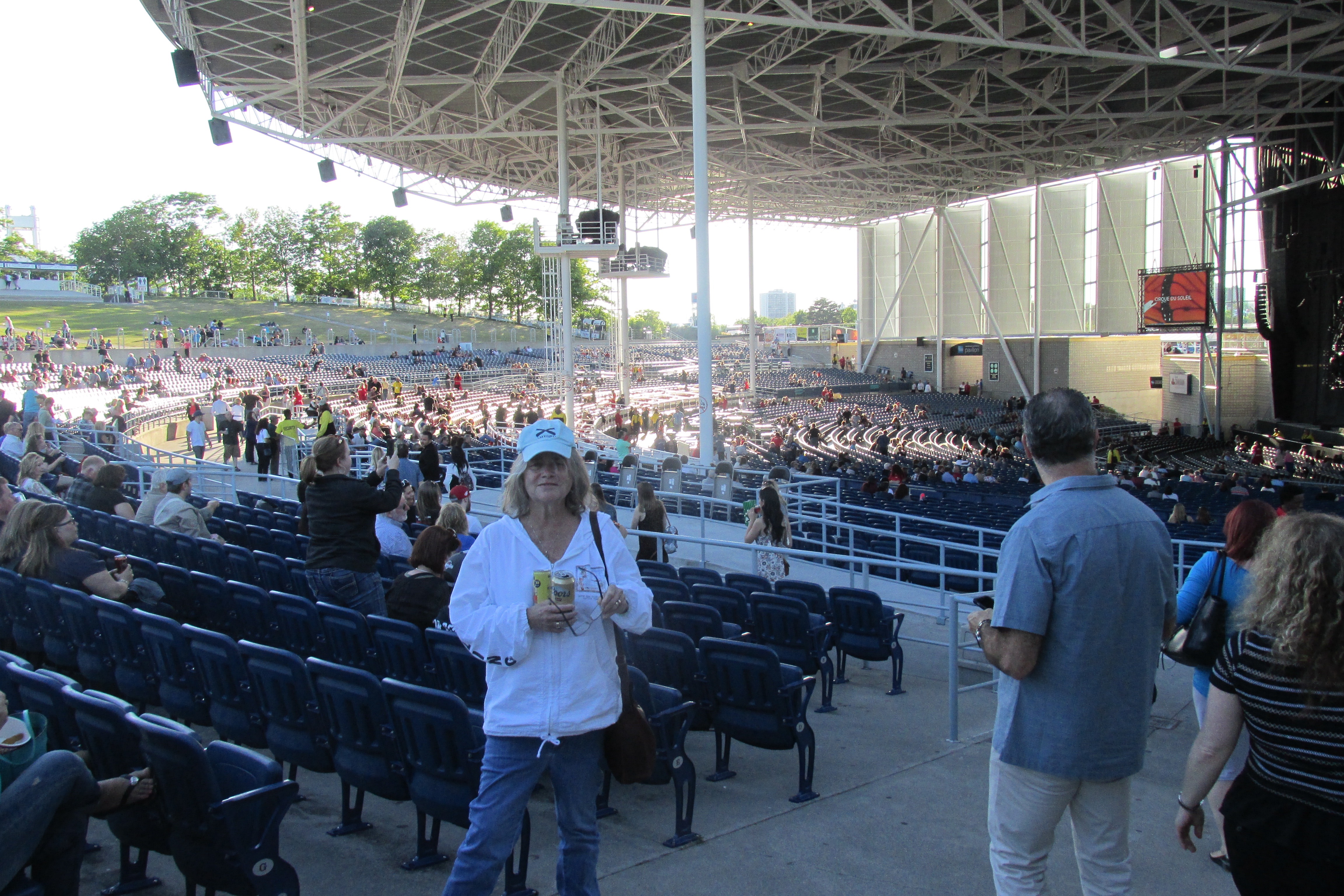
—Which brought us to the Molson Amphitheater on the waterfront of Toronto, looking out on Lake Ontario.

H&O_5580

Daryl Hall lights up on Man Eater.

This open air concert venue seats about 5,000 under the roof, and another 1,500 or so up on the lawn.   On a warm summer evening, with a cooling humid breeze coming off the lake, one can’t find a better place to enjoy a live concert.

There are auditoriums and arenas for McCartney, The Stones and Bruno Mars, but you are one of 60,000 fans holding your ears.  Instead, the Molson Amphitheater is the happiest compromise of a concert crowd and intimacy rolled into one.

The ticket prices are good, and there is no more politely enthused and amicable concert fan than a Canadian.   Every performance we have attended at the Amphitheater evokes a heartfelt thank you from the performers about how welcome, and safe, they feel in Toronto.

Wow!  It must be pretty tough everywhere else.

H&O_5584

Oates is the Yin in this timeless duo.

Our mental image of Hall & Oates is locked in the 70s.  A couple young guys, with hair and rugged good looks.  Up close today, on the jumbotron, it’s 40 years later.  But the genes still hold their ground.

Even better, so does their music.

Predictably, they opened with Maneater, a solid up tempo number that had the audience on its feet in an instant.  What followed was a succession of hits from the 70s: Sarah Smile, She’s Gone, It’s A Laugh, Kiss On My List.

IMG_5636

A friendly Toronto on Lake Ontario

Somewhere half way through their performance Daryl Hall hung up his guitar and went to the keyboard, which was a delight.  The camera focused on his hands pounding these hypnotic chords for 8, 12, 16 bars, typical of their best songs where the lyrics open only after the background music is solidly in place.

Hall’s voice has great range.  It’s remarkably soulful up on the high notes, and he is completely unchained in front of 5,000 fans, delivering melody and passion.  Meanwhile, he works the keyboard with complex chords, lots of 8-fingered flats and sharps, in minor and major…a true believer of “black keys matter”.

IMG_5576

Their music is complex, melodic, and memorable.

John Oates is the journeyman guitarist.  He switches between several during the night, and works up and down the neck effortlessly.   Strutting across the stage he occasionally sides up to Hall, which is the only time you see the physical Yin/Yang of these two: Oates the significant counterbalance to the tall and blonde Hall.

There is a third component to the Hall & Oates sound and that is the roving saxophone of Charles DeChant.  This ponytailed magician nuances every tune with mellow contemplation.   His signature delivery is an extended solo in “I Can’t Go For That, No Can Do” which really stretches the boundaries of contemplation to hard core introspection.  Too long for my taste, but for many, right on.

IMG_5585

The group returns for two ovations. We can’t get enough.

The team comes out for two ovations, after prolonged applause.  They close with Private Eyes and then back again with Rich Girl, which by then has the audience screaming for more.

But no more, they bid good night.

The genius of this pair is their melodic creativity.   It is complex music: hard to dance to I think, but easily remembered, expansive tunes that you can hum  long after the hall goes silent.

Indeed, the tunes play over and over, inside my head.  After walking 9 holes of golf I have re-sung Private Eyes a hundred times without thinking.

Unfortunately, I can also wake up at 3am, and still have the soundtrack bouncing along, varied, hypnotic, and without cease.


Thanks for reading!   If you are an H&O fan, you will find their tour dates here.


Standard