Cars, Culture, Economics, Government

Dear President Trump:

Dear President Trump:

I voted for you. I understand your strategy of America first. But your decision to tariff Canadian auto exports to the United States makes no sense.  As you know, the automotive trade between Canada and the United States is virtually balanced. While Canada’s exports of cars to the U.S. may create a U.S. deficit, the United States exports an excess of automotive parts to Canada, balancing the automotive trade between the two countries.

This is clearly stated by the Toronto Dominion Bank’s economics team, January 28, 2025: “Potential Hazards Ahead” by Andrew Foran.

So why tariff Canadian exports of automotive products?

Your position to re-patriate the automotive industry to the United States is supposed to “bring back” jobs lost to overseas countries.  The truth is that in Canada, many of those jobs were created over a hundred years ago, long before you and I were born. Look at these Canadian subsidiaries, and their starting dates in Canada:  

The Ford Motor Company of Canada, founded 1904

General Motors Company of Canada 1918

The Chrysler Corporation of Canada 1925

Kaiser Willys Jeep 1954

American Motors Corporation (Nash & Hudson) 1954

Honda Canada Inc 1986

Toyota Manufacturing Inc 1988

The Big Three were building and shipping cars in Canada for Canadians long before WWII. Four, and five generations of Canadian families have worked in the factories, the shops, accessories and parts businesses feeding these successful companies. It’s in their DNA. They have taken loans to buy cars, mortgages to build homes, grow towns, and slogged to work for their families. The profits were returned to head office.

Sir, why are these companies in Canada? Market opportunity. This expansion wasn’t about finding cheap labor. This was about mining Canadian dollars.

Now you suggest that Canada is “ripping off” the United States by building cars and trucks. I think it’s a fair bet that every automotive trade investment that has been made on Canadian soil in the last seventy-five years has been supported by Canadian loans and a motivated labor force.

These industries existed decades before NAFTA. The 1965 US/Canada Auto Pact designed this relationship, which is balanced, and has been a cornerstone in supplying both countries equally.

I must remind you, Mr. President, that Canada is not just a neighbor. It is our friend and ally. Canadians have pitched in whenever the need arose: Dieppe, Vimy Ridge, Juno Beach, Afghanistan, Iraq, Iranian hostages, emergency 911-housing. Canadian first responders have convoyed to floods and tornados in the US heartland, quakes, hurricanes in the south, and to forest fires in the west.

These tariffs are worse than a slap in the face, they are a stab in the back.

Please explain why this balanced relationship is being burdened by tariffs which will harm citizens on both sides of the border.  Better yet, Mr. President, please stop the tariffs on the automotive trade.

                                                Yours truly,

                                                Phil Brown

                                                Libertyville, IL 

Standard
Cars, Culture, Government, Politics

Shuttering A Family Business

The US administration’s current tariff policy is gutting a family business. Not that most Americans would think about it. The push to re-patriate the automotive industry to the United States is supposed to “bring back” jobs lost to overseas countries. The truth is that in Canada, many of those jobs were created over a hundred years ago.

The Ford Motor Company of Canada, founded 1904

General Motors Company of Canada 1918

The Chrysler Corporation of Canada 1925

Kaiser Willys Jeep 1954

American Motors Corporation (Nash & Hudson) 1954

Honda Canada Inc 1986

Toyota Manufacturing Inc 1988

The Big Three were building and shipping cars to Canadians before WWII. Four, and five generations of Canadian families have worked in the factories, the shops, accessories and parts businesses feeding these successful companies. It’s in their DNA. They have taken loans to buy cars, mortgages to build homes, grow towns, and slogged to work for their families.

And why are these companies in Canada? Market opportunity. Historically, Canada had no native manufacturers to serve its consumers, and the automakers in Detroit and Japan saw the potential of exploiting this virgin market. This expansion wasn’t about finding cheap labor. This was about mining Canadian dollars.

Now we are led to believe that Canada is “ripping off” the United States by building cars and trucks in facilities that have been financed by Canadian manufacturers. I think it’s a fair bet that every investment that has been made on Canadian soil in the last seventy-five years has been supported by Canadian loans and a motivated labor force.

These industries existed decades before NAFTA. The current tariff action isn’t a market correction. It’s a government-driven, grand-theft-auto: generations of jobs and livelihoods stolen by Presidential edict.

I have to remind you, gentle reader, that Canada is not just a neighbor. It is a friend and ally. Canadians have pitched in whenever the need arose: Dieppe, Vimy Ridge, Juno Beach, Afghanistan, Iraq, Iranian hostages, emergency 911-housing. Canadian first responders have convoyed to floods and tornados in the US heartland, quakes, hurricanes in the south, and to forest fires in the west.

Worse than a slap in the face, this is a stab in the back.

Yesterday, Canadian Prime Minister Mark Carney said it best: “The old relationship we had with the United States… based on deepening integration of our economies and tight security and military cooperation… is over.”

April 2, 2025 will be remembered as the shameful day the U.S. shuttered a family business.

Standard
Culture, Economics, Government, Marketing, Politics

Spin City: “Shop Local”

Last week I shared my frustration and shame at President Trump’s brutish and uncaring treatment of Canada, a treasured friend of the United States. My letter was to the Republican National Committee.

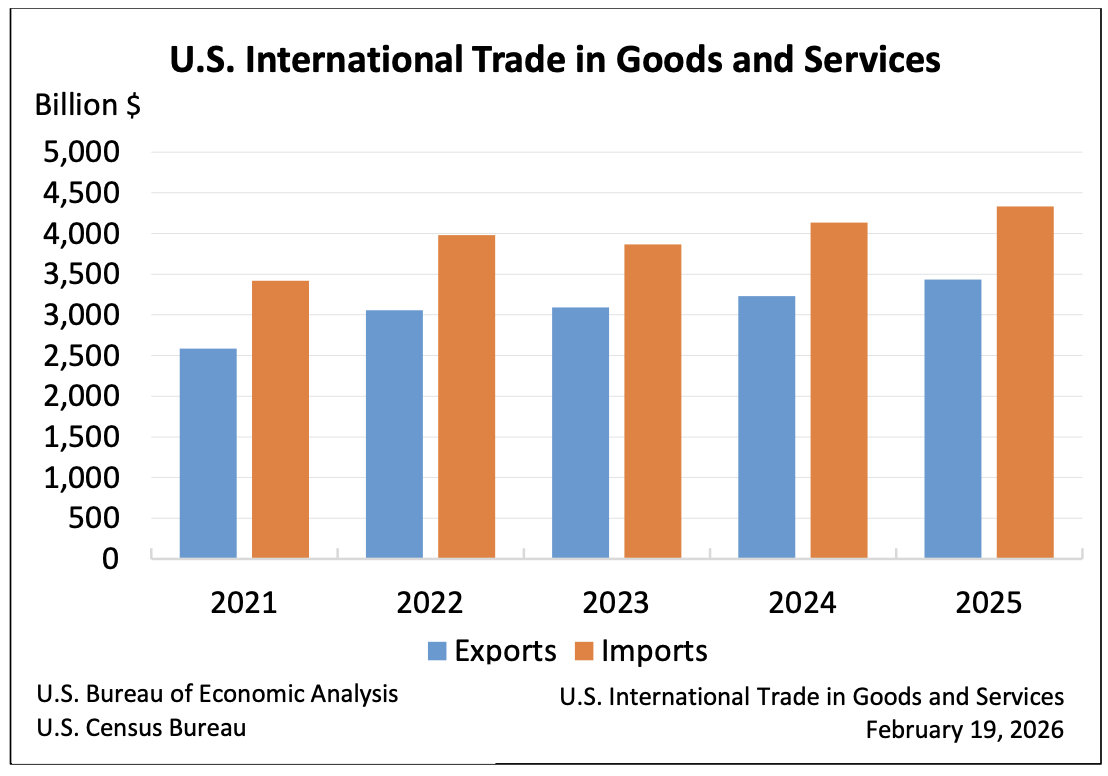
The gist of it was that under the pretense of stopping drugs and illegal immigration, Canada was forced into increasing secure borders, or risk tariffs. After complying to the President’s demand, the subject pivoted. It wasn’t about drugs and borders, it was about a $60 billion trade deficit between our two countries, favoring Canada. I called the pivot a “bait and switch”.

But I have finally settled on the ultimate truth of this pivot, and it’s not what we thought at all.

First, to confirm, a trade deficit exists when two bodies don’t equal each other’s bank accounts. To wit, Canada’s tills received $413B from Americans, and America’s tills received $349B. from Canadians. Canadians would be right in saying, “We need a bigger cash register!”

To put this in perspective, the trade deficit has not been $63B in recent history. In fact, from 2017 to 2020, the deficit has averaged $20B per year. So the latest is a jump.

This deficit phenomenon is not unique.

If I was mayor of a small town, and noticed with some gloom that my local residents all went to the neighboring town to buy groceries, because they were cheaper, or more varied, I would expect the grocer in my town to come banging on my desk, with a grievance. “Nobody shops here. I’m going out of business at this rate!” I would apologize, and hoist signs on every lamp standard, “SHOP LOCAL”. I would also tell the grocer to get smart: “Bring in better stuff, and lower your prices.”

This is logical enough, but it doesn’t necessarily work if the out-of-town grocer has better suppliers.

So placing this on an international scale, the USA is taxing imports, with punishing tariffs paid by American importers.

But here’s the real twist. I finally glommed onto this as I ate my last Dad’s Cookie which was baked in Toronto Canada. While the President has charged that “Canada is ripping us off,” what he was really afraid to admit is, “I am going to punish American consumers for purchasing desirable Canadian product. By collecting a tariff on those imports, U.S. consumers will learn to shop local.”

It would be political suicide to come out and just say that, so instead, this “rip off” language targets Canadians, and all other countries as bad actors. The end game however, is to bring offshore jobs home. And while it may seem that Canadians are the bad guys, they aren’t. We are the bad guys because we like our Dad’s Cookies. The President’s hope is that one day, those cookies will be made here.

You can see this happening now in Canada. With new Canadian tariffs on U.S. goods, Canadians are encouraged to buy Canadian: SHOP LOCAL. To which they are proudly responding.

Mean time, the home-wrecking language and bombastic posturing from the White House has had a toxic effect on the USA’s goodwill account. Who knows how long that major faux pas will take to smooth over?

Standard
Culture, Economics, Government

An Open Letter to Michael Whatley, RNC Chair

Bait and Switch

Dear Chairman Whatley: I am staring at my Sustaining Member card for the Republican National Committee, and I am debating whether to return it to the RNC.

I am dismayed by President Trump’s transparent attempt to fool his electorate into believing he is imposing tariffs on Canadian exports to the USA just to stem the flow of illegal aliens and to stop the production of fentynyl. He revealed his real goal: to balance trade between our two countries.

You well know he announced his tariff plans were contingent upon Canada bearing down on illegal crossings and drug controls. When he was satisfied, the tariffs would go away. Canada responded and is working with US agencies to comply.

Now President Trump is accusing Canadian exporters of “ripping off” the United States over a $68 billion trade deficit. In a $762 billion trade relationship, this is a 9% differential. Never mind he negotiated this trade pact.

The outcome of this capricious and arbitrary action is that we have lost the best friends we could ever have. Canadians are rightfully angry and scalded by this abusive action and language. You will witness that our flag is lowered from Canadian businesses. The national anthem is booed at sports. Provincial governments are canceling contracts with US vendors. American sales people are refused entry to Canadian offices. One wonders how American tourists will ever be welcomed in Canada.

The numbing question over this infamy is whether Americans are even aware, and if so, do they even care? The tariffs have created 40,000,000 enemies without a single shot fired.

I would remind you of an important test for what we say, think and do. It is the operating rule of the Rotary International, here in Evanston, Illinois: The Four Way Test. Is it the truth? Is it fair to all concerned? Will it build goodwill and better friendships? Will it be beneficial to all concerned?

I believe that the President’s treatment of Canada fails this test abysmally.

I am urging you to communicate my anger and disappointment to the President with respect to this ridiculous and deceitful tariff ruling.

Yours truly, Phil Brown, Libertyville, IL USA.

CC: KC Crosbie, CoChair; Kathy Salvi, Illinois State Chair; Dean White, Illinois National Committee Man; Rhonda Belford, Illinois National Committee Woman; Daily Herald, Chicago Tribune.

Standard
Economics, Government, Legal, Marketing

Open Letter to Kwame Raoul

Re: Kroger and Albertsons Merger

Dear A.G. Raoul: I am concerned that the proposed merger of Kroger and Albertsons grocery stores will create a disadvantage for Illinois shoppers. Here, in Lake County, we are fortunate to have two corporate branches: Jewel (Albertsons) and Mariano’s (Kroger). The stores face each other across Milwaukee Avenue, in Libertyville/Vernon Hills. They are connected via a major intersection.

The parking lots are full.

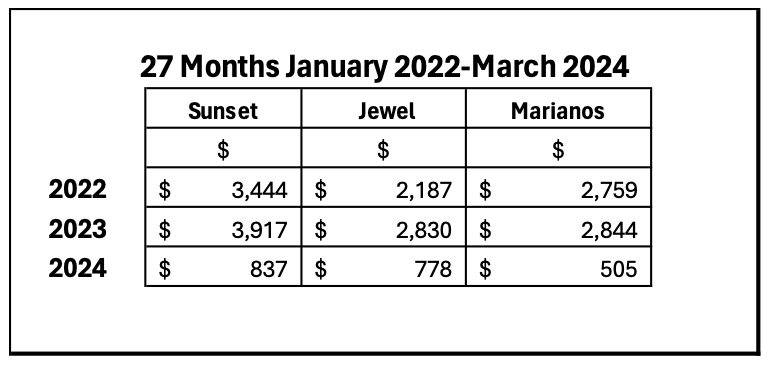
We are long term shoppers at Sunset Foods, Jewel, and Mariano’s . Despite the distance, we visit all three stores regularly to choose from a rich, wide selection. Each store continually makes competitive offers, which we enjoy. We are frequent shopper club members at all three stores, and take full advantage of the timely deals.

Over the past 27 months I have logged the dollars spent at each store.

As you can see, all three stores enjoy our business. If Jewel and Marianos co-exist under a merger, it would not be for long, as they will both get their product through the same purchasing department. So one of these stores will probably close. To me, that eliminates the competitive environment. Indeed, it is likely, with no competition, that prices will rise over time.

I urge you to be firm in fighting this proposed merger. It may be good for business, but it’s no good for shoppers.

Sincerely,

Phil Brown, Libertyville, IL.

Standard
Government, Media, Mystery

Ballooning Problem

What a complete embarrassment. First we let a floating convoy of three school buses float by at 70,000 feet. We shoot it down. Now, no news about the buses.

Where’s our super powers when we need them?

You know, thirty-seven years ago ocean scientist Robert Ballard discovered the burial ground of the Titanic.

When finished arcing through space at 18,000 miles per hour, every returning space capsule is reliably plucked out of the waters within minutes by US Navy frigates. After the tragic downing of a PanAm flight 103 over Lockerbie Scotland in 1988, forensic scientists combed the debris field to find an incriminating piece of metal with a serial number to track down the terrorist bomber Abdelbaset Ali Mohamed al-Megrai.

Still, as of today, we have no news about the “object” which so threatened us.


But to deflect some of the scorn, we then went out hunting, and brought down three more unidentifiable objects, one the size of a Volkswagen. It took several days to reveal these objects were suspended from balloons. Really? Did no one in the press room have the temerity to ask? Or was the administration not bold enough to answer?


Meanwhile, one such object is splatted on the ice off the north shore of Alaska. Another lies on a mountainside in the Yukon, being picked over by mountain goats. A third is quietly sleeping below the drifting currents of Lake Huron, resting on the sandy bottom, waiting for a ride.

When will we see the Volkswagen?

Now we are told with a shrug that the objects were probably privately owned. No doubt the owners fear getting a ticket, and are not claiming the goods.

If there ever was a time that the administration needed to communicate clearly and consistently, and the news media attempted to get to the truth, this would be it.

Standard
Cars, childhood, Culture, Government, Legal

The Nose Count

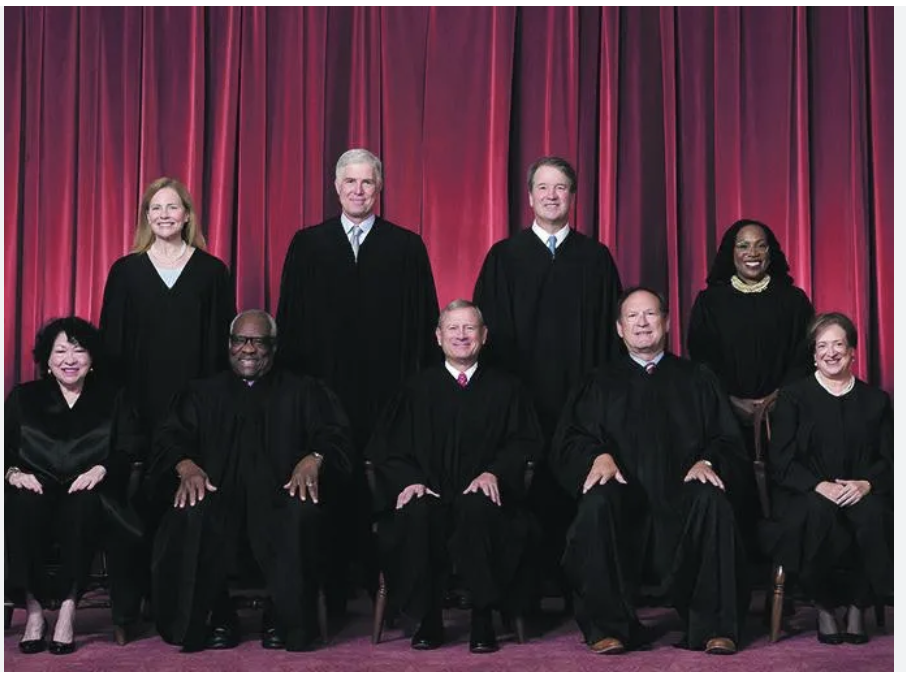
“Opinions are like noses: everybody’s got one,” which is what one of my best bosses ever advised me. And so it is, the 2nd Appellate justices reviewed the Libertyville appeal, buttressed by eloquent oral arguments, and came to the opinion: “No dice.”

Our appeal to reverse the Lower Court Judge Michael Fusz’ ruling was refused. The ruling stands. The Archdiocese of Chicago may now expect the Village to re-zone the 40-acre lot on Butterfield for residential building, and along with that, allow the final plats to be submitted and approved for building the 148-units which were proposed in 2017.

This of course is subject to the Village Board’s acceptance of the decision, which will be deliberated in the next few weeks.

There is no upside to predicting future events. However, if there is an upside of any sort, it is that the proposed development still has to respect and comply to the fifty-plus requirements which the Village planning department had stipulated two years ago. And that is assuming that there is a developer who still is eager to pursue the enterprise.

Putting it all aside, we hang on to the original objections to the development as values and concerns the neighborhood held about this development. We hope that the Village departments will remember these too.

Chief among our concerns today is the forecasted population of 150 children who will live and play a stone’s throw distant from Butterfield School, and its magnificent and inviting playing fields. They are there within sight, viewed from the opposite side of a 4-lane Butterfield highway.

Hindsight is perfect vision. While the Village focused on the difficulties in local motorists making left turns out onto Butterfield, little light was shed on the dangers of pedestrian traffic– young kids, minors, venturing across the highway over which 24,000 cars speed through at 47 mph. every day.  The lower court judge never heard that insight, and the opportunity to remind him now is moot.

However, the developer will still have that, among many other hurdles to pass before the shovels go into operation.  We will wait to see what the Board chooses to do next, and how the parties involved will respond.

Thanks for reading and sharing, loyal Butterfield Friend and Neighbor.  We will see how it all works out!

Standard
Culture, Government, Legal

Red Light-Green Light

The Church’s 148-Unit Subdivision continues to bubble.

Libertyville: The Village had its day in court this morning, with a brisk Q&A between a panel of three appellate court justices and two lawyers who represented both sides of the debate– “Did the lower court make a mistake when it green-lighted the Church’s plans to build a 148-unit subdivision on Butterfield Road?”

As you can guess, the proposed answers were, “yes” and “no”.

As you will recall, in February 2019, the Lake County 19th Circuit court held in favor of the Church that their development could go ahead. The court ruled that the Village could offer no credible proof that the traffic on Butterfield would be dangerous to the health and safety of Libertyville residents. This ruling hinged on the court’s belief that Lake Street at Butterfield Road would not be a dangerous intersection, and that the development’s single access point further south would also not be dangerous to residents entering and exiting the development.

Inherent in that decision was the court found the Village had been unreasonable and capricious in refusing to change the zoning of the area to accommodate the development.

Northbound traffic on Butterfield: tough for left turns.

The Village chose to appeal this ruling.  It’s reversible, on the basis that the developer had not complied with the Village’s subdivision code. The code is steeped in engineering and planning requirements, out of which bubbles a concern for our health and welfare. To wit: traffic is dangerous.

The 2nd Appellate Court is located on the banks of the Fox River in Elgin, Illinois just off route 25, and south of I-90.  It’s a well-dressed building with free parking and pretty efficient entry, unlike Lake County’s 9th Circuit Court in Waukegan where parking is iffy, conflict is more apparent and real, and the justice is being dispensed retail.

Inside the Elgin courthouse you can see large, high-ceilinged courtrooms, paneled in cherry, with a raised bench for the three black-gowned justices.  A foot lower is the single-miked podium and desk for the attorney.  There is ample desk space to lay out volumes of material.  But frankly, not enough time to use it all.  The counter-space could afford two attorneys lying nose-to-nose in a final thumb wrestle if necessary.  The court room also provided for a couple visitor rows.  Interesting to note, there is no steno taking minutes of the proceedings.

What the courthouse does enjoy however is the continual train whistles echoing across the Fox as the freights labor their way back and forth, oblivious to the closed-door grumbling and pleading going on just yards away.

The justices–who commendably had prepped by reading the Village’s 3,000-page appeal statement, plus review the lower court’s 8 days of testimony and final decision– peppered the Village with questions. In 15 minutes, the basic question was formulated, “Where in the lower court trial did the Village ever talk about the subdivision code, while instead only testifying to the traffic safety issue?”

Our response was that the Church never complained about the subdivision code, only the negative zoning decision. So that’s all we defended against.

With that established, the Church’s attorney stepped forward to bat away the justices’ questions. These generally focused on any challenges or approvals that might alert the developer to change plans to comply. “No, in fact we were agreeing to comply, or getting approvals in every negotiation of a planned development. A planned development allows for Village and developer to side-step zoning rules in favor of creative alternatives. For example, narrow alleys and no driveways with small lots provide room for more open space for all residents.”

Following that 15 minute dialogue, the Village attorney resumed for a 5-minute rebuttal where again he re-iterated that both zoning compliance and subdivision code had to be upheld, and that the lower court ruling should be reversed.

The chief justice then closed the session with a promise to find a decision. No time-line was offered, but outside the court, we heard it could take months.

When I asked the Village’s attorney to sum up our position, that despite the Planned Development process, both the Zoning Ordinance and the Subdivision Code both had to be upheld, to paraphrase, he observed: “You can’t have one without the other.  You can’t plead innocence to the judge that you were obeying the speed limit while you ran the red light.”


Standard
Culture, Government, Legal, Marketing, Media

When Your Number Comes Up

You know that funny feeling when the cell phone vibrates in your tight jeans pocket, and you struggle to extract it before the caller hangs up. Sitting in a movie theater is tougher because you know to leave it alone. But, it continues to zing—zing—zing, vibrating like a terrified june bug caught in your pants.

A couple days ago, my phone wouldn’t stop zinging. Starting at 10:30 in the morning, I got a call from San Antonio, TX. I know no one there. It’s hot, dusty, and except for the Alamo and the acclaimed Riverwalk, San Antonio doesn’t figure on my list of destinations, let alone origins. But the phone zings insistently.

It’s an unrecognizable number. Area code 210. I skip it.

A few minutes later, another call. San Antonio again. Flush it.

Two more calls after that, and I decide to pick up.

“This is to inform you that your Social Security Number has been suspended, and that there is a warrant for arrest under your name. Please call back immediately…”

I give high marks for originality on this call. It turns out that so does the caller, because they continue to zing in my pocket until a little after noon. 13 calls in total. 13 spoofs: each number changed, but the origin and area code remained San Antonio, Texas.

Next to our annual plague of stink bugs, I think the robo call is the most obnoxious–and noxious–element in our midwest existence. What amazes me is that nothing much is ever done about it.

The telemarketing channel has been a constant irritant to me, and to probably 99% of the adult American public.  In fact, it was the subject of my very first post in 2013: Let Me Get This Call.

In a typical day, we will receive at least 5 calls.  I am thankful for these, as:

  1.  They force me to get up and walk to the phone, providing necessary joint movement;
  2. They frequently remind me that I am eating dinner when they call;
  3. The calls provide a fleeting moment of excitement thinking a family member is calling.

We’ve nearly reached the tipping point to give up our land line, which was the main robo conduit into our normally quiet existence.  And then the cell phone becomes the new target.  What to do?

I looked up the Do Not Call registry, and confirmed that all three of our phones have been registered since 2005.  Fat lot of good that has done.

Checking the FCC page, I read some business-like claims by the department head that multi-million dollar fines have been handed out recently.  $80 million.  $40 million. Serious money, but the zinging doesn’t stop.

The government site points to the measures that phone companies are taking.  AT&T, my server, offers a Call Protect App for the zinging cell phone.  It’s free, and I install it.  Then quickly and effortlessly the app reports I have had no robo calls in the last 30 days!  What about the last three hours?

A Facebook friend has suggested I take a third party anti-robo app.  I may do so. We’ll see how AT&T performs over the next few weeks.

Surely AT&T wants us to keep all of our phones, right?  But mean time, I have this nagging concern.    AT&T is now HQ-ed in Dallas, Texas, area code 210.

Could it be possible?   No, don’t even think of it.


Standard
direct mail, Economics, Government, Media, USPS

USPS: A Six-Month Stagger Into 2019

What can you say about a cursory glance at the most recent USPS Revenues Pieces and Weights report other than “CURSES!!” ?

What else can one say? They raised their rates around 2.5% last January, and six months later, revenues, pieces and weights are down.

SPOILER ALERT: This is all about numbers, which mean little, unless you are thinking about money.

You can see the details for yourself, but a cautionary word: the official RPW report above covers 9 months, from October 1 to June 30.   I have extracted the numbers below to cover from January to June, 2019.


In First Class Mail, which is all about bills, statements, cards and letters to mom and the folks, volume was off 3.2%– 904,000,000 pieces less than 2018.

Marketing Mail– direct mail was off 4.9%, — down 1,839,000,000 pieces from a year ago. Even more disturbing, the weight of those direct mail pieces also shrank about 2% from 1.49 ounces in 2018 to 1.46 ounces in 2019.

Leavened economics: 4 for $8.00 or 1 for $3.50?

The lesson here is that when you raise prices, despite your dominant position in the marketplace, people will buy less. We experienced a similar phenomenon at our favorite bakery when they raised the price of a cinnamon bun from $2.00 to $3.50. We used to buy 4, for $8. Now we buy one. Who’s happy?

The only bright light in the USPS tunnel to perdition is the package volume. Thanks to Internet orders, parcel shipments are still growing revenues, up 3.6%, though pieces and weights are off 1.7% and 3.3% respectively.

For wholly different reasons, magazine volume is also continuing its slide. Pieces are off 7.7% to 2,345,000,000 total delivered to as many as 159 million addresses in each of the past 6 months. If these magazines are all monthlies, there are approximately 391 million subscriptions in effect. About 2.4 for every household in America. While that may seem like plenty, just 5 years ago, the USPS delivered just over 3 billion periodicals, honoring approximately 502 million contracts, or 3.2 for every household.  But face it: if it wasn’t for the waiting rooms outside doctors’ offices, lube shops and office lobbies, the count would be less.

None of these figures should surprise you.  We all know the effect of the Internet on hard copy, paper, ink, and postal delivery.  Still, it is distressing to see a vital communications channel slowly price itself into a retreat, fulfilling a prophecy of irrelevance.

USS Ronald Reagan, a meager 110,000 tons.

But it’s not irrelevant.  Total mail volume in the fiscal year 2018 was 146 billion pieces.  That weighed 12.3 million tons. For those of you who are counting, that’s 108 USS Ronald Reagan aircraft carriers, soaking wet.

I have said it several times before, that the USPS, as an independent government agency has lots to be proud of, starting with its relatively minuscule cost to the US taxpayer.  Its 2017-2018 annual report showed an operating loss of $3.9 billion.  Sounds like a lot!  It’s 0.095% of the total U.S budget.   Less than one tenth of a percent.

The reality is, the USPS is still the bargain of all the media choices: it’s part of our lives, 6 days a week, with door-to-door pick-up and delivery, costing the taxpayer household about $23 per year, plus stamps.  Beat that, Amazon Prime.

Standard