direct mail, Government, Marketing, Media, Thank You, USPS

Their Appointed Rounds

The United States Postal Service closed out their fiscal year September 30.  Never mind that the rest of the world goes by the annual calendar; the USPS wanted to beat the Christmas rush.

All in, the giant continues to perform well, within the confines of its quasi-government walls.  I wish the rest of the Federal government departments spent as much time looking after their own performance and expenses as does the USPS.

But from the latest Revenues Pieces And Weights report, here are a few glimmers of surprise and excitement.

  1.  It is a $69.6 billion dollar enterprise.  In the Fortune 500 list, it hovers around #37, bigger than Target, and smaller than Procter & Gamble, both good neighbors.  Like both of these companies, the USPS is an indicator of the USA’s pulse rate, though we will admit that it has slipped a bit.
  2. In 2017, the USPS revenues fell $1.8 billion.  We know why.  The Web, social media, email have all disenfranchised much of the USPS core business: first class mail and standard mail.
  3. First class mail continues to fall, $1.9 billion.  Compared to last year, it delivered 2.5 billion fewer pieces of mail, a drop of 4.1%.  Why? Because we receive our invoices, checks and statements electronically.  We pay electronically too.
  4. Standard Mail, now called Marketing Mail, dropped 2.6 billion pieces, about 3.2%.  Why?  Last year was a mail-infused election year.  It was distinguished by huge volumes of mail, from you know who, despite his predilection for Twitter.
  5. Overall, in its market dominant categories, that is, where it holds monopoly rights, revenues fell just over $4.0 billion.
  6. In the open competitive markets, ie., parcels and packages, revenues were UP over $2.2 billion, a 12.5% increase.  Wow! Who knew?

The Web Taketh, And It Giveth

Here’s what I find impressive about the USPS.  Despite the constant nagging of the digital futurists who want to write the Obit for the post office, it continues to hold its own.  In an environment where Internet media are running rampant, the USPS has found a broad new niche: parcel delivery, a $20 billion business.  If anyone should be worried, it will be the brick and mortar retail stores. Ask Sears.  Ask Toys R Us.  Ask Amazon.

American consumers have taken to the Web in all respects, but at day’s end, they need physical product delivery, and the USPS has risen to serving that need.  After all, they were coming by our house anyway.  Their two main competitors are UPS and Fedex, the latter using the postal carrier to make the “last mile” delivery.

Neither Rain, Nor Snow, Nor Gloom of Night…

Postal carriers are the only American entity which visit 157,000,000 addresses every day.  They delivered, all in, 149 billion items in 2017.  They lifted 24 billion pounds, or 12 million tons, of physical product: mail, checks, magazines, parcels and yes, live bees and plants. The USPS has over 500,000 career employees and another 140,000 part-timers.  While this may seem like a wildly aggressive employer, I put it to you that the postal employee actually delivers, a claim many can’t make for other government institutions.

So hats off to the USPS.  It continues to fight the currents, and with astonishingly little help from its political friends, it far surpasses its governmental cousins.

Thanks for reading! If you would like to take a look at the USPS 10-K for 2017, click here!

Standard
Culture, Media, Science

Tip-a-Tip-a-Tap-Tap-Tap-Ching

Typewriters deliver a physical honesty.  No spellcheck!

My 8-year-old grandson cautioned me that to write important stuff in an email for posterity was not a very good idea.   “It’s technology'” he explained, and pointed out, “it’ll get lost really fast.”

After 40 years in the writing, printing and mailing business, I experienced a moment of happy vindication.

He made a good point. Despite the pervasive and indelible nature of social media, unless you know what you are looking for, ten years later, that little nugget of an email is crystallizing somewhere in a cloud far away, never again to fall to earth.

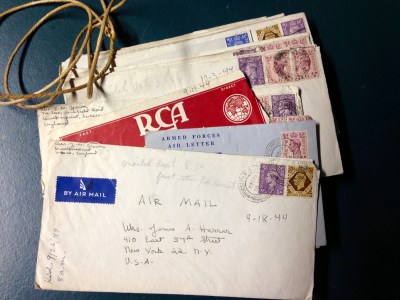
I have spent most of this summer reading hundreds of hand-written letters dated between 1943 to 1947. These nearly daily journals record my mother’s life in England as the war was finally won, and reconstruction had begun.

Mom’s letters to her dad 1944-1947.

It is a safe bet that had the stories been written as emails, they would never have resurfaced. But these did, unbidden, and made for an arresting and revealing read.

They appeared in a box from her estate, neatly tied together with a shoelace. The bundles were collected and saved by her father, in New York. No internet cloud at work here.   But without doubt, their physical presence could not be ignored; they had to be saved, and they were.  As a result, her story was available to be read, 70 years later. I’ll share more on that another time.

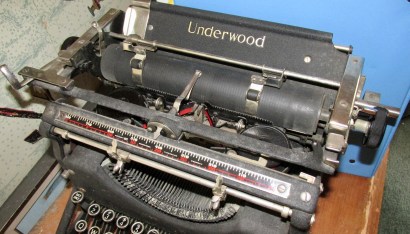
The workhorse 1915 Underwood–engineering marvel.

Along with the letters, I also inherited her Underwood typewriter. As a child I recall working this machine, struggling with its keyboard, stumbling through sentences like a child inebriate, unable to find the right letters, the right case, the right push.

Last year I purchased some new ribbon to replace the one that was now leathery dry. The new reels came from England.

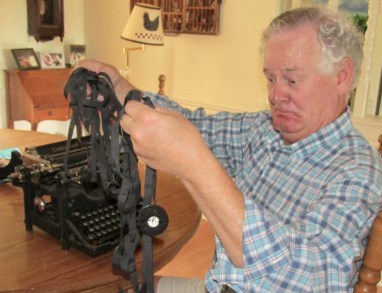
Today I installed the ribbon. It’s black and red, and very, very fresh.

Changing a ribbon: lost on today’s digerati

The Underwood is about 100 years old, and is an elegant, and beautifully engineered piece of machinery. It is built on a solid black cast iron base, and probably has about 500 moving parts, all in perfect working order. A priceless possession.

The Underwood’s engineering was as intricate as a Swiss watch…or a steam locomotive.

The QWERTY keyboard is easier to manage now, after a career of hammering away on computers. But there are some niceties, too. An exclamation mark (!) is accomplished by striking the apostrophe (‘) key over the 8 key. Back space, and drop in a period. Voila!

Wordwrap had not yet been conceived, let alone invented, so there is the iconic bell to warn that the margin is in sight. Better than that, there is NO spellcheck. What you type is what you get. The typewriter  has a physical honesty about it that today’s word processors cover up like embarrassed parents viewing a child’s essays.

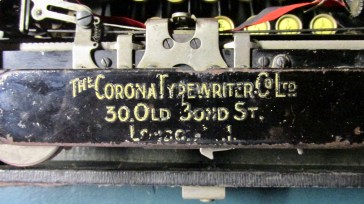
Dad’s portable Corona was the picture of efficiency

At the same time I acquired the Underwood, I also received my father’s Corona portable. It comes in a cardboard leatherette case, tied together with a length of electrical cord. This machine is remarkably lighter, only 10 pounds.

The 1914 Corona flipped open to reveal a tiny keyboard

Opening the 100-year-old container, I discovered that the upper half of the machine, ribbons and all, flips over revealing a modest set of keys. These are faithful to QWERTY, but there is special efficiency in the Corona. The actual slugs have 3 different characters each. An informed operator can do upper case, lower case and special figures off of the small keyboard.  My father wrote his doctoral thesis on this relic.

fullsizeoutput_4555

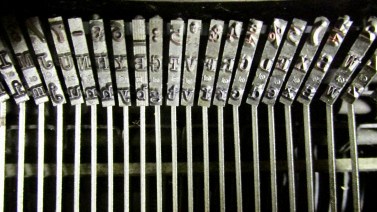
Three characters for every slug, a clever design.

Again, I marvel at the care and diligence of the engineers who designed these machines. They are quite exquisite pieces of working technology.

I recently read a book entitled, “The Iron Whim – A Fragmented History of Typewriting“, by Darren Wershler-Henry. This Canadian author has assembled a fascinating thesis about the role of typewriters in our culture. After our 30+ years of PCs and laptops and smartphones, his book is a brilliant perspective on how we have developed.  You think it’s just about stenos and typing pools?  Get the book.

IMG_0882

The #5 Underwood, 25 pounds of literary punch 

And then there’s Tom Hanks and John Mayer, who have just concluded a documentary “California Typewriter“.  They too are quick to tell you about the beauty of typewriters, especially as Hanks says– his typewritten messages “can never be hacked by the forces of evil.”  Apparently Hanks also has a book in the works, featuring three stories involving typewriters.  He has time on his hands?

So, returning to the advice of my grandson, I will continue to use my laptop, and thumb my way through the iPhone keyboard, but I am much more respectful of his intuition on these things.

Hard copy doesn’t go away, and especially in the long run, is probably easier to find.


Post Script: October 26–I just finished Hanks’ new book, “Uncommon Type”, a series of short stories written by the actor.  A great read!


Standard
Culture, Government, Media, Politics

A Note To My Canadian Friends

Leading up to the final election results today I have received a pretty consistent flow of commentary through social media and the occasional conversation that suggested perhaps we have all gone nuts in the land of milk and honey.

Since this morning, I have been presented with sound bites of disdain, disgust, and some pithy, intellectual thoughts about the decline and moral decay of America.

The latest was a clipping from the New Yorker “An American Tragedy” with my friend’s comment, “A sad day…”

First of all, let me say, I totally get it.

It is extremely difficult to swallow the language, the rude, boorish nature of the President-elect. But before we blame the winner, we need to ask why such a perceived lout could still mop up the electoral college with such surprise and certainty.

It reminds me of a story the late Art Buchwald told a gathering of we Canadian direct marketers back in the ’80s. This was a luncheon of about 200 business folks at the Boulevard Club alongside Lake Ontario in Toronto.

Buchwald, columnist from the Washington Post, was introduced after lunch to give a few comments. Like a good speaker, he started with a story. Buchwald was about 70 years old at the time and had a dry, gravelly voice that tumbled words out of a mouth you’d swear was filled with marbles.

He was recounting his conversation with the cabbie who drove him downtown from the airport. “I said to the driver, ‘I love coming here. The people are nice. The streets are clean. The architecture is superb. What a wonderful city!’ The driver looked in the rear-view mirror and said, ‘You wouldn’t say that if you lived here.’ ”

The punch line drew lots of laughs predictably.

But you can say the same thing about the view from inside the U.S. today.

By the way, Garden Collective, a Toronto ad agency put together a wonderful 2- minute piece about, “America You Are Already Great“. Watching it on TV, I was speechless, with a lump in my throat, overwhelmed by the kind and complimentary upbeat tone of the message. It was a warm, nice message.

It reflected well on a population which has elected a young, progressive, educated, well spoken, photogenic and popular leader named Trudeau. We Americans can only be jealous, political ideology aside.

But when the verdict is that today was a “sad day” in the United States, let’s be sure why.

Undoubtedly, the election of a person who may personify “bully”, is hard to stomach. I am sure that the nose plug counter at the voting booths cleared its inventory faster than Cubs shirts in one day.

The question is, how many voting Americans picked the winner because they like mysogyny, crudeness, xenophobic language and gratuitous swagger. Not many, I’ll bet.

The reason they held their nose and checked the box is because it has already been a sad day–sad for many years.

Trump won his votes because of the raw facts: only 62% of the U.S. workforce has a job. 45 million Americans are below the poverty level. 43 million Americans live on food stamps.

There are twice as many tax-payer funded civil servants as there are manufacturing employees.   Our enemies disrespect us, and our allies don’t trust us.

We have a $365 billion trade deficit with China, and a $20 trillion national debt, exacerbated by a limitless annual budget deficit.

The economy has poked along at a 2% growth rate annually, for 8 long years.  We are engaged in a middle-east conflict that seems to have no end, with heavy weights like Russia and China picking a piece of the pie.  The icing on the cake: a $12 billion payment to Iran for a nuclear arms deal.

Today there are 61 million immigrants in the USA, myself included, and approximately 25% of those are here illegally, absorbing their share of welfare, medical, educational and social services.

While the numbers may lead to numbness, they add up to a diminution of happy times.  And they have done so for at least 8 years, perhaps longer.  So for a family which is struggling today, to hear the same promises again from the same mouths as the past, the pot finally boiled over.

We all depend upon the media for our news.  And it is the mass media focused on their one dimensional narratives on Obama, Trump and Clinton that have glossed over the very real problems which exist in the U.S. today, leaving you the viewer to wonder how could Americans could elect such an impossible choice for President?

We have been manipulated by pollsters, pundits and reporters who just didn’t see what was happening at street level.  And then in a moment of surprise that only Wile E. Coyote could express, they ran off the cliff.

So I get your disappointment.

I know you are hurt inside that America voted as it did.  But don’t blame it on the electorate.  The numbers are a record– over 120,000,000 made it to the polls, and split the vote like a giant slab cake right down the middle, with just a few crumbs left over on one side.  But hopefully you won’t call out every other American as the stupid one.

More likely, they are holding their breath, like me, and hoping that this sea change, continental shift, tectonic grinding will really change things, and for the better.

In the mean time, thank you for your goodwill and take advantage of a huge dollar exchange advantage: it is a great time for us to visit Canada.

Thanks for sharing!  And don’t stop coming south, we love to see you.


Standard
direct mail, Economics, Marketing, Media

Awakenings: What Happens When USPS Cuts Prices

Spoiler Alert: This Is All About Direct Mail Math

It was not a well publicized announcement, 10 days before Christmas, that the USPS will most likely cut the price of a first class stamp by 2 cents, April, 2016.  That’s a 4% cut!

Whether the consumer figures out that a letter will mail for only 47 cents is a question, but for the direct mail community, the news is big.

First of all, direct mailers don’t talk cents. They communicate in thousands. (‘000’s.) A 2-cent drop in mail cost is worth $20 per thousand pieces mailed.

Hopefully the marketing folks at USPS have now awakened to the merciless mathematics of direct mail. In the civilian world, when we experience a cost of living increase, we suck it in, or look for a raise in pay to compensate.

In direct mail however there is a brick wall facing an increase in mailing costs.   The reality is, mailers don’t manage by total program cost. Rather, they manage by cost per response.

For instance, if a charity spends $1,000 to mail 3,000 letters, it is because they expect to get a 2% response…60 donations, at a cost of $16.66 each.

That cost per response (CPR) is bedrock..an anchor around which all other budgeting decisions are made. So when the USPS issues a 1% increase in postage, the CPR goes up, which is unacceptable.

The Story Behind The Story

When the post office raises its prices, we experience the inelasticity of direct mail performance, because mailers must preserve that cost per response.  The only way to do that is to spend less on something else, and that is exactly what happens: smaller envelopes, fewer pages, cheaper paper, less ink, for example.

The bogeyman in this reduction process is that the cheaper the package, the lower the response, which drives up the cost per response again!

The end game option in this vicious circle is to cut out lower responding markets, by mailing fewer pieces, and diverting funds to other direct media.

None of this helps the USPS.

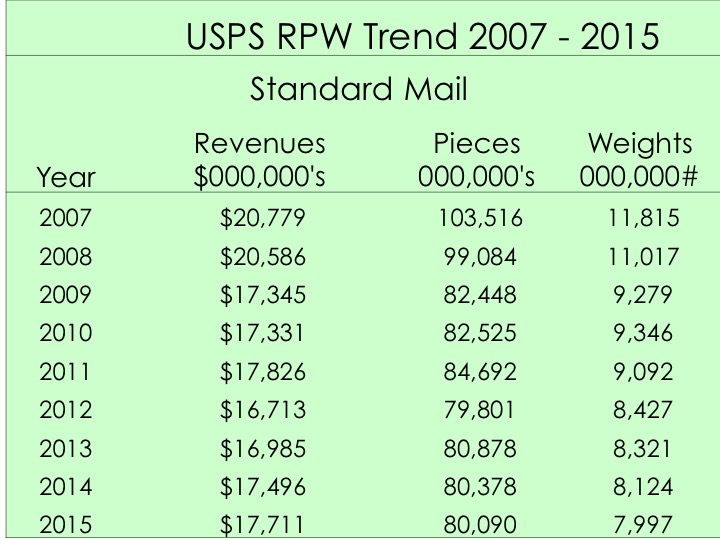
Mail Trends 2008-2015 Prove The Point

In 2007 the USPS delivered 104 billion pieces of direct mail, its highest performance in a 240-year history.  Next year, the U.S. economy had a collapse, and there was a 4.3% drop in direct mail.  In 2009, there was another drop of 16.8%, eroding 21 billion pieces over two years.

Slide1

From 2007 to 2015 Direct Mail volume shrank 24 billion pieces.

Revenues likewise fell from $20.8 B in 2007 to $17.3 in 2009.  $3.5 billion dollars–gone.  Looking for cash, the USPS raised its prices nearly 13% from 2006 to 2009.

The bottom line is that the USPS has held direct mail revenues in the $17 B tier ever since, with three more price hikes from 2009 all the way up to 2015.  Its actual revenue per piece has gone up from 20 cents to 22 during that time.  Direct mail volumes have stabilized around 80 billion pieces, down 23% from its stellar 2007 year.

What You Don’t See

Slide2

Revenue per piece grew 10% while weights decreased 13%.

While the USPS has been able to weather the economic storm, the quality of mail has deteriorated.   In 2007 the average piece weighed 1.83 ounces.   In 2015 that shrank to 1.60 ounces, a 13% decline in paper, ink, pages and envelope.  More post cards, fewer envelopes, fewer flats.

The irony in this is that the USPS is actually earning more money for every ounce delivered: 11 cents in 2007, versus 13.8 cents in 2015, a 25% increase.

The Good News

A 4% reduction in postage in 2016 may not mean much to the consumer, but to the direct mailer, it opens the door to better creative, design, and production.  These lead to better response, lower cost per response, which drives up mail volumes.  Whew!

This price cut is good, good news.

PS: Kudos to you for getting through this important math lesson!  Please share.

PPS: You can check all the numbers by reviewing the USPS Revenues, Pieces and Weights report which they faithfully publish very quarter.


Standard
Education, Media

One Mail Date You Can’t Miss

IMG_4675

Early cursive, having graduated from a straight pen to a fountain pen.

Valentine’s Day is nearly upon us. You need to prepare.  But just yesterday, in an important and related circumstance, our world was jiggled.

The news is that the State of Washington is considering a bill to re-install cursive writing as a mandatory subject in elementary school.

These things creep up on you.

It’s not that we missed cursive writing so much as we just didn’t notice that our children no longer write.

They print.

This is because the key pads of every digital device in the world host simple characters, void of any “joined up” writing.

In schools today, writing is no longer a strength. QWERTYUIOP is. This is the real impact of an analog world that went digital.

OMG!

Love Script 9

~”Steel Rail Blues” 

On closer inspection we find a more destructive force at work.

When our kids were divested of their writing skills, they likewise lost their will to communicate on paper. And what follows that is the total lack of understanding about commitment, letters, and the mail.

Love Script 1

~”P.S. I Love You”

In just over two weeks’ time it will be Valentines Day.   February 14th is the penultimate delivery day for personal mail.

Miss this date, and you are sunk, pretty much for the year.

The magic of Valentine’s Day is all about writing and receiving cards, and letters, which are totally tricked up and enhanced for impact.

Love Script 3

~”Mr. Postman”

Cursive writing plays a big role.

Getting Letters
Since the invention of papyrus we have lived in a world where written communication was executed using mail delivery.

A note arrived, not at the speed of light, but at the speed of foot. Replies were expected within weeks, not seconds.

Love Script 5

~”Return To Sender”

There is an argument that speed is of the essence. Why wait two weeks to learn that a love is requited when you can know thumbs up or down in nano seconds?

Answer: the wait is part of the experience.

Not knowing for sure can extract days of wistful, sometimes excruciating, wrenching anticipation of an answer.

Why spoil that with a text reply that will fit on a license plate?

Love Script 8

~”Nights In White Satin”

The effort of putting it on paper, combined with the plodding slowness of mail have been the guard rails of civility for centuries.

Writing gives time for the distillation of emotions.

Committing thoughts on paper gives solemnity and gravity to an otherwise flippant, momentary impulse.  By contrast, the most powerful, and potentially destructive word in the lexicon today is “Send”.

Love Script 4

~”Song For A Winter’s Night”

So we need cursive.   It takes practice and time to perfect.  It also looks nice, even when young hands, and older ones too, have difficulty forming the words.

There are two weeks remaining before a trip down to the mail box reveals your true feelings to a certain someone.

Make the most of your time.

Standard
Marketing, Media

USPS: Taking A Retail Moment

USPS4

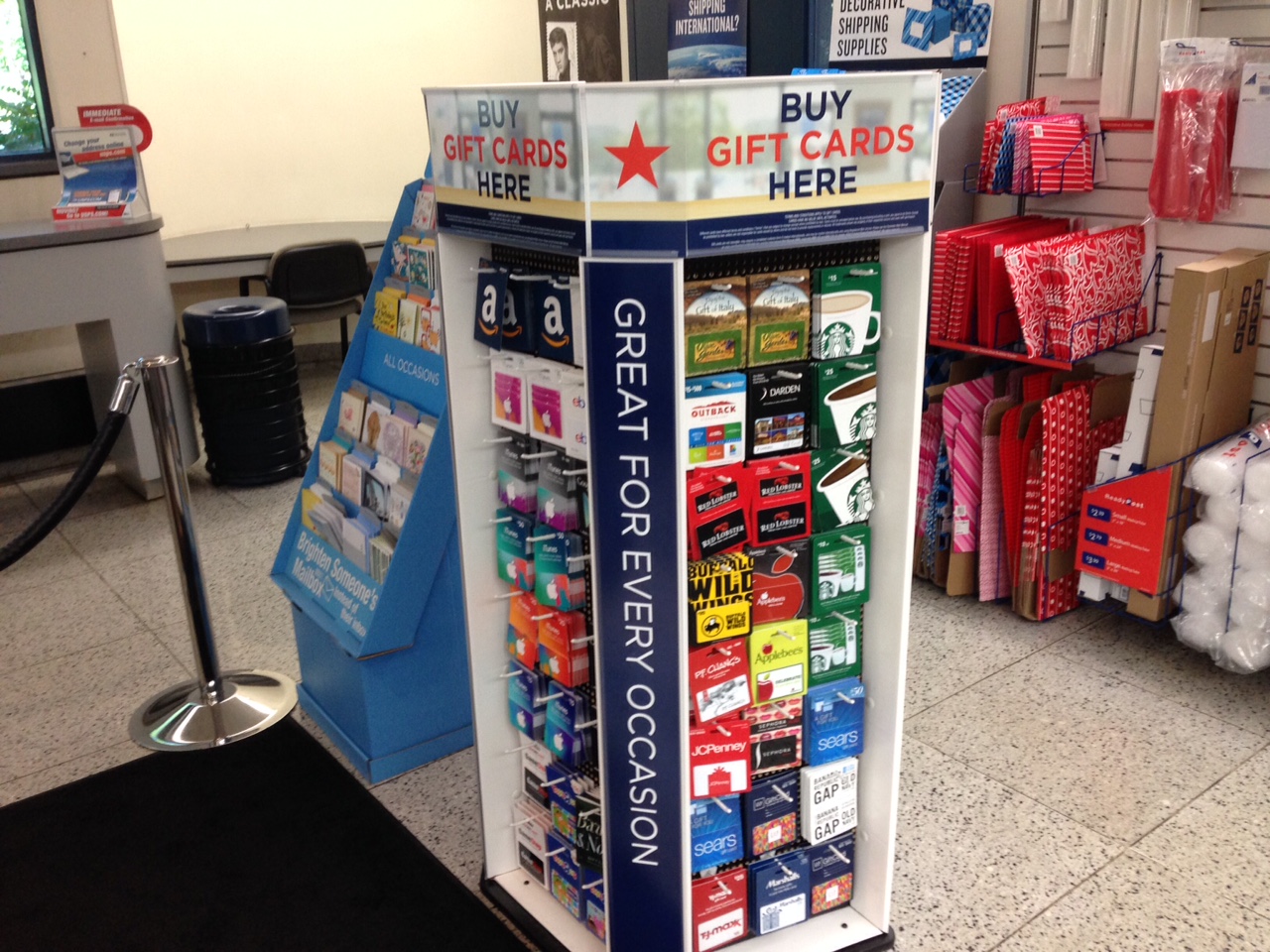
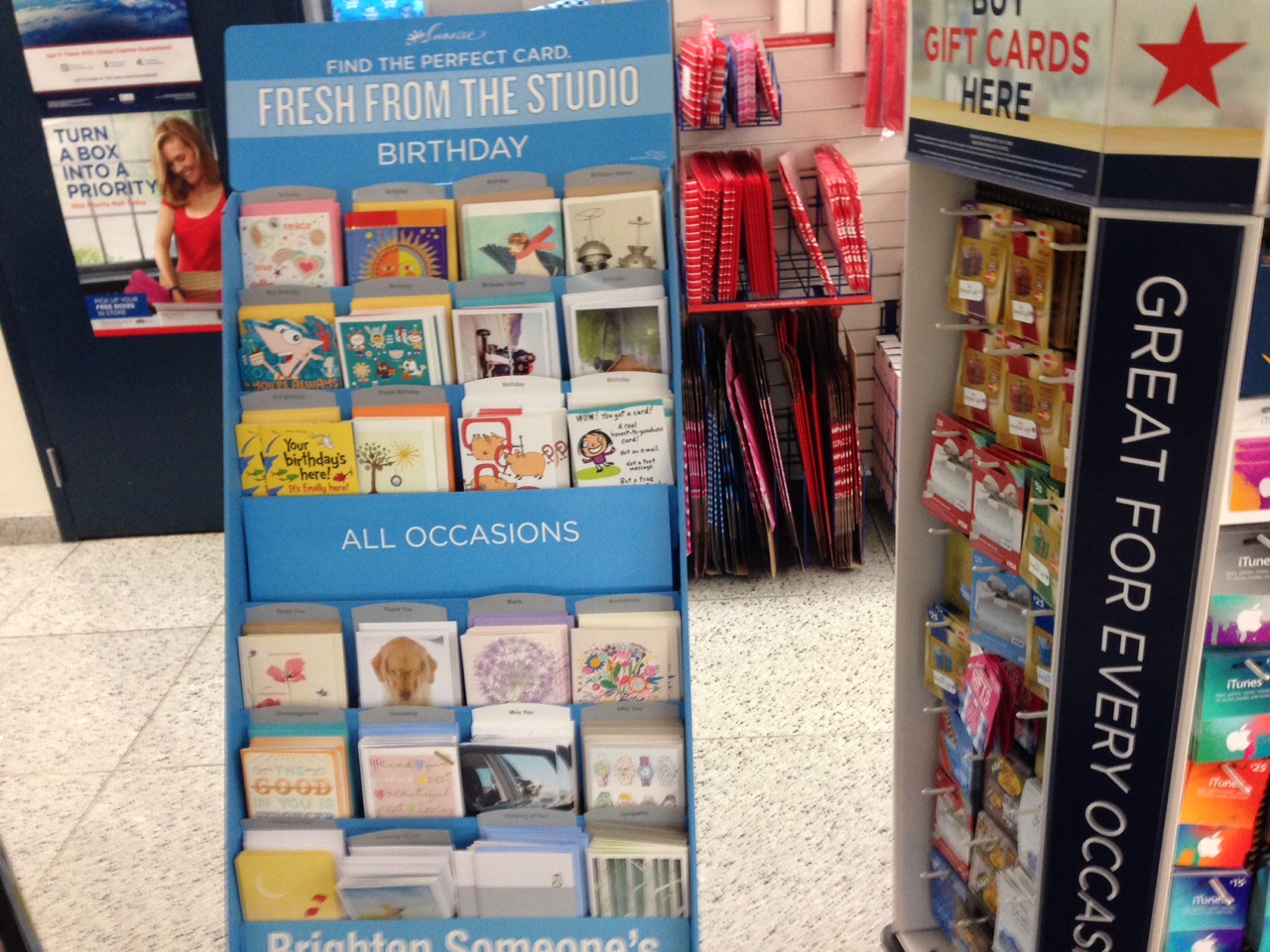
The USPS card display is there to capture the impulse to do something nice.

Kudos to the merchant-minded individual who suggested that the Post Office should sell greeting cards in their lobby. After all, if you want to receive letters, you need to send them too.

Part invites! Looking for a venue.

Party invites! Looking for a venue.

It turns out that the USPS does an audit every year to measure how long we wait in line. Two minutes is the national average. During that time we have a variety of scenery to peruse.

Beyond the oddities of humanity that lean over the counter to ship parcels bound up like mummified hat boxes, or to mail extravagantly addressed purple letters, or the restive small children that roll across the floor, we can look at the card displays.

The USPS selection is not encyclopedic, but it is enough to trigger the impulse.

The USPS selection is not encyclopedic, but it is enough to trigger the impulse.

The selection isn’t anywhere close to that found at a card store, and that’s good. We only have two minutes to make a choice. But the cards available still represent a middle of the road attempt at gentle humor, quiet sympathy, and friendly reminders.

Next to the greeting cards is a rack of retail gift cards, perfect for the last minute desperate search for an overdue birthday gift.

Stationery sets as starter kits. After all, if you want to get letters, you have to write them.

Stationery sets as starter kits. After all, if you want to get letters, you have to write them.

Across the lobby is another display of stationery sets, and party invitations.
When we are there to pick up our mail, or buy stamps, we have a brief opportunity to snatch a couple of cards, and whip them off to someone who is on our mind at that precise moment.

The USPS is demonstrating a simple case of vertical integration here. They are providing the total service: stationery, gifts, attractive postage stamps and delivery.

What better way to merchandise the universal service that gives you access to over 150,000,000 addresses across the continent?

The next time you visit your post office, take a look around. This is the perfect place to yield to the impulse to greet and treat someone, two blocks over, or on the other side of the country.

It only takes a couple minutes.

Standard
direct mail, Government, Media

Across The Routed Plain

MailThere is a page on the USPS website which was written to boggle the mind.

It is a story worthy of the read for anyone who views the postal system as a fading presence.

While you have to dig a little, and do your own math, you can learn something fascinating about the real meaning of “ubiquity” and “omnipresence”.

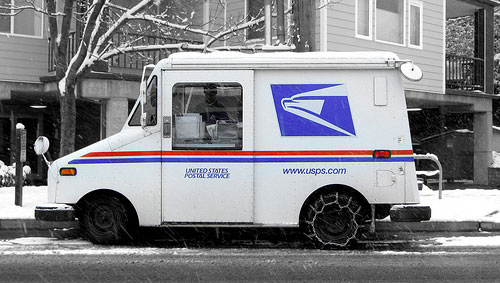
mailman-truckIt turns out that America has a network of 4,100,000 miles of roads.   From two-rut country lanes to 16-lane raceways.   Like a fine mesh of nerves stretching across the continent, the road leads up to the doorsteps of 154,000,000 US mail boxes.  Quite incredibly, the USPS drives vehicles along 3,834,000 miles of this road system, six days a week.

This would not seem such a big deal if it wasn’t for the presumption that we are all connected inexorably by the Web.

mailmanTruly, the Web has done its best to increase our knowledge about more people than we could ever achieve otherwise, without really coming to know them at all.

Enter the the USPS.

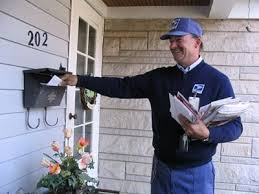
This quasi-Federal organization shows up in person every day to see us.   For the working masses, the visit occurred while we were somewhere else, doing our job.   For the very young, the out-of-work, for the retired, and home keepers, it’s likely we saw the truck pause in front of our home, or heard a plop and clunk at the front door as a postal person marched across the yard.

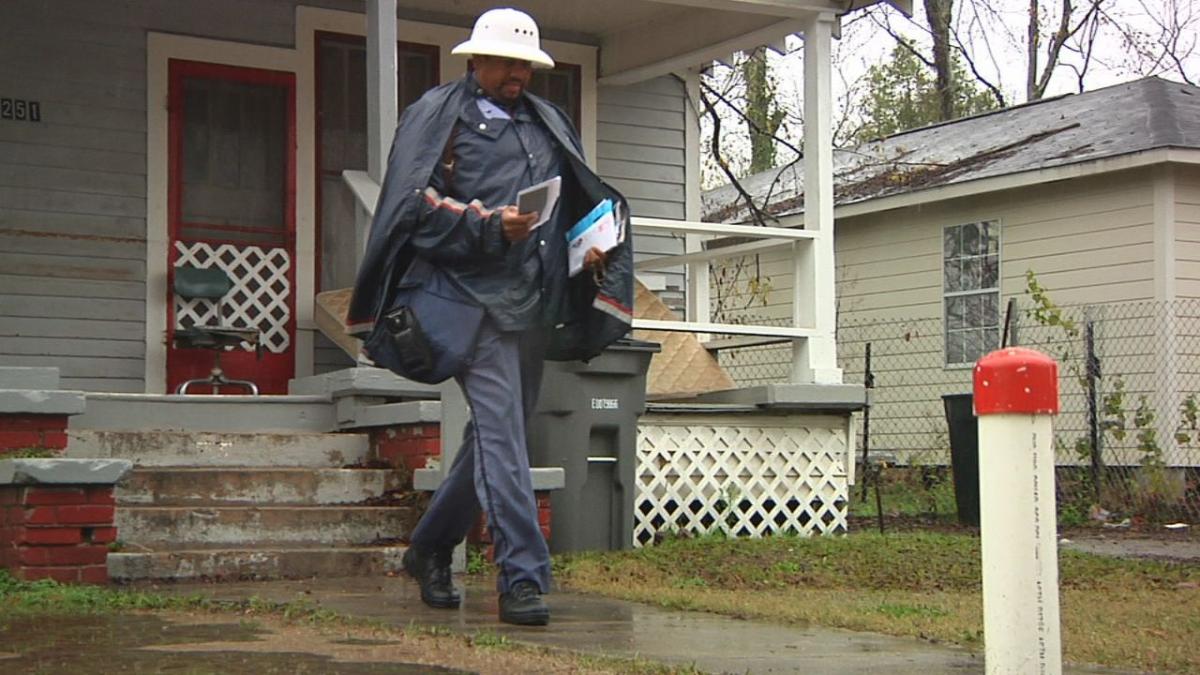
Mail ladyThe point in all of this is that we are connected by a single, reliable entity that physically bears witness to the daily lives of the country’s people.  Present and accounted for.

To fill this in a bit, the post office drew over 244,000 separate routes on a map to come see us, and ostensibly sent over 211,000 couriers out to make the call, judging by the number of vehicles in use.

Just for comparison, Google has 54,000 employees, and apart from their roving camera cars, most probably haven’t left the office.  Yet they would make the claim they know all about you.

The USPS web page is a column of statistics that may astound you, and then again maybe not.   What is riveting nonetheless, is their final, bold statistic– “$0: tax dollars received for operating the postal service”.

Give it a read!

Thanks for reading! I have no affiliation with the USPS, but do value their work and worth.  Compared to a lot of government agencies, this one actually gets the job done.

Standard
direct mail, Marketing, Media, Thank You

Why Hard Copy Matters

From the time that they could open mail, I have written notes and cards to our grand children.

The goal was to accustom them to the excitement and anticipation that accompanies a successful trip to the mail box.

A real letter will always prevail over an electronic communication with the same content.

Like a personal gift, it eclipses any email. Hilly 500

Granted, the mail box delivers direct mail too, and some may object.   But compare a couple letters, catalogs and cards a day versus an earful of robo calls, or endless repeat ads on TV, and nervous, persistent popups on your favorite website, and you are prepared to give the mail man, or mail lady, a pass.

In the  social media arena, the email medium has a dark side, which I blundered into this week.

It started when scanning my email folders, I found that I had collected some spam.   I opened the “junk” folder to find a stern notice summoning me to a court hearing next week.

The subject line was ominous: County Court Summons.

Hunh?

Like a total rube, I opened the email for details. It announced that I had been summoned by a named county court officer to appear March 25.   I was advised that in my absence, the court would proceed with actions as described in the official court document attached.

“Gawrsh, holy moley,'” I said under my breath, “I better open this file, pronto!”

Screen

Uh-Oh.

When I did, the computer screen flooded with a thousand lines of code. More characters than a kanji encyclopedia scrolled before my bedazzled eyes.

In a panic, I punched keys left and right, closing the file, and dove under the desk for the power cord, to rip the laptop off the grid.

Pointless of course.

Returning to the spam folder, I found another foreboding greeting, this one from E-Z-Pass toll collections  warning me to pay off past due charges immediately.

Much wiser now, I did not open the Official Billing Notice attached.

I had been duped by the brusk, official look of the email, and should have recognized the ruse immediately.

Email builds its own insensitivities.   We are more disposed to ignore it, or save it never to read later.   It’s a casual, low calorie communication.

Conversely, without thinking, we may dive right in like I did, and open it, only to poke a bees’ nest.

2015-03-19_10-04-53_917

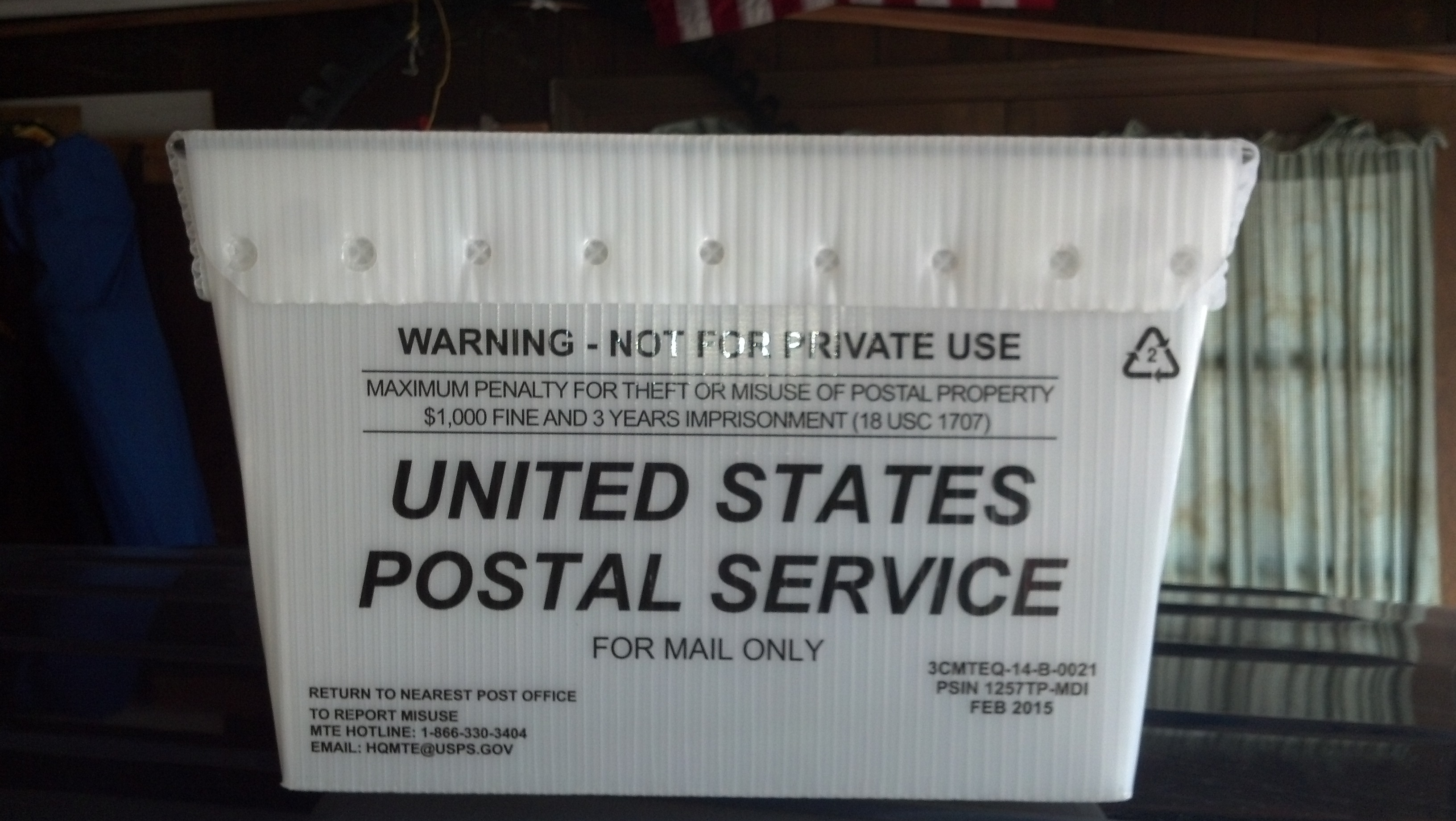
The real deal: Federal property carrying real value.

Regular postal mail requires much more attention, both by the writer, and the receiver.   The fact that postal mail is a Federal government enterprise, armed with regs that have brought many a crook to jail, gives me great comfort.

Esthetically, there is enormous value in every personal letter, because it’s a perfect indicator of care, concern and thoughtfulness.

Hilly 501We feel good opening a letter, and just as good writing them.

So I continue my efforts on peppering the grandkids with real letter mail, printed on paper, much in the tradition of my own grand parents, hoping that one day, they will get the bug.

It’s slower, physical, and more thoughtful.

And who knows, maybe just one day, what goes around will come around.

Standard
direct mail, Economics, Media, Politics

Found: The Hidden Miracle in the USPS

Spoiler Alert: This Is A Good Story About Numbers
Every year the media touts the headline that the United States Postal Service lost another few billion dollars. Politicians get huffy. The digerati are quick to call the funeral home.

But in fact, the USPS has accomplished an amazing business coup in its mail delivery management.

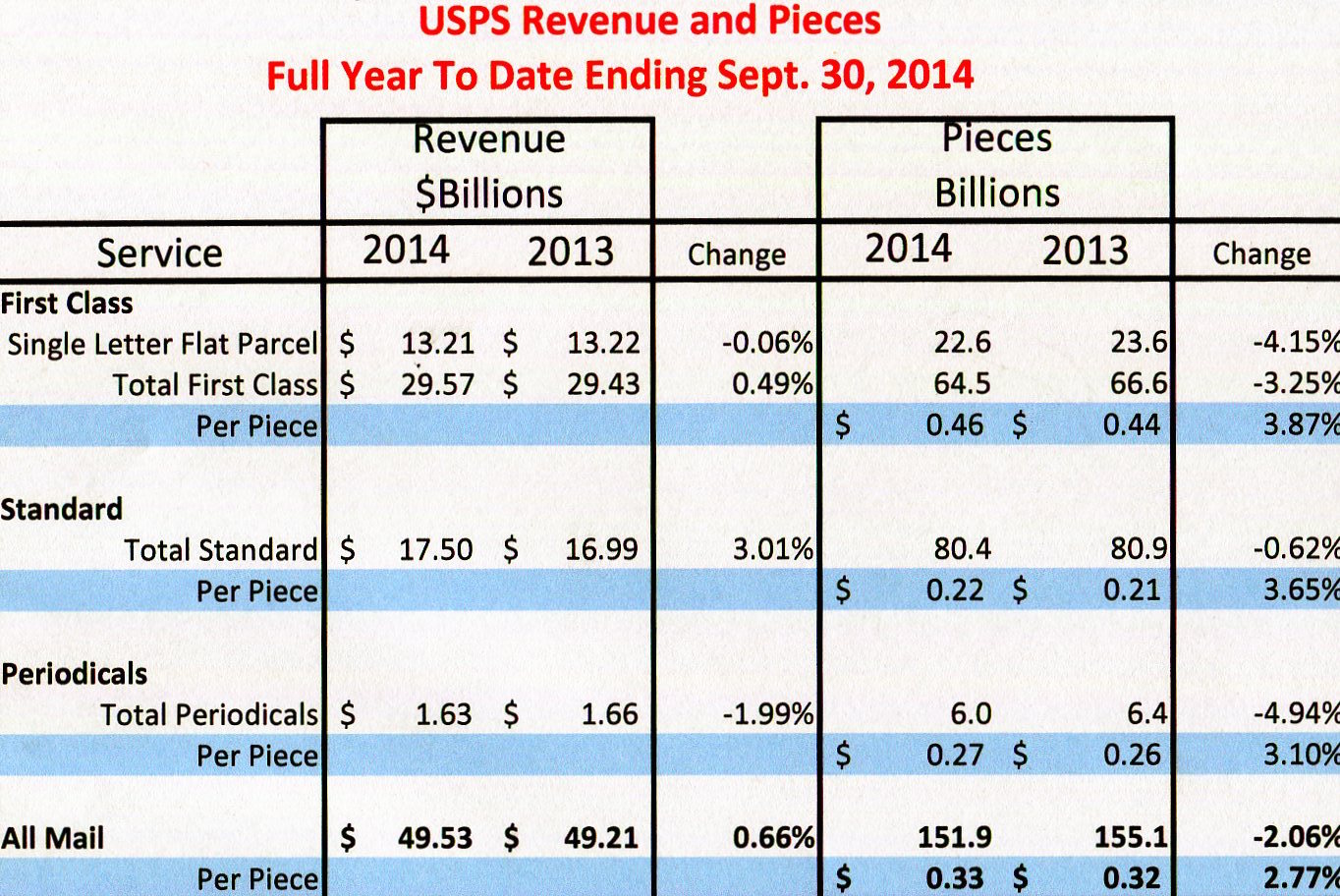
First, look at the current “bad news” available in the latest Revenue, Pieces and Weights report* for USPS full year 2014.   Figure 1 gives some highlights.

Fig.1.  2014 revenues were up 0.66% while volume fell 2.06%

Fig.1. 2014 mail revenues were up 0.66% to $49.53B while mail volume fell 2.06% to 151.9B.

Mail volumes decreased from 2013 to 2014. A 2.06% decrease to 151.9 Billion pieces. “Pieces” include letters, parcels, magazines and flats. The shrinkage may be attributed, if you wish, to a blended increase in price (postage) from 32 cents to 33 cents per piece. A 2.77% increase. But it probably has more to do with society’s use of email.   We would just as soon email Gran a singing birthday gift card as send her a parcel.

Dig deeper and we find that First Class volume shrank 3.25% while actual revenues increased 0.49%.

Postage per piece went up 2 cents, or 3.87%

What we know about mailing economics is that there is no elasticity. When postage goes up, volume goes down.

This is the fundamental truth of direct mailers. They maximize performance through testing list, offer, format and copy. The best performance becomes the economics benchmark. So when Standard Postage goes up 3.65%, we expect some mail to drop out, which it did: 0.62% less.

Amidst The Bad News, A Twinkling of Brilliance

November 14, the USPS presented its preliminary financial results to the Board of Governors. It declared a $5.5 billion loss in income. That made headlines. What was not picked up however, was its mail operations performance. You see, its operations income was $1.4Billion profit.

What that means is that the USPS moved nearly 152 billion pieces across the country to over 140 million addresses, six days a week, and did better than break even. What was the all-in price per piece to the mailer? 33 cents.

2004 Eye Opener

Now lets look at the real miracle of the USPS by comparing 2014 with 2004.

Ten years ago, it delivered 206 billion pieces for $65.87 billion.

Cost back then? 32 cents each.

Not bad! A one-cent increase in 10 years. Despite a 26% decrease in economies of scale, its performance eroded only by a penny.

Surviving The Ravages of Inflation and Restructuring

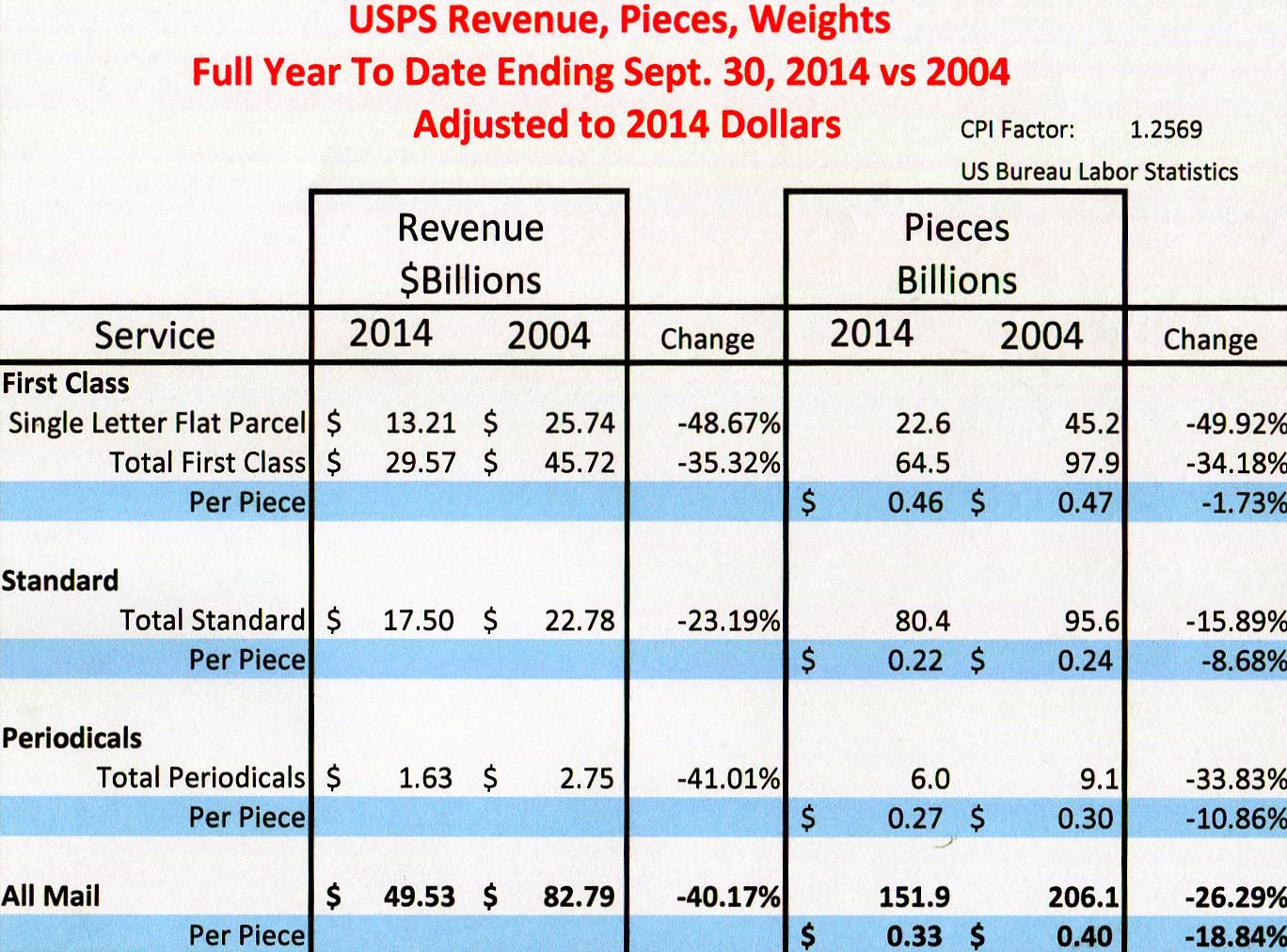
This does not begin to recognize the efficiencies the USPS has managed to achieve in the last ten years however. It disregards the massive cutbacks in volume, and the inexorable devaluation of the dollar. Look at the 2004 figures when they are expressed in 2014 dollars.  See Figure 2.

Using 2014 dollars it cost 40 cents to a mail apiece in 2004, versus 33 cents today.

Fig.2  Using 2014 dollars it cost 40 cents to a mail a piece in 2004, versus 33 cents today.

According to the US Bureau of Labor, we have experienced a 26% increase in prices. In other words, it takes $1.26 today to purchase what $1.00 would buy in 2004.

Applying the CPI to USPS figures then, we find that in 2004, it cost 40 cents to mail a piece, versus 33 cents today.

Standard Mailers would pay 24 cents in 2004 versus 22 cents today. First Class mailers would pay 47 cents, versus 46 cents today.

Magazines: 30 cents then, 27 cents now.

USPS: Economic Movement of Value

This government agency may have its critics.   The oracles may claim that mail is antiquated.   But they can hardly explain how well the post office has learned to distribute real property coast to coast at ridiculously low cost to the consumer.   Email and Internet may be instantaneous, but they both lack the credibility of hard copy delivered under government seal.

It can be said that mail is slow, but it maintains its cache because it is trusted.   We need to acknowledge the effort that the USPS has expended to bring us that service.


*The Revenue Pieces and Weights Report: http://1.usa.gov/1A8wEj1

Standard
direct mail, Marketing, Media, Sports

How the USGA Got My Attention, Fast.

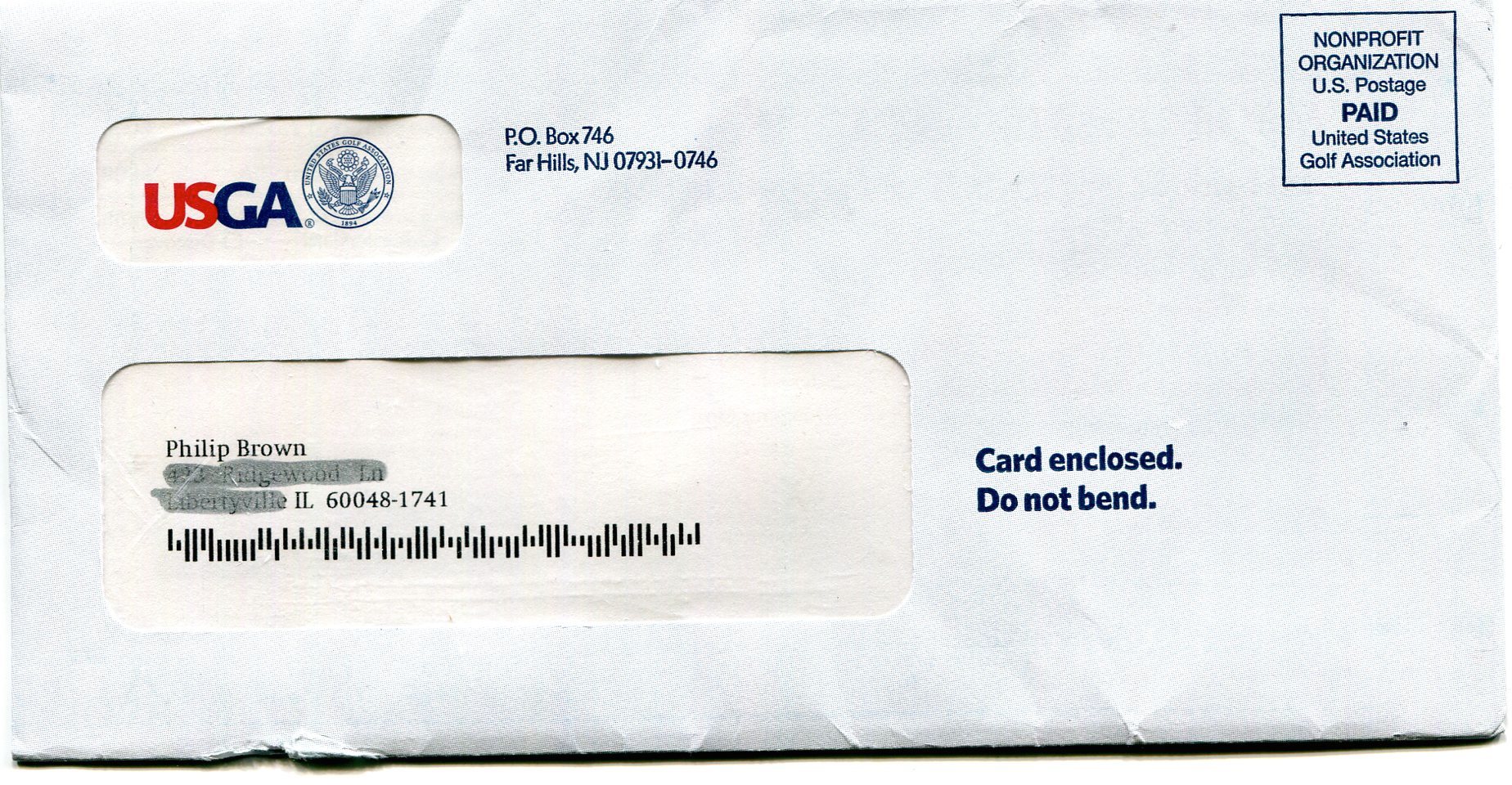
My walk to the mailbox this morning was rewarded by an irresistible offer from the U.S. Golfing Association. A FREE hat!USGA 2014-09-15 505 hat

How can you say no?

Their generosity gives me hope, too. This may be the re-emergence of the direct mail gift premium.

Once there was a time when any subscription offer came with a free gift. A calculator. A tote bag.   We even received a world globe from Macleans Magazine.

IMG_1042

A worldly gift with every subscription.

USGA 2014-09-15 504

The USGA wants me. They actually want me!

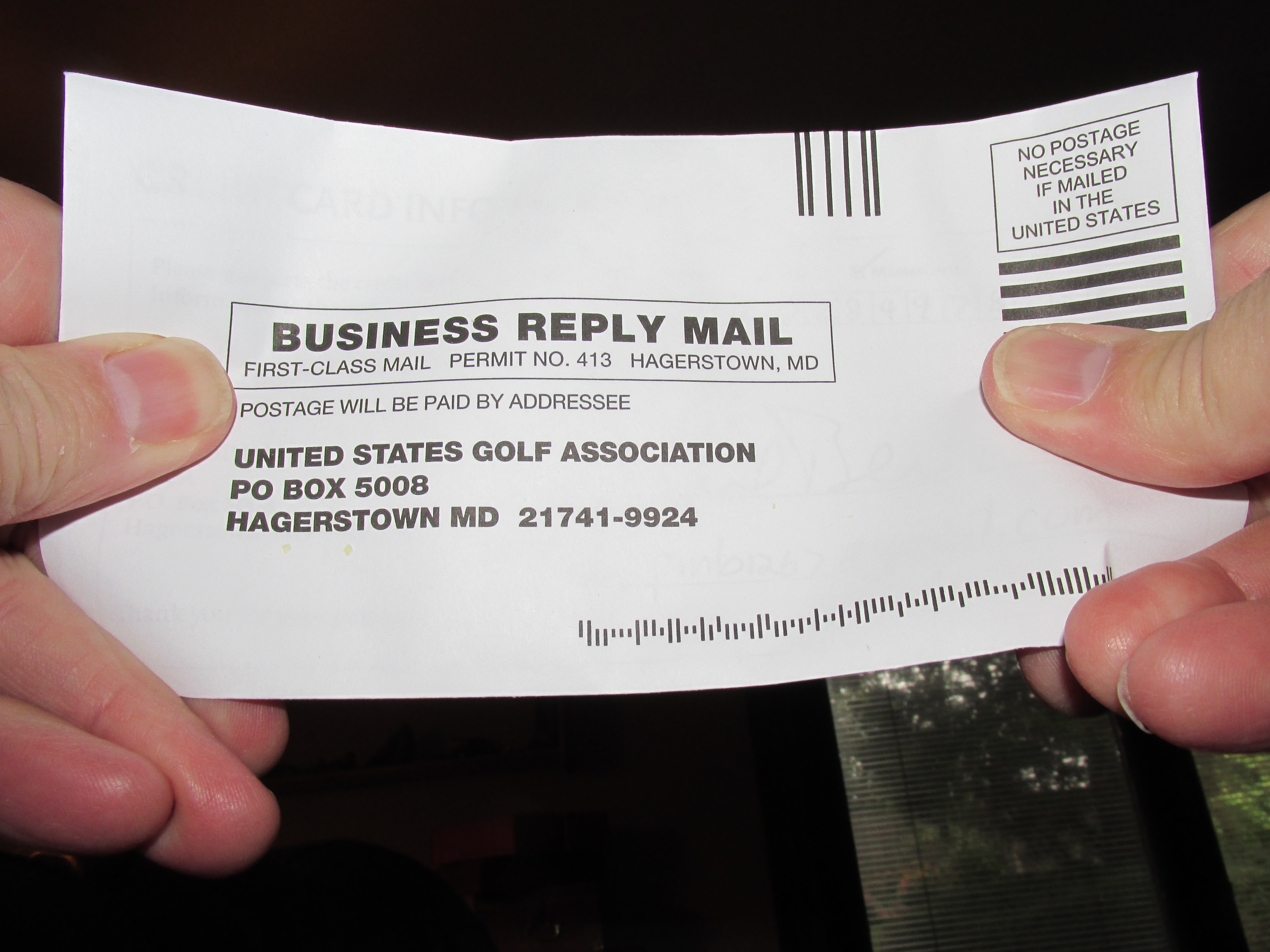
This kit begged to be opened. Not because there was a hat, but because the USGA had enclosed a card. For me. An official USGA card for a horrible axe-wielding duffer who scores a rambunctious 108 on a good day.

My handicap is so far off the chart I get a special space to park the golf cart.

USGA 2014-09-15 505 card

I am keeping this close by until my real card arrives, with my hat.

Nevertheless, I am moved by the card. I want it. Opening the kit, I am further thrilled to see that I can join the USGA and get a FREE USGA Open 2015 hat.

USGA 2014-09-15 505 slogan

A great slogan. But they don’t know me well.

At this moment, we have approximately 30 hats on the coat rack, all emblazoned with someone else’s logo. I don’t need another hat. But truly, I want this USGA hat.

USGA 2014-09-15 505

A compact offer, with color, balance, and readable content.

It’s like they recognize me. And how I have toiled to write “single-bogey” on a par 3.

Economics: Does This Kit Pay For Itself?

USGA 2014-09-15 505 benefits

All this stuff comes with the hat. How can you decline?

As thrilled as I am, and I am sure countless thousands of other golfers are thrilled at a Free hat offer, will the USGA lose its shirt with this offer?

No way, and here’s why:

All in, the postage and production for this piece was probably 40-cents. Let’s say they mailed 100,000 pieces. That’s $40,000 out of pocket. Now imagine that 2% of the readers sign up. They each pay $10 to join USGA. That’s 2,000 new members, for $20,000.

But the hat probably cost USGA $10, so the USGA ends up with 2,000 new members, each with a new hat. And a $40,000 bill.

USGA 2014-09-15 507Imagine now that the USGA direct marketing manager goes into the president, and says, “Chief, I just got 2,000 new members. They cost us $20 each!”

He replies, “Awesome– because at least 1,000 of these members will renew next year for $25 each. And 50 of these members will come to the Open and drop about $250 a day sipping coolers in the Club at Chambers Bay between strolls along the course to see the pros.  We pretty much break even.”

Second Thoughts About The Hat

USGA 2014-09-15 505 email

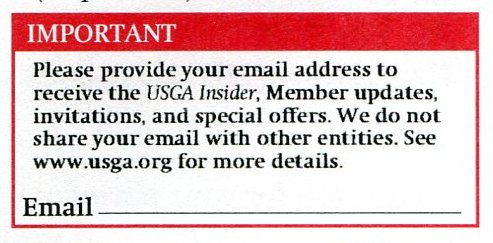
This microscopic email form has just enough room for “@”.

I have mailed my reply, and am quietly excited about my new hat.  And the free golf rules I get, and all the other stuff.  But really, it’s the hat.

IMG_1039

The thrill of mail order is waiting for the merchandise.

And then I start to think, what happens when I wear this hat?   First off, it’s yellow– school bus yellow.   So I will be easily identifiable on any golf course, or in any bar, as the duffer who went for the $10 hat.

Some earnest, scratch golfer will ask, “Are you going to the Open in Chambers Bay?”

“No, not really.”

“So why the hat?”

Or some hopeless hacker like myself will see the hat and ask, “Can you help me with my swing?”

“No. I’ll make your helicopter swing look like Blackhawk Down.”

So the hat is on its way, but I am not exactly sure I can wear it.

USGA PhilAnd that just might be “For the good of the game”.


Thanks for reading.   If you are a direct marketer, perhaps you should test out some gift premiums.   And make sure you put me on your list.

Standard