Cars, Culture, Economics, Government

Dear President Trump:

Dear President Trump:

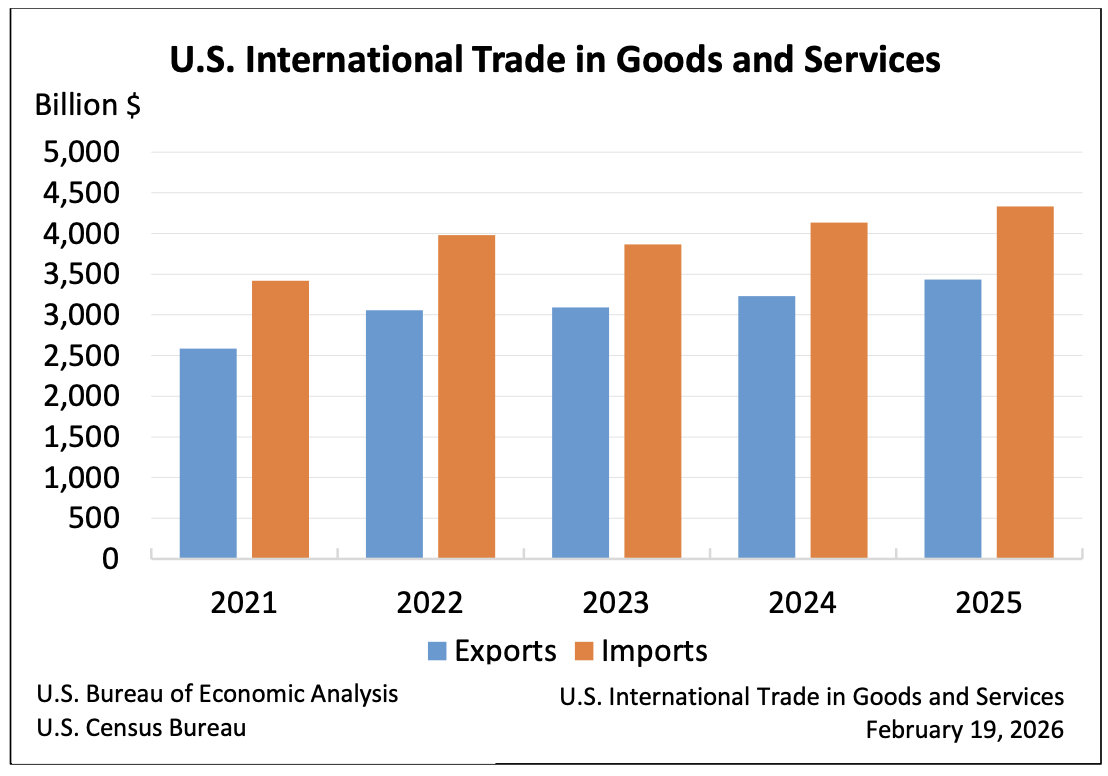
I voted for you. I understand your strategy of America first. But your decision to tariff Canadian auto exports to the United States makes no sense.  As you know, the automotive trade between Canada and the United States is virtually balanced. While Canada’s exports of cars to the U.S. may create a U.S. deficit, the United States exports an excess of automotive parts to Canada, balancing the automotive trade between the two countries.

This is clearly stated by the Toronto Dominion Bank’s economics team, January 28, 2025: “Potential Hazards Ahead” by Andrew Foran.

So why tariff Canadian exports of automotive products?

Your position to re-patriate the automotive industry to the United States is supposed to “bring back” jobs lost to overseas countries.  The truth is that in Canada, many of those jobs were created over a hundred years ago, long before you and I were born. Look at these Canadian subsidiaries, and their starting dates in Canada:  

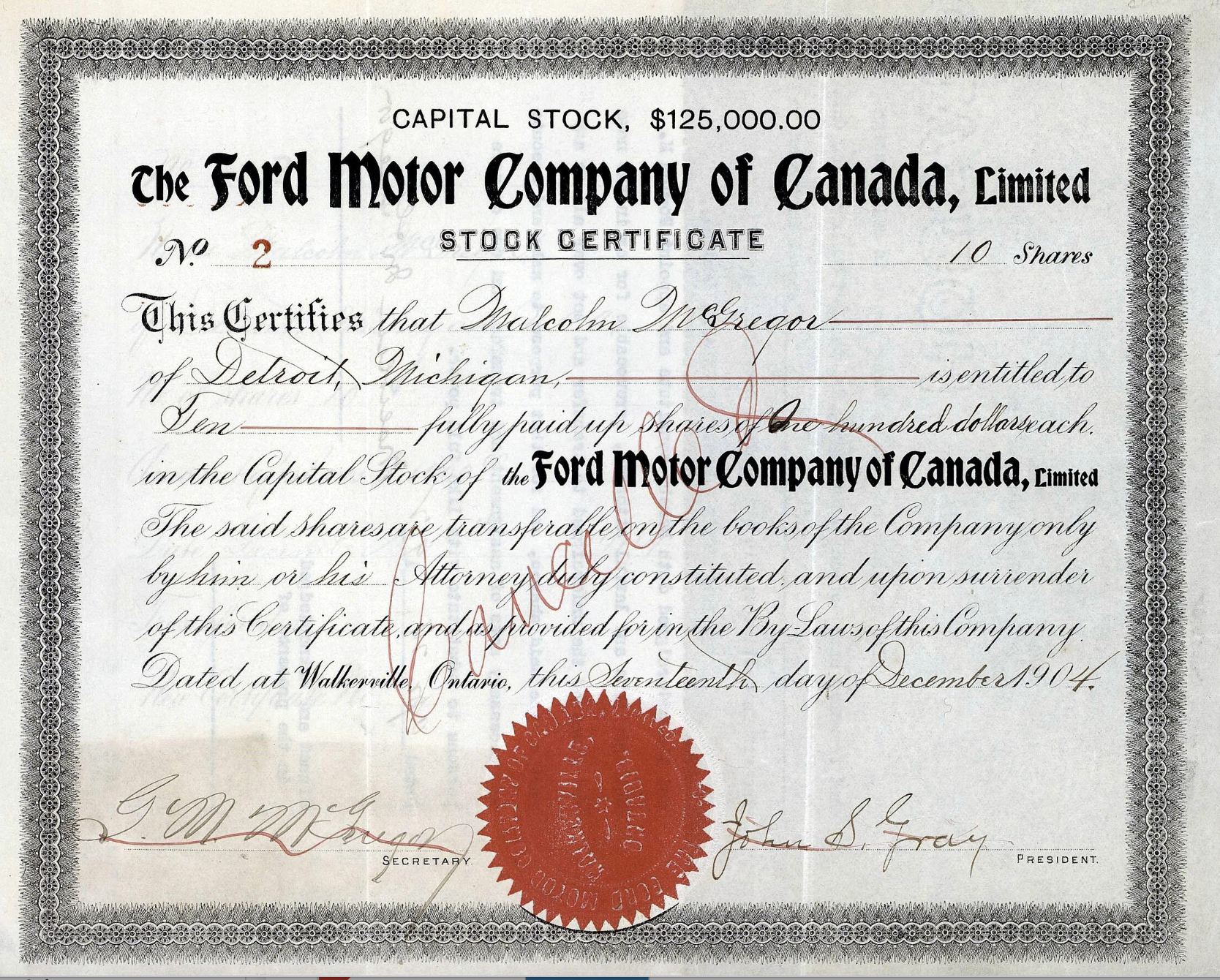
The Ford Motor Company of Canada, founded 1904

General Motors Company of Canada 1918

The Chrysler Corporation of Canada 1925

Kaiser Willys Jeep 1954

American Motors Corporation (Nash & Hudson) 1954

Honda Canada Inc 1986

Toyota Manufacturing Inc 1988

The Big Three were building and shipping cars in Canada for Canadians long before WWII. Four, and five generations of Canadian families have worked in the factories, the shops, accessories and parts businesses feeding these successful companies. It’s in their DNA. They have taken loans to buy cars, mortgages to build homes, grow towns, and slogged to work for their families. The profits were returned to head office.

Sir, why are these companies in Canada? Market opportunity. This expansion wasn’t about finding cheap labor. This was about mining Canadian dollars.

Now you suggest that Canada is “ripping off” the United States by building cars and trucks. I think it’s a fair bet that every automotive trade investment that has been made on Canadian soil in the last seventy-five years has been supported by Canadian loans and a motivated labor force.

These industries existed decades before NAFTA. The 1965 US/Canada Auto Pact designed this relationship, which is balanced, and has been a cornerstone in supplying both countries equally.

I must remind you, Mr. President, that Canada is not just a neighbor. It is our friend and ally. Canadians have pitched in whenever the need arose: Dieppe, Vimy Ridge, Juno Beach, Afghanistan, Iraq, Iranian hostages, emergency 911-housing. Canadian first responders have convoyed to floods and tornados in the US heartland, quakes, hurricanes in the south, and to forest fires in the west.

These tariffs are worse than a slap in the face, they are a stab in the back.

Please explain why this balanced relationship is being burdened by tariffs which will harm citizens on both sides of the border.  Better yet, Mr. President, please stop the tariffs on the automotive trade.

                                                Yours truly,

                                                Phil Brown

                                                Libertyville, IL 

Standard
Cars, Culture, Government, Politics

Shuttering A Family Business

The US administration’s current tariff policy is gutting a family business. Not that most Americans would think about it. The push to re-patriate the automotive industry to the United States is supposed to “bring back” jobs lost to overseas countries. The truth is that in Canada, many of those jobs were created over a hundred years ago.

The Ford Motor Company of Canada, founded 1904

General Motors Company of Canada 1918

The Chrysler Corporation of Canada 1925

Kaiser Willys Jeep 1954

American Motors Corporation (Nash & Hudson) 1954

Honda Canada Inc 1986

Toyota Manufacturing Inc 1988

The Big Three were building and shipping cars to Canadians before WWII. Four, and five generations of Canadian families have worked in the factories, the shops, accessories and parts businesses feeding these successful companies. It’s in their DNA. They have taken loans to buy cars, mortgages to build homes, grow towns, and slogged to work for their families.

And why are these companies in Canada? Market opportunity. Historically, Canada had no native manufacturers to serve its consumers, and the automakers in Detroit and Japan saw the potential of exploiting this virgin market. This expansion wasn’t about finding cheap labor. This was about mining Canadian dollars.

Now we are led to believe that Canada is “ripping off” the United States by building cars and trucks in facilities that have been financed by Canadian manufacturers. I think it’s a fair bet that every investment that has been made on Canadian soil in the last seventy-five years has been supported by Canadian loans and a motivated labor force.

These industries existed decades before NAFTA. The current tariff action isn’t a market correction. It’s a government-driven, grand-theft-auto: generations of jobs and livelihoods stolen by Presidential edict.

I have to remind you, gentle reader, that Canada is not just a neighbor. It is a friend and ally. Canadians have pitched in whenever the need arose: Dieppe, Vimy Ridge, Juno Beach, Afghanistan, Iraq, Iranian hostages, emergency 911-housing. Canadian first responders have convoyed to floods and tornados in the US heartland, quakes, hurricanes in the south, and to forest fires in the west.

Worse than a slap in the face, this is a stab in the back.

Yesterday, Canadian Prime Minister Mark Carney said it best: “The old relationship we had with the United States… based on deepening integration of our economies and tight security and military cooperation… is over.”

April 2, 2025 will be remembered as the shameful day the U.S. shuttered a family business.

Standard
Culture, Economics, Government, Marketing, Politics

Spin City: “Shop Local”

Last week I shared my frustration and shame at President Trump’s brutish and uncaring treatment of Canada, a treasured friend of the United States. My letter was to the Republican National Committee.

The gist of it was that under the pretense of stopping drugs and illegal immigration, Canada was forced into increasing secure borders, or risk tariffs. After complying to the President’s demand, the subject pivoted. It wasn’t about drugs and borders, it was about a $60 billion trade deficit between our two countries, favoring Canada. I called the pivot a “bait and switch”.

But I have finally settled on the ultimate truth of this pivot, and it’s not what we thought at all.

First, to confirm, a trade deficit exists when two bodies don’t equal each other’s bank accounts. To wit, Canada’s tills received $413B from Americans, and America’s tills received $349B. from Canadians. Canadians would be right in saying, “We need a bigger cash register!”

To put this in perspective, the trade deficit has not been $63B in recent history. In fact, from 2017 to 2020, the deficit has averaged $20B per year. So the latest is a jump.

This deficit phenomenon is not unique.

If I was mayor of a small town, and noticed with some gloom that my local residents all went to the neighboring town to buy groceries, because they were cheaper, or more varied, I would expect the grocer in my town to come banging on my desk, with a grievance. “Nobody shops here. I’m going out of business at this rate!” I would apologize, and hoist signs on every lamp standard, “SHOP LOCAL”. I would also tell the grocer to get smart: “Bring in better stuff, and lower your prices.”

This is logical enough, but it doesn’t necessarily work if the out-of-town grocer has better suppliers.

So placing this on an international scale, the USA is taxing imports, with punishing tariffs paid by American importers.

But here’s the real twist. I finally glommed onto this as I ate my last Dad’s Cookie which was baked in Toronto Canada. While the President has charged that “Canada is ripping us off,” what he was really afraid to admit is, “I am going to punish American consumers for purchasing desirable Canadian product. By collecting a tariff on those imports, U.S. consumers will learn to shop local.”

It would be political suicide to come out and just say that, so instead, this “rip off” language targets Canadians, and all other countries as bad actors. The end game however, is to bring offshore jobs home. And while it may seem that Canadians are the bad guys, they aren’t. We are the bad guys because we like our Dad’s Cookies. The President’s hope is that one day, those cookies will be made here.

You can see this happening now in Canada. With new Canadian tariffs on U.S. goods, Canadians are encouraged to buy Canadian: SHOP LOCAL. To which they are proudly responding.

Mean time, the home-wrecking language and bombastic posturing from the White House has had a toxic effect on the USA’s goodwill account. Who knows how long that major faux pas will take to smooth over?

Standard
Culture, Economics, Government

An Open Letter to Michael Whatley, RNC Chair

Bait and Switch

Dear Chairman Whatley: I am staring at my Sustaining Member card for the Republican National Committee, and I am debating whether to return it to the RNC.

I am dismayed by President Trump’s transparent attempt to fool his electorate into believing he is imposing tariffs on Canadian exports to the USA just to stem the flow of illegal aliens and to stop the production of fentynyl. He revealed his real goal: to balance trade between our two countries.

You well know he announced his tariff plans were contingent upon Canada bearing down on illegal crossings and drug controls. When he was satisfied, the tariffs would go away. Canada responded and is working with US agencies to comply.

Now President Trump is accusing Canadian exporters of “ripping off” the United States over a $68 billion trade deficit. In a $762 billion trade relationship, this is a 9% differential. Never mind he negotiated this trade pact.

The outcome of this capricious and arbitrary action is that we have lost the best friends we could ever have. Canadians are rightfully angry and scalded by this abusive action and language. You will witness that our flag is lowered from Canadian businesses. The national anthem is booed at sports. Provincial governments are canceling contracts with US vendors. American sales people are refused entry to Canadian offices. One wonders how American tourists will ever be welcomed in Canada.

The numbing question over this infamy is whether Americans are even aware, and if so, do they even care? The tariffs have created 40,000,000 enemies without a single shot fired.

I would remind you of an important test for what we say, think and do. It is the operating rule of the Rotary International, here in Evanston, Illinois: The Four Way Test. Is it the truth? Is it fair to all concerned? Will it build goodwill and better friendships? Will it be beneficial to all concerned?

I believe that the President’s treatment of Canada fails this test abysmally.

I am urging you to communicate my anger and disappointment to the President with respect to this ridiculous and deceitful tariff ruling.

Yours truly, Phil Brown, Libertyville, IL USA.

CC: KC Crosbie, CoChair; Kathy Salvi, Illinois State Chair; Dean White, Illinois National Committee Man; Rhonda Belford, Illinois National Committee Woman; Daily Herald, Chicago Tribune.

Standard
adventure, Culture, Romance

Leaner, Meaner and Faster

One of my most fascinating discoveries in researching the Prohibition days of Norfolk County was the building of the ‘Grey Ghost’.

It was literally 100 years ago that small lakeport communities along Lake Erie’s Ontario shore were forced to transition from commercial fishing to other sources of income.

Turtleback Racey, courtesy of the Port Dover Harbour Museum

Not all fishermen, but many, resorted to delivering shipments of whiskey and beer. The primary vessel was their main asset, the Turtleback fishing tug. That is, until the Grey Ghost appeared.

Turtlebacks are gill-netting fish tugs. They got their name for the box-like construction that covered the hull of the boat. The canopy shielded the crews and their fish from the punishing effects of sun, wind and cold. The tugs themselves weighed anywhere from fifteen to thirty tons, stretched thirty to fifty-plus feet, and their cruising speeds, around eight to fifteen knots.

HMCS Vigilant patrolled Lake Erie

These vital statistics put the tug, and its crew, in fairly even competition with the US Coast Guard, and Canada’s own revenue cutters. Those large navy boats were armed and armoured, and could cruise between 10-15 knots.

Rum-running was a risky, but respected sideline opportunity for some fishermen. When not being pursued by the law, both in Canadian and US waters, the midnight mariners also had to beware of hijackers. Those gangs were the nautical arms of organized crime. Not surprisingly, they had contacts in Detroit, Chicago, Hamilton, Montreal and New York. What bubbled up from these associations was a radical concept: the speedboat.

‘Patricia’ built by Gambles Shipyard, Port Dover, Ontario. ~Courtesy Port Dover Harbour Museum

The Grey Ghost was a steel-hulled, low profile, armoured delivery boat powered by one, or two aircraft engines. It was sinister in appearance, and undeniably designed to race across the lake waters undetected. Its Liberty-12 engines were army surplus. Ordered up during World War 1, the engines were originally intended to be installed in army planes that flew over Europe.

The Liberty-12 changed the rum-running business.

The Liberty-12 was a V-twelve-cylinder engine with an aluminum block. It had enormous power for lifting a biplane into the air. Who guessed it should power watercraft as well? While some tugs were still coal-fired steamers, the majority had moved to diesel. Gasoline was powerful, but dangerously flammable.

Along the Atlantic seaboard rum-runners had experimented with installing these engines in the steel speedboats. A fully-laden Grey Ghost could carry as many as fifty cases of liquor. When loaded, it could streak across the waters at speeds approaching fifty knots, over 90 kph. Today’s replica would be the monstrous, multi-coloured cigarette boats that roar along the urban shorelines of the Great Lakes.

Suffolk County Historical Society, Riverhead, NY

The Grey Ghost’s advantage was timeliness and escape. No one saw it coming, and no one could catch it. This enabled smugglers to elude the clutches of the US Coast Guard and Canada’s revenue cutters, and to do it in broad daylight. Multiple deliveries in a day. It ruled the waves until the coast guard itself launched its own speed boats, well into the waning days of Prohibition.

The USCG fleet, including speedboat lower left.

The Grey Ghost was a winning solution for rum-runners, but understandably, it had some drawbacks. First, it traveled over the water, not through it, and if the seas were not calm, it was a bone-jarring ride. Second, it was noisy. Even with submarine mufflers engaged, the ride was so noisy that by the time it arrived, everyone was alerted. Third, and not to be ignored, it was so noisy it could scramble the brains of its drivers.

But that was the risk of rum-running. For all the excitement and story, get a copy of Fish & Whiskey, and see how two young lovers, Joey and Belle, survive the time. I include an American and Canadian Amazon link for you!

Enjoy!

Fish & Whiskey in Canada

Fish & Whiskey in USA

Standard
Culture, Government, Media, Politics

A Note To My Canadian Friends

Leading up to the final election results today I have received a pretty consistent flow of commentary through social media and the occasional conversation that suggested perhaps we have all gone nuts in the land of milk and honey.

Since this morning, I have been presented with sound bites of disdain, disgust, and some pithy, intellectual thoughts about the decline and moral decay of America.

The latest was a clipping from the New Yorker “An American Tragedy” with my friend’s comment, “A sad day…”

First of all, let me say, I totally get it.

It is extremely difficult to swallow the language, the rude, boorish nature of the President-elect. But before we blame the winner, we need to ask why such a perceived lout could still mop up the electoral college with such surprise and certainty.

It reminds me of a story the late Art Buchwald told a gathering of we Canadian direct marketers back in the ’80s. This was a luncheon of about 200 business folks at the Boulevard Club alongside Lake Ontario in Toronto.

Buchwald, columnist from the Washington Post, was introduced after lunch to give a few comments. Like a good speaker, he started with a story. Buchwald was about 70 years old at the time and had a dry, gravelly voice that tumbled words out of a mouth you’d swear was filled with marbles.

He was recounting his conversation with the cabbie who drove him downtown from the airport. “I said to the driver, ‘I love coming here. The people are nice. The streets are clean. The architecture is superb. What a wonderful city!’ The driver looked in the rear-view mirror and said, ‘You wouldn’t say that if you lived here.’ ”

The punch line drew lots of laughs predictably.

But you can say the same thing about the view from inside the U.S. today.

By the way, Garden Collective, a Toronto ad agency put together a wonderful 2- minute piece about, “America You Are Already Great“. Watching it on TV, I was speechless, with a lump in my throat, overwhelmed by the kind and complimentary upbeat tone of the message. It was a warm, nice message.

It reflected well on a population which has elected a young, progressive, educated, well spoken, photogenic and popular leader named Trudeau. We Americans can only be jealous, political ideology aside.

But when the verdict is that today was a “sad day” in the United States, let’s be sure why.

Undoubtedly, the election of a person who may personify “bully”, is hard to stomach. I am sure that the nose plug counter at the voting booths cleared its inventory faster than Cubs shirts in one day.

The question is, how many voting Americans picked the winner because they like mysogyny, crudeness, xenophobic language and gratuitous swagger. Not many, I’ll bet.

The reason they held their nose and checked the box is because it has already been a sad day–sad for many years.

Trump won his votes because of the raw facts: only 62% of the U.S. workforce has a job. 45 million Americans are below the poverty level. 43 million Americans live on food stamps.

There are twice as many tax-payer funded civil servants as there are manufacturing employees.   Our enemies disrespect us, and our allies don’t trust us.

We have a $365 billion trade deficit with China, and a $20 trillion national debt, exacerbated by a limitless annual budget deficit.

The economy has poked along at a 2% growth rate annually, for 8 long years.  We are engaged in a middle-east conflict that seems to have no end, with heavy weights like Russia and China picking a piece of the pie.  The icing on the cake: a $12 billion payment to Iran for a nuclear arms deal.

Today there are 61 million immigrants in the USA, myself included, and approximately 25% of those are here illegally, absorbing their share of welfare, medical, educational and social services.

While the numbers may lead to numbness, they add up to a diminution of happy times.  And they have done so for at least 8 years, perhaps longer.  So for a family which is struggling today, to hear the same promises again from the same mouths as the past, the pot finally boiled over.

We all depend upon the media for our news.  And it is the mass media focused on their one dimensional narratives on Obama, Trump and Clinton that have glossed over the very real problems which exist in the U.S. today, leaving you the viewer to wonder how could Americans could elect such an impossible choice for President?

We have been manipulated by pollsters, pundits and reporters who just didn’t see what was happening at street level.  And then in a moment of surprise that only Wile E. Coyote could express, they ran off the cliff.

So I get your disappointment.

I know you are hurt inside that America voted as it did.  But don’t blame it on the electorate.  The numbers are a record– over 120,000,000 made it to the polls, and split the vote like a giant slab cake right down the middle, with just a few crumbs left over on one side.  But hopefully you won’t call out every other American as the stupid one.

More likely, they are holding their breath, like me, and hoping that this sea change, continental shift, tectonic grinding will really change things, and for the better.

In the mean time, thank you for your goodwill and take advantage of a huge dollar exchange advantage: it is a great time for us to visit Canada.

Thanks for sharing!  And don’t stop coming south, we love to see you.


Standard