To: Office of the Illinois Attorney General, 115 South LaSalle Street, Chicago, Illinois
Re: Kroger and Albertsons Merger
Dear A.G. Raoul: I am concerned that the proposed merger of Kroger and Albertsons grocery stores will create a disadvantage for Illinois shoppers. Here, in Lake County, we are fortunate to have two corporate branches: Jewel (Albertsons) and Mariano’s (Kroger). The stores face each other across Milwaukee Avenue, in Libertyville/Vernon Hills. They are connected via a major intersection.
The parking lots are full.
We are long term shoppers at Sunset Foods, Jewel, and Mariano’s . Despite the distance, we visit all three stores regularly to choose from a rich, wide selection. Each store continually makes competitive offers, which we enjoy. We are frequent shopper club members at all three stores, and take full advantage of the timely deals.
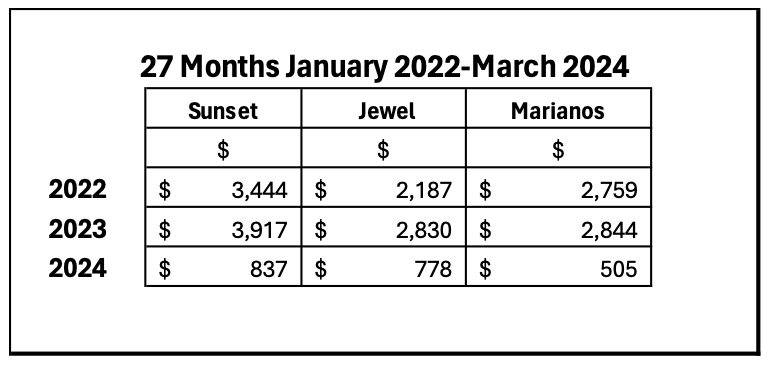
Over the past 27 months I have logged the dollars spent at each store.
As you can see, all three stores enjoy our business. If Jewel and Marianos co-exist under a merger, it would not be for long, as they will both get their product through the same purchasing department. So one of these stores will probably close. To me, that eliminates the competitive environment. Indeed, it is likely, with no competition, that prices will rise over time.
I urge you to be firm in fighting this proposed merger. It may be good for business, but it’s no good for shoppers.
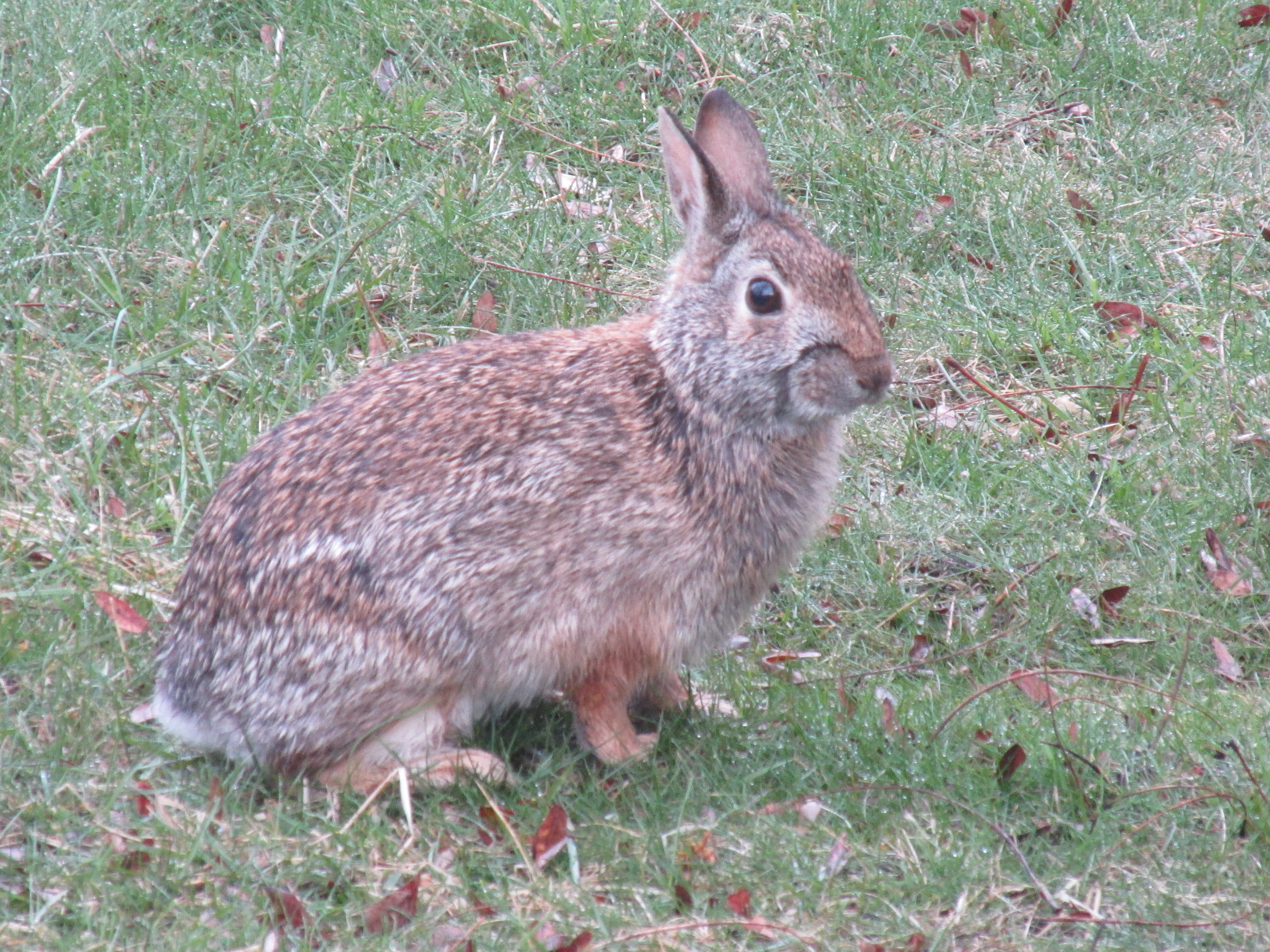
Every spring we are entertained to see a couple cottontail rabbits running around in the backyard. They live under a giant spreading yew bush that nestles against our deck. Over time, I have made peace with the bunnies.
Bunny: backyard entertainer
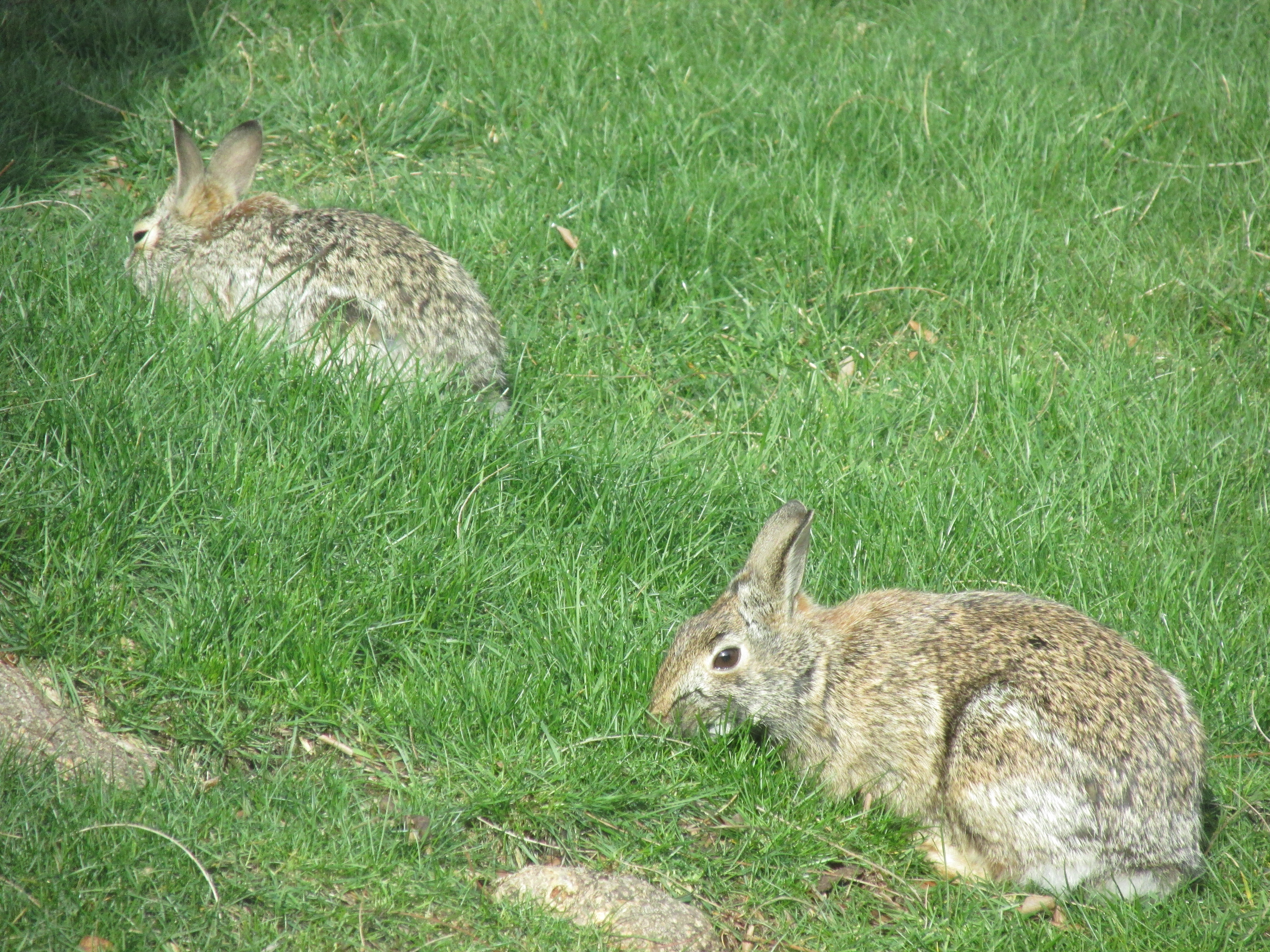
Despite a continual attack on our flowers– impatiens, tulips, pansies, zinnias– I have come to accommodate their presence. They are fun to watch. A ritual or game they play involves a constant chase of tag on the lawn. After a couple rounds, one will back into a corner, and egg the other one on to attack. So bidden, the aggressor runs toward the other like a cross-checking hockey player. The defender jumps straight up like a jack in the box. Then they start the tag game again.
Brothers, sisters, cousins, mates?
In the spring we get additional surprises. For the past two years I have cleared away the mulch around our rose bushes and have uncovered a little nest of tiny furry bunnies huddled together, absorbing the morning sun’s warmth. Cute as a button. Over the next weeks their numbers decrease from four down to one as Mother Nature starts pulling strings.
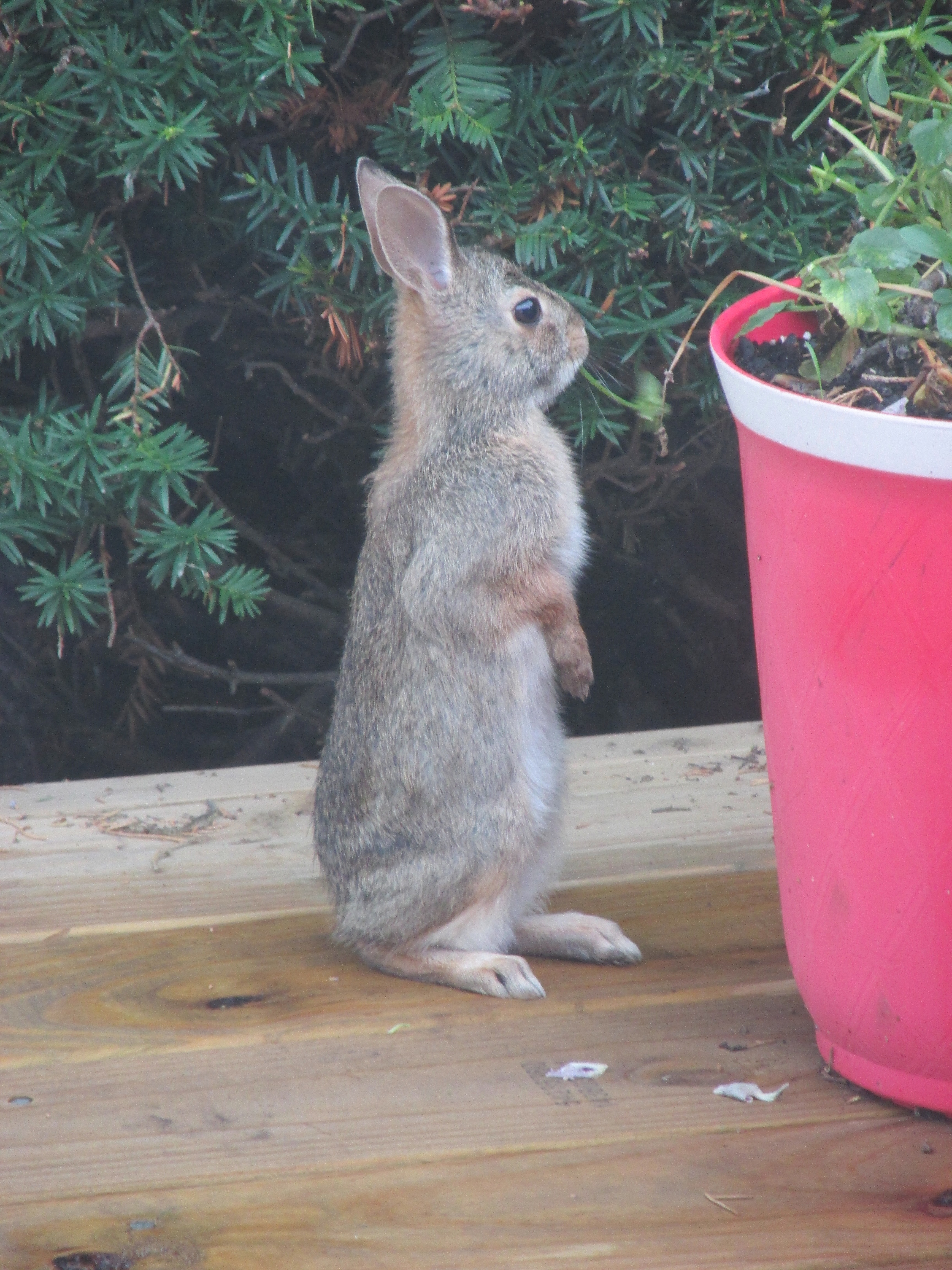
The bunnies were not always welcome. After they clear-cut a set of zinnias, they provoked me to build a fence around my garden. Next morning I came out to inspect, and found they had chewed a door through the fence. I put up another fence. Another door. Finally a steel fence, and security was restored. Despite their attacks, I give them space because of their entertainment, and because Jane, my wife likes them around.
Rascally rabbit at it again!
So, I have taken the extra step of befriending these furry chums. Walking out onto the deck, at any time of day, I may find a bunny contentedly nibbling away at our lawn. They never run. I think they are confident I could never catch them, which is true. So, doubling down on their casualness, I strike up a conversation. One-sided but an attempt. My logic is that the more they hear me talking to them, the more relaxed they are in my presence. So far, I have been right. Not sure what the neighbors think.
Pansies! Good eating!
This spring we were further surprised to find we had three fully grown rabbits playing tag. That begged the question: Siblings? Cousins? Mates? Philanderers? The possibilities of a triangle of relationships came to mind. But still, we were just entertained to see that three had emerged from the deck’s protection over last winter.
Yesterday, while mowing the lawn, I found this year’s litter. It was not under the roses, but dug into the side of a hill by the moraine locust tree in our backyard. A small grey patch appeared where I was pushing the lawn mower. Looking closer, I found a hole, carefully covered with a layer of downy rabbit fur. Aha! A new brood! Now I know what those full grown bunnies have been up to!
This year’s delivery!
This morning, we were again stunned. Out came another bunny from the yew bush, about the size of a teacup. Nibbling on the grass, and rolling in the sand pile they have created for morning ablutions. Wow! A small bunny..but wait…another one follows, also cup-sized! Two teenagers!
Two more show up!
Now where did they come from?
In the next few weeks I will be planting our flowers. We’ll see how long they last.
I am going to play the piano. Even if it kills me.
At the age of ten, I told my parents I would no longer take piano lessons. It was my first serious strike against adult authority. Over sixty years later they are in heaven, but laughing while I stare befuddled and bewildered at the 88 keys before me.
While I never learned more than the basic scale, mom and dad still felt I was worthy to receive their monstrous stand up grand piano when they vacated their home. It was a Willis model V: huge, bigger than a diesel engine, a massive structure of lacquered maple, mahogany veneer, spruce, mirror, steel, copper strings with ebony and ivory keys. The behemoth was so heavy that it actually cracked the tiles in our townhome when it was rolled over the transom.
The Willis: 600 pounds of furniture.
And here, more than sixty years later, the piano takes its place in our family room, an unflinching protective barrier against nuclear attacks and continental drift.
I often thrilled at the opening keyboard riffs of popular songs. Saturday In The Park (Chicago), Stuck With You (Huey Lewis), Hill Street Blues (Mike Post)…these pieces were introduced to our ears, thirsty for memorable intros that once heard, never left us. I took it as a simple challenge to learn those riffs. And I did. Then, I could sit at any piano, and pound out the beginning notes to these iconic songs. The trouble was, my audience, stunned by my virtuoso renderings asked for more. I always had to choke, and confess, “That’s all I know, just the intro.” Groans and dismissive shrugs were their responses.
So when I retired, I decided to return to the keys, and start anew.
Over the past ten years I have downloaded several dozen songs for which there are reasonably decipherable musical score. While I plunked away at a few pieces, I was happily involved in other leisure activities. So the initiative was dampened over time.
The simplest piece demands hours of practice.
But with the coming of COVID, time was on my side, and I renewed my attempts. It was only then that I discovered a new factor in learning to play. My brain does not necessarily connect. I have sat at the keyboard, literally for hours and worked through a simple piece, reading from score, translating to scale letters, and then picking the right key.
I likened it to translating from English to Arabic via Japanese. Start. Finish. Repeat. Over and over. While I can imagine the right sounds, the recall is gone. So what should take a ten-year-old a week to master, I struggle after a month of intense focus to eke out a recognizable rendition at half speed.
Still, I continue. I have now conquered two tunes. City of Stars (LaLa Land), and All I Ask (Phantom of the Opera). Both are simple constructions, and I have memorized them. The performance is still cringeworthy to any listener, as they wait hopefully for the next note, hesitantly offered by my uncooperative left and right hands.
Another factor I have discovered is the value of practice. After probably a 200 hours of struggle, I am now able to link musical score, note by note, to keyboard. I am learning! But even as I do that, my eyes are lighting off distress flares. It dawned on me yesterday that the constant shifting between the printed sheet of score and the keyboard is tough on the eyes. Graduated bifocals do not help!
Through this musical epiphany I have also made an additional discovery of the sales slip for our 600-pound furniture piece.
Willis of Montreal: 1884-1967
The piano, an upright Willis (1884-1967), was made in Montreal, and purchased by my mother on credit in 1949. She got it, used, for $350: $200 down, with $14 monthly payments on the balance. Conservatively, the piano is nearly a hundred years old.
I point this out because its tone is bold and clear, and still in tune. It is far more impressive than the late model Casio electric piano which I also practice on in the back room.
The Casio’s many digital features.
While the Casio offers countless digital features for enhancing my play, the aged Willis responds like a thankful, professional artist, giving full-bodied resonance to every note, no matter how badly I stumble through a piece.
I am still learning the notes and the keys, and my progress is enough that I am encouraged to grab a seat at the piano any time I have a chance.
If you have youngsters about, sit them down at the piano. I am making up for lost time!
What a complete embarrassment. First we let a floating convoy of three school buses float by at 70,000 feet. We shoot it down. Now, no news about the buses.
Where’s our super powers when we need them?
You know, thirty-seven years ago ocean scientist Robert Ballard discovered the burial ground of the Titanic.
When finished arcing through space at 18,000 miles per hour, every returning space capsule is reliably plucked out of the waters within minutes by US Navy frigates. After the tragic downing of a PanAm flight 103 over Lockerbie Scotland in 1988, forensic scientists combed the debris field to find an incriminating piece of metal with a serial number to track down the terrorist bomber Abdelbaset Ali Mohamed al-Megrai.
Still, as of today, we have no news about the “object” which so threatened us.
But to deflect some of the scorn, we then went out hunting, and brought down three more unidentifiable objects, one the size of a Volkswagen. It took several days to reveal these objects were suspended from balloons. Really? Did no one in the press room have the temerity to ask? Or was the administration not bold enough to answer?
Meanwhile, one such object is splatted on the ice off the north shore of Alaska. Another lies on a mountainside in the Yukon, being picked over by mountain goats. A third is quietly sleeping below the drifting currents of Lake Huron, resting on the sandy bottom, waiting for a ride.
When will we see the Volkswagen?
Now we are told with a shrug that the objects were probably privately owned. No doubt the owners fear getting a ticket, and are not claiming the goods.
If there ever was a time that the administration needed to communicate clearly and consistently, and the news media attempted to get to the truth, this would be it.
This summer we encountered a situation that was creepy and unnerving, and hardly expected. The house we were living in was on top of a radioactive site.
Well, that may be exaggerating a bit. Not a Chernobyl, for instance. But nevertheless, we were surprised to find that about one quarter of the homes in our neighborhood are subject to potentially deadly radon gas.
We bought our house over thirty years ago, and have loved its layout, design and location. It is a beautiful home. Coming from Ontario, we were a little surprised to find that our prized ranch did not have a full basement, but rather a large crawlspace adjacent to a subterranean room which serves as the ‘real’ basement. In fact, that smaller-sized basement has discouraged us from stowing thirty years of accumulated unnecessary stuff.
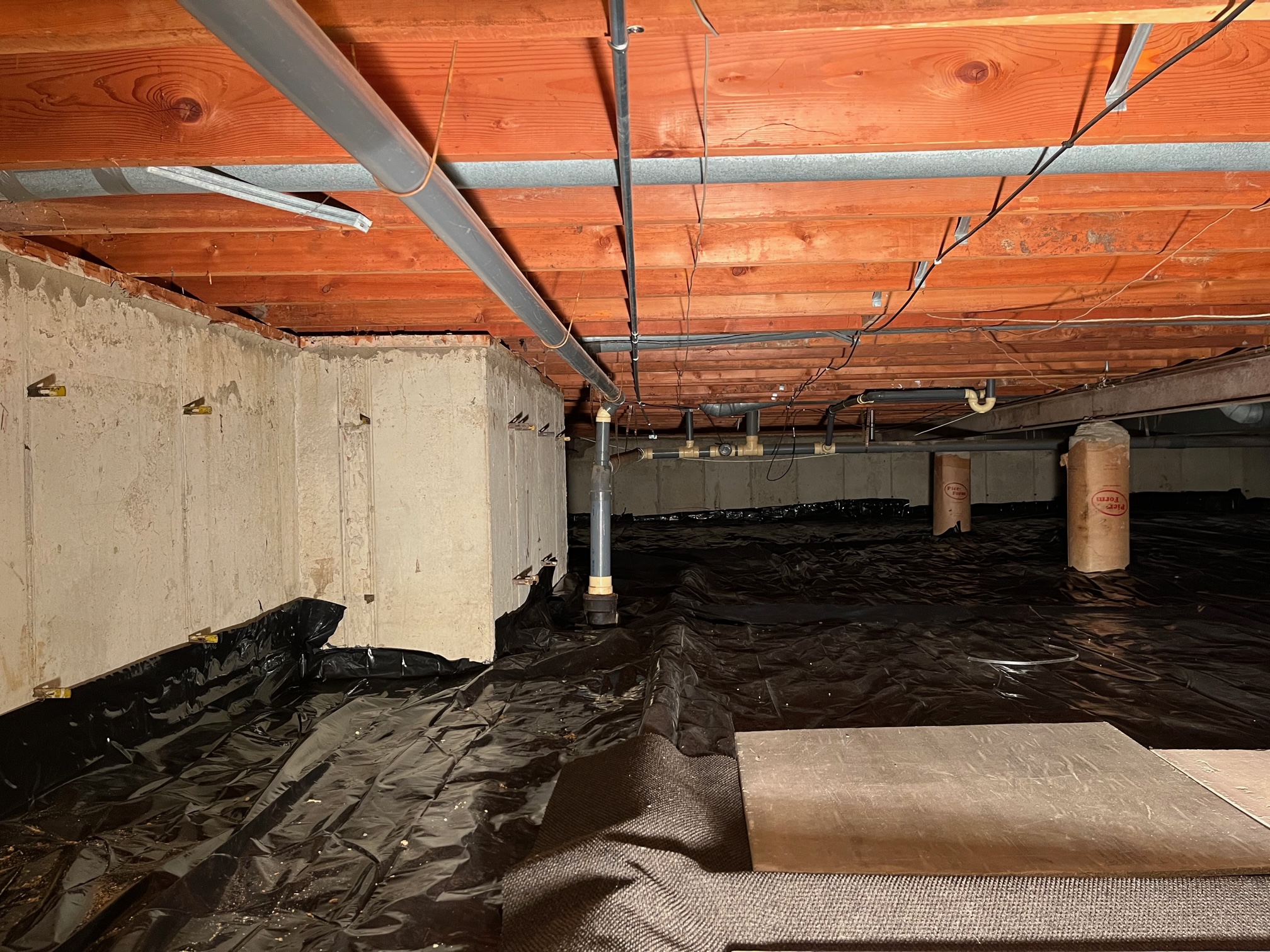
The crawlspace now sealed under 6mil plastic sheeting
But the crawlspace– it runs under two-thirds of our home. It is high enough to allow one to crab about on all fours, with easy head room. The expanse of it is covered with about 4-6 inches of pea gravel. Under that is a thin plastic sheet to keep out the moisture from below.
When we closed on the house, a necessary radon inspection was performed in the basement. This was a foreign concept to us, but, hey, we’re from out of town. The fellow used a sniffer geiger counter of some sort, and observed, “Oh, it’s a little high, but no big deal.” The real estate agent was quick to agree, and encouraged us to close the deal. We loved the house, and we closed. Commissions were earned.
Flash forward to 2022. Our county health department advertised the availability of do-it-yourself radon test kits. Since we had been conditioned to COVID self-testing, the radon kit was easily understood, and after all, what can it hurt?
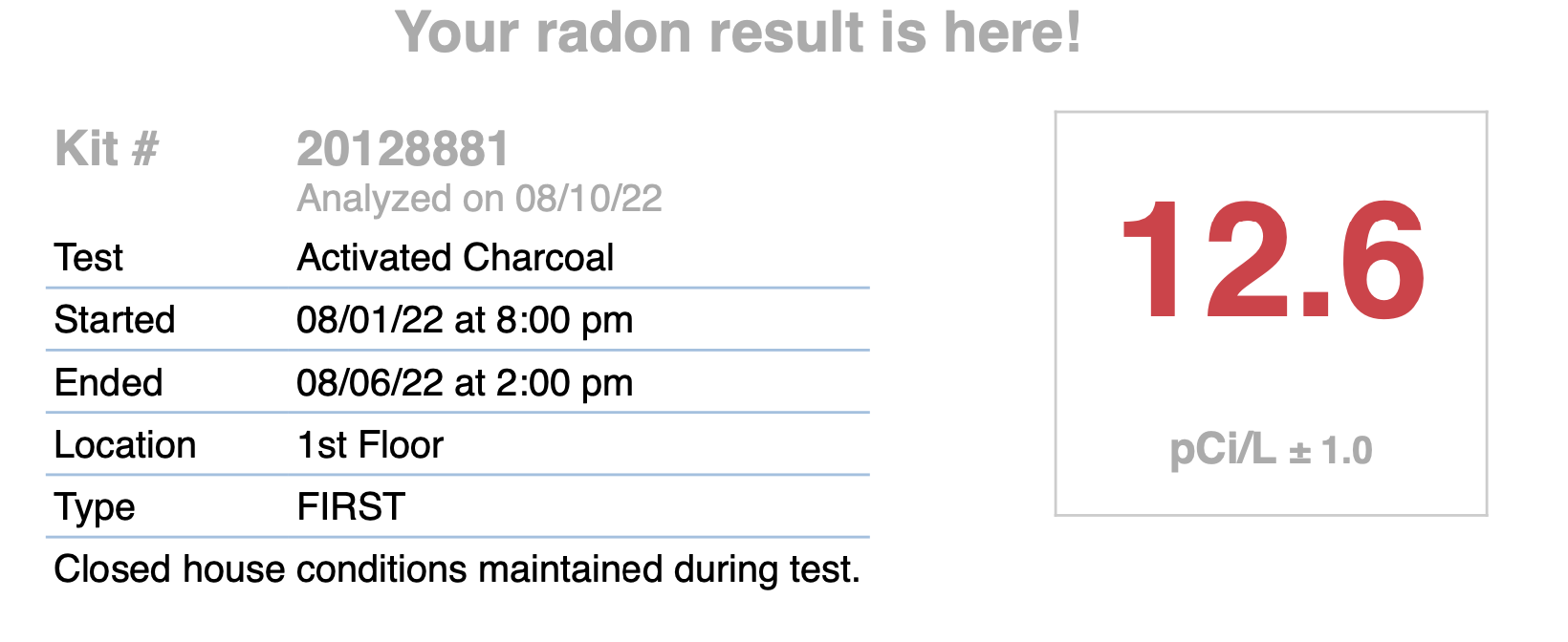
So, we tested. The numbers came back in a few days by email, in RED block letters, citing unacceptable ratings. Like three times higher than barely acceptable. Wow! The stuff was collecting in the basement, but worse, settled nicely in our bedroom and family room where we spent more than a third of our lives.
Drilling below the basement
It was time to check out radon, and understand what the big kerfuffle was about. Information is easily found online, and we read that radon is the second-leading cause of lung cancer. The numbers are confusing, but bottom line, radon causes about 21,000 lung cancer deaths per year according to the EPA and 2,900 of those are in non-smokers.
Who knew?
Radon is an inert, noble gas. Its cousins are helium, neon, argon, krypton, xenon and oganesson. They are called “noble” because they don’t react or bond with other elements easily. Stand-offish you might say. Nevertheless, they do have their value: helium is perfect for balloons and making squeaky voices. Neon gives us every flashy sign we ever saw, and is at the core of every country song. Krypton is used in fluorescent lights, and as the fabled home planet of Superman. Xenon also is used in lighting. Radon is actually used in cancer therapy. It is the result of radium, uranium and thorium decay, and is found in well water, rainwater and in the ground. It has a half life of about 4 days, so it does diminish in potency. It is also heavy, so tends to stay low, like in our basement. You can imagine how impressed we were to have that radon bubbling up in our living space.
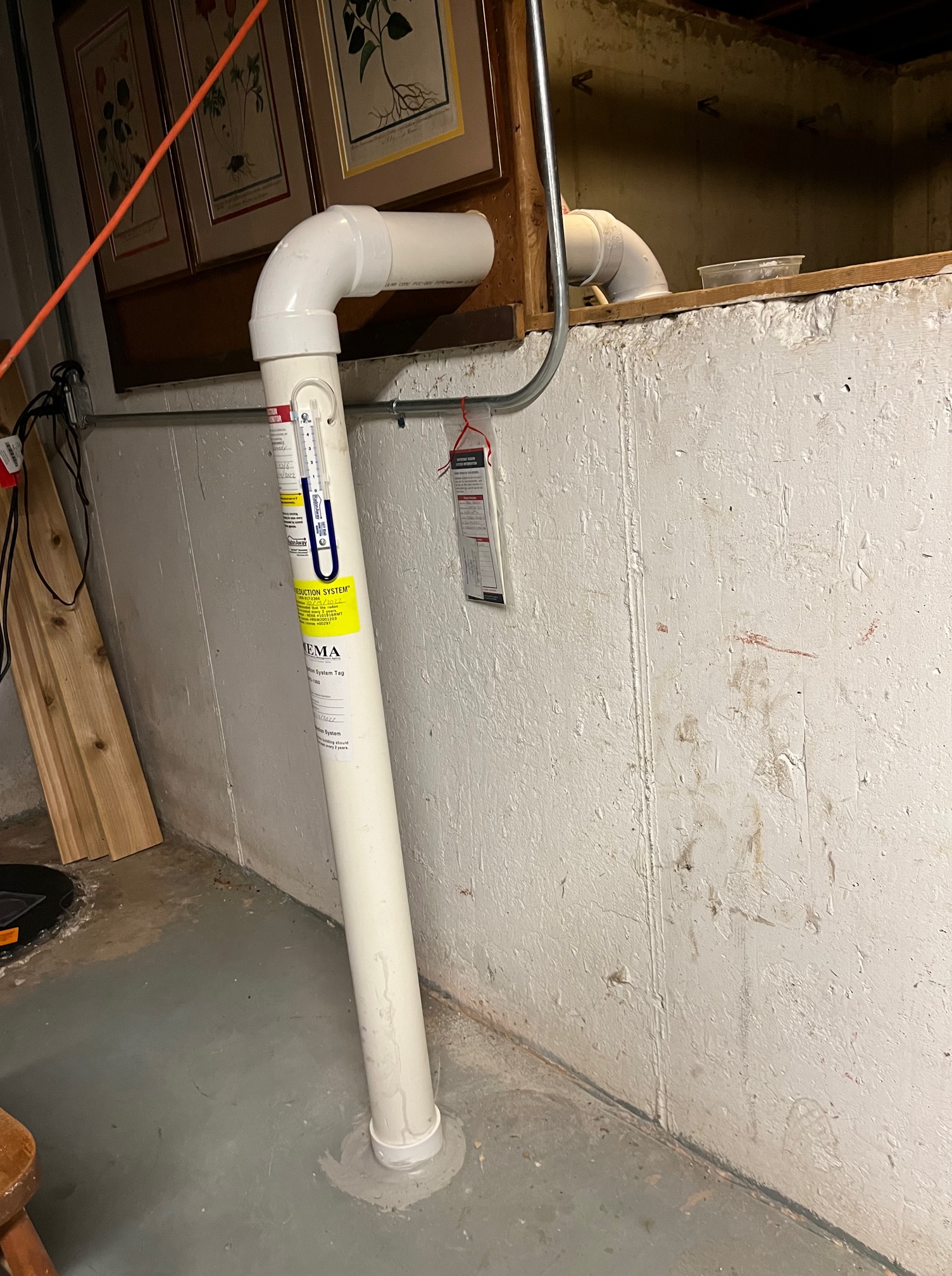
The vacuum pump and exhaust pipe
Consulting the county health department’s website, it turns out that 24% of the homes tested in our county have unacceptable radon ratings. Virtually one in four. Really.
So.
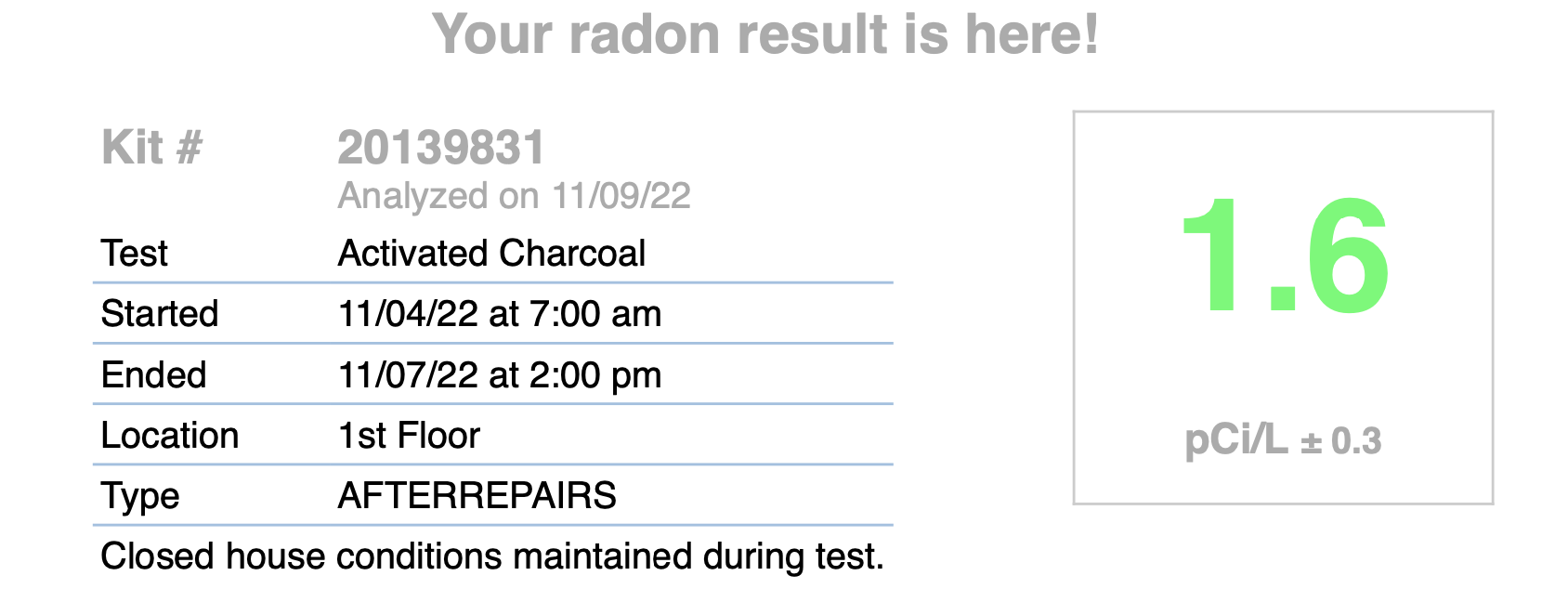
We felt it was worth our while to eliminate the threat. We hired a radon mitigation team to seal up our basement. The solution was low-tech, but required some physical effort. Two contractors came in from Wisconsin, and laid perforated PVC piping across the floor of our crawlspace. The entire crawlspace was then sealed under a thick sheet of plastic film. Then the piping was connected to a vacuum pump that sucked the air out of the ground beneath the sheet, and vented it outside. A second pipe was also punched through the concrete floor of our basement, and connected to the vacuum. The installers turned on the pump, and within a week, the radon rating plummeted to a safe level.
Is the threat significant? Depends upon your state of mind. One thing’s for sure, if you intend to sell your home, it will probably include a radon inspection, at which time you might have a 24% chance of losing the sale as panicky buyers run out of the house.
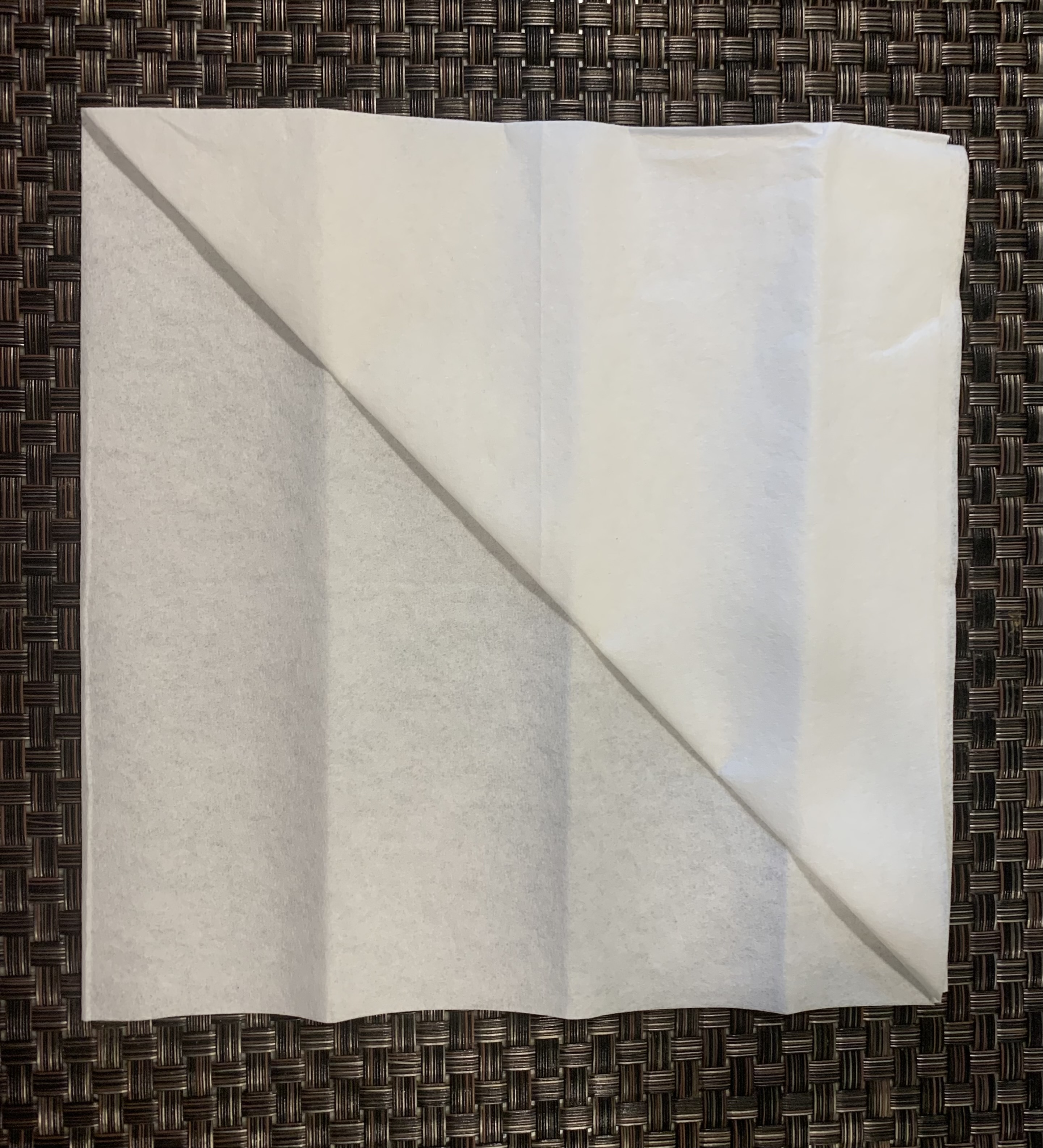
You know you’ve been COVID-locked down and masked up waaaaay too long when you have time to dissect a napkin fold. But there it is, lying before me in our favorite Thai restaurant, “Green Basil” in Vernon Hills, IL. –a beautifully constructed paper napkin. It is neatly folded and tucked to a soldier position at the side of my placemat.
I am captivated. Why?
Well, as a direct mail designer, I know the importance of format. As I was once told early in my career, by a great, professional copywriter, Chris Tomlinson, Toronto, “Before you can write good copy, you have to learn how to fold.” This, and a lot of other good advice is in my book, Many Happy Returns, expressly written for people who earn their living through direct marketing.
Anyway, as we were waiting for our food–shrimp rangoon and pot stickers– I was captivated by the napkin fold that was before me. I immediately unholstered my cell phone to photograph the construction of this napkin. I hope you get it, and try it out for yourself!
Here is the diner’s first view of the napkin. Notice the diagonals and neat corner fold which is used to tuck in another corner.
So I unfolded the napkin, all the way, and here’s its starting position.
Fold in half:
From the top, down, fold in half again.
Fold up one loose corner.
Flip it over. You are ready for the close!
Start the vertical folds, into the center. See the diagonals forming at top and bottom?
And again, fold into the center, and tuck in the corner.
The finished product is simple, yet elegant, and conveys the sense of purpose that the Thai restaurateur has for pleasing their diners. You know the napkin will be left in a crumpled mess, but no effort was spared in preparing it for the pleasure of the guest who sat before it.
Please forgive me for my absence! For the past few months I have been carefully editing a new novel, Edge of Destiny.
We have all found some escape route that has led us through the endless months of COVID, and mine was writing a story about two kids who grow up in a hurry on the eve of World War Two. This is a tantalizing and compelling tale that takes place in a small town which is on the brink of recovery from the Great Depression. Reppen is located in Norfolk County, and its ticket to greatness will be the fast-growing, world demand for Virginia ‘bright leaf’ tobacco. Claudia and Theo are high school seniors that are watching that future crash before them as the Nazi and Soviet threat unfolds in Europe.
They graduate from Reppen High and leave for college quite literally as war is declared by Hitler, September 1, 1939. Over the next year the couple navigate the streets of Toronto, the halls of university, and the growing pressure to enlist and fight, all the while learning about themselves. Claudia is a brilliant girl who up-ends the physics department as she enters that long-established male bastion. Theo, straight off the farm, faces the prospects of joining the RCAF.
Their trajectory comes crashing down when Theo is mysteriously swept away by unseen forces that drop him into the future, 80 years later. He seeks help from amazed and puzzled strangers in a desperate, impossible search to re-unite with Claudia.
This is a story that delivers a narrative about small town life, farming and the grit and reality of urban living. The characters reveal the unbeatable optimism of youth in the face of military conflict and raw, undisguised evil.
I will add, that U.S. readers can order direct from me using PayPal.Me/pmb1267, or mailing me a check. In return, I will personally sign and dedicate your book and get it delivered, pronto! The details are in the enclosed brochure, here.
Nearly two years ago I was invited to get involved in a writing project focused on my hometown. More specifically, about a generation of kids who lived in Norfolk County and died in World War II. The task looked academic in nature, and I was drawn to it, as much for the opportunity to write as well as to learn about the sacrifices these young adults made.
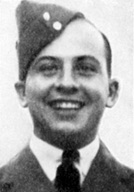
John Luxton, RCAF 23 years old
I did not realize what I had signed up for. The penny did not drop until I cracked open my first case.
George Brockington, RCAF 21 years old
Norfolk County is a picturesque spread of land that rests on the northern shore of Lake Erie. From the air, its most distinguishing characteristic is the long spit of land that creeps eastward into the center of the Great Lake. That’s Long Point. The next recognizable feature is Big Creek which is fed by countless streams and brooks, and runs from north to south through the heart of Norfolk, and spills into the bay created by Long Point.
The land is primarily agricultural and its sandy loam has been the productive real estate for a century’s worth of tobacco, fruit and vegetables. By 1939, Norfolk had a population of more than 35,000. Most lived in the countryside. Some 6,000 of these residents took it upon themselves to join the million-plus Canadians who went to war in support of Great Britain and its allies.
159 soldiers, sailors and aircrew never came home.
In the greater scheme of things, the casualty rate doesn’t seem shaking. Less than three percent. Covid-19 has been just as lethal. Joseph Stalin was once quoted as saying, “when one person is killed it’s a tragedy. When a million die, it’s just a statistic.”
Donal McLeod, RCAF 21 years old
A small group of Norfolk citizens decided to push back on this detachment. Why? The names of the 159 are engraved on a brass plaque in Simcoe, the county seat. Once a year there’s a ceremony to celebrate and honour the dead, but beyond that, those youthful volunteers are lost in the fog of time and current events.
Glendon Theakston, RCIC 20 years old
To that end, this motivated group decided to write the short life stories of the young fighters. They enlisted researchers, including secondary school students, retirees and part-timers. The Norfolk County Public Library gave structure to the project, and a generous benefactor provided seed money to deliver an astounding book about this lost generation of kids.
The source of detail on the men, their families and service record was retrieved from Ancestry.Ca, local newspapers, as well as from personal accounts provided by living family members.
What was not well understood at the outset of this project would be the effect it had on us doing the research and writing. As a seasoned Baby Boomer, I have taken a lot for granted in my upbringing, and I bet most of my peers, their children, and grandchildren have not a clue about the grave developments that gave us 1933-1945. Sure, we’ve seen the movies, and read a few books. A tiny fraction, a scintilla of us, may ever have seen a military cemetery up close. And the raw, territorial aggression of three malevolent dictatorships that spawned the war is unfathomable by today’s standards.
Eighty years ago the scene was different, and Norfolk’s young adults, mostly in their late teens or early twenties–college-aged by today’s measure– safely protected by the Atlantic Ocean, left their homes, and committed to fight a fight three thousand miles away.
Doyle Culliford, RCN 22 years old
I was lucky to receive thirty boys to write up. We wanted the stories to bring to life their upbringing, their family background, their hobbies, schooling, girlfriends, wives, and in some cases, children. In the telling we found family photos, portraits, service records, military journals and diaries, medical reports, post mortems, letters from home, letters from defense departments, character references, heartfelt pleas from parents, and yes, burial details. As one worker commented, “I had to stop every once in a while, just to process it.”
The end result of this revealing expedition is the publishing of an incredible book ‘Norfolk Remembers World War II’ that gives an honourable recognition of just who these 159 kids were. And in many cases, what they could have been had they not been struck down in the cause of freedom.
As Remembrance Day occurs, I will give more heed to what these heroes did for us, and as the book wished, I will remember them throughout the year.
Thanks for reading and sharing. I hope you will keep a lookout for Norfolk Remembers World War II which will be available later this year.
This past weekend we enjoyed what can only be described as a summer extension. Sitting by the sunny warm shores of Lake Michigan, we were delighted to find a fuzzy little friend, the Woollybear caterpillar.
As I have been deeply involved in authoring another book, a time-consuming project, I am shamelessly reprinting a story first published by the Toronto Globe and Mail, September 21, 1985.
“As we approach the end of another summer, we can look forward once again to sanity on the roads– but not quite yet.
“Any day now, drivers will be rattled by the wanton and reckless onslaught of woolly bears, those brown furry caterpillars that churn across the roadway like runaway locomotives.
“At one time I cultivated the notion that these creatures were compelled by nature’s dictates to make the near-suicidal break for the other side of the highway — in search of food, a mate or something mystically greener according to their multimodal instincts.
“This is not so. In fact, the woolly bears do it for a lark. They hear the oncoming cars and then dash for the pavement like surfers in search of the perfect wave. As the car whooshes over them, they are scooped up in a pocket of turbulence and tossed head over tail before they tumble harmlessly to the road like an old sock. Then they unfold themselves, and with antennae twitching and fur bristling, await the next car.
~ Phil Brown, Brampton, Ont.”
Thanks for reading and sharing! These little fellows are mythically said to foretell the winter coming soon. Mean time, they traverse the road for recreation. Drive carefully!
Twenty-one months into COVID hibernation, we often wonder when we’ll see our kids again. They reside on the other side of the border, a thin imaginary political line of separation. While thinking of that, it dawned on me that we do share some common geography.
Living near the shore of Lake Michigan, outside of Chicago, we share the same water basin as those kids who live in Toronto, on the shore of Lake Ontario. So while we may be some 600 miles distant, I take some comfort knowing that we drink from the same trough.
Paddle To The Sea
I am reminded of that wonderful book, Paddle-to-the-Sea by Holling Clancy Holling. A young boy dreamed one late winter of sending his small carved canoe “Paddle Person” from the melting ice of Lake Nipigon down into the Great Lakes, and ultimately to emerge in the Atlantic. It’s an excellent illustration of our connectedness by way of the water.
Paddle Makes His Trip
Less well known is our connection due to the Niagara Escarpment. As a boy raised in Southern Ontario, I have always taken the escarpment as one of those unique wonders of Canadian geology. The escarpment appears–and I will elaborate on that in a moment–to originate at the Niagara Falls, the escarpment’s namesake. Being some 170 feet high, the Falls are an incredible sight of raw nature, and have attracted millions over the years to view them, and feel the mist on their cheeks. They drain Lake Erie, and feed Lake Ontario. Back to our young boy, his Paddle Person will plummet over those falls in the story.
The Escarpment Starts in Rochester
What any Ontarian knows is the migration of the escarpment west to Halton County where it turns north, moling through the terrain, eventually emerging on the Bruce Peninsula, which forms the western shore of Georgian Bay. At the northern point, Tobermory, the escarpment slips under water and emerges at Manitoulin Island near Georgian’s north shore. For Canadians, myself included, the escarpment ended there.
Upper Level of the Door County Quarry
Imagine my surprise a few years ago when a friend in Green Bay Wisconsin pointed out that the Niagara Escarpment actually formed Green Bay itself, on the northwestern shore of Lake Michigan. Who knew? Our public education system failed to make that clear, decades ago. Let me just add, that as of thirty years ago, living in Toronto, I had no idea even where Green Bay was. My ignorance of Great Lake geography was woeful. The escarpment arcs in a southwesterly direction from Sault Ste. Marie, and forms a ridge that descends as far south as Appleton in northeast Wisconsin.
Potawatomi Park
Only then did I appreciate the true size and dimension of this iconic limestone ridge. As a frequent visitor to Door County, Wisconsin, I marvel at the escarpment’s height and color. Well I should, as The Door owes its existence to the rugged cliff. The county’s maximum height is around 150 feet above Green Bay, close to that of Niagara Falls. At hundreds of sites along its coast, viewers can see the craggy cliffs that jut out of the waters. Inland, the roads nudge up against the towering limestone and dolomite rocks comprising thousands of distinguishable layers of sea floor, exposed to the air after hiding nearly 400 million years underground.
The Caves on Lake Michigan
How did that happen? What made the pre-historic promontory raise its head?
The escarpment’s genesis is a long story told well in a short paragraph. Over a period of some 24 million years, during the Silurian age, an ancient sea was the home of jawed and bony fish and arthropods. They lived, died, and floated to the bottom to be pressed into limestone for the next 400 million years. You can see the remains of these creatures in the cliffs as long flat layers of cream-to-gold colored crumbling rock.
Early May Cherry Blossoms
For your confirmation, the Jurassic period was only 200 million years ago. During the last ice age, some 20,000 years ago, the region surrounding the Great Lakes was submerged under a two-mile thick layer of ice. The weight of the ice pack actually depressed the land beneath it. When the ice melted, the weight was removed, and the land popped back up. The melt water helped dissolve much of the outcropping, and the escarpment was revealed. The process is called post glacial rebounding, and it continues even today.
A New Planting of Grapes
Door County is the beneficiary of this geological epiphany. It is sandwiched between the temperature-moderating waters of Lake Michigan and Green Bay. The 40-mile spit of land is ideal for growing grapes, cherries and apples. The bi-products are wine, pie and cider. This agriculture is very similar to the escarpment in the Niagara Peninsula which also flourishes with similar viticulture and orchards.
Trilliums in Abundance
We visit Door frequently, and as I stand on the shoreline of Lake Michigan, I think that as far away as Ontario may be, the water, and the cliffs connect us. Living in the Great Lakes region is a wonderfully inclusive thing, and the little Paddle Man proves it.
Thanks for reading! I hope that COVID has not prevented you from seeing your family, but hopefully you have mutual reference points, a star, a TV show, a sports team, perhaps a song that brings you closer together.
Paddle-To-The-Sea was written and first published in 1941. Beautifully written and exquisitely illustrated, its ISBN is 0-395-29203-4.