direct mail, Marketing

Your First Impression Won’t Be Your Last

IMG_4041

St. Joseph’s Indian School delivers the piece de resistance.

You know it’s Fall when the big fundraising kits stuff your mailbox. This year we have a surfeit of gifts from direct mail fundraisers.

IMG_3743

Father Flanagan’s Boystown stickers for identifying anything that moves.

Years ago the pioneers in the business presented us with address stickers.

These we have dutifully paid for and have now labeled every moveable item in our home: CDs, iPads, iPods, iPhones, chargers, golf clubs, cassettes, Walkmen, books, staplers, rulers, vinyl… luckily we don’t own a pet.

The ante was raised by the March Of Dimes who gratuitously presented us with a small monthly stipend of ten cents: a shiny new dime pasted to a donor form.

IMG_4037

Food For The Poor’s coins… how can you just pocket them?

That munificence has been outpaced by Food For The Poor who made change for the dime, and sends us a penny and a shiny new Jefferson nickel. That’s a 40% cutback, but insertion is more costly, so it’s a wash.

Not to be outdone, Disabled American Vets provides a 9×12 calendar, which we can place beside the 10×20 calendar from Boys Town.

Of course, wall calendars are bulky, so we are grateful to St. Joseph’s Indian School which gave us a 4×6 calendar booklet for the purse. I am waiting for the 3×5 that fits in my shirt pocket.

IMG_3751

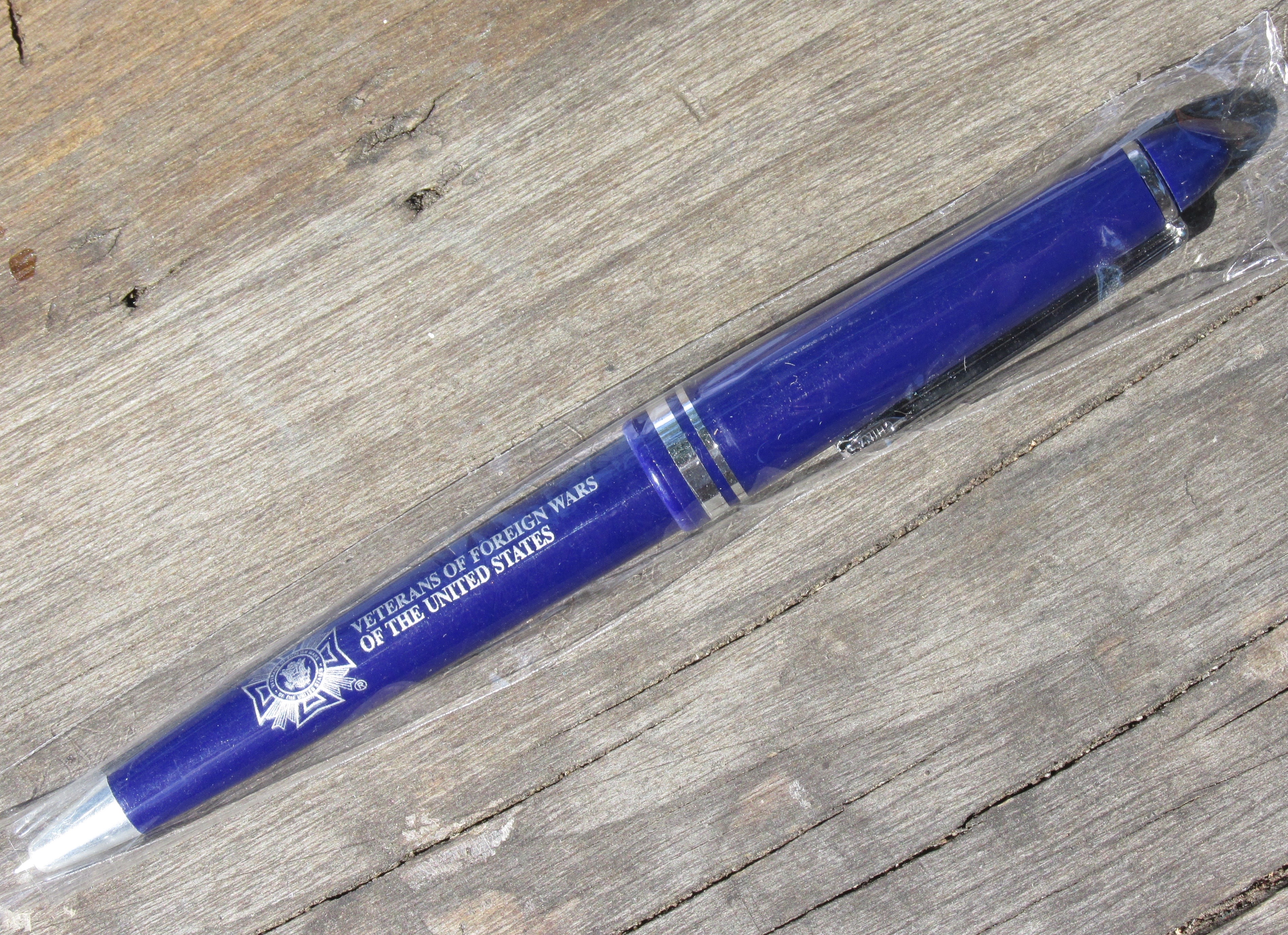
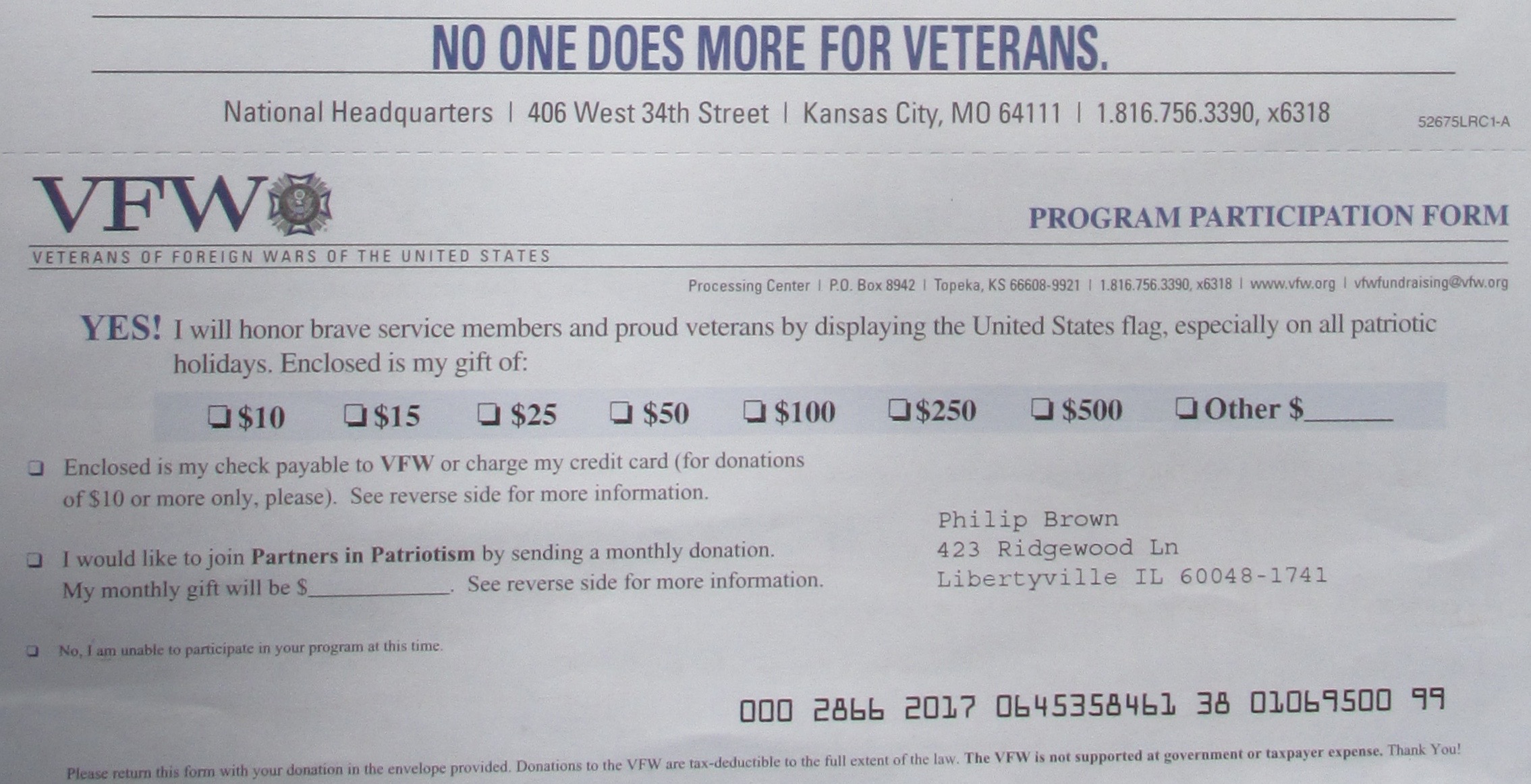
There’s no excuse for not writing….here’s a VFW pen.

The mailing industry is of a generous culture though. With all these other possessions, we have also received dozens of greeting cards: whole writing kits, with pens, to reach out and greet someone– anyone.

Oblate Missions has sent us so many Christmas cards it may be easier if we send them our Christmas mailing list instead.

IMG_4040

Catholic Relief Services’ prayer medallions.

You can’t blame an organization which does its part in reinforcing the goodwill that blossoms from receiving a greeting card in the mail.  I am all for it.

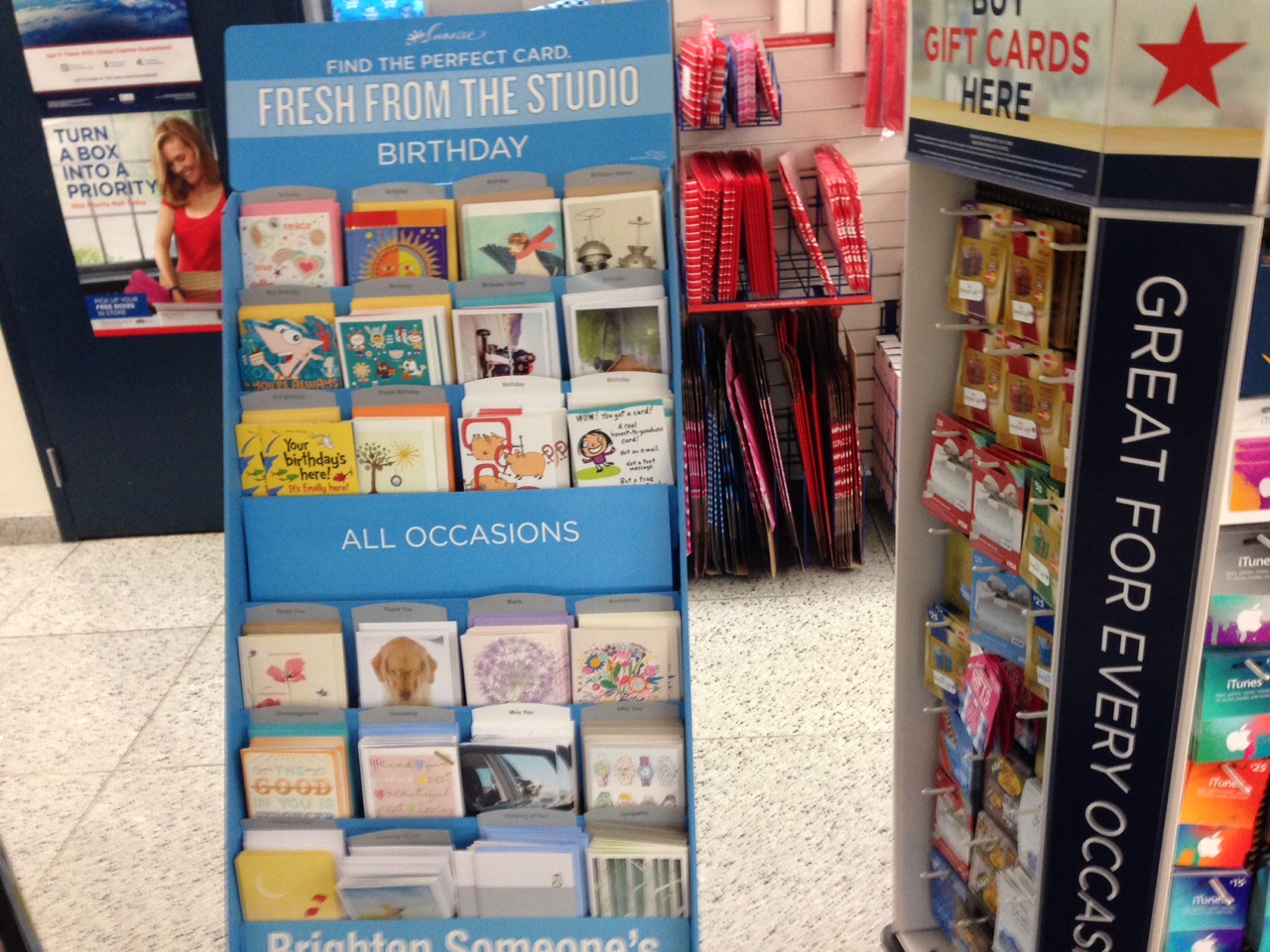
As a sidenote, the USPS post office in Libertyville has a well designed rack of greeting cards for sale.

This one cartoon I loved for its text:

Outer Cover: “Wow! You got a real, honest-to-goodness card! Not a text.  Not an email!”
Inside Caption: “Wow! It has an inside too! It just gets better and better!”

In one of their early bold moves, Disabled American Veterans pasted 45 cents in stamps onto their reply envelopes. Overflowing in confidence that once we saw the postage in place, we would feel obligated to fill the envelope.

IMG_4035

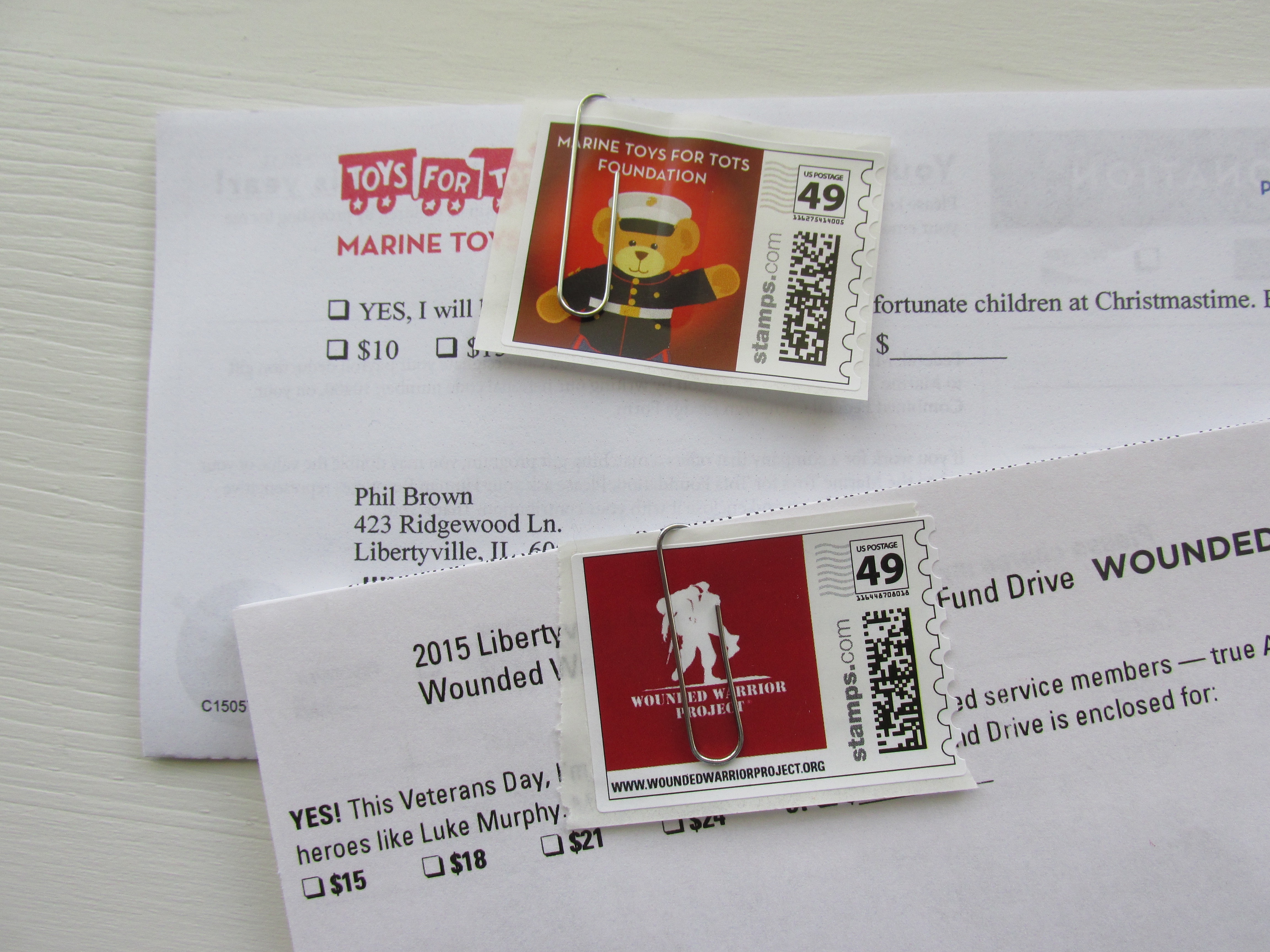
Marines Toys For Tots and Wounded Warriors provide your stamps.

Even gutsier, Wounded Warrior Project and Marine Toys For Tots are paper clipping custom 47-cent stamps to their letters.   This is very expensive, as Stamps.com provides these stamps at a hefty premium.

The strategy works though.  Can one really use the stamp for anything other than a gift without a stab of guilt?

IMG_4043

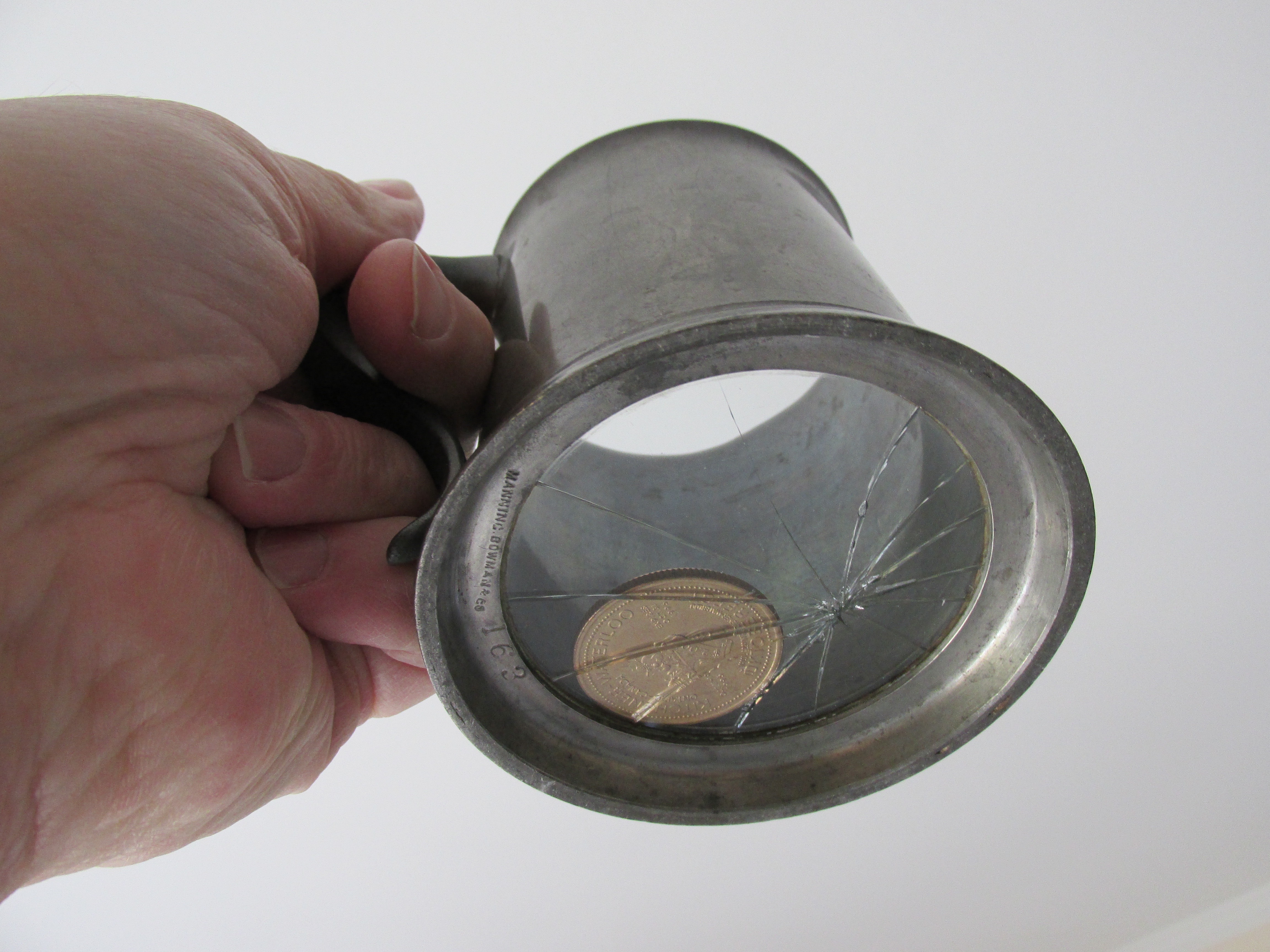
To avoid being pressed into service, British sailors eyed their brew from the bottom up.

The gifting brings to mind the old conscription practices of the 1700’s when British sailors were pressed into service when they drank from a tankard of ale, only to find the King’s shilling in the bottom.   By unwittingly enjoying the beverage, the sailor had been hired.

I think of that clever ploy as I pile up the loot, especially the coins and stamps.

The mailers know what they are doing. Despite all common sense, they have proven that the unsolicited gift still wrests outlandish response rates and donations. And once you are hooked, they will be back until they end up in your Will.

That’s right. Planned Giving is a part of every established fundraising strategy, and if you asked, many organizations can tell you which of their huge bequests started with a direct mail gift, years before.

IMG_4033

Fleece gloves… probably a postal nightmare, but still handy.

This season’s most impressive packages included one from Kids Wish Network, which sent along a pair of fleece gloves.  They arrived in a lumpy wrinkled paper envelope I am sure that the post office would rate as “baggage class”.

But how do you throw those out?   What tight fisted non-donor could wear them, especially when the writer suggests: “When you use the deluxe fleece gloves I sent you, I hope you you’ll remember Wish Kids like Tabitha…” .

The penultimate delivery however, the cream of the crop, the ne plus ultra, is the bulging envelope from St. Joseph’s Indian School.  No doubt USPS rated this one as “duffel bag class”.  Inside we found the usual and generous complement of address labels, gift stickers, 4×5 note pad, 5×7 note pad, pocket calendar, wall calendar, personalized calendar card, and 3 shrink wrapped greeting cards.

IMG_4036

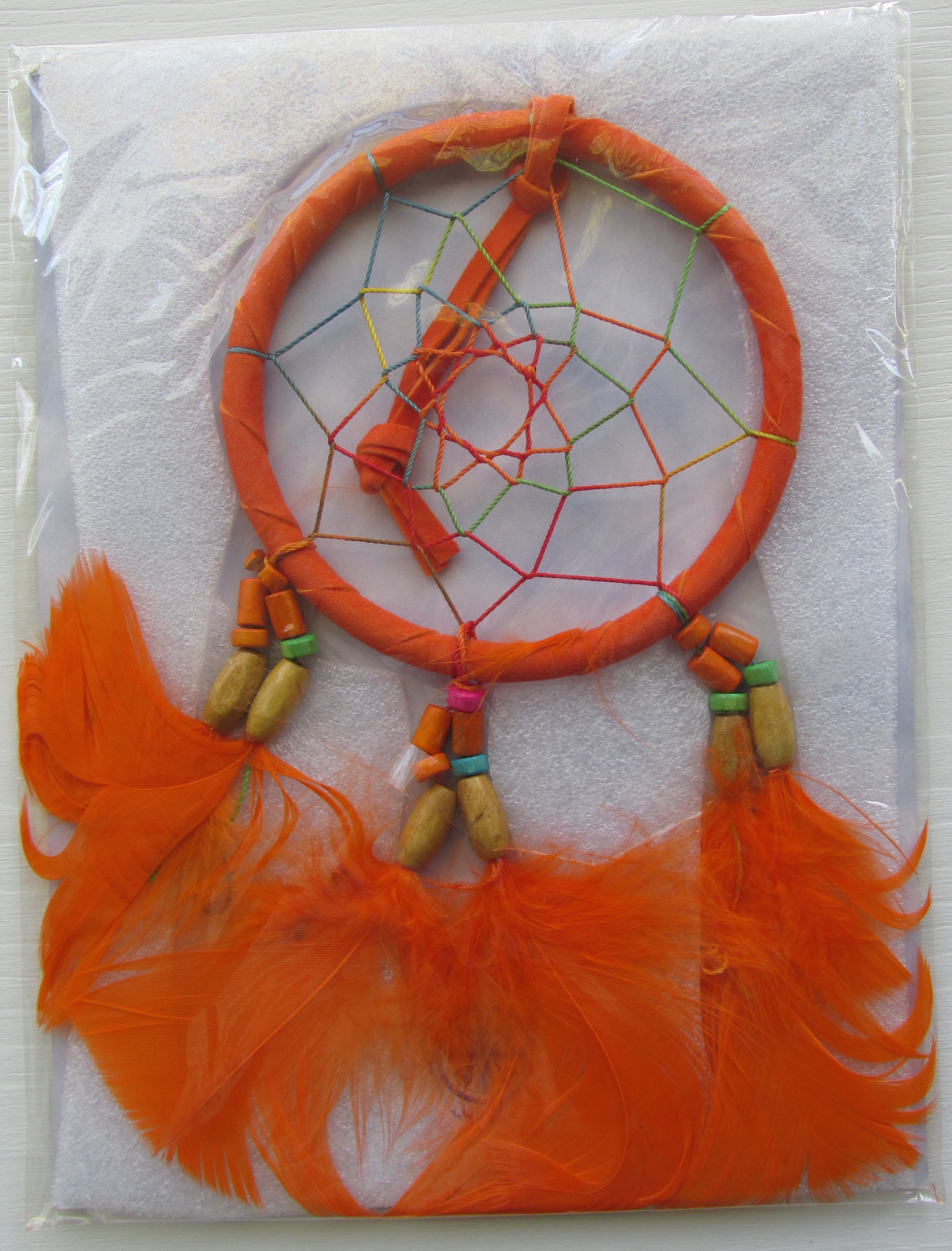
St. Joe’s mystical Dream Catcher, not to be ignored.

In addition however there was a most unique and unusual item, a genuine facsimile of a Lakota Indian Dream Catcher.

The Dream Catcher is a little hand-made assembly of string net, naugahide, beads and feathers.  Mounted on die-cut foam core, it is shrink wrapped with colorful operating instructions ending with: “to be hung on the tipi or lodge and on a baby’s cradle board”.

I have to admit, I had to dig through pounds of newspapers and old phone bills to retrieve this package from our recycling bin.  There is something especially foreboding about disposing of the St. Joseph’s piece so casually.

IMG_4039

The Marines Toys For Tots medallion, struck with the USMC shield and Semper Fidelis on the other side.

Yes, in the past, I have taken all the coins, scribbled on  lots of notepads, hung countless calendars, and stuck hundreds of stickers without a moment’s guilt, or nearly so, but the Dream Catcher had me netted and nettled.  This one item–which I would never purchase on a dare–clinched the deal.  Just how unlucky could my life turn out if I didn’t give due respect?

So it’s hanging over my DAV Certificate of Merit.


Thanks for reading!   I hope you find your charity of choice this season.  These organizations are especially effective, and they mind their pennies too.


Standard
Entertainment, Music

50 Years, Then and Now

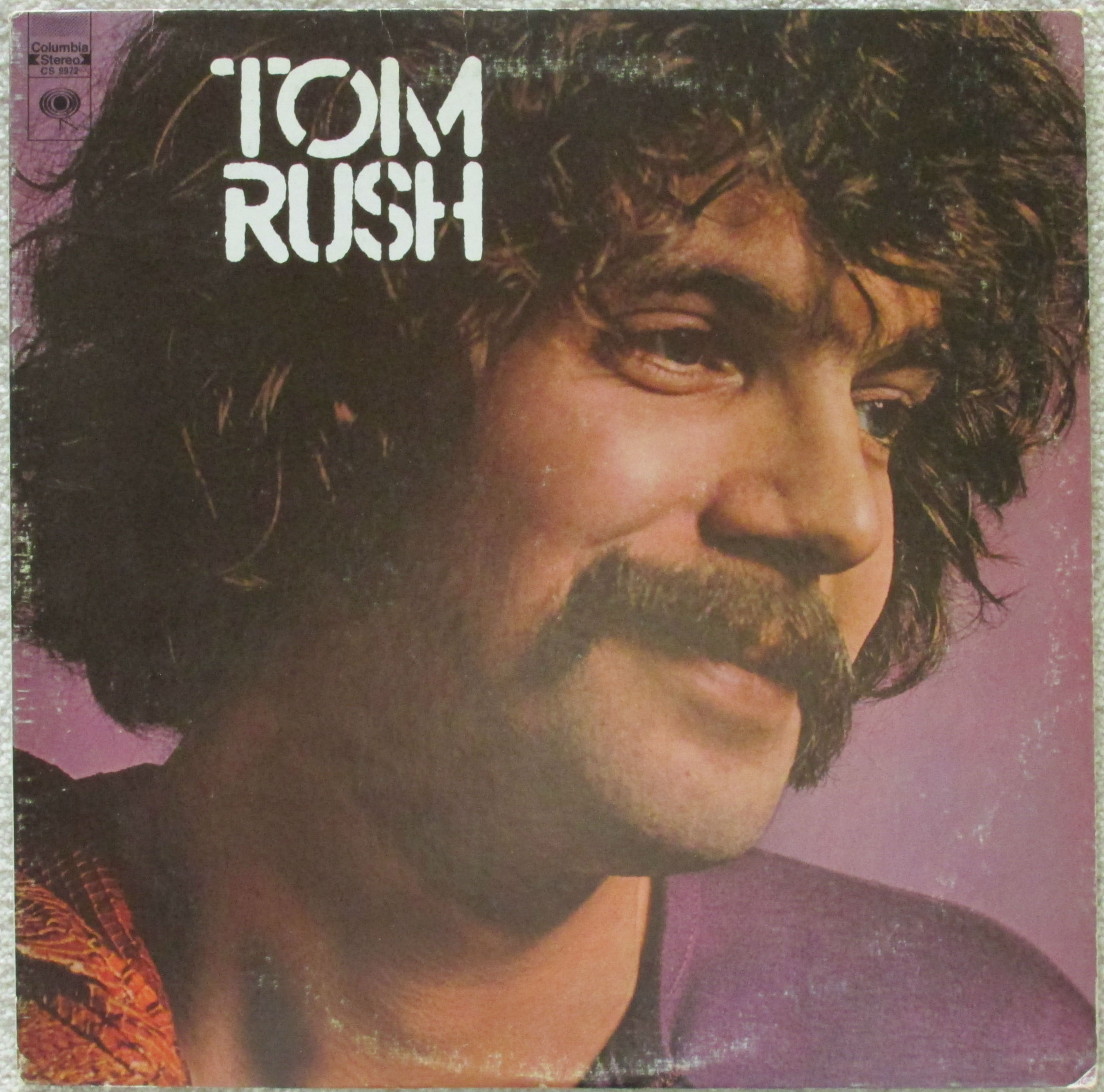
Tom Rush Purple

Tom Rush– timeless and still touring.

We are not much into nostalgia.   And we aren’t groupies.   But it was more than idle curiosity that drew us to Minneapolis last week to see and listen to the folk blues singing hero of our youth, Tom Rush.

Rush was, and still is the consummate story teller.   We first saw him at The Riverboat in Toronto back in 1966.  Back then, about 75 of us could cram into this little subterranean shotgun of a room on Yorkville Avenue, right beside a smoke shop called the Grab Bag.   Admission, $3.00.  If it wasn’t a busy night, you could stay for two sets, maybe all night.  Drinks?  You bet.  Lemonade, cappuccino or mocha coffee.  Smoke?  Light ’em if you got ’em.

Tom Rush Blues Songs Ballads

Selfie, before there were selfies.

The Riverboat truly derailed my formal education.  All of the new folk and blues singers  started there: Joni Mitchell, Richie Havens, Jim Kweskin, Gord Lightfoot, Sonny Terry, Brownie McGee, Tim Hardin, Jack Elliott, Arlo Guthrie, Eric Anderson, Tom Rush…and I saw them all, prolonging my university stay.

But Tom Rush was the most memorable because of his ability to set up every song with a story.   And the tunes themselves were stories, made epics by his delivery.

Tom Rush Mind to Ramble

One of his first albums, a masterpiece.

So it was exciting to see this guy again, even if he wasn’t mainstream billboard marquee candy.

The 20-something concierge at the hotel asked,

“So where you going tonight?”

“To see Tom Rush.”

“Cool, Rush.  So, like, are they touring again?”

I took along his first album cover with the plan to get an autograph.   But I changed my mind when I realized that I had bought it in 1965, 50 years ago.

To ask him to sign it now would be a cruel favor indeed.

When we entered the Dakotah Jazz Club on Nicolett Mall we also had an awakening.   It’s comfortably small, hosting maybe 150 diners around a small stage.

But the diners were the warm bucket of water we did not see coming.   They were old.   With old gray pony tails, and walking sticks, and suspenders, and jean shirts, and earrings, and mustaches, and sandals.

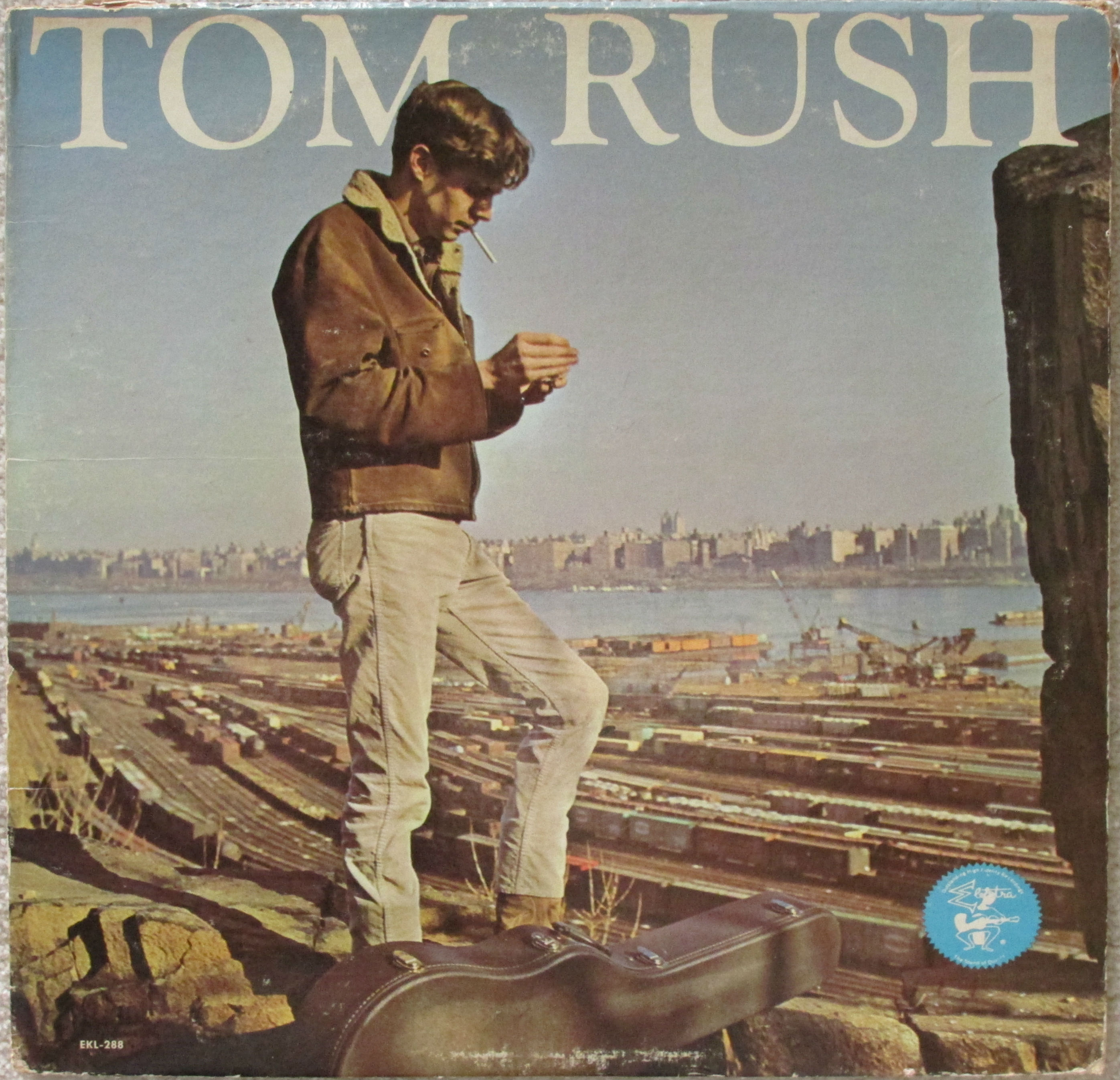
Tom Rush Trainyards

Trains, stories, music, smokes… the quintessential folk singer.

That’s when it hit me.  Pow.  I’m old.

Just then Tom Rush came out on the stage.  And he’s even older.  Not the slim, young, booted guy strolling down the cobblestone lane we remembered.   But still, to his credit, a slim older guy, with a full head of real, white hair.  Rugged and ready.

He launched into one of his new songs, “It’s Gonna Get Hot Tonight” and never looked back.  The voice was there, intact.   His guitar work was perfect.   And the stories flowed, all over again as the audience sat back to enjoy the ride.

What a treat.   He knew us well, and played to our weakness: we’re all old.   Or advancing anyway.

Tom Rush Take A Little Walk

The idol of our hippie youth: an english major Harvard drop out.

He smiles as he sets up The Remember Song.   This is his talking blues about failing to recall names and faces, conquering wireless technology, and hooking up.   True to the theme, he forgets where he’s at in the middle of it.

And we lap it up.  Delicious.

When he finishes, he says, “That’s my hit song.   It’s just a few clicks short of 7,000,000 on Youtube.  My wife says, they’re all probably from the same guy.  He can’t remember watching it.”

Tom Rush Circle

An unlikely pose, but the record company demanded it no doubt.

He covered a lot of his work that night, and it provoked me later to get out all our Tom Rush albums.  Which gave me pause to think.

The tragedy of streaming music online is that we no longer have album covers to read.   Used to be you’d put the needle on, and sit back and read the album backer, extracting every scintilla of detail about the artist.  No more.

IMG_3898

Something to read and read again while we listened.

Our migration to smaller media and its packaging is the driver. In the 25-year generational shift to today, we traded in big vinyl records for 8 track, then cassettes, overtaken by CDs, which were displaced by downloads and Internet radio.
Along the way, we gave up the opportunity to read about our music.

Now we can listen to more and more of it, while we know less and less about it.

A Michael Wiseman pic of the story teller, non pareil.

A Michael Wiseman pic of the story teller, nonpareil.

Fortunately, Tom Rush steers clear.  He doesn’t play to massive concert audiences.  He’s for small crowds, talks to them, and as a result, we come to know him and his music well.

Probably won’t forget it either.

Thanks for reading!  Please share this with your musical friends!


Standard
Marketing, Media

USPS: Taking A Retail Moment

USPS4

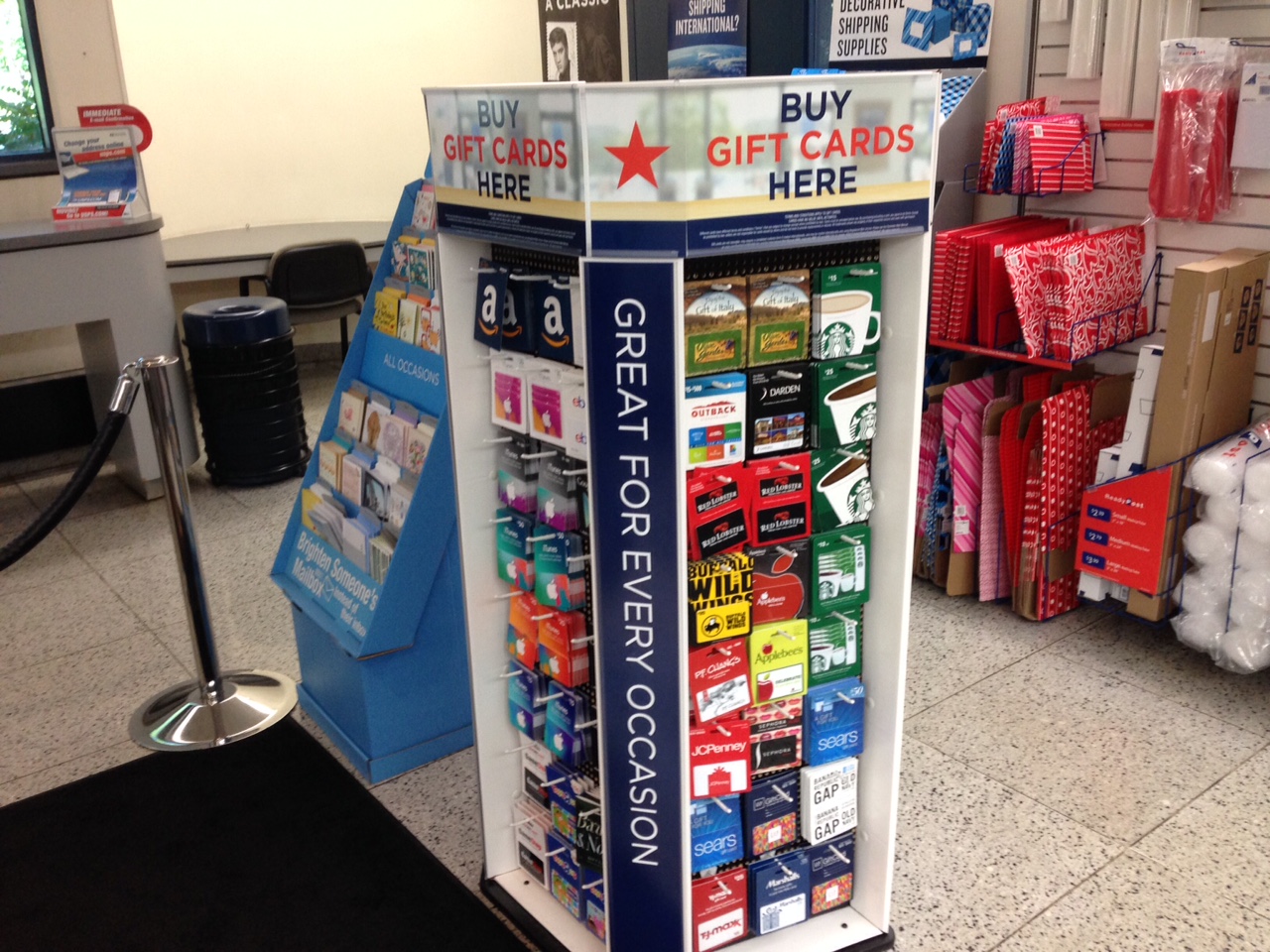
The USPS card display is there to capture the impulse to do something nice.

Kudos to the merchant-minded individual who suggested that the Post Office should sell greeting cards in their lobby. After all, if you want to receive letters, you need to send them too.

Part invites! Looking for a venue.

Party invites! Looking for a venue.

It turns out that the USPS does an audit every year to measure how long we wait in line. Two minutes is the national average. During that time we have a variety of scenery to peruse.

Beyond the oddities of humanity that lean over the counter to ship parcels bound up like mummified hat boxes, or to mail extravagantly addressed purple letters, or the restive small children that roll across the floor, we can look at the card displays.

The USPS selection is not encyclopedic, but it is enough to trigger the impulse.

The USPS selection is not encyclopedic, but it is enough to trigger the impulse.

The selection isn’t anywhere close to that found at a card store, and that’s good. We only have two minutes to make a choice. But the cards available still represent a middle of the road attempt at gentle humor, quiet sympathy, and friendly reminders.

Next to the greeting cards is a rack of retail gift cards, perfect for the last minute desperate search for an overdue birthday gift.

Stationery sets as starter kits. After all, if you want to get letters, you have to write them.

Stationery sets as starter kits. After all, if you want to get letters, you have to write them.

Across the lobby is another display of stationery sets, and party invitations.
When we are there to pick up our mail, or buy stamps, we have a brief opportunity to snatch a couple of cards, and whip them off to someone who is on our mind at that precise moment.

The USPS is demonstrating a simple case of vertical integration here. They are providing the total service: stationery, gifts, attractive postage stamps and delivery.

What better way to merchandise the universal service that gives you access to over 150,000,000 addresses across the continent?

The next time you visit your post office, take a look around. This is the perfect place to yield to the impulse to greet and treat someone, two blocks over, or on the other side of the country.

It only takes a couple minutes.

Standard
direct mail, Economics

All That Glitters

IMG_3733

The solid gold gift pack. Gotta open it.

Our mailbox opened this morning to present a gorgeous golden Flat from Veterans of Foreign Wars.

It is highly improbable that the recipient of this gilded kit would toss it in the bin without at least checking to see if there was a $10 dollar bill waiting inside, too.

Just might have been too, considering the total payload we discovered:
-12 Christmas cards and envelopes

IMG_3739

12 Christmas cards and envelopes, a big offering.

-1 gift bag

-1 pen

-1 calendar card

-1 set of gift & address labels

Of course, there was also a letter/donor form and BRE.

But two unusual items cropped up.

IMG_3749

The gift bag, big enough for a ham sandwich.

First, the headline alerted us: WOUNDED VETERANS ARE IN CRISIS.

If you are at all disposed to the plight of these warriors, as countless Americans are, you are going to open this labeled treasure chest to see what the crisis is.   Foreclosure on the home?   Withdrawal of benefits?   Family disintegration?   What is the crisis?

IMG_3735

Crisis: a powerful set up.

Inside, the letter launches in to a completely different train of thought: “When we began sending out these free special edition Christmas cards and other gifts, people said we were crazy.”  Only three paragraphs later do they mention the main focus of their cause: the wounded Veteran.

Version 2

The non sequitur: handwringing debate about cards.

While this may seem nitpicking, the golden rule of good headlining is to pay it off.   VFW brings the reader to the edge of their seat, and then chats away on the frivolity of costly free gifts.  Crisis takes a back seat.

The second wrinkle is more about economics, and a good lesson is taught here.  This 6.8-ounce kit probably cost $2-$4 dollars each, all in.   Conventional marketers would roll up their eyes, cross themselves and close the garage door before spending that kind of money, especially when the response might not break 5%.

IMG_3743

Labels and stickers, a fitting complement.

But what if it does?   The real question is, what’s the average gift, and how long before it pays itself off?

So assume for a moment this scenario:

Mailed 10,000 at a cost of $40,000.  700 donors, at a cost of $57.14 each. Response, 7%.  $17,500 in gifts.  Average gift, $25.

IMG_3751

Cello-wrapped pen.. not since Time magazine!

What does VFW have? 700 new donors at a net cost of $32.14 each.   What are the odds that over the next five years, the group will turn in another $100,000 through renewal mailings, bequests and planned giving?   Pretty good, actually.

Version 2

This compliant disclosure gives pause to the reader.

It’s all speculation, of course.   For some background on VFW’s fundraising success, check their website for its latest financials.   Total gifts, $66.8 million, fundraising expenses, $25.6 million.  Roughly 2.6/1.  By comparison, its major competitors turn in gift/fundraising ratios of 3:1 up to 7:1.

The challenge is knowing in advance what the numbers can, and need to be.  Here is a formula worth knowing–witnessed by a fly on the wall of VFW, where for a fictional moment, you are now working.

Budgeted Cost per Piece

Your boss went sideways over the cost of the Gold Lame’ package.  Piqued, she said the gross cost per response can’t exceed $32.14.  You blurt out,

“But that’s the net cost on our Vanilla kit.   Gimme a break.”

“Give you a break? I have to explain this gold cadillac to the board.   If it doesn’t beat Vanilla, I will be back in community service, and you will be on the phones while you are licking envelopes.   Got it?”

IMG_3745

Gifts up to $500. If you don’t ask…

So you have a ceiling: the cost per response must not exceed $32.14.   Historically, you have generated a 3% response on the Vanilla conventional mailing format.   The all-in cost of the Gold Lame’ must not exceed $32.14 times 3% = $0.964 each.

Impossible.  The vendor stares through you with crocodile eyes.  Three bucks without postage, he grins.

But you feel strongly about Gold Lame’.  Your all-in piece cost totals $3.75.  Divided by the boss’s ultimatum, $32.14, you need 11.67% response.   Phew.

At this point, you wake from this disturbing nightmare.   Will Gold Lame’ quadruple Vanilla response?   We may not know, but at least you know the formula to weigh the risk.

Remember: ($ piece cost) / ($ response cost)  =  % response

Now, back to our piece.

  1.  Fix the headline to set up the letter, or change the letter to pay off the headline.
  2. A bold choice of cards: an unabashedly Christmas theme.  Just make sure your list is of that persuasion.
  3. The donor form offers 8 gift choices, from $10 – $500.   Good!
  4. Lastly, the prepaid BRE is worth it.   Whole campaigns can falter for want of a postage stamp.
  5. Mail it.   Whatever the response, whatever the gift, if you don’t test, you will never know.

Lastly, find a good quote to share with your boss, something like Teddy Roosevelt’s, “better to have failed while daring greatly than to live with those cold and timid souls who have neither known victory nor defeat.”

A little wordy, but it may work.


Standard
Cars, Culture, Thank You

Farewell To A True And Faithful Friend

Blue at Weslemkoon

Our first Olds Cutlass Cruiser.

It’s strange how we can instill heart and soul into material objects. Because of that, this is a wistful moment, bidding farewell to a member of our family for over 25 years.

Back in 1990 when we bought our home, the real estate agent said, “Hey, you have a few dollars left over from your loan, why don’t you buy a car?” So we acquired a brand new Oldsmobile Cutlass Cruiser, a mid-sized station wagon.

330,000 miles later, here we are, standing beside Blue, who is resting quietly in the driveway.

You may think it is a stretch to give a soul to a machine, but it is not uncommon. Sea captains adopt their boats. Hearst had his Rosebud, and Davey Crocket, his trusty rifle Old Betsy.

Blue after a wash

Blue, fresh out of the shower.

Olds Plywood

A rare talent: a 4×8 sheet of plywood through the window.

Actually, Blue is resting on the driveway, not in it. Family only goes so far.
The reason why this departure is so touching is that we remember when we first got Blue. We traded in an earlier Olds wagon, the exact same model.

It was the easiest order a car salesman ever took:
“Yes sir, can I help you some how?”
“Yep, see that Olds wagon in the lot outside? I want another, just like it.”
“Certainly. Just like it?”
“Well, yeah, but with air conditioning, fuel injection, and FM radio.”
“Power windows and door locks?”
“Nope. If we drive into a lake I want to be able to get out.”
“Same color? Blue?”
“Yup.”
“Done.”

The paperwork took much longer, but by the next day we had Blue.

Years later there’s no need to recount all the outings and family trips in Blue, but the car distinguished itself by its steadfast performance.   According to industry stats, Blue must have been made on a Wednesday, because he never suffered a quality issue.  Beyond the normal R&M costs, Blue lived a clean and pure life.

It was not until 14 years later, on a mild December evening in 2004, that we truly realized what a prize Blue was.  We had parked outside a restaurant for dinner, and walking in, spied a similar Cutlass Cruiser wagon, same vintage.

I was moved to scribble a note and leave it on the windshield:

“Hi! Great car!  We have one just like yours.  Look behind you. 210,000 miles, and runs like a clock!”

Olds Back Seat

Rear view treat: the seat of choice.

When we came out of the restaurant after dinner, the wagon was gone, but we found the note with a reply, under our wiper:

“This car just won’t die.   190,000 & runs great. Hope you make 300K.”

And here sits Blue today, well past the mark.

With a few makeovers mind you.   We have repainted Blue four times.   Maaco gives us respect, though honestly, the owner there may have succumbed to paint fumes.   On two different occasions we returned after a week to pick up Blue as scheduled, and he couldn’t remember us or the car.

Blue Possum

Varmint duty: airing out after trapping a possum.

But the new paint jobs breathe new life, just like a new suit, new carpet or a new kitchen.   People would stop to stare at Blue.

“What year is that?  How many miles you got on her?”

We never viewed Blue as feminine, but protocols demand the female gender for cars it seems, just like Pat Brady’s Nellie Belle.

Another common comment from admirers:

“We used to have one just like this.  Rode in the back seat.  Does it face backwards?”

You bet it does, kids loved it, but the D.O.T. put an end to that hazard, understandably.  Still, it was fun.

Olds Jerry's

The pitt crew: Don and the team.

But what Blue could do with its backseat and rear window was pack in a 4’x 8′ slab of plywood, thanks to General Motors’ patent on the hatchback window.   You can find the same feature on Cadillac Escalades today.

Unfortunately for Blue, General Motors lost its way, and designed a long series of geriatric, goofy looking Oldsmobiles through the 90s and into the new century.  Sales withered, and April 29, 2004, the last rolled off the line.

Mean time, Blue had become my main ride, and delivered me daily to work and home, racking up the miles.   One day, in 2006, around 229,318 miles, I filled in the new owner questionnaire.   I was 16 years late, but General Motors responded February 9, 2007.   Adam Dickinson, our designated Customer Relationship Specialist congratulated us.   After a stream of compliments, he suggested:

Olds March 2011 copy

15 minutes of fame, and a year’s free oil changes.

“We would be remiss, however, not to suggest that you look closely at our new Cutlass at your local dealership….”  That was three years after the demise of the Olds make.

Denial.

We wonder today if Adam is in a small cube somewhere, still writing optimistic notes to holdouts like me.

In summer 2009, Blue was worried.   The CARS program lurked.   Car Allowance Rebate System, popularly known as Cash For Clunkers, was the federal government effort to compensate GM and others for turning out a decade of lemons.   To the automobile, this was like plague, emerald ash borer and mad cow disease, all rolled into one.

Blue's Worst Fear

Blue’s worst fear: to be stripped at Pick & Pull.

All told, the feds grabbed 671,000 vehicles off the street.  Blue wasn’t one of them.

As a celebration, Blue had his own Facebook page.   It was revealing, listing his favorite movies, shows and songs: Bullitt, Dukes of Hazard, Knight Rider and Deadman’s Curve.

January 2011, the miles continued to climb as Blue enjoyed continuous 100-mile round trip sprints to the office every day.   300,000 loomed ahead on the odometer.   We contacted Jiffylube, which had been Blue’s choice since May of 1991, mile 5991, 20 years earlier.

They sensed a PR opportunity when easy math showed a century of oil changes: 100 visits.

Blue in Hebron

Under the State Champs water tower, Hebron, IL.

Jiffylube’s ad agency jumped on Blue and he had a day’s coverage in suburban Chicagoland’s news, taking interviews from reporters and an FM station in Dubuque.  Best of all, a gift of free oil changes for a year.

Celebrity is emboldening, if also a heavy responsibility.  We bought Blue a new set of tires, with the slim whitewalls to complement his spokes.

The daily commutes were Blue’s opportunity to let the ponies go.  There is a 4-lane strip of highway north of Chicago where we pushed the speedometer over two digits a number of times.  Only for a mile, but long enough to let him smell and feel the brisk air screaming through the rad grill.

Blues new wheels

New tires. Sweet!

Sadly, things change.   With our retirement, the commutes stopped, and not too long after, Blue saw his first signs of slowing down.   Kind of an automotive hardening of the arteries.   Don, the pit crew chief, who has managed Blue like an uncle cautioned us:

Blue at Mars Bar

A ride in the country, Lake Como, WI.

“Yunno, he’s stiff.   You’re not running him hard.   So he gets tired.  He’s gonna stall on ya every once in a while.   Nothing serious, but he really needs a good long drive.   And some Gum-Out.   Use high octane every once and again, just to clear the injectors.”

Then last week, a new wobble.   Driving out for a visit to the hardware, Blue couldn’t make up his mind on which gear he was in.  3rd? 2nd? Drive?  We got him home by slipping into Neutral at every brake and corner, just to keep the revs up.

Blue at 330,000

Blue notches 330,000.

He wouldn’t talk about it.   When we pulled the hood release to check the engine, the wire snapped, locking us out of a closer look inside.   Blue was suffering his pain quietly.

Back to Don again.

“It’s the solenoid in the transmission.   We’ve tried everything, but it’s dead.  He’ll still shift, but you might have to change gears manually.   There’s nothing else we can do.”

At mile 332,879, the automatic Hydra-Matic transmission that was perfected by Oldsmobile in 1939 was out of the race.

Our worst fear is that Blue could end up in the jaws of a car crusher at some junk yard.  It is  unpalatable.   Better to hide under a tarp in a barn.

Blue at Sunset

Sunset, Butler Lake in Libertyville, IL.

So we are hanging onto Blue, and will nudge him past 333,000, maybe with a trip or two to the golf course, or to a grassy park overlooking the tollway, where he can hear and smell the noise and speed of the thousands of cars that whine and hum along the lanes below, unaware of his watchful gaze.

It’ll be a sunny, breezy day.


Standard
Agriculture

Tobacco, Gardening and Growing Up

IMG_2651

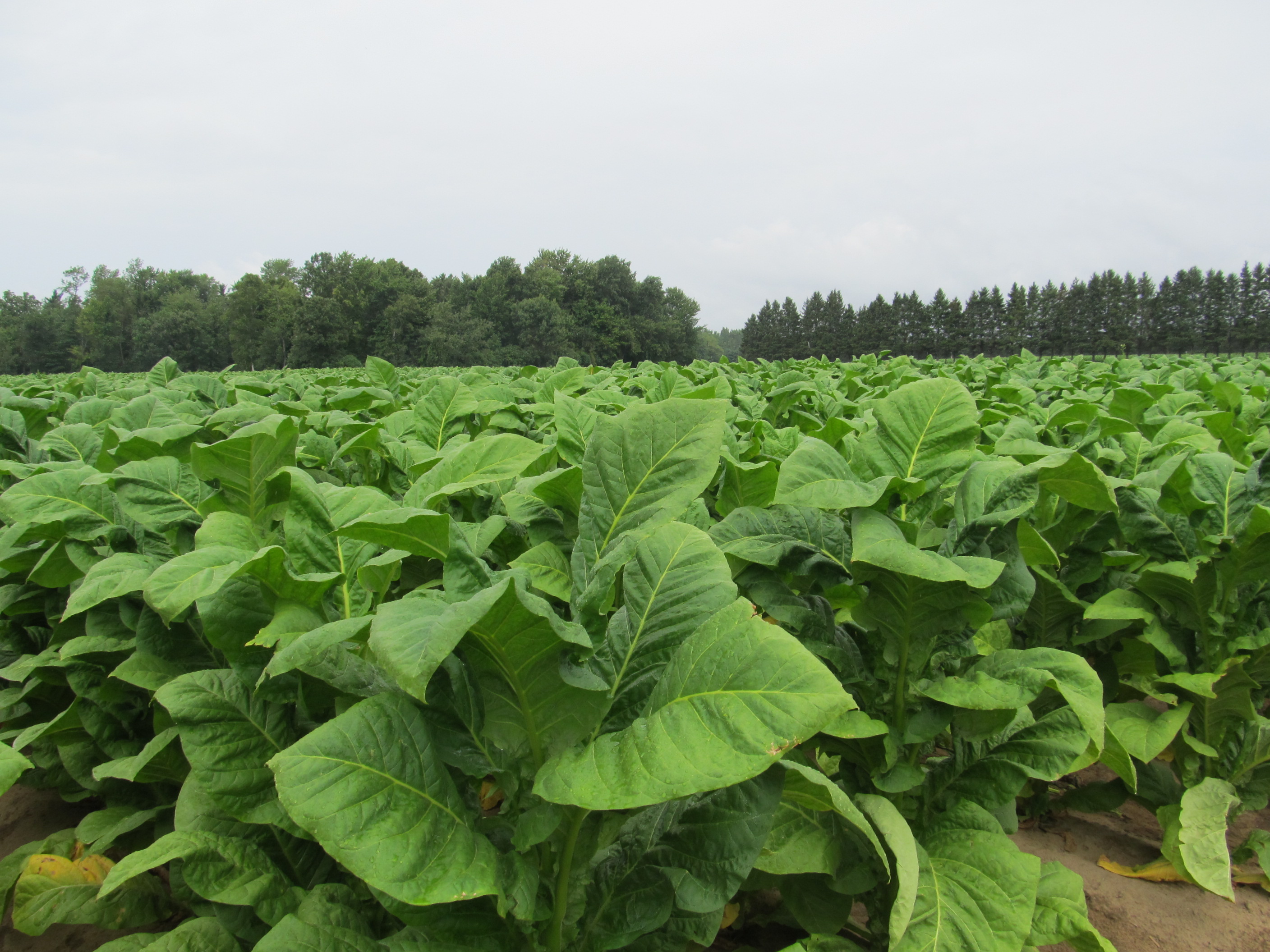
Norfolk County tobacco in its prime.

Gardening is a passion for many.   It’s also an education.  Living in the suburbs today, I now realize my first summer jobs in tobacco were an education on a grand scale.

But when you are sweating it out along a sandy trail between endless rows of voluptuous green, you don’t recognize the perspective it gives to one’s view of the world from then on.

Let me tell you about growing this insidious, but historic, magnificent plant.

Norfolk County is a sandy-loam, verdant garden on the north shore of Lake Erie.   It’s recognizable on any map by the 22-mile spit of sandbar called Long Point that hooks into the center of the lake.  Flying from Chicago to Toronto, you can see the milky currents wrapping around it from the air.

Today tobacco is a small fraction of the agriculture in Norfolk, but from the 1920’s up to the ’70s, tobacco farms neatly patched the landscape, rich in wealth and long in work.

IMG_2653

The Norfolk growers are proud of their neat and efficient farms.

A 100 acre tobacco farm could furnish a family nicely, provide for a new car every few years, fund college, build barns and also buy a trip off to Florida for a well earned vacation in the winter.  It would take a 1,000 acre wheat farm to deliver the same income.

But making that all come together required interminably long work, accented by brilliant sun on hot sandy fields.

Greenhouse

In March the greenhouses are steamed to heat and humidify the rich soil for germinating seeds.

Tobacco Seedlings

By May, millions of shoots are ready for transplanting.

In late March the growers steam the greenhouses, getting them warm and moist to germinate microscopic tobacco seeds which are sprinkled across rich, black dirt like poppy seeds.   These grow to 12-inch shoots by May, ready to be pulled and planted.

The shoots are planted from behind a tractor.   Two workers, usually women, sit on a frame and feed plants into a steel wheel that parts the sandy soil into a furrow, drops the tobacco plant, and then closes the furrow behind.

You can plant more than 10,000 shoots in one acre.

Early June and school’s out, and summer jobs begin to blossom, just as the adolescent tobacco plants are spreading their first leaves, called “sand leaves”.   All manner of weeds try to overtake the tobacco. Our first serious job is to scrape a hoe between each plant, spaced roughly 18 inches apart.

hoeing tobacco

Hoeing: meticulous painstaking work.

It’s 7 in the morning, and we are at the edge of the field.   Mourning doves are cooing, off in the bordering woods, and the air is fresh with the scent of dew evaporating on the tobacco.

Hoeing is a walking activity.   Wearing a hat, shirtless, and in shorts, I shuffle along a row carefully carving out weeds between the tobacco.   There’s a million plants, shared by five workers: me and 4 women.

It’s painstaking work.  If careless, the hoe will cut the tobacco plant, which will cost the grower money, and that can be painful.

Most memorable along these interminable rows was the unceasing chatter among the workers, sharing stories from family fortune to family scandal.  As the youngest in the group, and as the only male, my role was to listen, and take the jibes from the women.

replanter

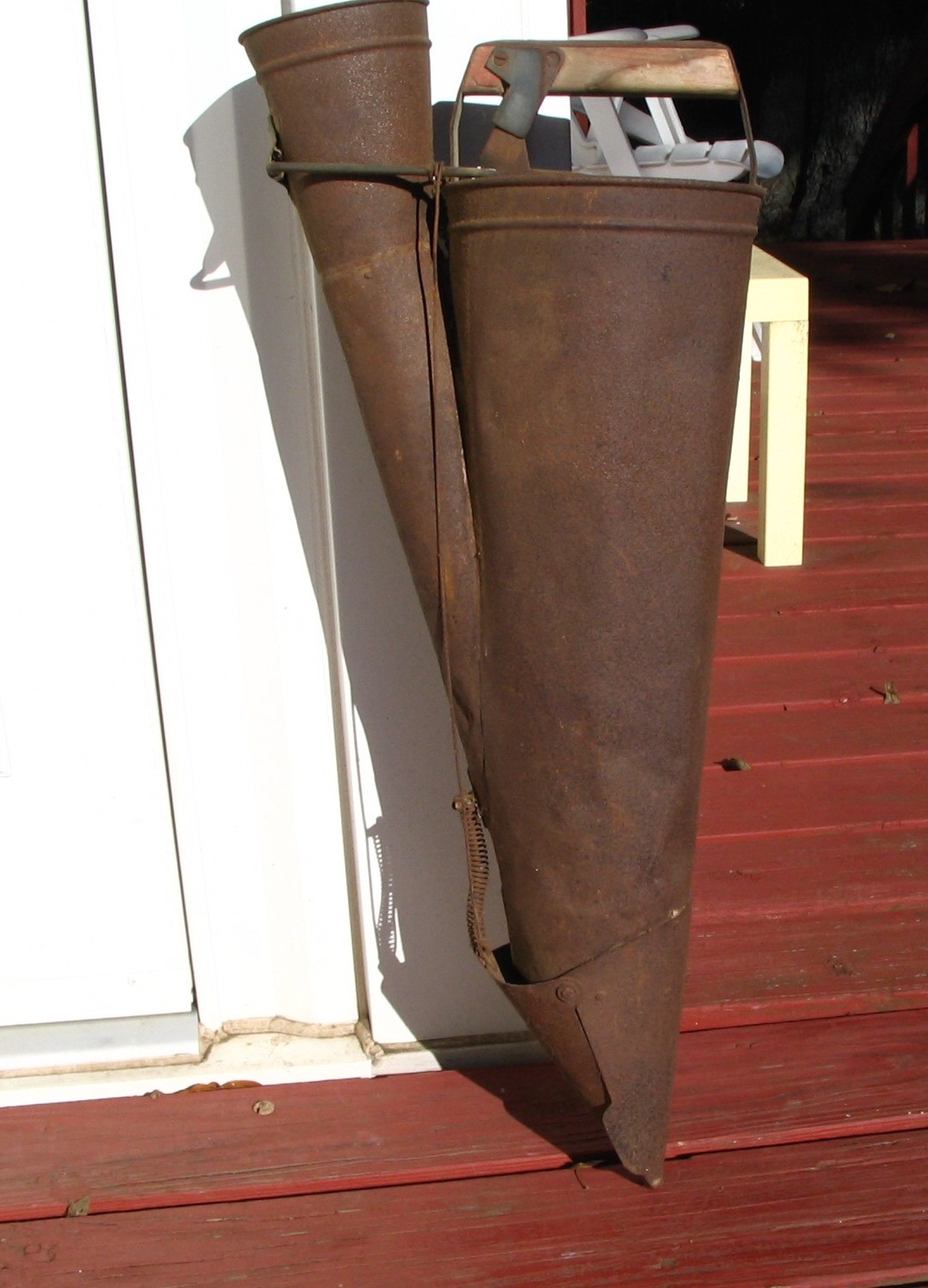
Do-over: the replanter dropped a new plant and a cup of water into the soil.

Then there’s replanting for dead and missing plants.   Toting a six-quart basket with new plants and a water tank strapped to my shoulder, a replanter punches a hole in the furrow, drops a plant down the chute, pulls a lever on the chute and a cup of water is dispensed.

Replanting is my punishment for hoeing a plant under, a week ago.

My recollection of this job is twofold: the rows are unending, and the cold water from the farm’s well, pumped by a windmill, is heavily laced with sulphur.   After 10 in the morning, the sun is high.   The body dries up pretty quickly, and water breaks were serious and necessary.  Gulping down a pint of icy sulphur water is a challenge.

By 3 in the afternoon, staring along the next row, the heat waves make the woodlot at the other end a shimmering green plasma.   No matter; we work until 4:30 or so.  After a few days of hoeing, the frigid sulphur water tastes sweet.

tractor (1)

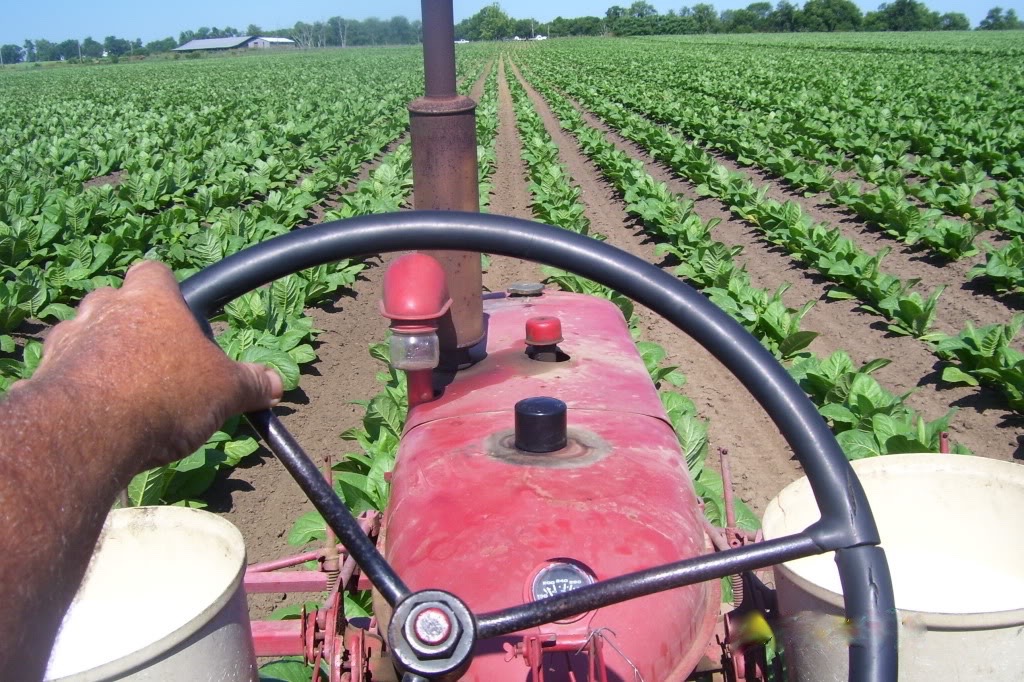
Long straight lines at 2 miles per hour.

Next, we cultivate.   The tractor pulls a wheeled, steel frame manned with two guys, heads down, hands controlling little rakes, zigging and zagging between each plant, digging out a second round of weeds.  Great for building your pecs and ceps.

I drive the tractor.   This is hot work, roasting slowly over a 6-cylinder diesel Massey Ferguson.   So hot and monotonous that I fall asleep behind the wheel.   I have driven across three rows before I wake to the scowls and groans of the boss’s sons who are zig zagging behind me.

Stone age cultivator, left by the Tuscarora.

Stone age cultivator, left by the Tuscarora.

The upside of walking or driving down countless rows is finding a handful of ancient arrow heads and prehistoric farm tools along the way, remnants from the Tuscarora that long since have moved on.

Every day the tobacco continues to sprout new leaves as it shoots skyward.

Tobacco 1991 778

The flowers are lopped off to encourage leaf growth.

When the plants have mushroomed to shoulder high, we take a brisk walk down the rows topping off the flowers to encourage a fuller plant.

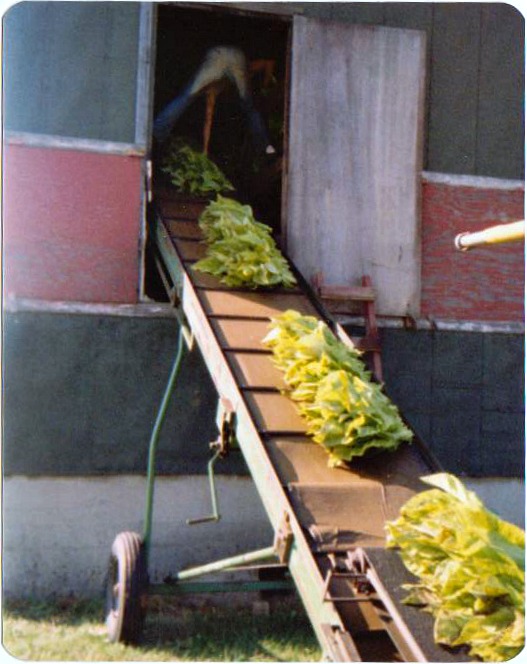
August brings heat and showers, and cooler nights.   The tobacco plant has about twenty broad leaves, stands a good 5-6 feet high, 3 feet across, and is rich green and aromatic.   The leaves are as large as tennis rackets, and along the stems, they sweat beads of juice which turns to black tar on the hands after a while.

The harvest begins.   On my first tobacco summer, 1965, we had 5 “primers”…pickers from South Carolina.   They walked the rows, hunched over, pulling leaves, starting with the sand leaves.  They earned this name as their bottom sides are coated with sand.   It’s seven-days-a-week work, because the crop is an unstoppable force, growing as fast as it can.

primers copy

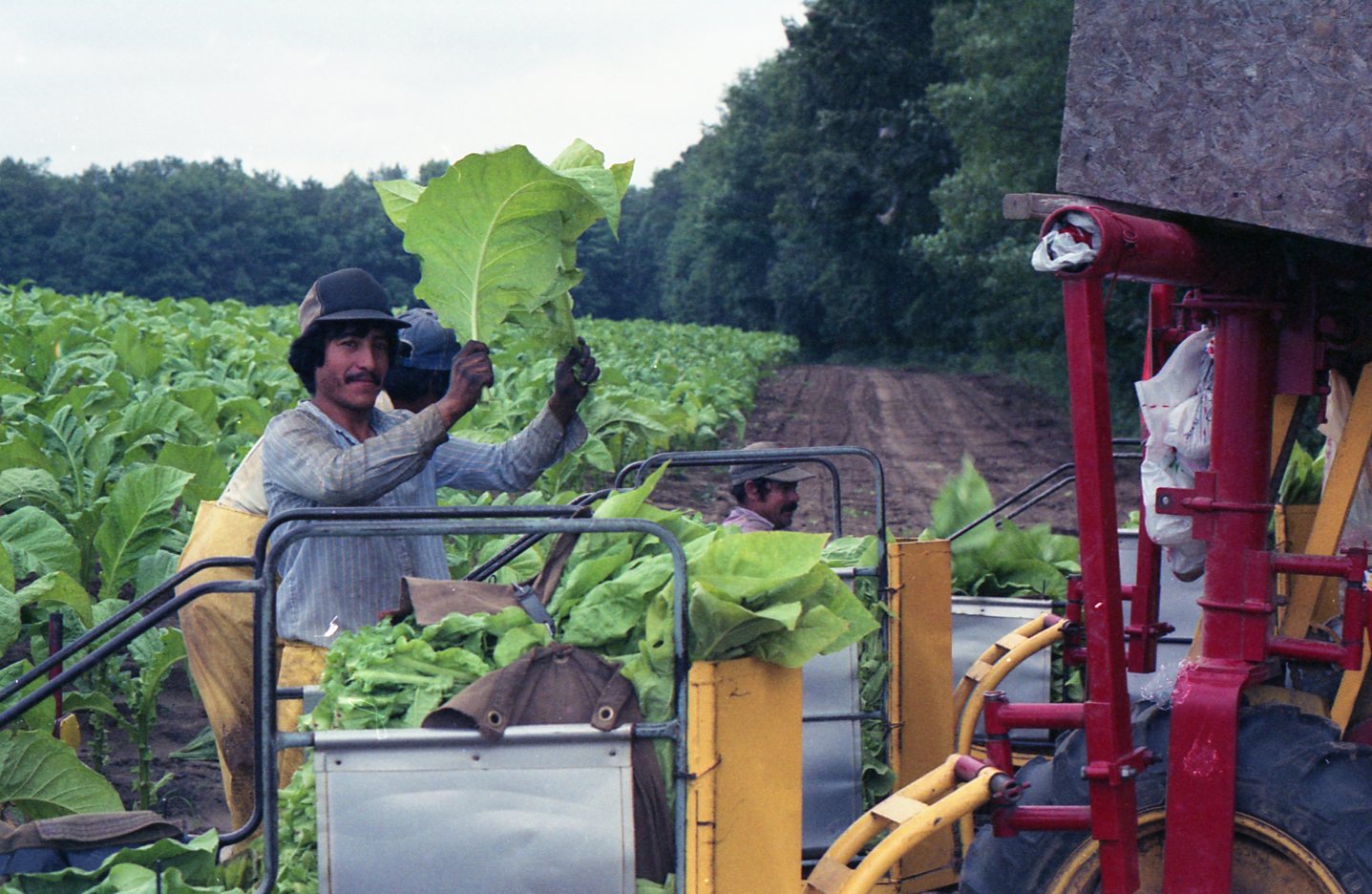
Priming: picking the leaves is back breaking work. Nowadays primers ride picking machines.

The primers pull off the leaves, usually about three per plant, and tuck them under their arm until they have a bundle of 30-40 bunched up like stacks of green newspaper. Standing up, they bring the leaves over to a horse-drawn tobacco “boat” that follows in the row.

The boat was on wooden runners, and pulled by a tired horse who probably wondered daily how he ended up here sweating in the field.   The primers were sympathetic, but not kind, and pretty course  with their language for the old gentleman who didn’t need the work.

tobacco boat1

My first job was on a farm with horse drawn tobacco boats.

The priming crew will go through the hundreds of rows of tobacco 3 or 4 times to pick all the leaves as they mature.

When the boat is full, at the end of a row, it’s winched onto a trailer and tractored back to the tobacco kiln.   In Norfolk, we called them “kills”.

IMG_2654

The tobacco kilns were a landmark of Norfolk County.

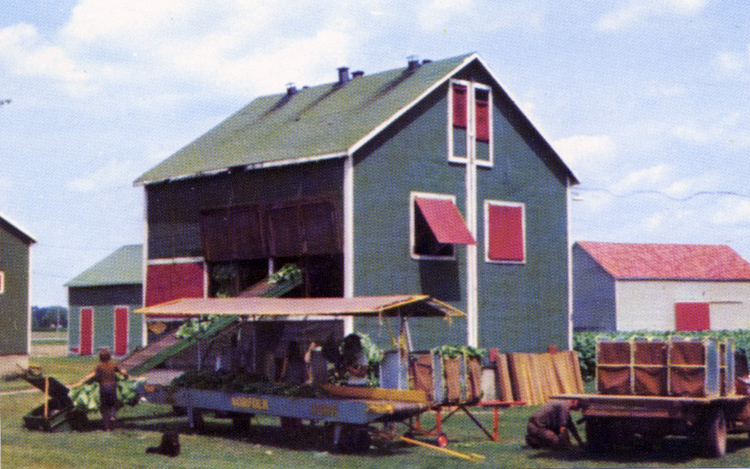
A typical tobacco kiln stands about 20 feet high, and 25 feet square.  Usually covered in green tar paper with red doors, these cube-like structures dot the landscape.   Every farm has at least 7 kilns, one for every day of curing required.

Tobacco Tying

Hand tying: a lost art. Each stick carried about 10 pounds of leaves.

But before the tobacco is placed in the kiln, the leaves are sewn onto sticks, each about 4 feet long.

It used to be that tobacco was hand-tied onto the stick.  About three tobacco leaves were half-hitched at a time by their stems, by a lady using a continuous string.   A good tier could tie about 10 pounds of leaves onto a stick in about a minute.

1990 183

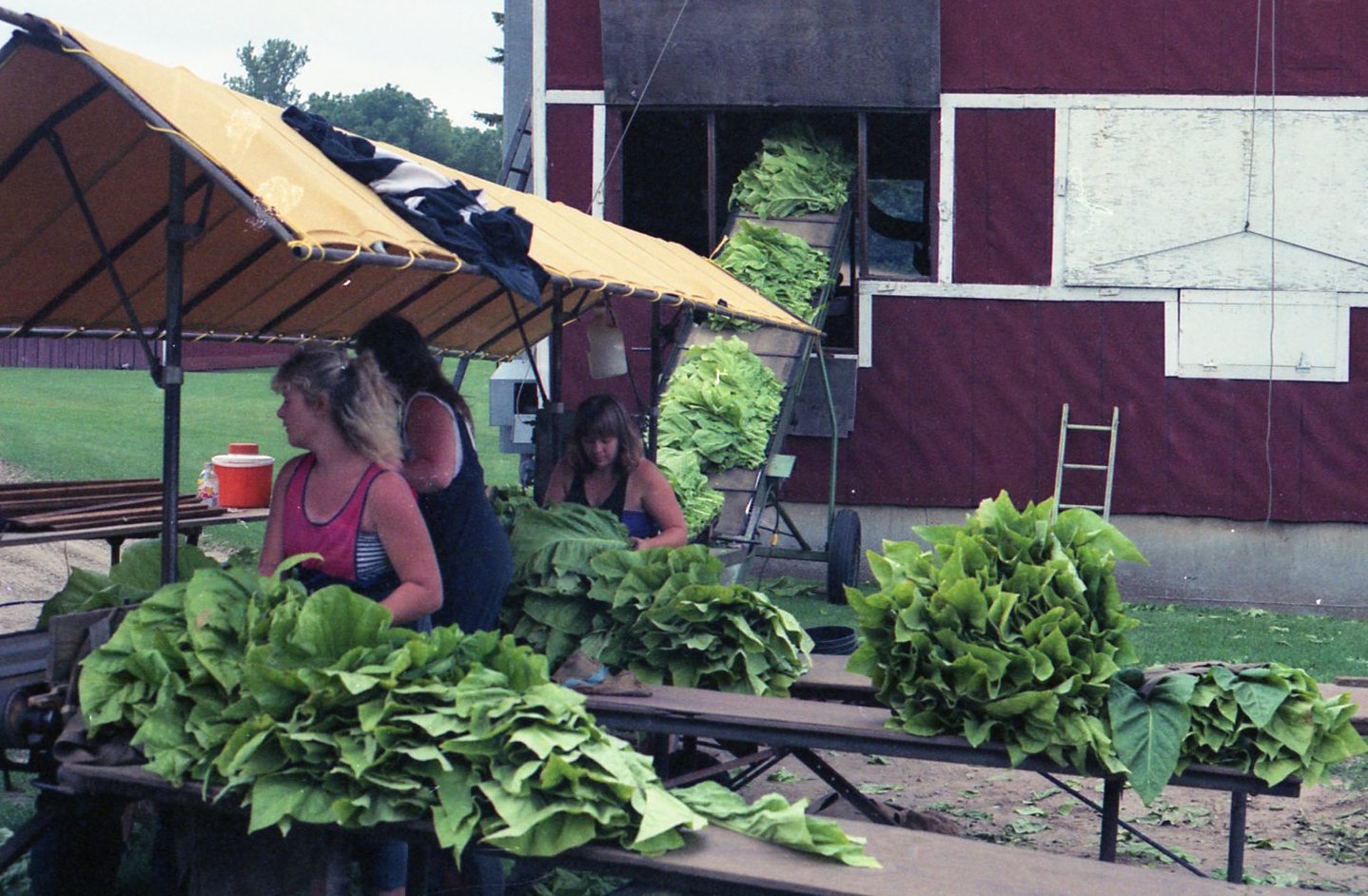
The tobacco tying machine delivered speed and finished product faster.

Sometime in the 60s, someone invented the more contemporary tying machine.  This is a conveyor belt with an industrial stitcher.

Three ladies run the machine.   The first pulls a bed of 20 leaves, by their stems, onto the belt, and as the belt moves along, she grabs another set of leaves for the next bundle.  Lady #2 would lay down some more leaves, plus a tobacco stick, and pulls some more leaves on to cover the stick.   Lady #3 continues laying on leaves as the stick goes by, under a roller, and under the stitcher.   It delivers 10 pounds of leaves straddling the stick.  All to the rise and fall of a conversation that flows with the chatter of the stitching machine.

The ladies turn out 2-3 sticks a minute.

kilnhanger-2-Lance

The kiln hanger strung up 2-3 sticks per minute, skipping across 20-foot-high beams.

These leafy sandwiches are sent up a second conveyor into the kiln.   The kiln hanger, who is me, waits at the other end, standing on a shaky row of 2 x 10 boards, loosely resting between two beams, 15 feet above the dirt floor.   I grab the stick by its middle, and suspend it in notches between two beams over my head.

There’s enough time to walk on the boards to the notches, place the stick, and get back for the next stick.

Occasionally I miss a notch, or a stick breaks, and it plummets to the ground, crashing on the beams below and landing in a pile of leaves like a great wounded bird, with green feathers everywhere.

When a row is finished, I move the 2 by 10s to another position, either below or above me, and climb into position.   The conveyor is moved, raised or lowered.   The conveyor jumps into motion.   One wrong step and I join the bird.

At the end of the day, all of the doors of the kiln have been closed snugly over the bulging sticks of tobacco.  1200 sticks, 6 tons of tobacco, wet.

A typical kiln holds 1200 sticks. We filled 40 kilns during harvest.

A typical kiln holds 1200 sticks. We filled 40 kilns during harvest.

Harvest takes about 5 weeks, finishing after Labor Day, unless we get frost early.

Standing in the doorway of the kiln and looking up, I see a mouse’s eye-view of a beautifully trimmed forest of leaves, in hundreds of orderly rows, hung like romaine lettuce, ready for baking.  Early in the harvest, those leaves drop millions of grains of sand, so an upward look usually ends up with watery eyes.

Kiln fires gave a frightening glow across the sky at night.

Kiln fires gave a frightening glow across the sky at night.

In the early days of tobacco curing, hot open flame oil burners were lit below the leaves.   This is flue-curing.   A harvest never went by without a dozen kilns going up in smoke and flames, a spectacular, punishing and frightening sight, all at the same time.

During the 60s someone got the idea to have forced air blown through an external furnace, and into the kiln, removing the threat of fire.   A local entrepreneur made a fortune manufacturing the blowers for all the kilns in Norfolk.

The tobacco is flue-cured in the kiln for about 7 days.    Warm, dry air is circulated bottom to top among the leaves.   By day seven, it is golden and smells sweet and peppery.  Each leaf has given up a cup of water, and has shrunk to the dimension of a tired dish towel.

1990 187

In the late 70s tobacco pickers rode a machine with baskets. No more stoop work, no more horses.

Late after supper on the 7th day, or early in the cool dark morning of the 8th day, a crew brings a wagon up to the kiln, and gingerly unloads the kiln.   They gently lay the sticks of tobacco down on the wagon bed, being careful not to damage the leaves.  The kiln is ready for a new batch.

I have personally touched, hung, or cultivated every one of the leaves in this kiln.   By summer’s end, I have loaded 40 kilns.

The harvest is pulled to the tobacco barn where it will remain until stripping, sometime in November.   The sticks and tobacco string are stripped from the leaves which are then bound into bales the size of a kitchen microwave.

I never saw the stripping process, but reportedly, it occurs in a hot, humid room which forces the strippers to shuck off their clothes after a while.   The event is aptly named, and there are tales of racy, raunchy humor surrounding it.

Tobacco Exchange

The auction house in winter. The product was bought, and exported to the far east.

Delhi Sign

Hometown Delhi, center of the Canadian tobacco industry.

Sometime in January, the growers take their bales to auction, and there they are sold to cigarette manufacturers like Imperial Tobacco, Rothman’s and MacDonald Stewart, whose Canadian customers prefer the Ontario flue-cured leaf, much different than the tobacco that comes from the southern states.   Today, that market has been dwarfed by the far east, where smoking is more popular, and less regulated.

The “dutch auction” is an unusual process.   A ceiling price is first established, and then the single hand of a clock spins slowly through descending prices.  The first buyer to hit their buy button wins the grower’s lot.

From the auction house the grower’s tobacco is trucked to the factory.   In my hometown of Delhi, the Imperial plant was on the south side.

IMG_3249

Another planting.  The young crop absorbs sun and rain before its explosive growth.

By early February and March the plant was processing tobacco, and when a warm south wind blew across town, there was a pervasive, mildly exciting, sweet earthy fragrance that tickled the nose.   Unforgettable, 50 years later.

As I said at the outset, tobacco is a magnificent plant, and troubling too.  I have no use for it, and can’t recommend it.   Still, a good crop is a work of discipline, and there isn’t a day that those priceless memories of demanding, careful labor, delivering a harvest–a real summer job–don’t come to visit.

And I like to garden, too.


Thanks for reading! This was as long as some of those rows. It’s been years since my days in Norfolk. I can’t forget the smell and feel of the countryside. It’s sweet and distant, and I always like to go back to visit. Who says you can’t go home again?


Standard
direct mail, Marketing, Sports

Mail Order Magic: The USGA Doubles Down

golf_grip_1

Marketing: a good grip that doesn’t let go.

The challenge of any direct marketer is to hold the enchantment of the buyer from the moment of first interest until the next order.  Let me tell you how the United States Golfing Association had me firmly in their grip.

Mind you, I have always been attracted to mail order.

robinhat

First mail order purchase.

As a kid, my first experience with mail order was a Robin Hood hat off the back of a Quaker Oats box. I wrote them a letter with a dull purple crayon. Two box tops, a quarter, and four weeks later, I was decked out in a lincoln green cap complete with turkey feather.

Moments later I dissolved onto a path through the tree line behind our house, earnestly in search of rich people to steal from.

My brother and I followed up with another offer, this time, a potato gun from Nabisco Shredded Wheat. More box tops, more coins, more waiting, and our ordnance arrived: two shiny, plastic, blue and red hand guns.

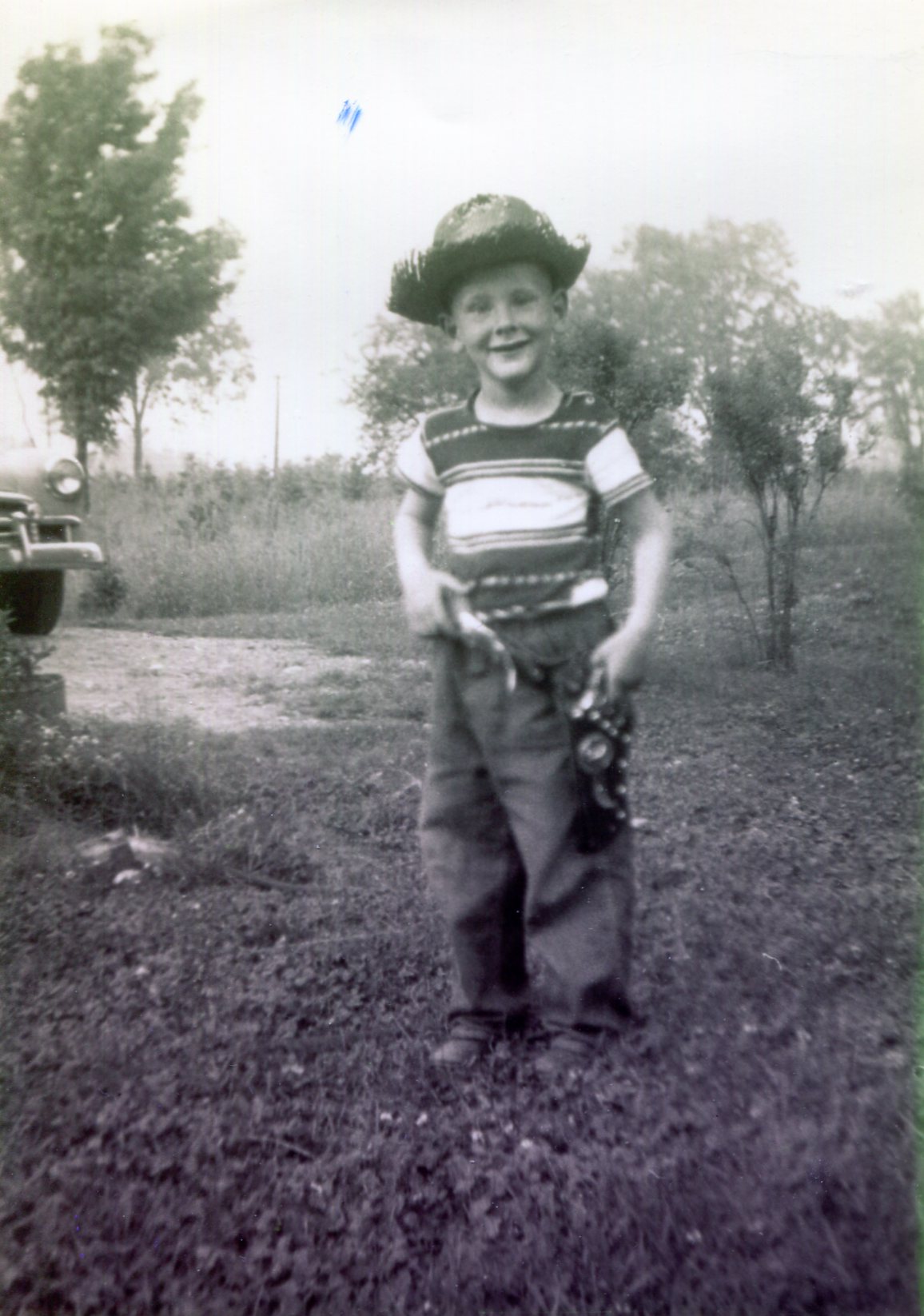
Phil Cowboy825

The properly outfitted small arms mail order buyer.

Operating instructions were basic. Stick the front of the barrel into a potato, and pull away a small plug about the size of a pencil eraser. Choose a target. Pull the trigger. The little wad of potato would fly across the living room and roll to a stop under the couch.

After a couple of potato bits wound up in the electric space heater, the jig was up.

But the magic remains.   It’s important for cataloguers, mailers and weekend supplement advertisers that their buyer squeezes every bit of enjoyment possible from the order cycle.

The Hat: Mailorder Delivers!

The Hat: Mailorder Delivers!

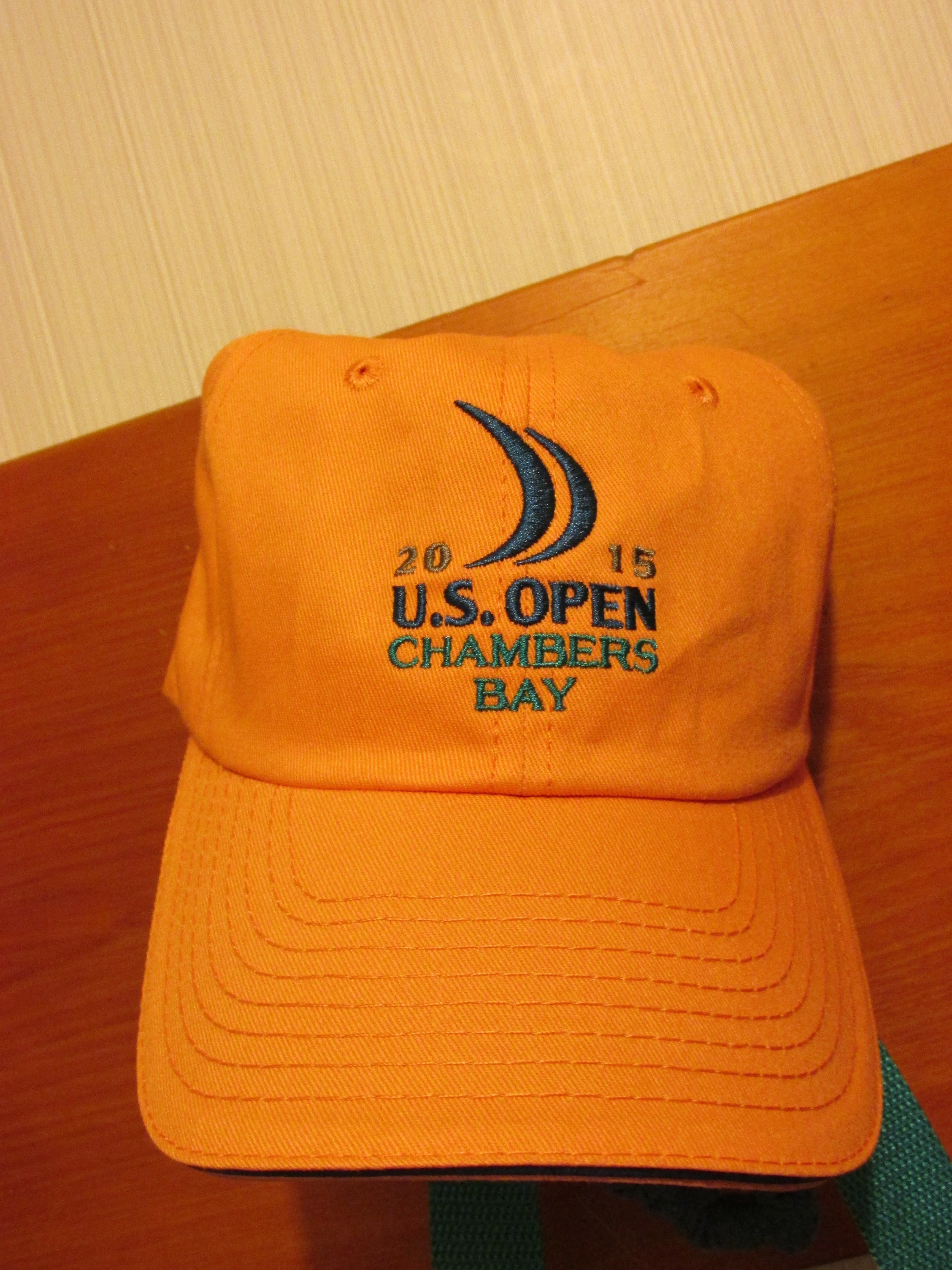
There is an inexpressible excitement in opening a long awaited package sent by complete strangers, far off and away.   I had sent in my USGA membership renewal, and according to the letter I would receive a hat: an orange 2015 USGA Chambers Bay Open cap.  I already had one, but if it blew away, I’d have back up.

I am certain that the USGA Board of Directors convened a special meeting, extensively reviewing my  application before granting my membership extension for another year. A no brainer for them, this was an important symbolic order of business, for which they would levy a $15.00 fee against my credit card.

From there, I visualized urgent instructions hammered out on the teletype, dispatched to the membership fulfillment department, ordering them to rush a member package to our home, sparing no cost.

IMG_3522

The long awaited, hoped for package arrives.

Like a glistening white, dimpled Titleist, teetering on the edge of the cup, I waited by the mailbox.    This week, the USGA kit arrived.

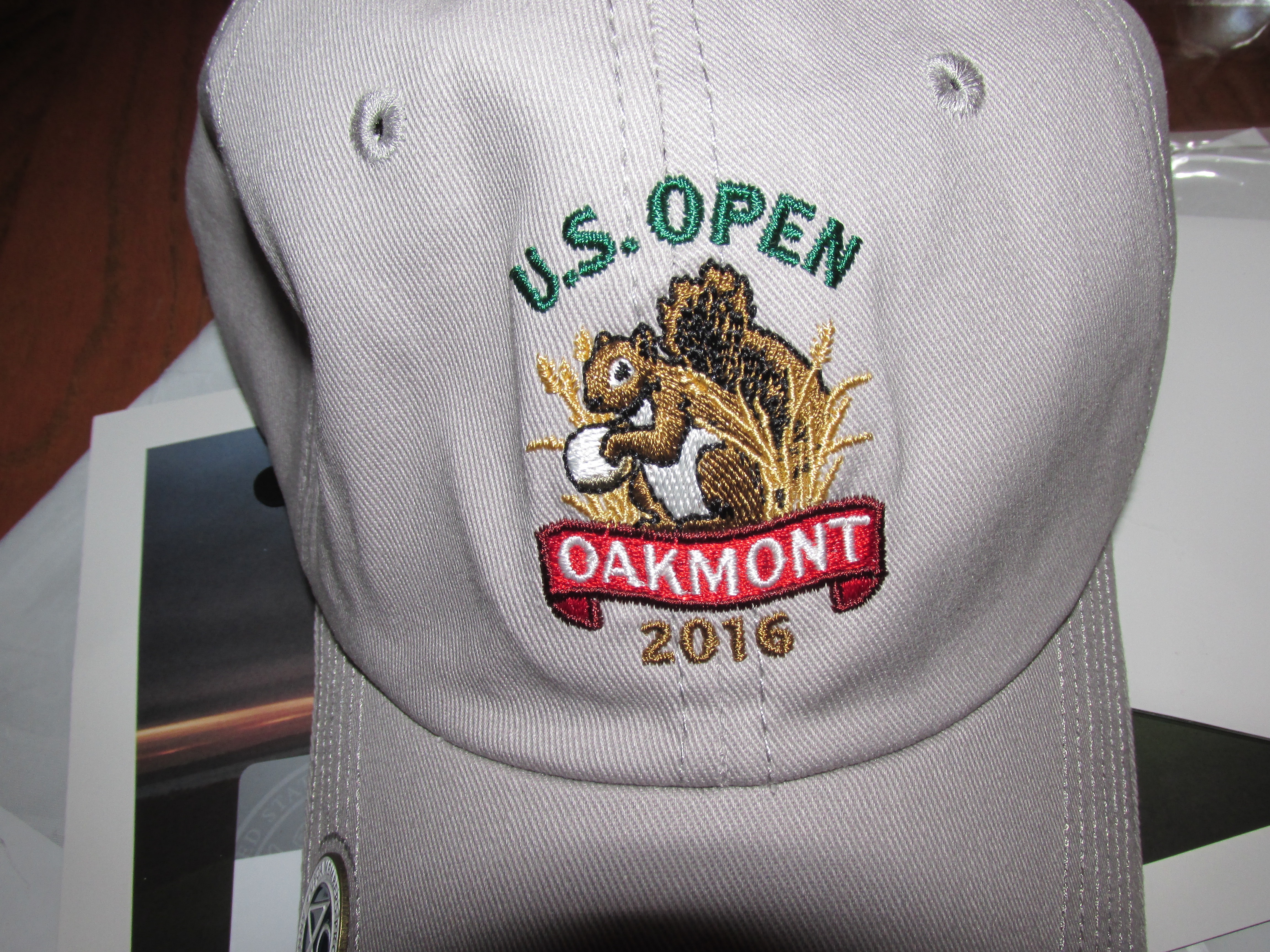
Inside the lumpy plastic package I found my new member card, and a bag tag, branded with my name, and a framable picture of Chambers Bay, site of the 2015 Open.   And more…there inside the package was a new hat–but it was gray.

IMG_3510

Surprise! A new hat!

Was there a mistake?

No!   This hat is for the 2016 Open in Oakmont.   I have no idea where that is, but according to the hat, there are squirrels, and acorns.  Perhaps there are groundhogs too.

But the USGA prize committee could not contain themselves by merely presenting me with a new lid.   They also sent along a USGA 40th Anniversary metal ball marker.

IMG_3497

Double surprise! A ball marker!

This little disk is used to mark the fictional place of my golf ball as it rests closest to the pin.   I have never had the pleasure of seeing that, but I hope to one day.

IMG_3509

But wait, there’s more. It’s magnetized.

Even better, however, the prize committee designated that the ball marker have a special place of its own: it attaches to a magnet on the visor of my new cap.   Wow!   Like many bad hooks off the neighboring tee box, I truly did not see this coming.

Of course, the cap is firmly held in place even on the windiest fairways as the magnet rests over the metal plate in my skull.

Just kidding.

Years ago we were introduced to the concept of lagniappe.  This is the art of giving a little extra.   It wins a customer for life.  Good marketers always work lagniappe, and the USGA has cultivated the technique.

IMG_3520

The course beckons; the marker is poised.

With luck, they may someday improve my game.

Thanks for reading!  Please share.  Oakmont is outside of Pittsburgh, PA.

Standard
Entertainment, Media, Sports

The Peril of Cable

IMG_3205

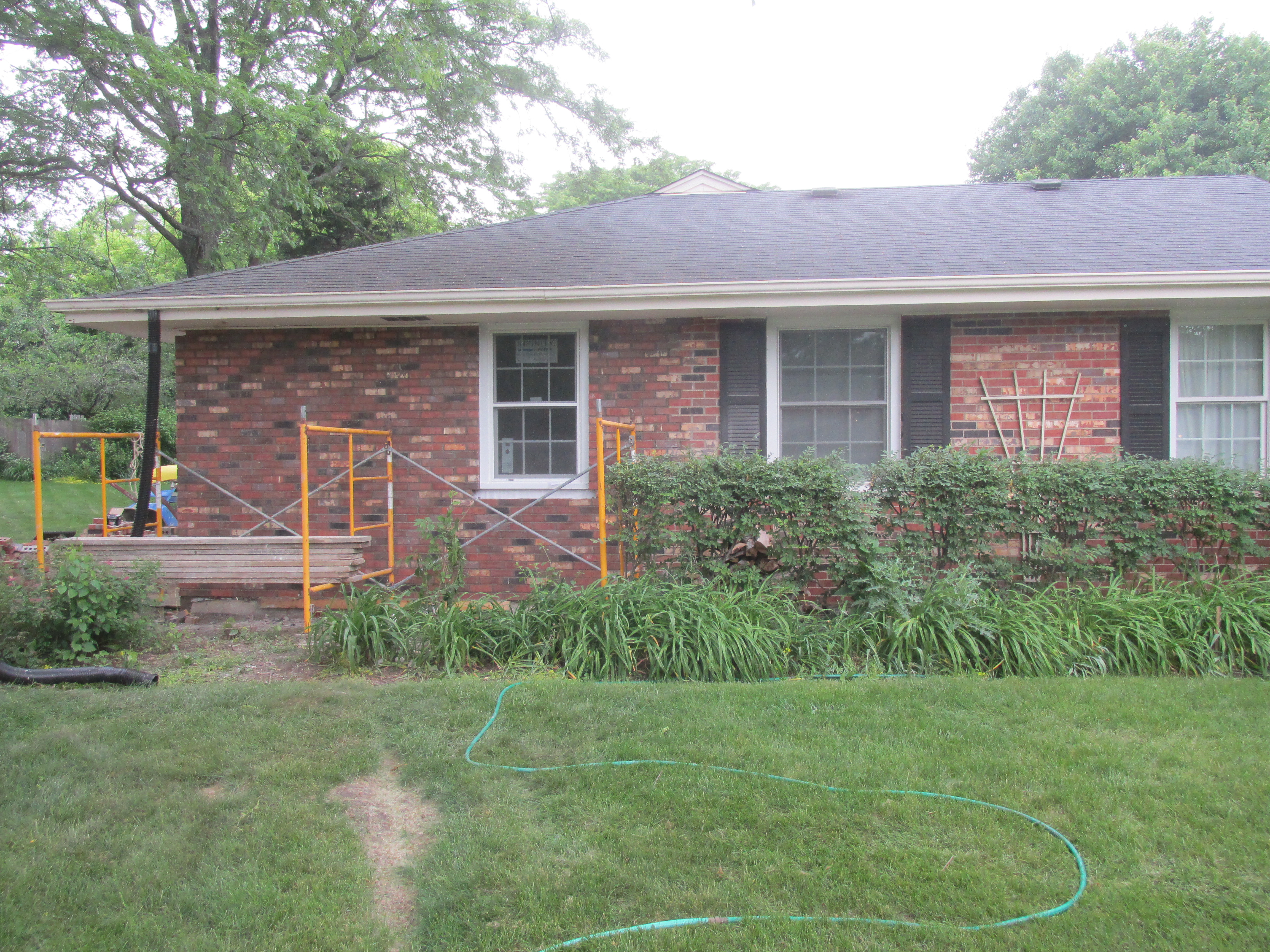
Reconstruction goes on, with no traffic tie ups.

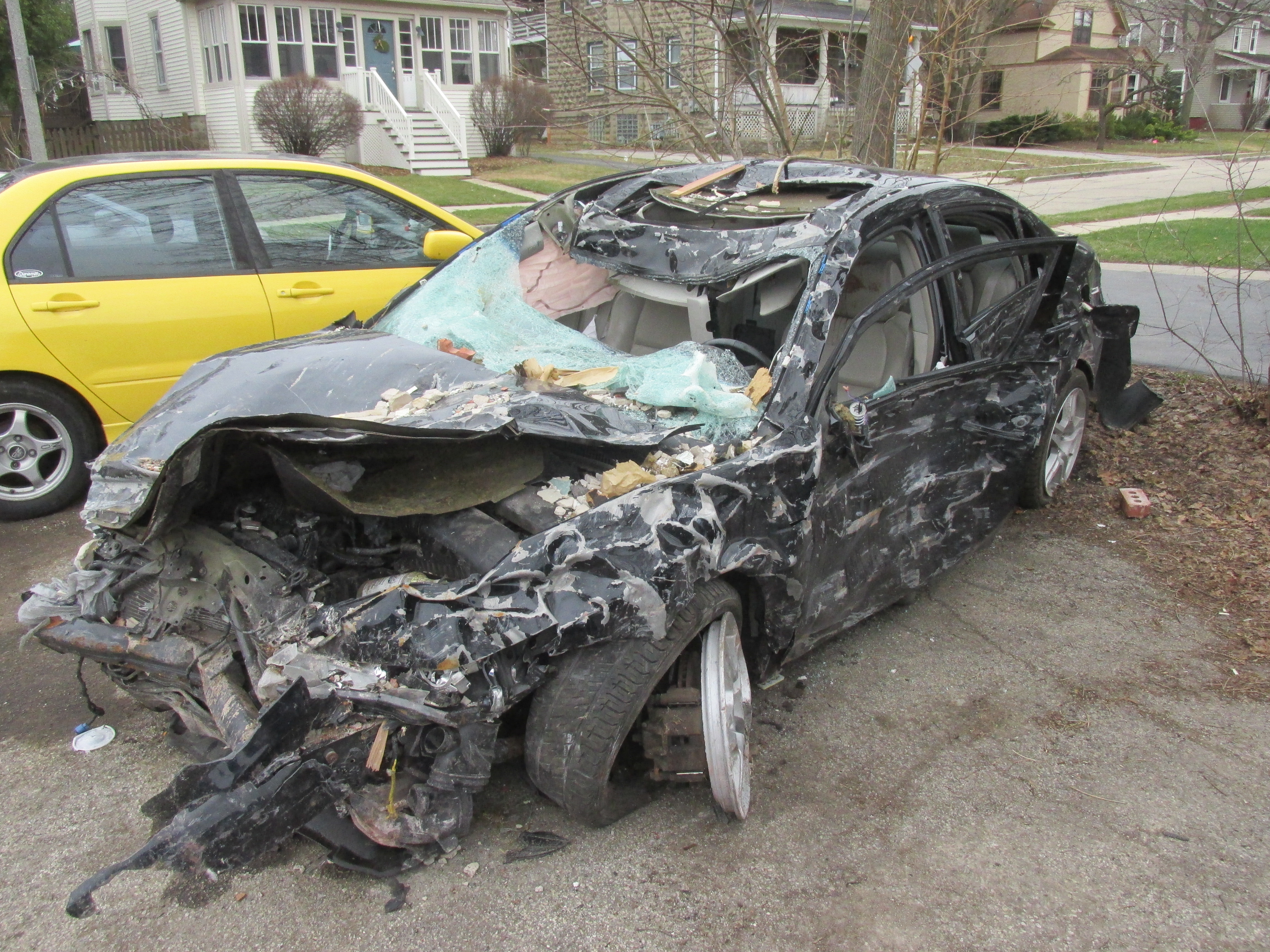
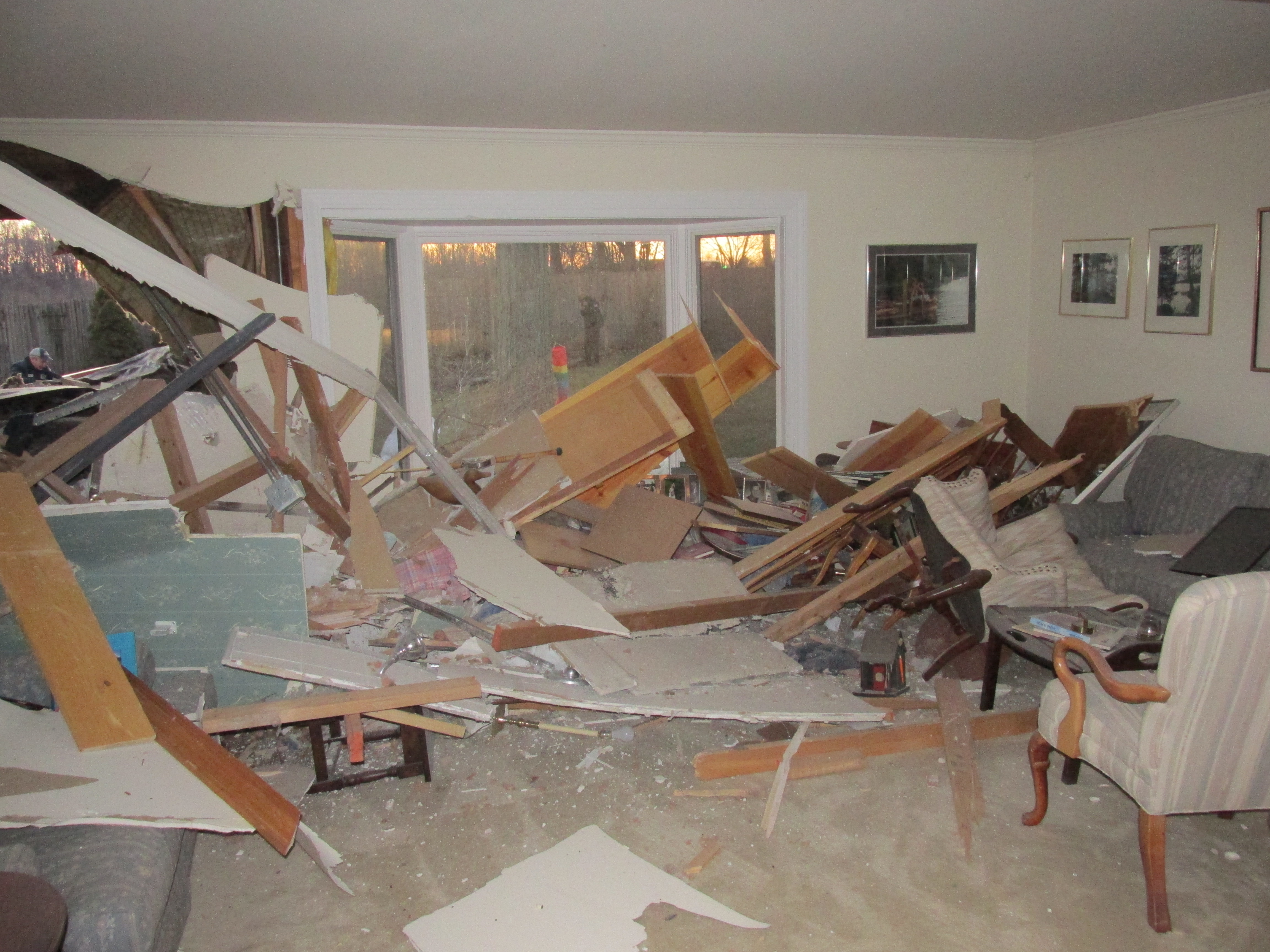
We are in the midst of rebuilding our house after extracting a 2007 Acura from the bedroom where it was abruptly parked, 9 weeks ago.

IMG_0001

Billy, our ATT guy sorting out phone lines.

The latest house renovation is re-connecting some of the ATT phone linkage which was damaged during the crash.   My hat is off to those dedicated techies who spend hours on their knees, on pea gravel in crawlspaces of 50-year-old houses, communing with spiders while they unravel nests of old wires, looking for a dial tone.

Cable and wires are my nemesis.

The current Stanley Cup playoffs remind me of my near cable undoing during the 1976 Canada Cup.

Forty years ago we had no television. We found great entertainment listening to the radio. But there was a new show on– M*A*S*H, and curiosity drove me to see it.

TV

Black & white: as good as it gets.

We had inherited a small black and white television, but its rabbit ear aerial could only bring in fuzzy pictures, even from the three local stations. I had learned that a new invention–cable– could pipe in perfect imagery.

All I needed to do was to subscribe. But reportedly, the cost was huge, so we stayed with radio.   Inspector Maigret on CBL Toronto was great theater.
At the time, we rented in a townhouse complex, one of about thirty 2-story apartments surrounding a common. Blue collar young families used the common as a play ground for their kids, who could run off their patios and into the parkland, well within the confines of the complex.

Cable

No amount of protective sheathing will resist a wire cutter.

Our next door neighbor Buzz was a truck driver.   Buzz wasn’t an outlaw, but you could tell by the look in his one good eye and the stitchery across his face that he met challenges head on, or at least, with his head.

Buzz

Buzz, on a good day.

We called him Buzz after we heard him holler across the common to a neighbor about a batch of turkey buzzard soup he was making.  -Not sure that he was a hunter, and it would not surprise me to find he was feasting on something from the grill of his rig.

On any warm evening we could wave to our neighbors who might be on the patio, barbecuing, or enjoying dessert outside.

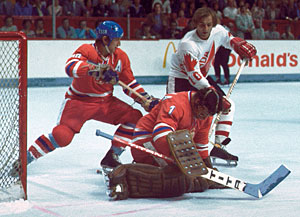
Guy laFleurCan76_06

Guy Lafleur works his technique.

In September, 1976, the common discussion was about The Canada Cup series.  This was a fierce hockey competition between Canada, Finland, Russia and Czechoslovakia which were fighting each other on the ice for supremacy.

The game between Canada and the Czechs was starting soon, and the chatter all along the patios was about our chances.

gyro_gearloose_150_right

Gyro and his little helper.

On our patio, I was brewing a solution to the TV viewing problem. Gyro Gearloose, unleashed.

I had often seen in our basement the TV cable snaking along the ceiling, one wire going to each room upstairs.  In the living room was a cable outlet.   My figuring was, cut a length of cable from one of the unused bedroom lines, and use it to connect the TV in the living room.

After confirming it was a bedroom line, I deftly severed it to create a 3-foot piece of cable.   Marching upstairs, I connected it to the wall, and to the TV.

MASH-tv-show-15

Success! With 12 channels to surf, too.

Voila!!   Pure, crisp and pristine TV viewing, not on three channels, but on TWELVE channels.   And as I spun the dial, I found M*A*S*H.   Wow!   I was amazed by my brilliance.   Running through the channels, I also found The Game.  First period, and the Czechs are pounding Canada.

Pretty pumped, I went on to the patio to brag about our newfound cable reception.  I wasn’t expecting high-fives, because everyone already had cable, but still…

Revolt-1811

Where’s the remote??

Outside there was commotion.  Unsettled residents were sliding open their doors, crossing over to their neighbors, assembling in groups.   There was a mild but growing grumble of discussion floating across the common.

“What’s up?” I asked.

Buzz growled.    He stood about 6’4″ and 260 pounds.  The devil tattoo on his forehead was pulsing.  “Cable’s out.   How about yours?”

“Oh, geez, no, hahah, mine’s fine!” I blurted out.  I hardly had seen the words float across to his pierced cauliflower ears before I realized my blunder.

“Good.  We’re coming over.  Got a bottle opener?”

gyro's helper

A better idea in progress!

“Well, let me just check the kids, first.”  I dove back in to the living room, slammed the door, and literally ripped the cable out of the television.  Unscrewing the wall plate, I pulled the piece out, and ran to the basement.   Minutes later, I had re-connected the wire.

Running back up to the patio, I found Buzz gathering his restive and frustrated friends heading in to our living room.

Out of breath, I put on my most disappointed face, “Geez.  Whaddyaknow..our cable is out too.  Crap. Shucks.  ‘Can’t get the game!”   I kicked the lawn chair for emphasis.

In the next moment, another hockey fan grunted across the common: “Cable’s back on. What the…”

Buzz retreated with his entourage, shuffling back onto his patio, tearing  off a prolonged belch as he slid open his living room door.

We retreated to ours as well.  The TV screen was an oatmeal grey with Hawkeye swimming through it.   I turned it off.  Out on the patio, the sound of distant cheers.

Mean time, we clicked on the radio, Inspector Maigret, surveying a footprint in the garden.  We leaned in closer to hear.


Thanks for reading!  It wasn’t for a couple more months before I learned that cable was free: it was in the rent.  Canada won the series. Go Hawks!

Standard
Government, Politics, Sports

Performing Under Pressure

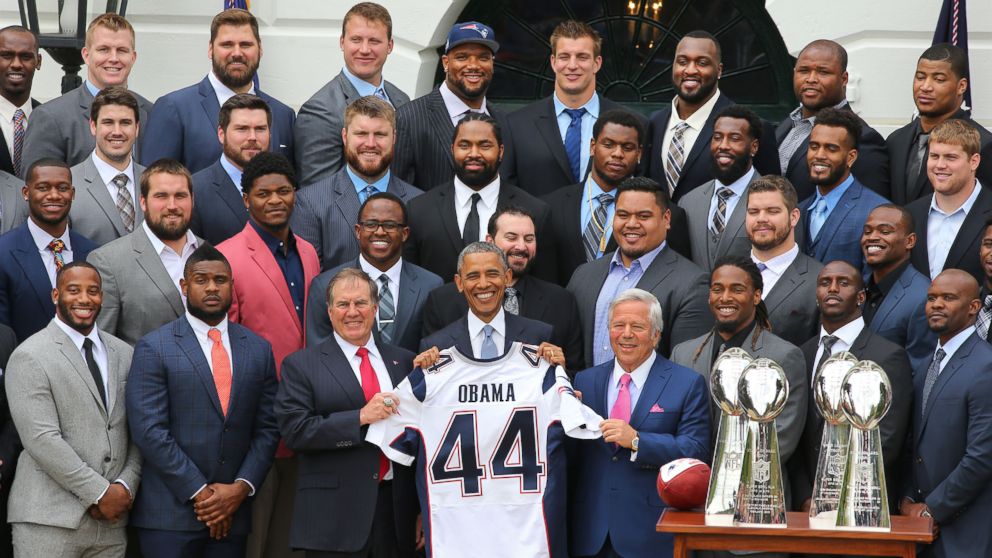
Pats & Pres

Number 12 couldn’t make it.

In the locker room~

“Everyone listen up! Step forward everybody who wants to go to the White House!

Scrambled scraping of chairs, shuffling and stamping of feet.  Clearing of throats and nervous coughing.

“Uh, not you Tom.”

Sometimes it’s just not in the cards, and my suspicion is that we didn’t get the whole story when the New England Patriots visited the White House, on their own, without star QB Tom Brady.

The official excuse from the Brady household was that he had a family commitment.  More likely, he was rushed to find one after a round of calls between the back offices of the NFL, Ted Wells, the White House, and of course, the Patriots.

Is there anyone who really believes Tom Brady blew off the President and the Oval Office for a family picnic?  This is the same NFL star who managed to leave town and his family for 12 games during the season,  including the SuperBowl.

Political writers suggested he was a staunch conservative and anti-Obama.  And would never show.

Really?

Keeping Up Appearances At The White House

My hunch is that the powers that be had set up their dance cards about two days after deflategate hit the news. There’s no way that the obsessive meeting planners at the White House only thought in February to ask the Super Bowl champs to visit.

More likely they cued the caterer and photographer last November, don’t you think?  They probably had brackets displayed across the kitchen wall for months.

And the adminions-in-charge would have their antenna up for any possible smudge that could sully a Presidential photo op.   Remember, Aaron Hernandez, another Patriot, was on trial for murder at the same time.

Without question, the President would have to tap dance a bit if the deflated football story didn’t turn out well.

And it didn’t.

Special investigator Ted Wells was assigned to the case February 14, and May 6 he delivered his verdict.

The timing was precisioned too. With the deftness of a Manhattan social maven, Wells stalled past March Madness. Got beyond the MLB spring opener. Stretched it through tax day. Slid through the White House visit.   Let the NFL draft event take place.  And then 4 days later dropped the hammer.

The President was spared the embarrassment of hosting a person who was under a cloud. But to be sure, they burnt his invitation.

Their hunch was right, and they probably had it confirmed by Wells, or NFL’s Roger Goodell, weeks before.

To save face everywhere, Tom Brady stayed at home to see the fam, because after all, when it comes to what counts, politics is definitely low  priority.

Or is it?

Standard
direct mail, Marketing

Why Some Envelopes Get Opened Faster

IMG_2660

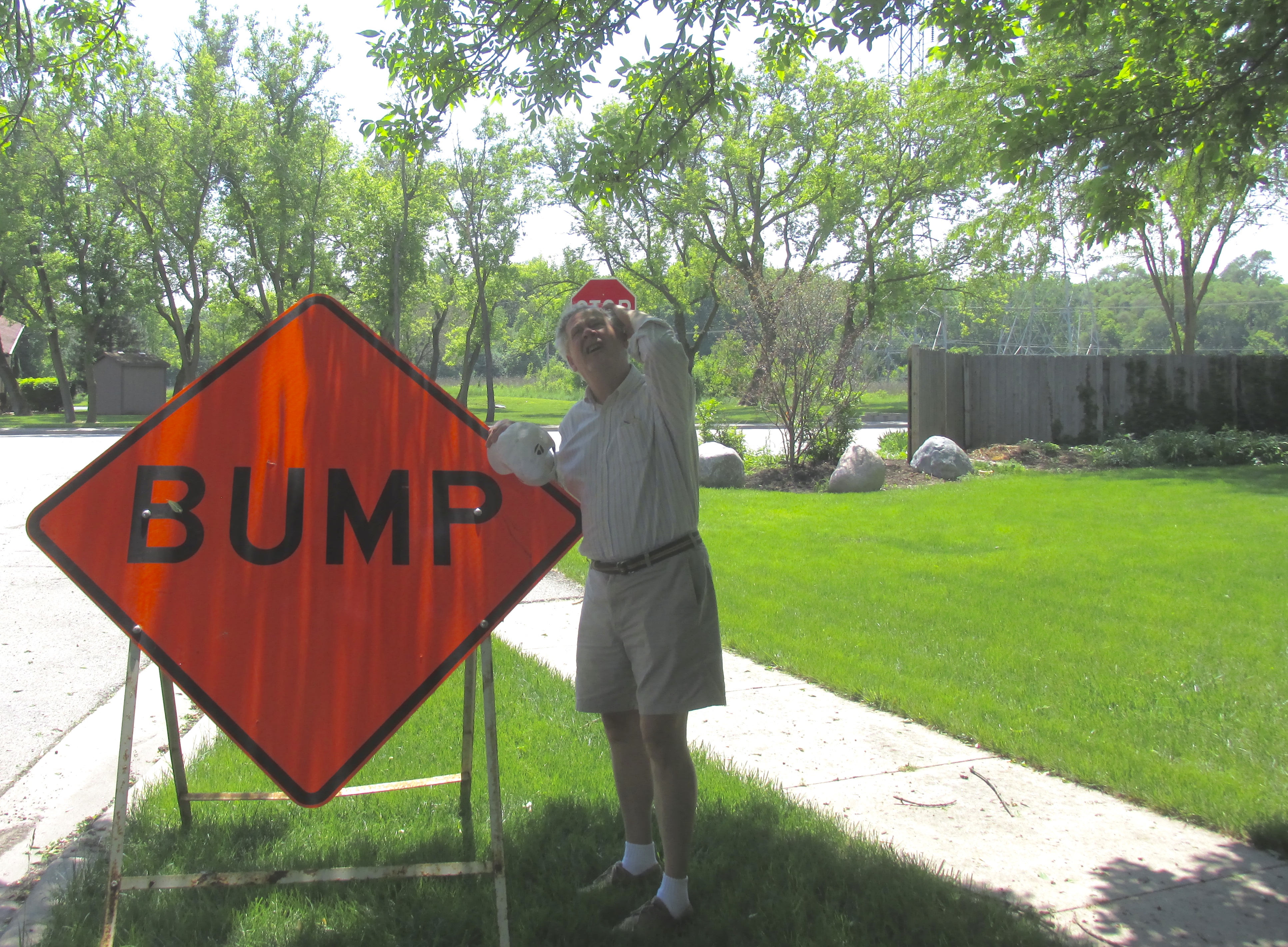
Uh, no parking after 5, please.

Life deals ironic hands to all players.  Timing is everything.

Last week, a fast moving car barged through the corner of our house leveling three rooms. Radiator coolant ended up on our coffee table.

Physicians 2015-04-16 594

“More than you know, Mr. Brown!”

This week, we received a mailed life insurance  offer from Physicians Life Insurance Company.

Regardless of circumstances, this envelope would get opened, and here’s why.

Physicians 2015-04-16 593

“Please Keep It In A Safe Place” is an arresting instruction.

Your Beneficiary Card is Enclosed. Please Keep It In A Safe Place.

The #11 envelope starts with the cautionary instruction above, and has a tiny die-cut window revealing a scannable OCR-A number, the inferred key to wealth for my beneficiaries.

It takes an iron-hard constitution not to open the envelope to see what is inside.   And true to their word, Physicians has attached a varnished card to the letter enclosed.

Physicians 2015-04-16 597 CARD

The card is a token, and as promised on the envelope, to be saved. Note the 800-number.

Let your beneficiary know you’ve applied for up to $10,000.00…

The bold, 16-pt. font is positively encouraging. Congratulating us as Illinois residents, aged 45-80, which suits my wife and I respectively to a tee in her opinion, that we are guaranteed a Secure Promise Plan.

They prompt us to ask our beneficiary to keep the card in a safe place.   (But in your case Mr. Brown, not in the back of the house.)  It didn’t actually say that, but the suggestion is uncontrollable.

Physicians 2015-04-16 597 Johnson

The headlines: we are eligible for a guaranteed policy. Details to follow.

These are powerful words, usually reserved for protecting wills, social security cards, PINs, firearms and Pokemon.

The following letter reverts to 12-pt courier, fixed space font, as if it came off the very typewriter we keep next to the rotary phone on our vestibule in the front parlor.

Physicians 2015-04-16 596

Straight forward benefit headlines. Orderly, easy to read.

It is only moments later that my suspicions are confirmed that we don’t actually have a policy yet, but if we just apply by May 4th, we are golden.

The Bottom Line

Physicians 2015-04-16 597

Courier font: back to the 60’s! But it works.

Physicians wrote perfect copy, presented by a hard working envelope.  Most important, the enclosures pay off the reader’s expectations, and have shifted into second gear with an orderly sales presentation.

Everything is according to the rules, and you can bet the Physicians legal crew spent hours in the office before retreating to the golf club lounge vetting the whole kit, extending their discussion out to the first tee about the careful use of commas.

Physicians 2015-04-16 595

Policy details on varnished filigreed paper. Impressive, but not pretentious.

From the prospect’s point of view, life insurance is not an impulse decision for most people.

Still, for those who might be teetering on the edge, like us and the lucky folks in the car, the Physician’s package gives pause to consider.   And the sale is entirely dependent upon the envelope getting opened, which this piece accomplishes.

Radio, TV and web don’t hold a candle to direct mail when it comes to delivering all of the decision-making tools…on workable, readable, paper.   The deal, the sales support, the application, and prepaid reply envelope, complete with return address are presented for thoughtful consideration.   But it’s the envelope which kicks it off.

Let's put the meter by the commode.

Let’s put the parking meter by the commode.

Meanwhile, we are rebuilding our house!

Standard