Science

Stringing Me Along

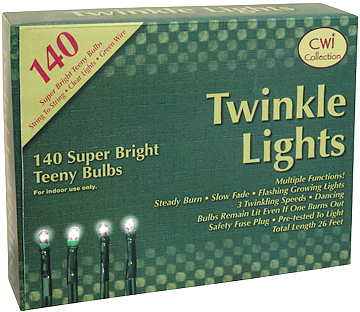
twinkle lightsNo doubt you have your lights up.   The annual ritual of hanging Christmas lights started about seven minutes after Master Bradford cleaned the last buffalo wing off the Thanksgiving plate in New Plimouth, in 1621.   Since that very day we, as a reasoning people, have been asking ourselves why we get sucked into buying more of those little twinkle lights every year.

These insidious strings have over 100 small, incandescent bulbs stuck in little sockets like poison darts.   At the store they appear smartly  packaged in plastic frames, efficiently coiling 25 feet of 3-ply electrical cord.   The bulbs are lined up like little glass medical phials, waiting to be plucked from their beds.   There is even a bonus packet containing a blinker bulb which, when engaged, turns the whole string into a tawdry window display for an all night pizza stand.

Lynch House.jpg

And the price for this residential street weapon: dirt cheap.    So it’s not hard to throw a couple more strings into the shopping cart during the weekly trip to ACE Hardware.   The rationale behind the purchase is that this year we are really going to show that supercilious twit across the street how we can tart up our roof gutters, window frames, mail box and chimney wreath better than him any day, hands down.

Which gets to the nut of the problem.   Once the tangle of a thousand lights has been festooned across every stationary object on our front yard including the lawnmower, we turn on the power.   Just like the movies, three strings don’t fully light.   150 bulbs are freezing dead black, at the top of the crabapple, and wrapped in and around a downspout.

string of lights

They worked fine when we tested them in the garage.  The act of hanging however has a terminal effect   I’m sorry–  I can’t begin to explain this many-layered pun to you.

It is the conundrum I repeatedly face: how can a civilized and sophisticated species like ours invent machinery that can create such elegant packaging, but can’t get the blinking (sorry) lights to work??

Christmas Lights

Anyway, moments before the recycling truck came rumbling down our street yesterday, I salvaged the three “dead” strings from the bin, and took them back to the basement.    I threw them onto the workbench like a bushel of seaweed–  this green tangle of plastic, copper and glass spikes.   I plugged in a set, and fingered down the glowing string until I came to the block of 50 dead lights.

Then I did something radical, and unwittingly logical.   Unplugging the string, I cut the dead block of lights off with my pliers.   Plugged the string back in, and the first 50 bulbs lit up, with no spray of sparks or numbing jolt up my arm through the back of my head.    Encouraged, I cut the the other two strings, and smiled at my thriftiness.   I had three strings of lights, shorter, but working.

Getting braver, I wondered if I could save the three dead strings too.   A little more tricky, I attached a new plug to one of  the severed strings.   Flying on one wing now;  metaphorically, driving 60 miles an hour into a fog bank.    I plug this string into the wall, but the lights don’t go on.   In fact, all the lights go out.   Not on the string, but in the house.

Uh-oh.

I am pretty sure that the circuit breaker in the darkest part of the basement hiding behind a curtain of cobwebs will be switched off, and if I am quick, I can get it back on.    This is not the problem.   The real challenge is to re-set the clocks:  the stove clock, the microwave clock, the alarm clock and then endure a 7-minute blackout on the TV waiting for our beloved cable company to resume its flow of NCIS re-runs.   And then–  to reset my ears.   They have been pinned by my better half, the lady who grudgingly allows me not quite enough rope to hang myself on a daily basis.

This year, I am going to let “Sparky” across the street have his moment in the glow of 18,000 lights.   With any luck, the electric company will make him a “preferred customer”, and send him to Niagara Falls to take notes.

Mean time, I am going to ACE.

Standard
direct mail, Marketing

DAV Makes The Numbers

I just received a mailing from the Disabled American Veterans, whose organization I frequently support.

DAV's Mailing to Past Donors

DAV’s Mailing to Past Donors

The mailing piece is illustrative of the investment DAV makes to raise money for their many services provided to America’s injured war vets.  If you have never received a DAV piece, you have not seen the abundance of gift stuff frequently mailed to potential as well as loyal donors: greeting card sets, bookmarks, calendars, and beautifully crafted address labels.   There’s nothing “junky” about a DAV appeal letter.

IMG_6191

46 cents postage, courtesy of DAV

What struck me about this recent letter was the inclusion of a reply envelope which was already paid with 46-cents of stamps.

Claiming austerity, most fundraisers ask you to provide your own postage.  Instead, DAV pays the bill.   Does it seem contradictory to you?   Or does it make perfect sense?   My guess is that providing the postage is a tactic to increase response, not necessarily the gift amount.   In other words, if a donor normally gives $10, the prepaid return postage tactic doesn’t get more dollars per donor, but it gets more donors: those folks who won’t allow 46 cents to go to waste.  And it’s unlikely many stamps get steamed off.

But here is where it gets interesting: what direct mail manager is willing to put their job on the line by suggesting they add 46 cents to the cost of every fundraising letter they send out the door.   “Are you nuts, or just plain stupid??” suggests their boss, popping TUMS once a minute.

“Riskophilic” may be the proper term.    Daring.  Or canny.  A little bit of math may reveal the truth.

You can look at DAV’s 2012 annual report which shows some numbers worth bragging about.  They earned $97 million in direct mail donations at a cost of $32 million.   Basically, for every dollar spent in direct mail they received 3 dollars in return.   The 3:1 ratio is pretty consistent every year, and by the way, their fundraising cost is only 19% of all their expenses, which is quite acceptable.

Anyway.  The letter I received had 5 Christmas cards and envelopes, a disclosure sheet, a letter, outer envelope and reply envelope.   With outgoing postage, I figure the kit was worth 75 cents in the mail.  $750/m.    Add an additional 46 cents, and you are at $1.21 for one piece of mail.   Multiply that by 100,000 and you have college tuition at Northwestern.

However: increase your cost by 60% and you need to increase revenues by 60%, to keep that 3:1 ratio.   Sounds challenging?   Just about miraculous is how I would define it.   You don’t get swings like that.  But the beauty of direct mail is that you can test it both ways, with and without the extra stamps.   Clearly, the test proved  positive, in a good way, so the DAV is keeping the USPS afloat while making money for its vets.

There’s more at work though.   That crazy manager also has another equation in his or her head.   It answers the question: how much revenue with every piece mailed?   If each piece costs $1.21, then each piece must earn $3.63 in donations.  3:1, right?    But only if DAV gets 100% of the people to respond.   What if only 15% of the people respond?   Then a $3.63 donation won’t cover the ratio.     Now the gift changes, and here’s the revealing equation: $3.63 divided by 15% response.   $3.63/15% = $24.20.   The average donation must be $24.20.

IMG_6190

The “ask” starts at $7.00.

Hmmm.  Look at the donation form on the letter.   DAV is asking for “$7… $10… $15…  or more”.  Whoa!   What if everyone just gives $7 dollars?    Well, again, this is what gets tested, and DAV is pretty confident that a $7 gift is acceptable.   My hunch is that if each gift is at least $7.00, DAV just about breaks even.   How’s that figured? Well, divide the piece cost by 15% response.   $1.21/15% = $8.07 average gift required to break even.  $7.00 is close.

Fortunately, my bet is that people give a lot more.   Without having any direct knowledge of DAV’s results, I can only guess that the scenario is something like what I have described.    And if it is anywhere close, DAV has some very good writers, and some very generous donors.    And some very deserving vets.

A salute to all of them!

Standard
Science

Lightning Striking Again

lou-christie Do you think maybe a Lou Christie tune plays in your head all day because a renegade programmer at Amazon is beaming music directly into your brain?  No, I didn’t think so either.   Still, it does support the idea of direct human downloading: no more messy Paypal signups, MP3 conversions and ear buds.   Unfortunately, my brain only plays vinyl, and on a ’70s  turntable.  And cassettes.   So I will need new headware.

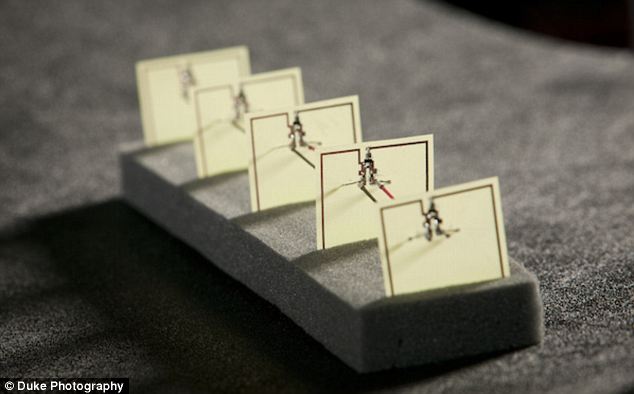
Brain_WavesJust in a nick of time however there is a stunning development in the exciting world of microwave technology.    Those irrepressible engineers at Duke University have invented a “power harvester”.    Not to be confused with the all new Swiffer Steamboost, their device actually sweeps up lost and mis-directed microwaves and turns them into useful electricity.   Science alert– we are surrounded, perpetually smothered, in a cloud of energy waves which are whipping around us like angry fetuccine, bouncing off furniture and walls, looking for something soft to stick to.

Energy Capturing Gizmo

Duke’s energy capturing gizmo

It turns out that Duke’s “meta-materials” absorb microwaves faster than ranch dressing on a new tie.   So all that wasted energy– whole zettawatts  of British football crowds, lawyer commercials, deer whistles, Neil Diamond songs, tax returns, trees falling in the woods– can be packed up in sparky voltage to power necessary devices like power tooth brushes and Twitter.

This is a bonus development of quantum proportions.   Until now, we had to collect electricity the old fashioned way, rubbing our shoes across a plush broadloom to carefully dispense with a finger touch on our little sister’s neck.  Until now, electricity poured out of the wall sockets into invisible pools that Grandma’s cat rolled in before zapping her with a nose-kiss.

Ghostbusters-15And of course it has military significance.   Not only does the device collect electricity, but it can transmit it too.  It can zap.   See that bug on the wall?  Cinders.

If you ever had any doubts about the prescience of Ghostbusters, rest assured, the Dukesters are working on a strategic capability as you are reading this.

kiss-2009I am sure you are thinking “wireless Taser cannons”.  But no, it’s far more formidable, and on a galactic level.    Before long, they will be sweeping up enough subway announcements, Honey Boo Boo ads and congressional filibusters to beam the entire KISS video anthology to Andromeda, thereby warding off potential invaders.

In the mean time, preparation is the key priority.    As for me, the tunes just keep on coming, so I have ordered Google Glass.

Which I will hook up to my VCR.

Standard
direct mail, Marketing

DM: Cheaper By The Gallon

junk-mailIs it possible today that any direct mail we get is still worthy of the moniker, “junk mail”? Once upon a time it seemed that mailbox was overflowing with incredible stuff. But after the shenanigans of the 70s–no, not junk food; and in the 80s.. no, not junk bonds — that government and the USPS put the brakes on junk mail. Mean time, reputable cataloguers, mail order companies, insurance, fundraisers, retailers and publishers had raised the art to a science.

Today, there is a legitimacy hurdle so high for any direct mail business, that to clear it, you have to be very, very good. And what is that screen?  Economy.

110601-eggies

A typical all-in cost for a direct mail letter is around 30-50 cents a piece.   Compare that to 39-cents a pound for bananas.    Mail a 100 letters, and you can find the $30-$50 bucks in your back pocket. Mail a thousand, and give up your iPad. But mail 100,000 and you give up your new car. Mail a million pieces, and you have just mortgaged your home, or a boatload of bananas. That’s why direct mail is hardly junk. It is very expensive, and without this expense, it won’t work.  Time to re-think that Eggies-by-mail deal.

So who thinks it is junk? The persnickety consumer, of course. And why? Because they don’t want whatever is being sold that day.

The reality is that on any day, we consumers are suspicious, and very tight-fisted. I bet we only surrender to an unsolicited sales pitch about 2% of the time, regardless of medium: mail, phone, in person, on TV, radio, or email.  I do  admit caving for the Eggies, which for the record are a physical impossibility. The chickens had it right from the beginning.

IMG_5632
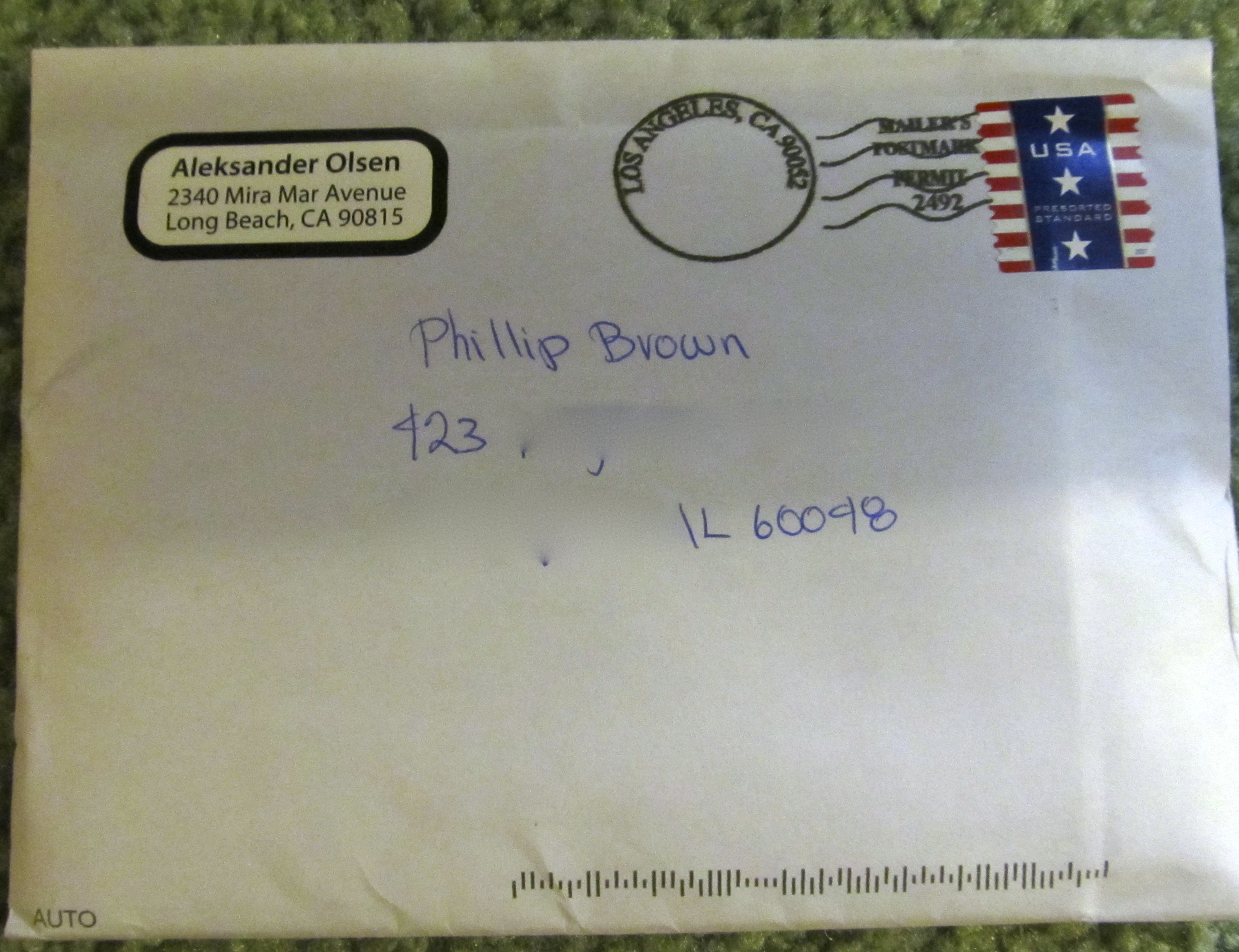
Which leads me to a piece I received earlier this summer. A mauve-colored, hand-addressed and stamped envelope, complete with a foil return address sticker. My antennae are up.   Would this be a well-wishing note from a long forgotten contact? A wedding invitation? Birth announcement? A request for money from a relative? All of the above?

No. Inside the envelope was a short note from the desk of Aleksander Olsen advising on the merits of a certain skin creme. Despite the tracks and furrows that criss-cross my shrine-like body, I was not hooked. Perhaps if his credenza had written, I might have been swayed.

But Olsen’s desk also sent me a 32-page booklet, and it is a work of art.
IMG_5586
It is the tale of Hilda, a Norwegian cleaning lady, who, like her entire countryfolk has a crick in her neck from living on the side of a mountain overlooking icebergs in the North Sea. It turns out that she cleans fish tanks in Norway. If you haven’t been to Norway yet, fish is the main protein staple.   Hilda’s job would be similar to that of a stable cleaner on a Kansas beef farm.    Actually, I have never been to Kansas so I am only guessing on that.

In any event, the booklet unfolds a page-turning saga about Hilda’s travails in the tanks. Every evening at home, as she washes up for a night out on the town, she discovers under the layers of fish elixir a fresher, tighter, more supple Hilda.   She has reversed the hands of time!   The story introduces a series of sub plots, so spoiler alert, let me just say that she looks great, smells great, and I can too for just $60 on a tube the size of a shrimp.  Well maybe a lobster tail.

IMG_5587

The thing is, as obscure as this offer is, I don’t consider it miss-applied.   I have the money.   I certainly could use some air-brushing.    And who doesn’t have a secret wish to smell like a school of herring?   I wonder if Hilda has a cat.

So to my point: Mr Olsen’s desk probably holds a business plan that reveals  the path to riches selling oil of tank scrapings to prunes like me.    This is hardly a junk mail enterprise.

But it sounds fishy.

Standard
Media

What’s Really Happening In the News

The PotusThe President gave his best shot at explaining the complexities of building a website yesterday, and I was able to accept nearly everything he said, except for: “The Federal Government is not very good at buying I.T. services.”  Sitting at my Commodore, I nearly dropped the joystick.   In fact the Feds are very, very good at buying I.T. services.   While starting out with a miserly budget of  $60MM, they were able to expand the Healthcare website development to $200MM without blinking.

Now that is how you buy I.T.!

But there is something much more intriguing that happened at the President’s press conference yesterday.   For the first 15 minutes, there was the unmistakeable clatter of a typewriter in the background.

girl friday typewriter

Could it be the true “systemic” problem that the President was alluding to?   Do you think it was press-sec Jay Carney typing out name badges?   Or perhaps the prompter was down?   Or maybe Bob Schiefer was hammering out a Tweet in time for the afternoon mail pick-up?

Which brings up another phenomenon of the TV screen today.   Is there a news show today that is not yet displaying Tweets while attempting to deliver a news story?   It seems that Twitter-on-the-News is really like target practice at the arcade.   A quiet heckling that the speaker can’t see, but persists in 140-character blasts across the bottom of the screen.

Well, not quite at the bottom of the screen.    Actually, the TV viewer today is lucky to see anything at all on a conventional TV monitor.   When the Tweets aren’t pinging below the speaker podium, the broadcast network is busy branding the presentation with a banner headline and of course, their logo on the bottom one-third of the display.

FoxNewsHD1a

This may really benefit unprepared reporters who otherwise would need to wear pants with their suit jacket and tie.  It is also a lifesaver for those celebrity chefs who are talking about their preparation of waffles flambé, but madly scrambling to extinguish the blaze on the stove.   The network message covers it all up.

Except for the crawlers.   While the news takes us to a rained-out chicken rodeo roast in the southwest, we can ignore that while reading a continuous stream of other news, curtly written and dragged across the very bottom of the screen.   This is the crawler.  Aptly named, it’s a reminder like a leaky faucet that, despite the whopper that is being unfolded up above, there’s a lot of other stuff we should catch up on.

wolf

But back to the typewriter.   In last week’s October-November AARP magazine (my mother’s) I noted this newsworthy finding on page 14:   a typewriter repairman can earn up to $50,000 per year.    Apparently there is a market-worthy segment of writers and literati out there who use typewriters, and when the keys jam, you need a professional.   Keeping this all in mind, I would gently advise those repair professionals to hang around the White House press room.

It could be a $150,000 job in no time.

Standard
Science

Over The Top

Recently, our way of life has experienced a major transformation.  A positive change for good.  You may be thinking I have given up sweatpants.   Or started composting.   But no.  Actually, this goes to sustenance, almost at a spiritual level, and whom do I thank?

Martha Stewart.

As a youngster, I looked forward to Sunday dinners where my mother would deliver a beautiful roast beef accompanied by Yorkshire pudding.

Cratchit

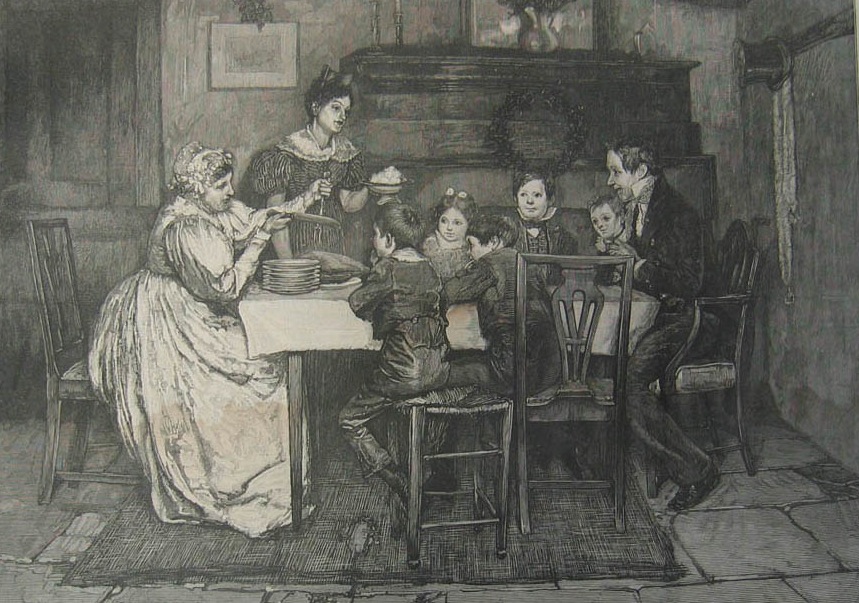
My father would happily growl in hungry anticipation as this feast came to the table.   On the platter rested a brown-crusted beef, glistening in its juices.    And beside it—Yorkshire pudding– a 10-inch-square slab of lifeless, yellow putty about one inch thick, with a burnt collar around its edges.    Suitable stuffing for kneepads, or maybe for filling in a broken window pane, the object of our appetites looked like a weathered soccer ball flattened by a Mack Truck.

Yorkshire pudding is basically unleavened pancake mercilessly fried in beef drippings.     Famished, we happily glopped gravy over the mass, and munched it down between mouthfuls of beef, potatoes and broccoli.   The Yorkshire acted like cement, filling in every nook and cranny of a kid’s stuffed tummy.

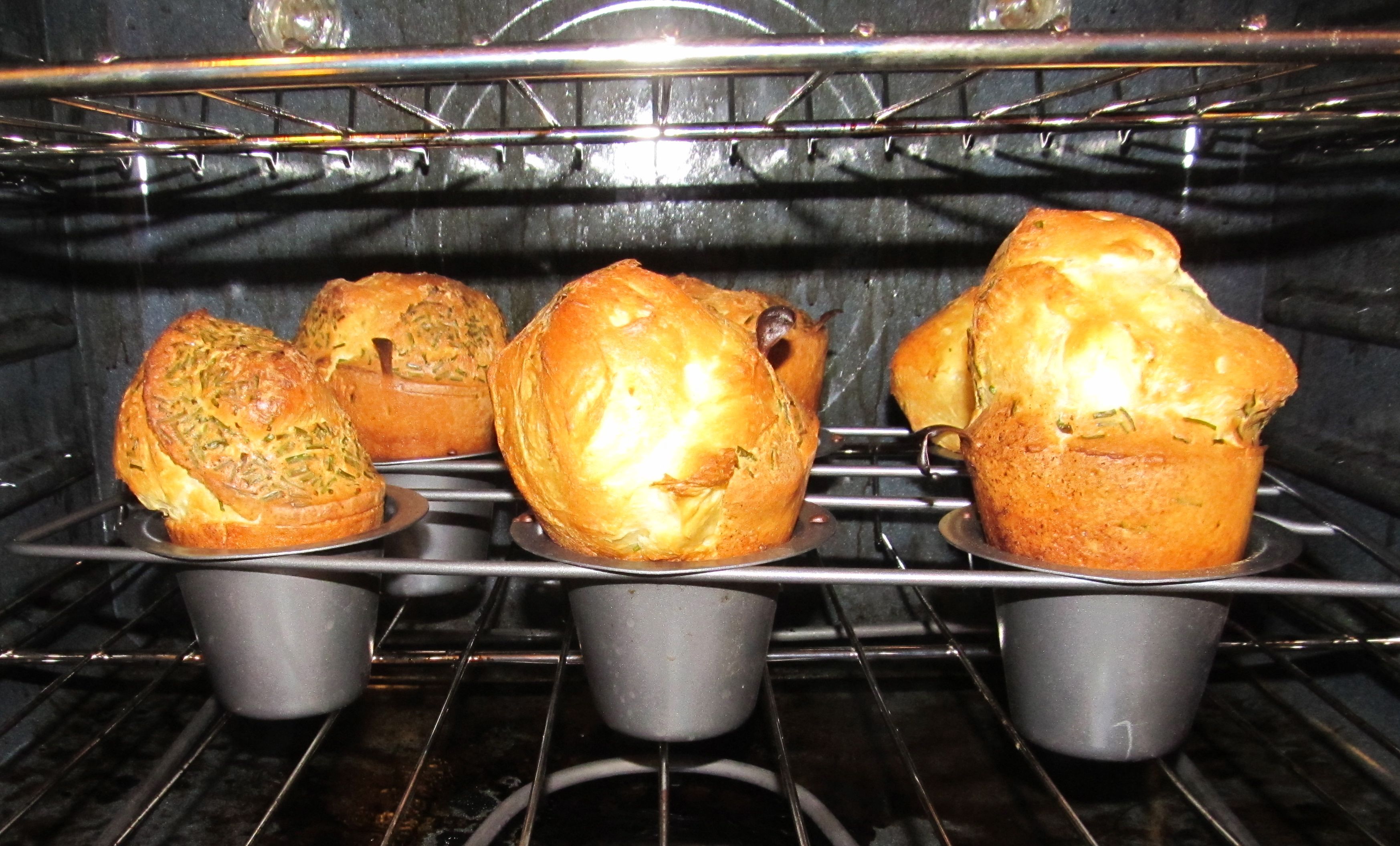
It wasn’t until years later that I discovered the same recipe miraculously delivered popovers.  Beautiful, robust, baked puffs that burst out of cupcake molds like mushrooms on steroids.  And my wife was a popover queen.   No, she did not burst out of cakes on steroids.  Better: she made fantastic popovers.   Our visits back to my parents’ home were highlighted by her popovers.   So the Yorkshire “pud” was dispatched to the neighbor’s dog and to the plumbers to pack around weeping water pipes.

1228popovers

But in the past few years, we have encountered challenges.   The popovers weren’t popping any more.   They hid, down low in the muffin pan.   Sullen, staring at you like Jabba The Hut.    Like hockey pucks.  Horse muffins.   We came to call them rock balls.

I longed for the heady days, even the old pudding days, but it seemed like our oven, or the flour, or the cage-free eggs just could not find the chemistry.  The roasts sat naked and insulted on the platter, surrounded by a gang of mean, surly, brown lumps.

Then, an epiphany.

IMG_5917 - Version 2

Martha Stewart’s Living Magazine#239 showed up last month, and there, on page 90 was the most impressive display of popovers ever captured on camera for her readers.    These popovers stood high and proud, like free range souffles: big, golden, slim-waisted, top heavy and delectable.

The recipe was identical, but trust me when I say, get the right equipment, follow instructions precisely, and don’t substitute.    In one week we cooked 4 sets of popovers for ourselves, and for our kids’ families, in three different ovens with the same colossal outcome.

We have been so taken by this recipe that we had it copied and laminated for our family members.  Obsessive or what?

IMG_5919 - Version 2

The secret is air.    To get it hot, in the right place and in a timely fashion.

Want to change the way you live?  Move on from the macrame lessons. Bail on the ballroom dancing package.

Instead, call Martha.    Click here!

Standard
Uncategorized

Lest We Forget

In Flanders Fields

In Flanders Fields the poppies blow
Between the crosses row on row,
That mark our place; and in the sky
The larks, still bravely singing, fly
Scarce heard amid the guns below.

We are the Dead. Short days ago
We lived, felt dawn, saw sunset glow,
Loved and were loved, and now we lie
In Flanders fields.

Take up our quarrel with the foe:
To you from failing hands we throw
The torch; be yours to hold it high.
If ye break faith with us who die
We shall not sleep, though poppies grow
In Flanders fields.

~Lieutenant Colonel John McCrae, MD, Canadian Army 1872-1918

Standard
direct mail, Marketing

Turning Someday Into Now

What would be your reaction to mailing a hundred or so wedding invitations, and only 2 or 3 people show up?   After celebrating with champagne, a direct mailer would happily plot through the night about doing it again tomorrow.   And maybe bumping up the appetizers a bit.

the-godfather

Every good offer adds an incentive.

The challenge of direct marketing is to create the irresistible offer.    On a Don Corleone level if possible, but within the USPS regs.   The closest I can think of is the IRS: “Tell us how much money you have left and we will take it.”   Their mailbox overfloweth.

The thing is, all the targeting, the overlays, clustering, time-stamping and regression analysis can get you to the right person at the peak of their tumescent desires, yet, they don’t commit.  Why?

MW 2.30

Long after the grapefruit is gone, you can still treasure the free spoon.

It’s the offer, or course.  More to the point, it’s the added incentive offer that pushes the buyer over.

For instance: you may like the idea of four monthly $25 shipments of 15 ruby grapefruit, but you don’t budge.

Then, they throw in a set of 4 serrated, stainless steel grapefruit spoons and you can’t dial fast enough.    Or the showercap company that bowls you over with a “Fast Fifty” deal promising a Mystery Gift to the speediest responders.

That’s how to convert “someday” into “now”.   By the way, serrated spoons are impossible to use on a grapefruit, but once an idea has taken hold…

And give the IRS credit too.   They have learned how to move you from:  “I dream about some day when I will file my return” to  “Jiminy, I gotta do that right now!”

Their incentive offer–jail time!

I recently received a direct mail offer from a funeral service company.   Sorry, “Memorialization Service” company.   A discreet letter promoting the many benefits of cremation.

It is a ticklish subject only made comfortable to discuss, thanks to poet Robert Service.    He penned ‘The Cremation of Sam McGee’ so Johnny Cash could recite it to us.

Anyway, the company offers me a free booklet to help me make up my mind.   Am I reaching for my pen?     I don’t think so.

cremation

“I took the bill-me-later option!”

But then, they throw in the dealmaker: “WIN a pre-paid cremation.  Return this card etc…   Last month’s winner is…”,  and they go on to identify by name, one lucky fellow who can now pack his bags with confidence.

I won’t call it a barn burner, but it certainly ups the offer.

Still I was a little curious over the difference between winning a free cremation, versus a pre-paid cremation.  Does that mean I forfeit the bill-me-later option?

And then I wondered too, is this transferrable?    Say I was hit by lightning.   Will they do me like a twice-baked potato?

And then, if I did win, how do they break the news?   Did the lucky mope who won last month get told immediately, or is he waking each morning  wondering if today’s the day?     Will it be a knock on the door from the prize committee chairman himself?

“I have good news and bad news, Mr. Brown.”

grim_reaper_cartoon

So I have not quite tipped into the “now” column yet for the cremation offer.

But wait, there IS more!    Way down in the fine print on the reply form–tiny mouse type– is the statement: “Vermont residents may omit return postage.”

There it is!      The final component of the irresistible offer.

Vermont is beautiful in the fall.  I am packing now.

Standard
Sports

Hands Up!

Does praying really work?   I am guessing it does, because any footballer whoever crossed a goal line knows that next to putting both feet on the ground, it’s getting an elbow down on bended knee fast that is just good sense.    Especially if your contract is up this season.

Losing-faith-in-the-nfl-10-5

“…for three more years on my contract, a product endorsement, and don’t boot my car out front…”


It seems that NFL’s Sunday, Monday and Thursday football games ensure that at least three days out of the week, someone is getting to church, sort of.

My question is, should one pray before making the play?   Or only after?   Is a touchdown the minimum requirement for a prayer?   What if one flubs an end zone pass?   Especially in the fourth quarter? Should one whisper a plea for a second chance?  Maybe admit they did not really close their eyes during opening team prayers earlier on?  Personally, I would pray for protection from getting pureed by a highly motivated gang of college-educated, beef-fed, millionaire road pavers.

Of course, the truly devout are curlers.   I witnessed this when I watched an intense match on the ice earlier this weekend while viewing sports TV in a Canadian pub.  On one screen we had football: men in colorful helmets and tight pants;  on another: extreme surfing.   Yet another there was cage fighting, and on the fourth screen, curling.

Curling

As in football, the runner is not down until the knee touches.


Without fail, on every shot, the curler would get down on one knee immediately and stay long enough to string together a pitch for charity, world peace, an end to the chicken dance, and for their rock to land on the button at the other end of the rink.

You may think my bar-mates were also praying that they would not to die before they woke at the end of the game, but you would be mistaken.    Despite touchdown passes hurtling through the air, sharks tearing into surfboards, fighter bits oozing through the grills of their cage, all eyes were wide open, riveted solely on the curlers madly swiffing the ice in front of a rock rumbling  down to its target at about 4 miles per hour.

Curling_on_a_lake_in_Dartmouth,_Nova_Scotia,_Canada,_ca._1897

A devout congregation.


This past summer the whole issue had come to a head at the NFL where rules are to flag any “excessive” celebration that might taunt an opponent to explode into a melted pool of plastic.

So in practice, it turns out that one-knee prayers are okay, but two-knee prayers are excessive.   Hence the curlers slip in under this definition.

chris-johnson-flagged-for-praying-or-celebrating-too-much

“Chris, we’re just in warm up.”


It is also worthy of note that curling is a game built on contemplation.   In addition to allowing the near glacial speed of the stone, the curlers themselves have up to four minutes to “think” about their shot… which I suspect is separate from praying.

Womens_Curling_Team_Denmark

“You notice they never have blue ones?”


This is all well and good that comparisons between the two sports reveal their differences but we would never expect to cross-pollinate the two.

After all, football doesn’t use brooms, and curlers don’t spike the stone.

Standard
Wildlife

Pesky Neighbors

Do you think Bill Murray got his part in Groundhog Day because of his prior experience in Caddyshack?

caddyshack-560-gopher

Just wondering.

In our own home, we were nearly over run by a rage of groundhogs.   I am not sure what you call a roving gang of 20 herbivorous groundhogs, so I made it up: a rage.    Actually, there was only one groundhog, which we called Doug.   But Doug did have his way with us.   He trimmed all the heads off our tulips.

One day I discovered that Doug had created a complex tunnel network in our backyard, headquartered under the cable TV/electrical/phone station.   I had a vision of Doug one day holed up in his cave, controlling the cable feed, and playing Groundhog Day non-stop like a renegade radio DJ.

We decided that Doug had to go.   My neighbor suggested we flood him out with a garden hose.     Or blow him out.   He  kindly offered two small sticks of dynamite.    Instead, I rented a “Have-A-Heart” animal trap.  It’s a humane wire cage with a spring door. No leg holds.  No harm, no fowl, so to speak.

I placed the trap outside one of Doug’s many doorways, and loaded it up with broccoli, carrots and cabbage.   For two days we visited with no success.   I added even more vegetables, including some turnips.   That worked.   Next morning, we had our perp.  But it wasn’t Doug.   It was an opossum.

Pogo01 Pogo Hat

Opossums have a face only a mother could love.   They have silver fur, a pink nose, beady eyes and oversized teeth that they like to bare with a gnarly, cheesy grin.   Kind of like Bob Dylan, but without the hat.

They have pink feet and toes and a pink tail.   Nothing like the cuddly little cartoon character Pogo.   More like God had a bunch of spare animal parts left over at the end of the week and decided to throw them together before closing up.

But our work was just starting.   My son and I decided to release him in the park.   So, the steel cage was loaded into the back of our station wagon, and off we went across town to set the opossum free.

I should have thought this through.   After passing hundreds of livestock trucks on the highway, I should have recalled that animals generally react badly to caged transport.  And I should have thought more clearly about the half bushel of raw vegetables fermenting inside our cargo’s stomach, too.

Shoulda-woulda-coulda…

As we slowly moved through afternoon rush hour, the opossum exploded.

The inside of the car was ranker than a jar of gramma’s tomato preserves.     We gasped for air, groaned and gagged as the opossum crawled to the far end of the cage.   Was that an expression of embarrassment on his snout?   Relief?  Or pure animal satisfaction?

And then, he died.   Well we thought he had, but true to his instincts, he had rolled over on his side, and pretended to be dead so we would not eat him.

opossum_2

Doubling down, the opossum then pulled his final defense: gas attack!!… showering the walls of our car with an odor so foul it would melt the paint off a Sherman tank.

For the next mile, we crept along to the park, windows down, fan on high, and heads leaning out the windows like sorry bloodhounds.   Finally, we pulled over in a wooded area, and opened the back, yanking the Have-A-Heart cage out.   I opened the trap door, and, he wouldn’t come out, hanging from the wall like a furry super hero.

Image

I won’t detail the extrication, except that we had the car shampooed, inside and out.

But another curious annoyance has cropped up.   Every morning, our TV is on before we are out of bed.

What channel?   The Animal Planet.

Thanks for reading!  If you enjoyed this, feel free to follow!

Standard