Culture, direct mail, Fundraising, Marketing

It’s All In The Bag

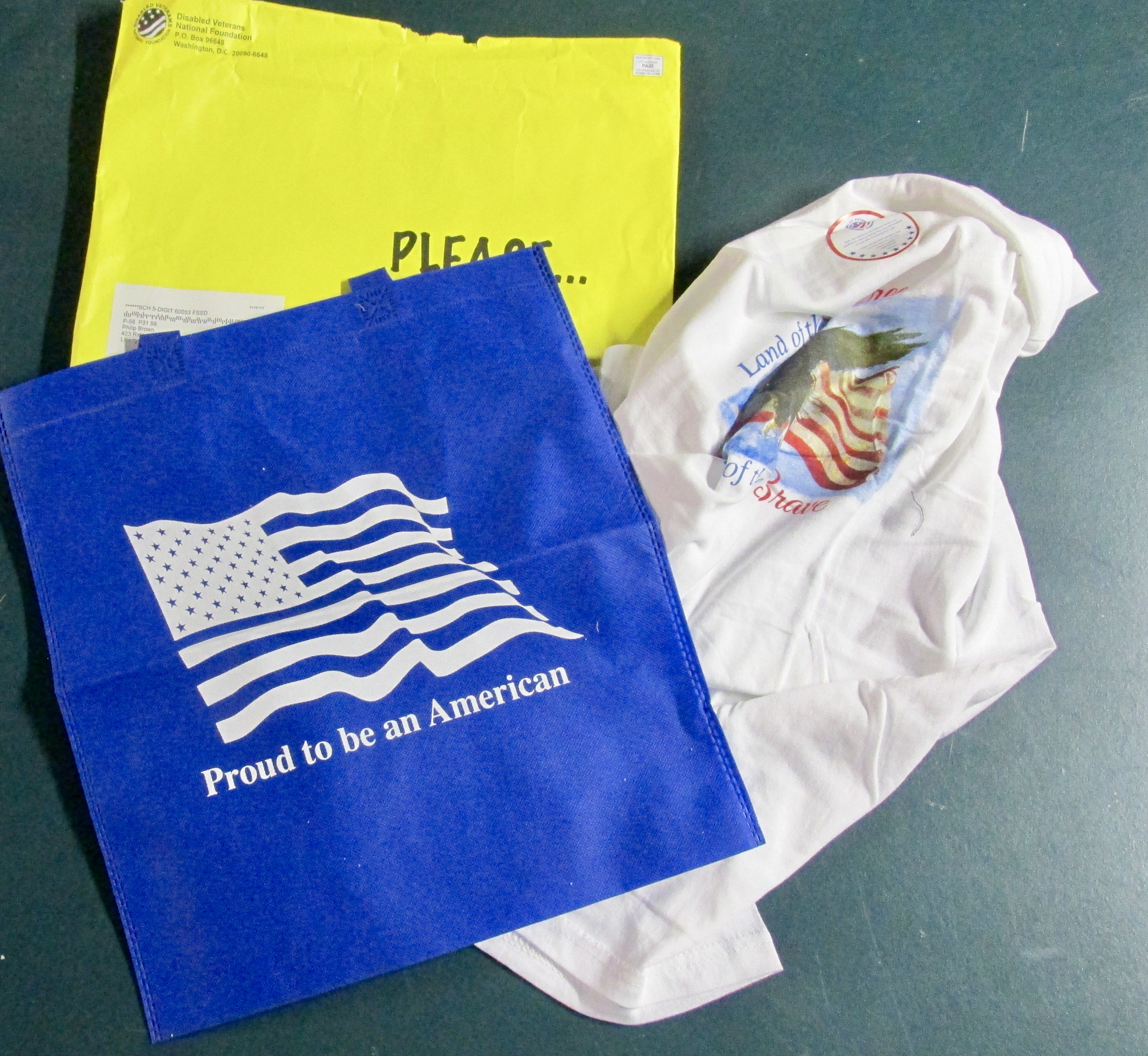
A max-sized lumpy day-glo envelope from Disabled Veterans National Foundation

October comes around, and the non profits are making their first of several strong pitches for another discretionary dollar donation. I find my mailbox full, and refreshingly, with some new twists.

Kudos to the team at St. Joseph’s Indian School who have brought in some new creative to overlay their basic control kit.

St Joe’s gift vouchers go full color.

The Dream Catcher is the most unique gift of all.

As always, the Dream Catcher is a unique keeper. I have several, which make their way to the grandchildren. But the kits also deliver more colorful coupons. We’ll see if they repeat…or does the sterile, sober-looking appeal still trump happy colors?

As yet, St Joseph’s is not twigging to my male gender: I am getting stunningly beautiful foil labels with flowers and butterflies. I can’t use these, not even on my golf clubs.

The Post-It Note goes pointy for more attention.

Another St. Joseph first for me: a pointy Post-It note. It’s a little different, and catches my eye.

Certificates, suitable for framing deliver a message.

Plus, I have received a colorful, feather-imaged gold foil, embossed certificate of appreciation, on laid stock, no less!   Veterans of Foreign Wars sent me a similar recognition.

These certificates really are quite classy, as ‘thank you’s go. I am not going to frame them, but that doesn’t mean that someone somewhere else won’t frame theirs.

VFW targets the CD-player crowd with Christmas carols.

VFW also sent along a CD of Christmas carols! This may seem early to you, but actually is just in the nick of time: our new car no longer has a CD drive, but hey, it’s the thought that counts. I do have a cassette player in the basement, a.k.a., Santa’s Workshop.

Father Flanagan’s Boystown has sent me a Puzzles and Brainteasers booklet. You know, I mean to give it to the kids, but in an idle moment, I look at them too.

Beautifully designed gift bags are the pride of several organizations.

In an additional kit I was also treated to a colorful paper gift bag. These items show up across several charities, and I suspect there is a traveling paper bag sales rep who is shipping bunches of orders back to a printing plant in Shenzhen China.

The tote bag is a premium-with-donation offer from VFW.

Veterans of Foreign Wars has kicked the bag up a notch. They offer a full-sized  tote as a premium with donation.

DVNF throws in the bag and a T-shirt with their request for donation.

At the top of the pile however is Disabled Veterans National Foundation (not to be confused with Disabled American Veterans) which sent the whole bag, and a T-shirt, in a day-glo yellow max-sized envelope.

I am now thinking that there are regular flights for printing sales personnel from U.S. to Shenzhen.

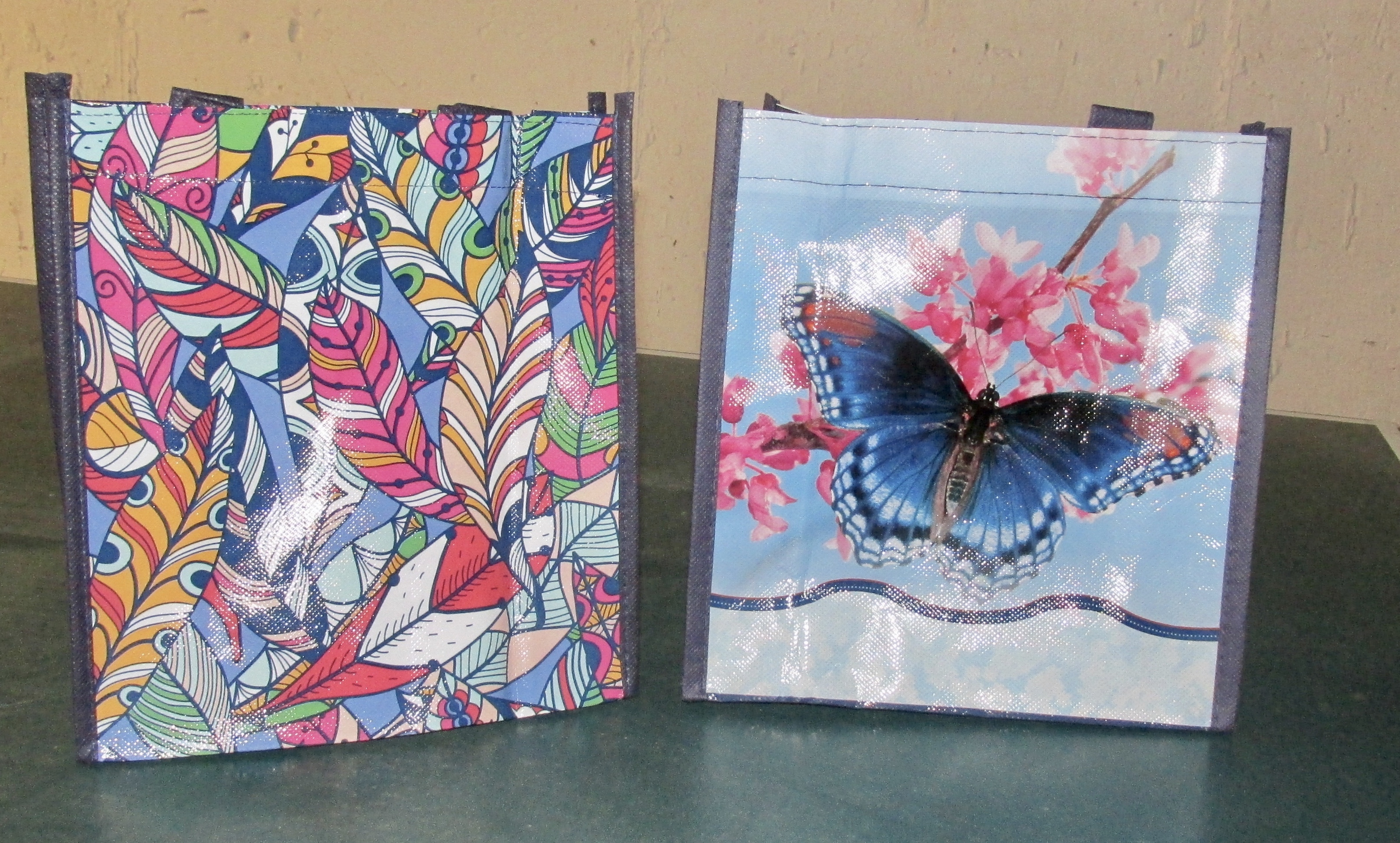
St. Joseph’s vinyl totes are small, but classy.

Truly, the most impressive were printed plastic vinyl tote bags courtesy of St. Joseph’s, that aside from their modest size, sported quality designs.

Lateral Thinking

There is an artful expansion of thinking on applying postage stamps to the reply envelope.   Pasting real postage on a reply envelope is a riveting issue.   Donors shudder to waste the stamps, and I am sure the charity’s accountants aren’t thrilled about giving away postage.

But here’s the thing–you may remember in my book Many Happy Returns, the story of the fundraiser who coaxed the donor to please supply their own stamps. The reply envelope said, “Your stamp will save us money.”  In a manner of speaking, it did. Average dollar gifts rose 6%, but response rate dropped 15%. Go figure!

DAV fronts all of the postage on the reply envelope..50 cents worth.

Anyway, the pioneer in applying the full 49-cents (or so) postage was DAV. They primed the pump, and happily cashed our flood of checks. We Baby Boomer donors can’t see a stamp go to waste.

But now, there are some diversions in the path.

VFW fronts only 5 cents, but appearances count in their favor.

VFW provides 5, one-cent stamps to the postage paid BRE, and the USPS will charge the rest. The modest nickel cost looks like a lot of stamps–but it’s not 50 cents’ worth.  This effectively cuts VFW’s in-the-mail costs by $450 per thousand, while still appearing to offer the more expensive stamps.

St Joes includes a faux return address label with 3-cents postage.

St. Joseph’s sharpens their pencil a little more, and only provides 3 one-cent stamps, but adorns their BRE with a faux return address label in my name.  How can I throw this out?

Boystown decorates their BRE with zero-value greeting stamps, but they look great, regardless.

Not to be outdone, Father Flanagan applies 4 Greeting Stamps of no value whatsoever to their BRE, but they look great!

Who can deny the effort?

To date we have 46 greeting cards in inventory. Production quality is high.

Throughout all of the recent spate of mailings I have received, greeting cards still predominate. I counted 46, all high production quality, and which are now stored in one of those pretty paper gift bags.

We have a bucket of pens, but St Joe’s are the classiest.

As well, I have been issued with numerous writing pens…lots of them, and some very tastefully designed, courtesy of St. Joseph.

And speaking of writing, I have a mountain of note pads, some die-cut, none of which can be discarded.

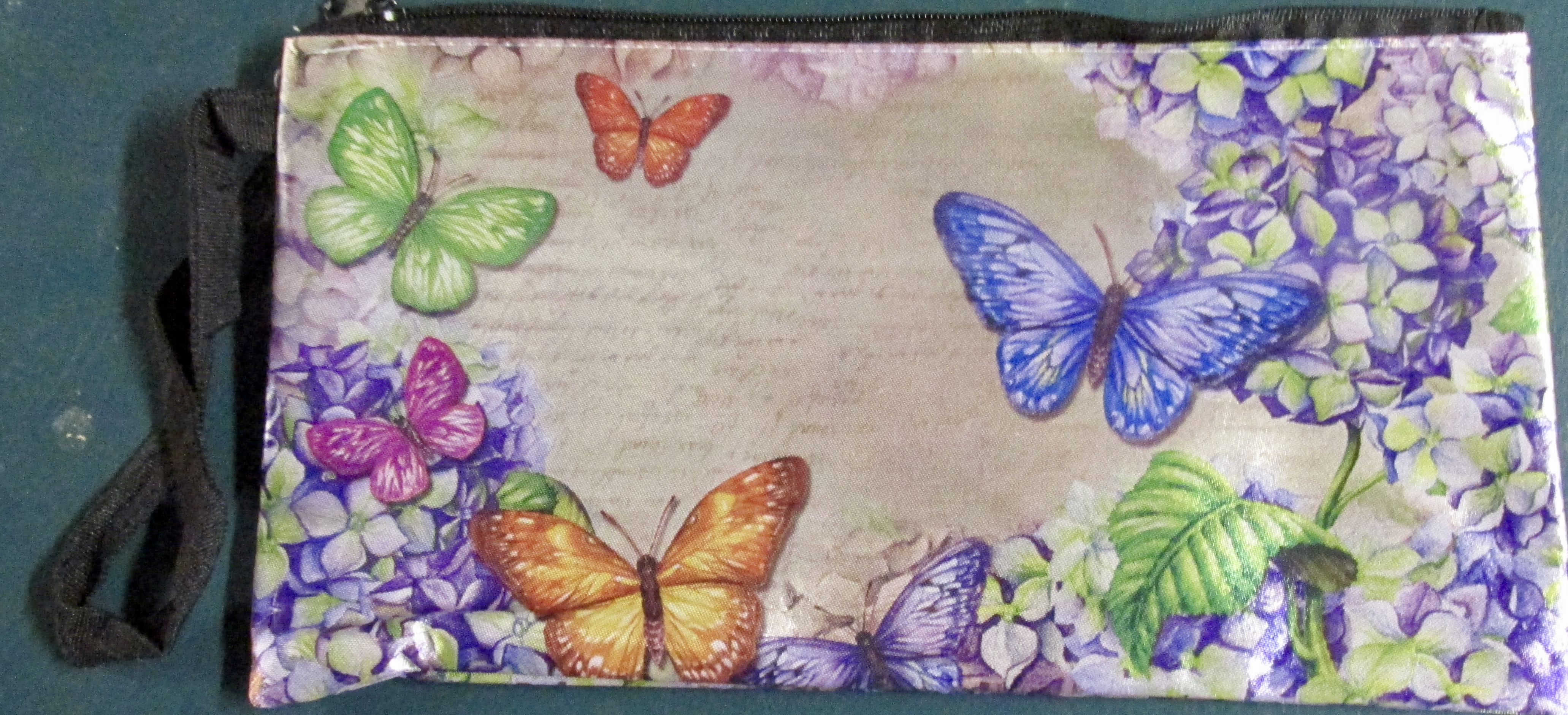
A pencil case for the pens. A lunch box may be next.

They get used.  And when not, where do they go?  Into a pen and pencil bag, supplied by St. Joseph’s!  Wow, what’s next…a lunchbox?

There is an ongoing debate, stirred up by loyal donors about the exorbitant expense taken in these mailing pieces.  How can a charitable organization spend this much, and then ask for more money?

The fact is, the gift strategy works.  Especially if the gifts are exclusive and high quality.  When they are accompanied by personal, expressive letters, the efforts are rewarded by donors who are sitting on, or searching, for the summit of Maslow’s pyramid: self actualization.

Thanks for reading, and sharing.  If you wish to check on these charitable organizations, you can visit Charity Navigator, or the organization’s websites to see their financial disclosures and especially their direct mail fundraising performance.

Standard
Agriculture, Culture, Environment, Science, Wildlife

Marmoration Nation

The Brown Marmorated Stinkbug

I had to laugh when a recent plea came across our Village Facebook page, “Will they be spraying for mosquitos this year?”

The summer’s nearly over.  Fall’s coming.  Frost on the pumpkin.  Mosquitoes??

Skitters may be annoying, a nuisance, bothersome and carriers of West Nile disease, but other than that, well, they aren’t stink bugs.

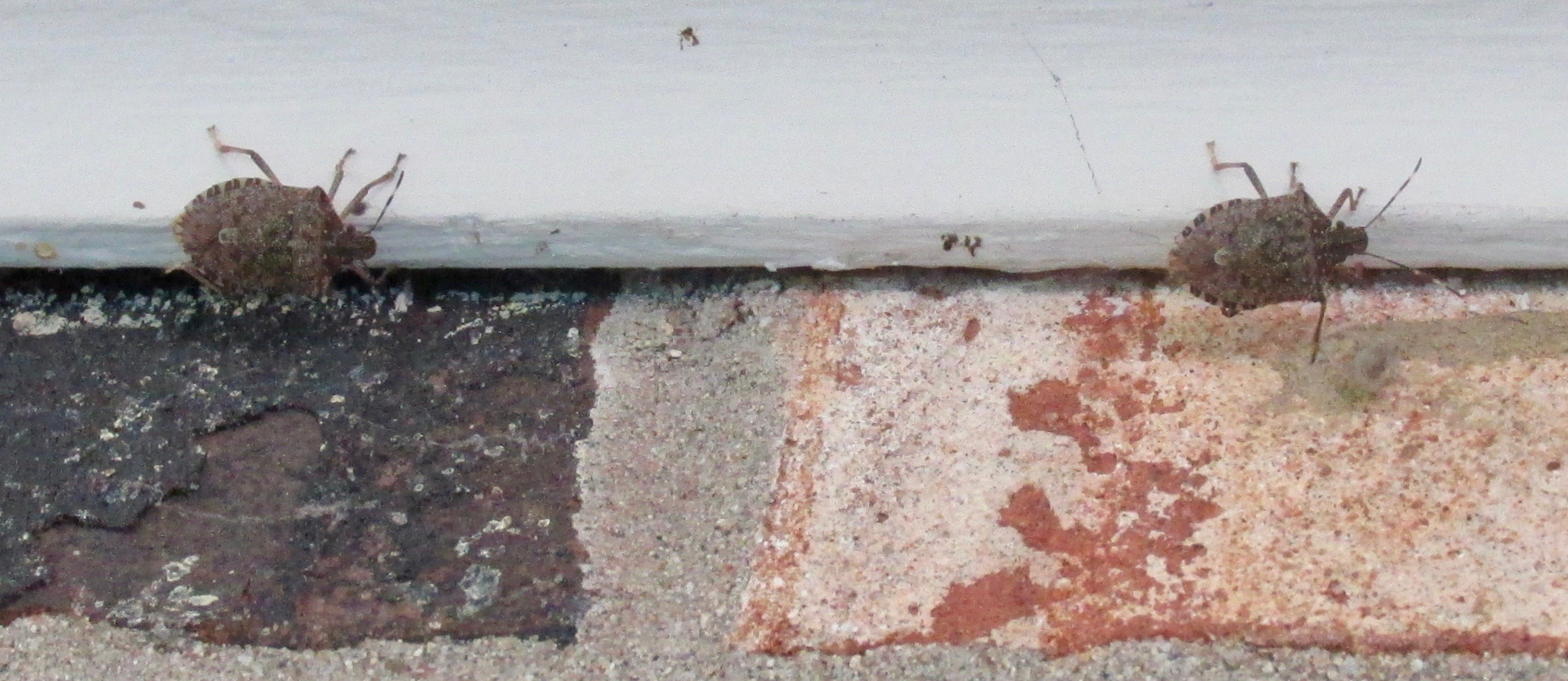
Last fall we found scads of these penny-sized twirps on the side of our brick ranch, an unsightly rash of brown measles, sunning themselves every afternoon through September and into October.  Mindful of the laws of karma, I did not kill them.  I flicked them off the sliding door screen and wished them a good life, but somewhere else.

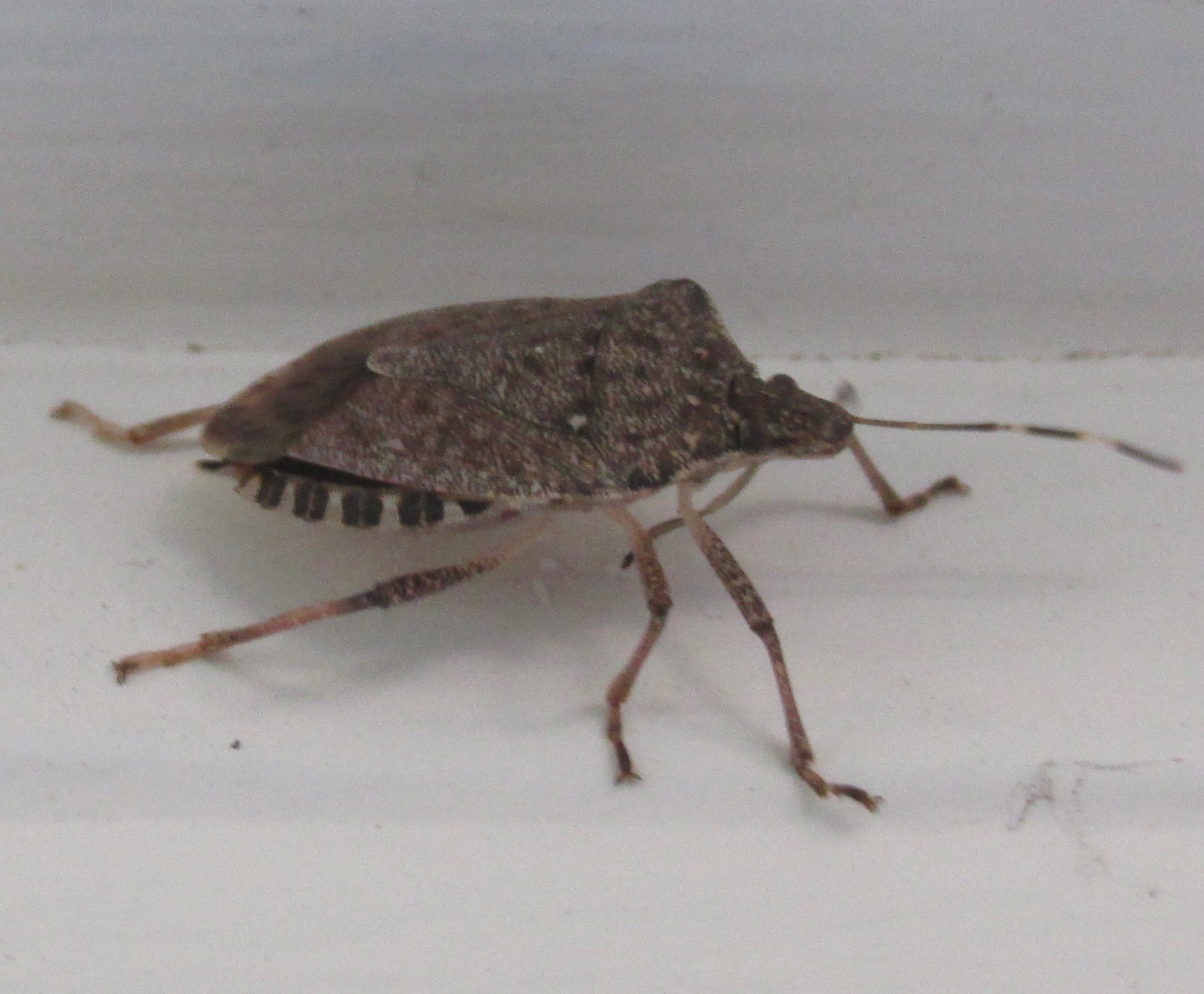
Brown Marmorated Stinkbugs are so named because they have a marbled camouflage suit.  Hard to see as they bask on the lilac leaves in the afternoon sun.

Halyomorpha halys: a member of the family Pentatomidae

They also smell.Before understanding what I was dealing with, I smacked one, and as it exploded under my hand, it shot off a dying waft of odor that resembled rotting, moldy underwear, which I say kindly.  Understandably, they are not tasty, so lack many natural predators.  Crows turn up their noses.  It turns out that wasps will go for them.  Terrific!

Stinkbugs are unpleasant creatures, only recently making it to our corner of the Midwest in northern Illinois. Apparently they originated in the far east, and hopped a ship to a harbor on the east coast, and with time, they have moved west.  Apparently they like soybeans which grow abundantly on a 33-acre field across the highway from us.

Time moved on, and as the snows fell in December, the stinkbug drifted out of our memory.   We passed the evenings in front of the fire, catching up on Survivor and other important social studies.

Then, one day in January, a black dot appeared on the family room wall, over the door.

“What the…?”  I stared.   “That’s a, a, a stinkbug!  What’s it doing in here?”

No longer spooked by the ironies of karmic payback, I grabbed the odiferous brown button in a wad of tissue, and walked it off to the toilet for a quick dispatch to the next world.

“Don’t know where that came from, but it’s history.” I flumphed down on the TV couch beside my wife to witness 8 publicity-hungry people attempting to dive into the Pacific ocean to retrieve a key, which would unlock a box of beanbags back on the beach to throw into a basket which would tip over and raise a victorious tribe buff.

Then, looking up over the fireplace, another brown button.

You can guess the conversation that followed, and that eventually, unbelievably, tortuously repeated itself for the next three months as every day, two more bugs appeared in the family room.

Under duress, their natural odor is intolerable.

Somewhere on the outer lining of our house, a gang of stinkbugs was holed up, waiting for spring.  We came to imagine that the ringleader would crawl among its cohorts asking for volunteers to go out and check the weather.

Everyday, without fail, two creatures would emerge, quietly, stealthily, and present themselves somewhere in the family room or hallway.  They never flew.  They just appeared, immobile, prostrate, stuck to a wall.   They stood out like 8-balls in a bathtub, and so quickly ended up mummified in tissue and expelled to a plumbing system which hopefully took them to a station miles way from us.

And then spring came, and the bugs one day missed their cue, not showing up.  We relaxed, and enjoyed the following months that scrolled through May and June’s fragrant flowers, thick lawns cut weekly, releasing the unforgettable aromas of fresh cut grass.  Deep into summer the garden fluttered under the visiting companies of butterflies, mindful robins, cock-eyed, frenetic squirrels and later the incessant, raucous buzzing of the cicadas.

As September arrived, the sun warmed our home on its west side.  Stepping out to the deck to light the barbecue, I lifted the lid, and looking up, spotted, there, on the wall, a brown, marmorated, stinkbug!

Stinkbugs: seekers of nook and cranny.

“Cripes!  A stinkbug!” I groaned.   Looking beyond this unwelcome visitor I found another.  And another.   “Holy crap!  They’re back!”  Sure enough, as I walked along the side of our house I spied more than a dozen.

The next day, I obtained a particularly bug-lethal concoction from the hardware store. Mixing approximately 3 tablespoons to a quart of water, I filled up a handheld spray bottle.   The solution was 5 times as powerful as recommended.

A crusade of epic proportions

For the balance of September I sprayed every afternoon and every morning, targeting bugs in twos and threes, clustered under the soffit, ensconced in the cracks between the bricks, hiding under the lilac leaves, perched on the window screens, and skittering along the edges of the gutters.

It was a crusade of epic proportions.   I had gone through a whole quart of the concentrate, and went back for a second, relishing the daily harvest I was taking on these annoying little bugs. The walls dripped in poison spray as the bugs plummeted to the ground, dead.

You may recall the adventure story, “Leiningen And The Ants” .  A plantation owner and his crew are defending the crops from a vast plague of soldier ants that devour every living thing in their path as they march, six-legged, towards the house.  Leiningen first attempts to fend them off with a moat. The crafty, unstoppable ants still cross. Next he douses his fields in gasoline to burn the ants, but they forge on.  Finally, he floods the entire plantation by diverting the river, only just escaping his own vivisection as the ants pulled him down.

Somehow, I felt like Leiningen, defending house and home, and winning.

Early this October, the weather turned cold and wet, and the stinkbugs were gone.  They had vacated the trees, the walls, the gutters, the screens, and the soffit.  It was over.

October in Illinois is a flighty month, climate-wise.  After raking all the fallen leaves, we were presented with three days of 80’F weather.  This past week, I surveyed the yard, and looking up to our gutters spotted more of the bug.  Returning to the house, I loaded up another quart of the juice, and like trigger-hyper Terminator in a video game proceeded to decimate the bugs, which by this time numbered a small mob.

“I just finished off 84 stinkbugs!” reporting to my wife, who rolled her eyes.  “The sun brought them out, and they got the juice.” I was triumphant.   The sides of our ranch looked like a target range for paintball, with little wet splats everywhere.

After lunch, I ventured out to the deck as the sun came around.  “Geez!!  There’s more of ’em!”  I went back to search and destroy mode, and sprayed 135 more bugs.  “That’s gotta be it.  Just gotta be.”  Indeed, it did seem like their rush was finally kaput.

Our yard hosts a forest of mature trees.  Closest to the house is a Moraine Locust.  This tall giant provides the most generous and pleasing canopy during the summer months.  Swinging in our hammock one can gaze up at the millions of tiny leaves that sway effortlessly in the wind like  green petals against a brilliant blue sky.  It’s an irreplaceable retreat, passing the time, thoughtless and serene.

The summer idyl is over in October however, and that is when the leaves turn yellow, and all one billion of them fall to the ground, and to our roof, settling in golden billows packing the gutters.  It is a regular ritual to blast them out of the gutters, and with that purpose, I climbed to the roof, leaf blower in hand, and started the excavation.

A little tank at the bottom of the summit.

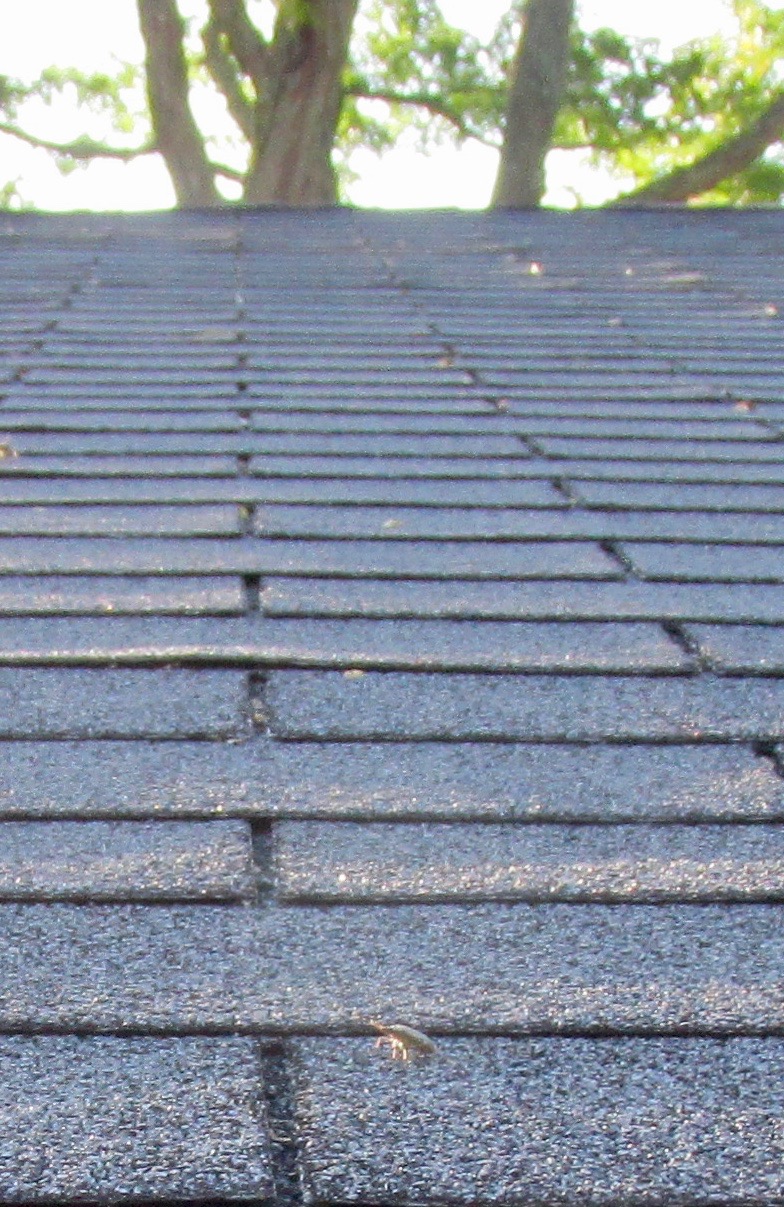
Hardly into the first side, and I scan the roof for errant leaves to push over the edge, when before me creeps a stinkbug.  Crabbing across the asphalt shingles, it joins another stinkbug.  I take a moment to blow it away with the leaves.  And then I look towards the peak of the roof, and there is a long train of bugs marching along the summit like Sir Edmund Hillary’s Everest trek, complete with sherpa porters, numbering in the hundreds.

I am aghast.

Stepping up towards them I inspect the shingles at my feet, and watch as stinkbugs enter and exit every little groove in the overlapping sheets.  They are everywhere.  This is home.  Seekers of nooks and crannies, they have found refuge.  I walk up to the roof ventilators.  These are black, screened aluminum umbrellas which shelter vapor draft for the attic.  I tap on one, and 20 stinkbugs explode out from under in every direction like gangsters rousted from a crap game.

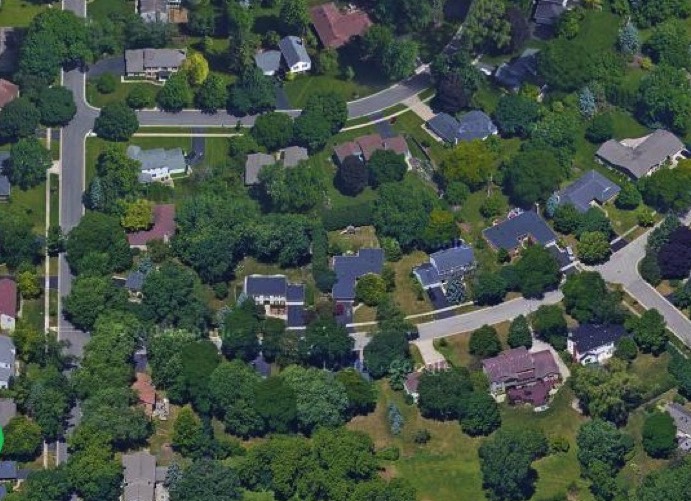
The neighborhood is a giant roof garden of marmorated chia pets.

I finish the leaf job, and descending to the deck pause to reflect.  Leiningen conquered the ants, but only after torching and flooding his land.  Not an option here.   It dawns on me, as I survey the gables and rooflines next door, that every house in town is hosting a giant blanket of stink bugs on their roofs like an enormous marmorated chia pet.  There is no defense.

We’re done for, until the frost comes, and it can’t come too soon.

Thanks for reading and sharing!  The Department of Agriculture sees these as an economic pest.  But a solution is hopefully underway.

Standard
Agriculture, Culture

A Change In The Clouds

Fall is a month away. It doesn’t seem like long ago that we were pouring fertilizer on a robust lawn before May was half done, satisfied with a green, grassy, house apron devoid of even one dandelion.

Back then, summer was still a month away pretty much, and we had a full agenda of activity including play and travel, romps with the kids, and some quiet moments by a large body of water, soothed by a clement breeze sent from the northwest.  The sun was up by 5:14am, the weather folks pointed to clear skies, and to the occasional fluffy batt of clouds, high up and benevolent as they shaded the lawns, fairways, fields and lakes for a moment before moving along.

Driving to Door County in Wisconsin today, I looked at the limestone cliffs which are the mirror image of the Niagara escarpment, running from The Falls north through Tobermory to Sault Ste. Marie and then south to Green Bay.  From the road, you see a 100-foot-high cliff, a sandwich of million-year-old seashells, blanketed with a hard-earned topsoil.  Above that, the trees, orchards, soy and cornfields richly, generously, spread in every direction.
And above that, are the clouds.  Lots of them. Hung against August’s blue sky, they are more intent on passing.  Their bases are grey, and the furls are silver, with a blown effect that signals that they are in a hurry to be somewhere else.

That’s when I sense the shift.  Our planet, perched on a permanent tilt, has moved along its perpetual path around the sun, and in the process, has changed its shadow settings.  The sun rose at 6:07 this morning.

Back here on earth, we are sensing the change, despite all our denials.

As a kid, I didn’t really sense seasonal change.  But when I was working age, the bells started to ring.

Back then, early in the morning, in the third week of August, standing at the bottom of a tobacco conveyor belt, there was a wet fog lifting across the cold, grey, sandy fields, revealing countless rows of tobacco stalks stripped to their top leaves. Only a couple more rounds to go.

Last night’s boat was left beside the kiln, ready to sew and hang first thing.  As we pulled back the dew-wet canvas, the leaves are warm from their own combustibility, and exude a sweet peppery scent.  Their steam escapes into the cool morning air nuzzling my face. Lifting them limp out of the boat, they beg to be hung out to dry, and quickly.

The tying machine folks aren’t the first up.  The primers and the boss’s family were out hours before, unloading the neighboring kiln in the dark, gently lifting out 1200 sticks of cured tobacco, placing these on a wagon to be towed off to the barn for storage.

The emptying of a tobacco kiln is a ritual as disciplined as doing your laundry.  After a week of careful curing, the heavy, wet, green layers of tennis rackets have baked to a light bouquet of stiff, golden dish cloths carefully stitched to three-foot-long sticks.  They rustle, and breathe a moist, musky perfume in the early morning. The grower has to evacuate the kiln promptly, as a new harvest will be hung tomorrow.

As the pickers ride off to the field, our tying team revs up the machine table and the sticks are placed into the moving chain by womens’ hands which moments before were finishing thermos mugs of coffee.   They pull in handfuls of tobacco like romaine lettuce for a gourmet chef’s banquet salad.

Off across the yard, the cool dew gives a fuzz to the grass while it drenches my feet, padding back and forth between the tyer and the conveyor.  Up above, our kiln hanger has cranked up his radio which he has hung on the red door of the kiln.  Sonny and Cher beg us, “Baby Don’t Go”.

It’s late August, and we all feel the harvest coming to an end.  Ten more kilns at most.  Ten more days.

Finishing up a harvest is a sobering experience.  The work started four weeks ago, roughly, the result of four months of careful planning and cultivation.  Our clothes are worn and washed out, hands tough, muscles built, our tans are faded, our pockets are full.  But as the coolness pervades the fields, and the sun retreats from its July intensity, everyone senses that the job is just about done.

It was numbing, repetitive, demanding, important work, racking up numbers in the thousands, and millions, if you cared to count. Despite its physical demands, tobacco harvest was a time of freedom, too. Just get the product safely packaged; don’t worry about tomorrow.

Now, decision time.

Some of us go back to school.  Others will stay on the farm, emptying the kilns. There are jobs in town. There’s canning to do.  Still others will go to the next harvest, moving on to pick apples, pumpkins and cabbage.

Overhead, the sun smiles on us, warming our days around noon, and then the clouds move in.

Standard
Culture, direct mail, Economics, Government, Marketing, USPS

USPS: Hidden Good Fortunes

Every quarter the USPS publishes their Revenues, Pieces and Weights Report. For the numerical savants out there, this is a feast of numbers beyond one sitting, for sure.

But the big story is, the USPS continues to perform in a stellar fashion, despite the ravaging onset of online displacement of hard copy as we know it.

If you think the post office is in trouble? Have another think.

Q3 YTD Results–9 Months Only
~The bad news– and what is publicly perceived, First Class revenues have fallen from $22.7 billion in 2013 to $19.9 in 2018. (off $2.7B or -12%).

~In the same 5 years, Magazines and Periodicals dropped from $1.3 billion to $984 million. (off $276M or -22%)

These two categories accounted for a $3 billion shortfall in revenue.

~Direct Mail, which includes catalogs, has ceded $294 million over the past 5 years. (off -2%) to $12.5 billion in the first three quarters of fiscal 2018.

Now for the good news.

In 2018, competitive Parcel and Package delivery has grown from $9.8 billion in 2013 to $16.9 billion. That’s a $7.1 billion growth, or 73%!

So we can certainly see how internet and digital media have blasted the legacy paper and ink communications business to smithereens.

What we did not see however was that online commerce has grown so rapidly that the USPS has found its newest niche: order delivery.

Year to date, 9 months, FY 2018, the USPS has delivered 4.2 billion pieces. Compare that to 2.3 billion, 5 years ago.

The USPS has another interesting report available, entitled Public Cost and Revenue Analysis, Fiscal Year 2017.

I like this report because it tells you how well it covers its costs of operation.  For instance, First Class Mail has a cost coverage of 210%.  Basically, its revenues are double its costs.

Direct Mail cost coverage is 153%.  Magazines and Periodicals, only 69%.  But the Package and Parcel delivery business, in the competitive markets, cost coverage is 155%.

Overall revenues for 9 months are $53.8 billion, up 5% from $51.2B 5 years ago.

These numbers indicate the ebb and flow of the door-to-door, pick-up-and-delivery business, and how the USPS is responding to America’s choices in communications.  True, the numbers do not account for front office costs, and legacy benefit and pension challenges, where there is a different story to tell.

But for making their daily appointed rounds, no one does it better than the USPS.


Thanks for reading!  If you would like to see these reports for yourself, have at it!

Click here: Fiscal year 2018 Q3 Revenues Pieces and Weights

and here: Public Cost and Revenue Analysis 2017

Standard
childhood, Culture

The Summer of ’61

July

Is there any event in our lives which doesn’t come back to remind us later? As I dressed yesterday morning, I recalled an evening in my youth, back in Delhi, my hometown when I was 12. It started at summer camp, but ended up at the Delhi rink.

Leading up to the moment, we had just burst out of 8th grade for the summer, and were headed off to our various pursuits. For some, it was the pool, for others, baseball, yet still others would go to the fields to hoe tobacco or run chains for the marketing board.  These days of promise were interrupted by sunny visits to Long Point and Turkey Point on Lake Erie for a stretch of beach and hours of breathless, soaking fun in the waves.

For me, I was packed into a bus, and sent to a YMCA summer camp on Georgian Bay. Many Delhi kids went there, so it was a familiar setting. My counselor was from town as well.

Every year the camp hosted a World Service Day where we chose to portray a United Nations country which would qualify as less than fortunate on the world stage. We dressed up like natives of the country, and prepared an exhibit for all the campers to visit. We charged admission, and all the money was sent to the YMCA to contribute to the World Service program, Canada-wide.

Charcoal for World Service; getting into the role.

I can’t remember the country chosen, but our cabin of 12 campers elected to strip down to our skivvies and cover our bodies in charcoal. We were attempting the native look.   We coated up in black, grimy wet fireplace ashes.

The day went well, and money was raised, just another activity for a community of young guys, followed by a serious wash up to remove the charcoal.

Obviously, the underwear never came clean.  And it went back into the suitcase, and came home in August to our laundry where it hung on to its coal black tones despite many washings.

August

Home from the forest.  The summer was in full force, and while tobacco harvest was underway, we looked for diversion, knowing school was just a month away.

“Let’s go roller skating at the rink,” offered my creative friend.  “It’s open every weekend. You can rent skates, there’s plenty of music, and girls too.”

Neat!  The rink was a booming business in the winter with hockey, curling and figure skating.  In the summer when the ice was out, the smooth, polished concrete floor was a platform for boxing and wrestling matches, magic shows, even bike races.  But the big draw was roller skating.

The prospect of an evening out at the rink was exciting.  Even more, was the opportunity to see girls again, after four weeks of boys camp.  I excused myself from dinner, and went to shower and dress for the evening ahead.

Prepping for an evening out was pretty much unknown territory for me, but basically, I wanted to look sharp.  I pulled out my favourite patterned, cotton short sleeve with button down collar, and placing it beside my slickest pair of khakis on my bed, it looked swell.  No t-shirt required, but yep, I need “gotchies” all right, and I pulled the next in rotation out of the drawer, which was the same grotty pair I wore on World Service Day a month before.

Holding them up, I inspected the dingey grey briefs.  Clean, no question, but not the “tighty-whitey” white one would expect.  I mumbled to myself, “what the heck, nobody’s seeing ’em,” so I stepped in, and completed the outfit.

A little Brylcream, Right Guard, teeth brushed and a fresh stick of Doublemint and I was out the door, hopes high, and to the rink.

Every weekend hundreds of teens and wannabes like me would swarm the rink and course counter-clockwise around the immense, dry, warm, barn-like enclosure to the broadcast beat of rock and roll  ’45s played by a pimpled DJ in the corner.  The rink sounded like a large dance hall submerged by the steady, grey drone of thousands of plastic wheels rolling on pavement.

Seeing the groups speed by–some laughing, others with serious, non-communicative expressions studiously ignoring the onlookers, but privately inviting the stares and furtive glances of others in their pathway–my heart revved up with the thoughts of what might come next.

I stepped off the doorway, and strode into the current of skaters, tentatively rolling on the clip-on rentals.  It was easy, and before long, I was rounding the circuit, feeling the wind on my face, and the crazy buzz through the soles of my shoes, all the while to the tunes of Ricky Nelson, Del Shannon, Patsy Cline and Gene Pitney.

There are girls everywhere.  Not a well-practiced pursuer, I am focused on a pretty, smiling blue-jeaned skater, her pony tail swaying behind her as she swung around the rink. She had beautiful white roller skates, tied above the ankle, just where the rolled up cuffs revealed an inch of exquisitely tanned shin.  I am conquered.

The best I can do is come up from behind, draft in front of her and keep ahead. Oh nerve, where are you when I need you?

Gene Kelly of the roller rink.

Meanwhile, there is a lone skater who stands out in the crowd. He is tall, pompadoured, and twirling about like Gene Kelly on fancy black lace-ups with red toe brakes. He’s big and muscular, with his short sleeves rolled up an inch to show off his biceps. Throughout a Dee Clark number, “Rain Drops”, he is tangoing and swinging through the moving groups, spinning, skating forwards and backwards, cutting a crazy path. Everyone moves on as he navigates the openings for a pirouette on one skate.

I have just completed another “fly-by” in front of the attractive miss who has captured and numbed my thoughts. She seems oblivious, but I have to keep at it.

Then, Boom! Out of nowhere, I am crushed by a jumble of legs and skates as Gene Kelly backs into me. Down we go onto the unforgiving concrete, and he lands on top.

“Jeezuz! Watch where you’re going creep! Ya little wiss! Get off the (**$%^&#$) floor. Ya wanna fist??”

Looking up, I stare at his hair which has come undone like a wilted bouquet of dead flowers. He sneers at me while he combs it back, and with a final dismissive hand signal, he is on his way again, spinning through the crowd.

Rolling over onto all fours, I push myself back onto my feet. I have a sore butt, but otherwise intact. I skate on to continue my approach to pony tail who seems to have missed my floor event. She smoothly circles the floor as I catch up from behind.

I am intent on coming up and saying hi, but at the last moment I chicken out, and pass by, crossing in front of her. I have serious, craven doubts about taking the final step in greeting her. In a moment she is off again and I am left to cruise around in my desperation.

A couple more circuits around the floor, and I have now glided in front of her yet again. Somewhere in the middle of “Calendar Girl” I slow down, turn my head and say, “Hunh.” Or “Hi”. Or, “Oh”.  It’s stupid, and dumb and I’m speechless. Looking at her, my head spins in a mixture of emotions: delirious, mindless, giddy panic.

Miraculously, she responds. “Hi.” She has a grin on her face and giggles as she looks at me.

“Yeah, hi,” I counter.   Idiot. Twit. Moron. I can’t talk. My mind is a tub of Jello. My tongue is towel dry.

“Are you hot?” She asks. Odd question, but here goes.

“No. Yes. Not really. It’s hot, no.  What?”   Why don’t I just shoot myself right now? And then she responds, laughing.

“It must be hot if you don’t need pants.”

“What?”

“Your pants. The seat’s gone.”

At this moment, the bottom drops out of my world as I feel back there, and find nothing but shreds. The neat khakis have atomized into a collection of torn scraps like a ragged, tattered old flag. Then the realization hits me, just like Gene Kelly did when he took me down onto the treacherous concrete.

Busted!

I look at her, with my mouth open big enough to chomp a Tootsie Roll. And then she makes another comment.

“Nice underwear. Seeya.”

And with that, she skated away on those spinning wheels, ponytail swinging behind her, as I peeled off to the exit, heading straight for the men’s room.

I never saw her again.

In time, like by the next day, the whole event was behind me, just another fateful insult in the long education of growing up.

But it’s the one lesson I have learned, and it still holds, whenever I get dressed: if I am ever hit by the proverbial bus, I am prepared.

Standard
direct mail, Marketing, USPS

Direct Mail Design: This Never Gets Old

Did you know that the USPS Office of the Inspector General performs a customer satisfaction survey every year? News to me, but why not?

The results are available for viewing below.

But the stunning and head-spinning discovery about direct mail design is worth noting. In the study’s own words, verbatim:

“In FY 2016, it sent out more than 5.7 million survey invitations in the form of a two-sided postcard that invites customers to take the survey online or by phone. These invitations resulted in approximately 71,000 completed surveys, a 1% response rate.

“In order to increase response rates, the Postal Service tested two other survey invitations. An oversized postcard did not make a significant difference, but a sealed envelope with an invitation on letterhead had a 7% response rate.

“Consequently, the Postal Service adopted the sealed envelope for all invitations for FY 2018.”

A 600% increase in response!

There are two big rules of direct mail design:

1. It takes A Letter.
2. Put it in an envelope.

As for the survey, it is itself a pot-boiler and you can “self-administer” online, or participate by phone. If you are the social scientist, you know that a 50% response rate is the minimum acceptable for self-administered surveys, because who knows that the respondents don’t drop off, or conversely, have an axe to grind, or perversely, come from Chicago and complete several forms.

All results can be read here, but first and foremost, remember the two rules above.

Glad the Inspector has come on board!

Standard
Environment, Government

How High’s The Water?

“May the rains fall gently upon your fields” ~ Irish Blessing

We get rain; the DesPlaines gets big.

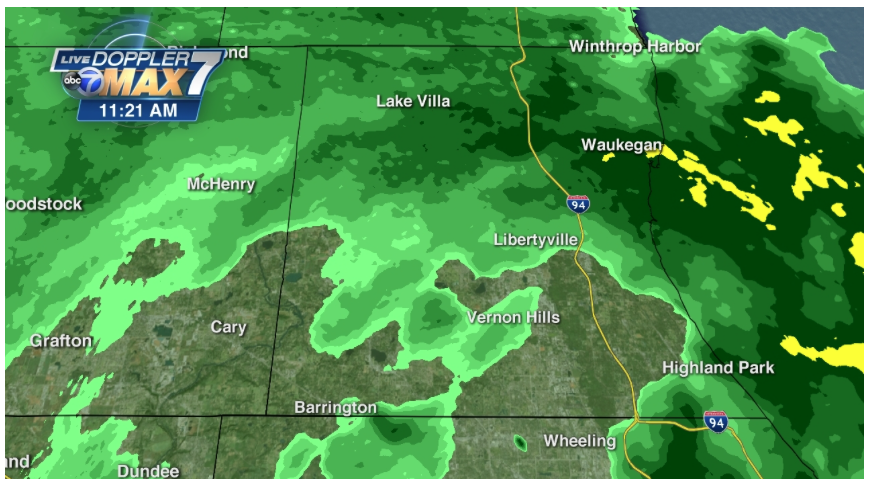
On a day like today, we are all content to stare out the window as indeed the rain does fall gently on our gardens. It has for two days now. The weather folks are enthusiastically dissecting their multi-colored maps showing this vast swath of water that circles the midwest, soaking us through the longest day of the year, and then some.

Waukegan will get close to 3 inches.

Closer to home, we can watch the steady building of Mellody Farms, at the intersection of Milwaukee and Townline Road in Vernon Hills. Traffic snarls along the roads, under the swinging makeshift signals. Meanwhile, trucks and trade vehicles pull in and out of the construction zone.

You can watch the construction cam: I have its URL down below.

Over 100 tankers for every inch of rain.

What is not first apparent, but might be some day, is the amount of water entering the site. Imagine over 100, 18-wheel tanker trucks coming into the site, and exiting too. You can only imagine it, because there are no tanker trucks. But that is how much water is being dumped on this site for every inch of rain that drops today.

Around 980,000 gallons of rainwater fall onto the 36 buildable acres in Mellody Farms for every inch of rain. You can do the math.

Once the rain falls onto the impervious surface of this new shopping center, it has to leave, and it does, coaxed into storm drains that take the volume down, or rather, just over to, the DesPlaines River.

From there, the rainwater disperses, much to the belated concern of folks along the river in Mettawa, Lincolnshire, and ultimately Wheeling. There may be some buildings, like Hollister, just north of Mellody Farms too who will be checking their basements.

And now be mindful, “May the river rise up to meet you.”

Thanks for reading!  I hope you will share this with anyone who ever wonders about the impact of development on our watersheds!

Click here for The Mellody Farms Construction Cam


Standard
Culture, Sports

Real Grit

Justify proudly, majestically pounds the dirt.

We watched the Belmont Stakes on Saturday, and came away with a shiver as Justify fiercely and powerfully pounded across the finish line one and three quarter lengths ahead of his closest opponent.

Why the shiver?

Was it because the 3 year old just won the Triple Crown?  Because he proudly stands 16.3 hands high and weighs in at an amazing 1,380 pounds?  The $1,500,000 purse? Because he’s a fifth generation descendant of Triple Crown Winners Omaha, Seattle Slew, Secretariat, Count Fleet and War Admiral?  His $3,798,000 winnings history?  Because he was loudly and jubilantly bestowed the laudable praise of immortal?

No.  We came away with a shiver because he almost lost to Gronkowski.

If you watched the race you may have lost track of Gronk as the race unfolded, and that is excusable, because absent the use of a wide angle lens, you would not see the trailing horse in the same frame as the 9 others.  He barely made it out of the gate.

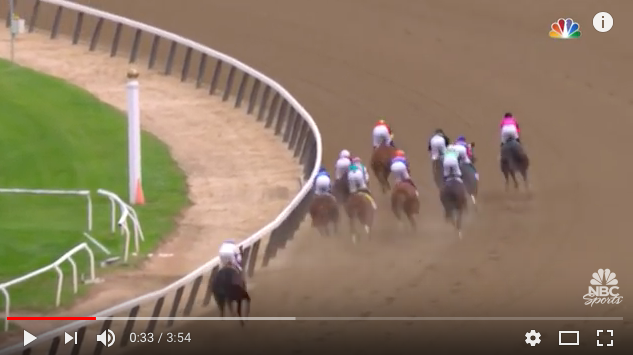
At the gate, Gronkowski, ridden by Ortiz in white is delayed.

Gronkowski is a lesson in accidental fortune.  With a meager $79,496 in winnings to date, he did not inspire much confidence as a good bet.  12-1 on race day.  Nevertheless, on a whim, New England Patriots tight end Rob Gronkowski recently bought a share in the horse, solely because they shared the same name.  Ah, the joys of personal disposable income!  The football player weighs 265; the horse is over 1,200.

Barely 10 seconds into the race Gronk falls back.

As the race begins, Gronkowski the horse breaks out of the gate dead last.  Only a length behind, he is now eyeing 9 horses’ butts in front of him as he appears to awaken from an afternoon’s equine slumber.  This would be the moment to double back, and check if he is in the right race.

Instead, Gronkowski shuffles into a gallop, no doubt looking to see what the kerfuffle is up ahead.  For the next minute he meanders in the dirt backfield waiting for a sign from his rider, Jose Ortiz.

The gap widens. Can we point the camera elsewhere?

At the first quarter mile, Gronk is in 10th place, 14-3/4 lengths behind you know who.

Meanwhile, at the front of the pack, with intrepid speed and power Justify stretches his lead, thundering ahead of some hopeful contenders.  All the while Justify and Mike Smith, his 52-year-old rider, soar around the bend, never looking back, confident of their win.  They are truly a remarkable, thrilling sight.

“This isn’t happening. This isn’t happening.”

At one mile, Gronk is in 9th place, 8-1/2 lengths behind Justify.

Still, there is a change coming.  The message somehow got through to the colt that this was a horse race, and there are terrific upsides to winning versus heading back to the stable.  It is amazing to watch as one by one, Gronkowski slips into the middle of the pack, and nudges his way up the rail like an impatient Target shopper on the way to self-check out.

At mile one, Gronk creeps up on the inside.


As the mob of horses approach the final bend, there is a quarter mile to go.  Gronk has smoothly worked up to 3rd place, 2-1/2 lengths behind.

Then in the final straightaway, the crowds are on their feet, the announcer is screaming into the mike, and Justify stretches forward like a wild dragon on fire, closing on the finish.  While horse and rider don’t look back, they surely can hear amid the crowd’s roar the fierce pounding of another set of hooves.

The finish, hot on Justify’s tail.

Alas, Justify crosses the line, victorious, and doesn’t know who crept up behind him in the last few seconds. It was Gronkowski, who came in second, a third of a second behind Justify’s 2:28:18.

“What the..where did you come from??”

True, it’s a horse race that astounds: it is loud, hot, wet, dirty, fast, scary and dangerous.  Justify completed his race with a time speed of 36 miles per hour.  53 feet per second.  But Gronkowski only woke up half way through the race, so he actually sprinted faster than Justify through the last half mile.

These horses love to run, and some even love to win.

Gronkowski in socks, at a quieter moment.

Talk about grit.


Standard
childhood, Culture, Environment, Wildlife

The Treetops Club

The white pine is the tallest in the woods.

Driving through the country the other day I spied a tall white pine on the edge of a woods, and it reminded me of the pine woods at home, in Delhi, Ontario. We spent many weekends.. in the woods, under the woods, and on top of the woods, building forts, huts, tunnels and abodes.

The pine woods framed the southeast corner of our wanderings around town.  Just south of the CNR tracks, and a few blocks east of Delhi Industries, and Delhi Metal Products, the 10-acre plot was our outdoor workbench as kids.

Soft green needles when on the branch, they fall rusty brown to the forest floor.

As the name implies, the woodlot was predominantly white pine, intermingled with some beech, birch, and the odd maple.  The floor was a soft pad of rust-colored pine needles.  If you dug down 2 or 3 inches you were into soft, black, sandy loam, the product of years and years of quiet decomposition.

White pines are majestic. They are permanently wind-blown like carefree flirts in a park, constantly getting the attention of every eye.  They were frequent subjects of Canada’s Group of Seven painters.

On any given weekend, the odds were good that we were in the woods, digging or climbing.  Our quest was the construction of a hut, or a fort, and occasionally a tree fort.

An adult attempt at reclaiming youth, somewhere on Kauai.

The huts were lean-tos.  We scavenged dead branches for ridgepoles and then layered quantities of pine bows over the structure until it blocked out the sun.  We never knew if it would stop rain, but if it did, it was on a day we preferred to rampage in someone’s basement instead.

Those huts were our headquarters on fair weather days, and absent the real thing, we consumed pine needle and newspaper smokes like little chimneys on fire.

The huts were also big enough to dig pits for small campfires, and if a lost hiker strolled by the lean-to, they were as likely as not to smell the pungent fumes of our home-rolled cigarettes as the smoke curled through the needles of the roof.

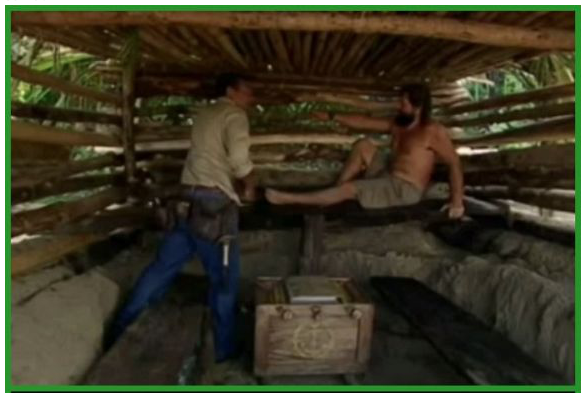
Rupert’s folly on Survivor 7. Caves don’t work.

On one series of weekends we ventured to build a cave.  This entailed equipment: shovels, smuggled out of the garage avoiding the scrutiny of our parents.  We learned years later that they were oblivious to the whole escapade.  Digging into the soft cool dirt, we dug down a good three feet, piling the proceeds around the sides of the pit.  When the resulting cavity was about 4 feet in height, we laid down the required logs and poles to hold up the roof, which again was a frilly knit of pine bows and other bracken.  Before long, the cave was satisfactorily complete, and smoke ventilated through the canopy to be blown into the woods.

The pine is majestic: a frequent subject for The Group of Seven painters.

This cave was pretty impressive, having shelving inside for a small inventory of consumables like Cokes and smokes, and also a side for a small fire.  We even had it stress-tested when a local teen drove his motorcycle over the roof to prove its strength.  Bikes were lighter then.  Today’s Harley would be stuffed into one of the shelves in an instant.

The first 10 feet were the challenge.

What we did find, and this is precursor of what the hapless Saboga Tribe found in CBS TV series Survivor, Season 7 on Pearl Islands– when it rains, water collects in the pit.  We could have jumped into the future, 2003, and told Rupert, the witless architect that it was a bad plan.  But sometimes, history needs to repeat itself.

Our best, and highest accomplishment remains however, when we built the tree fort.  The tree was an elegant and aging white pine, probably  among the tallest in the woods.  Easily 60 feet high, and climbable to the very top.

The challenge was the first ten feet, over which there were no branches to leg up on.  As a solution, we pilfered various 2x4s and 1x4s and fists full of 4 inch nails to build a ladder up to the branch-climbing level.  When the handholds and steps were in place, we were on our way.

A pine woods, ready for building.

Pine trees are distinguished by their regular frequency of branches.  Every year sprouts a new level, so that we could climb up the tree with relative ease.  As we only weighed about 60-70 pounds, we had the freedom to climb and swing our way to the top, high enough that only another 10 feet of tree was above us.  Standing on broomstick-like branches, hanging onto the trunk, staring into the breeze on a sunny afternoon, the world was ours.

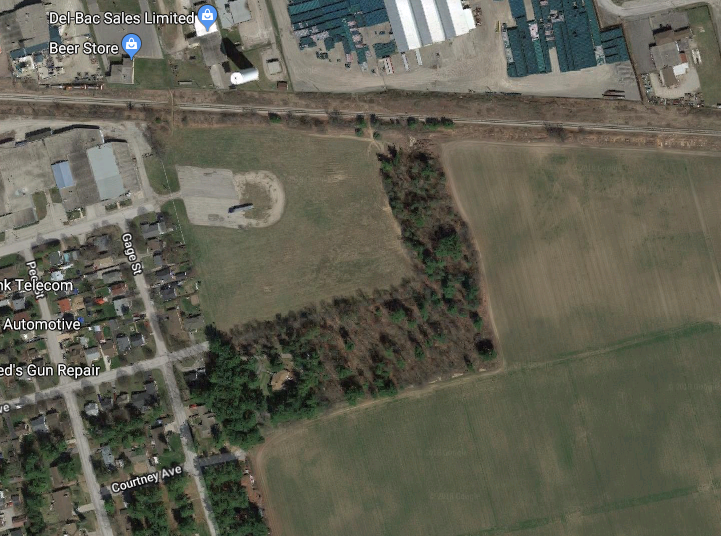
Google Maps finds our woods, untouched 60 years later!

Over to the west we could see the Barrel Restaurant, Wills Motors, Smith Lumber and the factories on the highway.  To the northwest, there was Beselaere’s Fuels, and the German Hall.  Just north of us was the CNR track, and if we timed it right, we could see the locomotives lumbering down the track towards Simcoe.  Beyond was the tobacco exchange and then the high school. To the northeast was the dump, and way off to the east was the fertilizer factory. Twisting around the tree and facing south was a vista of treetops and woods, edging up to a tobacco field, already green with young plants dotting the endless rows.

I think now about the tree as our finest moment.  It invited us to climb, and regardless of our real position, we felt entirely safe and secure, high above the ground, surrounded by a nest of soft green needles on a web of black branches.  There we hoisted up more boards and nails, and made a platform big enough for 2 or 3 kids, happy to be out of sight, but able to see for miles.

Google provides a beautiful view of the pine woods today.  Miraculously, it is still there, somehow protected from development.  I wonder if kids still climb trees, and I wonder, is ours still there?

Thanks for reading!  Please share this with your tree-climbing friends!

Standard
childhood, Culture, Education, Wildlife

Big Creek

For the past couple of weeks I have been enchanted by a Facebook site whose entire focus is looking back at my old hometown, Delhi Ontario.

Young fishers on the bank, waiting hopefully for that first tug.

It has been a treat, viewing grade school pictures and tagging names to people I haven’t seen in 60 years.  There have been renewed conversations with these long lost friends.  While the site’s members are asking others to remember their shared experiences, it has also rekindled some memories of my own that I clearly had forgotten.   Running central through these experiences is Big Creek.

The creek drains west Norfolk, like a vast willowy exotic plant.

Big Creek is about 40 miles long from its smallest tributary running into Windham township, at the northern border of Norfolk County. As it heads south towards Lake Erie it gains volume and girth, first with the addition of Brondy Creek north of town, then Cranberry Creek, from the west, in Middleton, then Trout Creek and Silver Creek come from the east, in Charlotteville.  Further south it expands as Venison Creek flows in from the west of Walsingham.

Two youngsters head into the edge of the Carolynian forest.

It drains west Norfolk through a valleyed web of locally named brooks, streams, rivulets, freshets and runs that on a map looks like the willowy profile of a vast, exotic plant.  Through its valleys grow a robust Carolinian forest, distinguished by towering beech, hickory, walnut, sassafras, butternut and tulip trees.  The woods are alive with rich scents and sounds, modified by the steady gurgle of flowing water.  Underfoot we find marsh marigolds and vast spreads of skunk cabbage.

Along every bank there is a path, both sides, worn deep by the feet of literally centuries of generations of natives, settlers, small animals and small people.  They are there to walk, fish, camp, trap, hunt, swim, wade and stare deep into  the current’s constant pushing of sand and silt towards the lake.

Green pools hide the fish on a sunny afternoon.

Fighting the flow are small fish– trout: brook, brown, and occasional suckers which vacuum the river bed.  They are scurrying against the riffles to sink deep into the green pools under fallen trees and trapped logs.  Every elbow in the river is the occasional site of fishers dangling a monofilament line over the pool, waiting for a tug.

The creek offered new events at every turn, especially after the spring floods.

As a boy, no more than 8 or 9, I accepted the waterway as open territory for discovery, as did all of my friends.  Big Creek was as accessible as the school yard and main street.  But more inviting, as it constantly delivered new events at every turn.

At the north end of town, a half mile pedal, racing down swimming pool road, a driveway took us into Deerlick, a rustic retreat.  Some church owned it, and sent their meditating members off to think, and maybe relax.  We wheeled in there on our bikes, and stopping in the woods, a few hundred yards, dumped our clothes, and jumped into a clear, shallow stream that flowed into the mother creek.

Icy water, 12 inches deep!  We hung in long enough to claim a short rebellion against our parents’ warnings to stay out of trouble.  Somewhere back towards the road we could hear the occasional rumble of cars over a steel bailey bridge paved with heavy, loose, oak timbers, and a pounding reminder that civilization wasn’t too far off.

The old swimming hole: fun, sand and noisy with shouts and splashes at a bend in the creek.

The little stream poured into a larger current, and a few minutes back to Delhi, past the horseshoe, which was an abandoned oxbow in the creek, and one could see the old swimming hole.  A sturdy wire bridge was suspended over the creek to reach the other side.

This was a service club’s effort to offer some fun for the youth of Delhi.  At a gentle bend in the creek, the water deepens as it wraps around a sandy beach, grossly out of place in the woods.  Were it not for Norfolk’s sandy composition, there would be no beach.  Nevertheless, there is a place to suntan, a change house, and every weekend the screams and chatters of a host of jubilant kids spread across the creek waters as they drift slowly by.

The dark water streamed by keeping us cool and moving.

The swimming hole is just that.  Shallow on the beach side, the creek bed drops off immediately into a dark, murky green pool.  The big kids jump off a diving board into the dark waters.  On the beach side, I walk out to the end of a small dock and jump in, expecting to hit bottom, waist deep.  There is no bottom, to my surprise, and am shocked enough to inhale two lungs full of water.  My last memory is a stream of yellow bubbles rising before my eyes.

I woke up in the change house some time later.  Luckily, I had been missed by a lifeguard who jumped in and pulled me out.  She must have been terrified as they pumped me and shook me in the change house.  I awoke under the eyes of a group of concerned kids.  I had a horrific case of the hiccups which lasted all the way home as my brother escorted me.  When I met my parents, I said I had taken a mouthful.  A couple years ago, I sent that lifeguard a note with a picture of my family and grand kids.  I pointed out they were her doing, and thanks.

The site was eventually downgraded to a camp for out-of-work transient tobacco workers, and the service club built a new pool up by the rink. Today the area is entirely unrecognizable, and the bridge is gone.

Skunk cabbage: big, voluptuous and odiferous.

The creek flows south, just behind a cliff.  At the top is Talbot Street, and that is the address of the Anglican church, St. Albans, then St Casimir’s the Lithuanian church, and St John Brebuf school.  It is one of the oldest streets in town, and is named after John Talbot who mapped southwestern Ontario, earning himself a throughway called the Talbot Road.  More currently it is Highway 3.

Highway 3 bridge on the west side. Upstream we played hockey in the winter.

Just before Big Creek curves under the bridge, there is a slow spot.  In the winter the ice forms easily, and we often went down to play hockey on the grey skin of ice in the winters.  One had to be careful as open water drifted close by, and our mutual responsibility was to stop the puck from sliding into the icy black that bubbled and melted the edges of our rink.

After the bridge, the creek has a run of a couple hundred yards in shallow waters before it hits Quances Dam.  There are stacks of rough cut wood there, six feet high, air-curing.  I have climbed on those boards and waited for hours to spot the groundhogs coming out on a spring day to catch some noon sun.  The brownie camera I hold takes vague, grey pictures, but they are gold to me, better than Disney, actually.

Big Creek jams up at the dam.  The dam is old, originally placed there in 1830, and powered the lumber mill and feed mill owned by the Quances, one of Delhi’s earlier families.

Quance’s Dam: a concrete pillbox was our watching station for fish jumping.

In my younger years there, I never sensed that lumber was a business. The dam was for our entertainment entirely.  Water cascaded over the concrete, separated by a ten-foot-high pill box between two spillways.  We would jump into the pillbox to stare up into the lip of the dam that was under a steel bailey bridge.  We looked for whatever was coming down, and occasionally for some hardy fish that thought they could jump up into the water above.

Quance’s Mill, creekside.

In the pool below there were small retention ponds built out of stones put there by fishers who wanted to keep their catch alive but captive, until they went home.  One day we played in the pond looking for crayfish and found a nest of lamprey eel.  They were just babies, about six inches long, flashing silver in our hands as we grabbed for them.  They would grow eventually to attach themselves to the game fish in the stream, and in Lake Erie.  Evil little slitherers.

Around the corner, there once was a hanging bridge that crossed the creek.  I never saw it, but it was a convenience for folks who didn’t want to walk around Western Avenue to get to the dam, which was a rendezvous for many purposes.  Farther down, the creek flows under the road, and past Stapleton’s stone welding and metal fabricating shop that is a landmark. When we built a go-kart, he built us an axle for the wheels.

Perhaps the loneliest, most foreboding building in town, our sewage plant.

Further south, the pungent odor of sulphur fouls the air.  We have frequently walked down the dirt road to the town’s sewage plant.  There, we would pass by a one-story cinder block building, lonely, unattractive and foreboding.  Beside it, a fenced off water distribution system carouseled around a 60-foot-wide circle, dripping treated water into a bed of rocks.  There was an intrepid group of truants who climbed the fence and rode the pipes one afternoon, reportedly.  There was mention of a police visit.  It was during school hours, so we missed that.  Nevertheless, we were in awe of their bravado.

Beside the sewage plant springs a bubbling fountain of sulphur water.  It boils out of the ground, exuding its trademark stench, and leaves a milky film over the rocks as it flows down to the creek.  Like a saviour, Big Creek takes both the sulphur water and the treated sewage water away, cleansing the town of its trespasses.

A couple more bends in the creek and it curves past a reforested pine woods.  There were many Saturdays when we sat in those woods, loaded up with a giant bottle of Coca Cola and a pack of cigarettes and solved the problems of our world, mostly school, teachers, parents and girls.  The meandering creek took our troubles away with it.

The new Lehman’s Dam, equipped with fish ladder forms a magnificent small lake extending to highway 3.

Just before it hits another bridge, the waters are joined by the North branch as it is called locally, and Lehman’s dam traps a small lake of water further upstream.  If one ventures up North creek, it eventually cuts under highway 3.  Just around the corner we camped up there for a night in a small canvas wall tent.  Fire, food, smokes, our friendly companion dog for company, and the calls of mourning doves made for a pleasant vacation in the woods.  We were 11 years old, and living the good life.

The early Grand Trunk steam engines blew their whistle on the trestle coming into town.

Back down at Big Creek proper, it travels south under the railway trestle.  Grand Trunk used to run trains over it, and then the CNR.  The trestle still stands today, black and rusted, out of use, and it is a monument to the energy and will of a bygone business generation.   50-year-old trees are growing among its foundations.  When I was very young that same rail line had steam engines pounding over the rails, and I can remember their flute-like whistles, nothing like today’s diesels with their air horns.

The trestle today, unused but picturesque. Credit: Randy Goudeseune.

This patch of creek is a highway for foot traffic.  We often came here, walking down from William street, over the tracks, and into the woods.  On any given Saturday this was a destination hike, punctuated by a campfire, and a sizzling frying pan of hamburger, potatoes and onions.

There was a particular elbow that we would camp on, where the creek rushed by in six inches of rapids.  Wandering out into the water, I fetched a peculiar rock that stuck out among the froth.  Picking it up, it looked like a brick, but very smooth and scarred with shallow scallops like someone had scraped the sides with a spoon.  It was block of flint.

Not knowing this, but still intrigued, I hefted the brick into my knapsack and took it home.  There, I chipped away at it with my dad’s hammer, and amid the sparks, broke off sharp thin wafers of flint.  Before long, I was failing,  but enjoying the attempts at making flint arrowheads.  Just another gift from the creek.  I still have the rock today.

Dicks Hill bridge under horse and carriage.

On Saturdays we went for bike rides beyond the tobacco factory.  The gravel road led to the long sloping Dick’s Hill intersected again by Big Creek.  The steel bridge there was a bailey construction with rumbling timbers that shook with every car that crossed over.  From that bridge you could fish, spit, drop stones and apples to the smoothly passing water below.  The town council closed that bridge in the 70s, and cut off the neighbours to the west of the creek.

The bridge in 1984.

A couple hundred yards in, at another elbow we camped in a grassy clearing over a 24th of May weekend: wall tent, food, fire and our same faithful dog.  It was a delicious, sunny warm afternoon followed by a quiet star-lit night.  Totally inspired, we rigged up a large tripod, and boiled a 5-gallon drum full of water and took showers, then turned in to bed, wet heads on a mattress of pine bows.  The dog wouldn’t enter the tent and slept outside, no doubt looking for varmints.  Next morning we woke under a heavy chill, with horrendous, thick, throaty coughs.  Outside, the dog slept, covered in a heavy coat of frost.

Croton Dam generated 60-cycle hydro to Quance’s Mill. It couldn’t hold the water back in 1937.

A couple miles down from Dicks Hill are the remains of Croton Dam.  We got there by gravel road and bike.  This structure was built over 50 years earlier in 1907, and blew out in 1937.  By the time we discovered Croton it had a young forest of trees growing out of its foundations.  The portions of the dam still standing are worthy of climbing and walking, all the time staring up the steep hill on the other side of the creek.  Looking upstream, it’s easy, and stunning to visualize what the mill pond used to look like, stretching back perhaps half a mile.  Croton provided Quances Mill with 60 cycle hydro, long before Ontario Hydro.

Our furthest bike pursuit of Big Creek was Lynedoch.  This little hamlet is poised in a valley around the bridge over the creek.  Just south is an orderly grove of walnut trees planted decades before: probably thirty or forty 50-foot trees in neat rows across the flats.

A few tools from the fields south of Lynedoch.

As the creek wanders past Lynedoch to another elbow, you can still walk up to the field above where there are arrow heads and tools left behind by an Indian village centuries ago.  Just another find by the water’s edge if you care to look.

Having unloaded my memories of Big Creek, it comes to mind just how lucky we were as kids to live in an unfettered, free-range world, to wander for miles, away from home.  By today’s urban standards, our parents would all be in court facing child abandonment charges.  Thanks to their trust, and maybe to their post-war sense of relief, we were launched optimistically to explore and learn, full time.

All the while, Big Creek was our playground and classroom.

Thanks for hanging in there and getting this far.  This was a long essay, but so is the creek.  Please like and share this one!  Thanks also to John Waite, Randy Goudeseune , James Bertling, and Alice DeGeyter whose Facebook posts supplied some of the images.

Standard