direct mail, Marketing

Mayo Clinic: Right On The Money

Smart, effective direct mail design comes from experience, and some times a lot of guts.    The Mayo Clinic Health Letter subscription kit is a classic example.   This masterpiece came to my mail box last month, and while the design may shake you, the numbers will knock you out.   Here’s why:

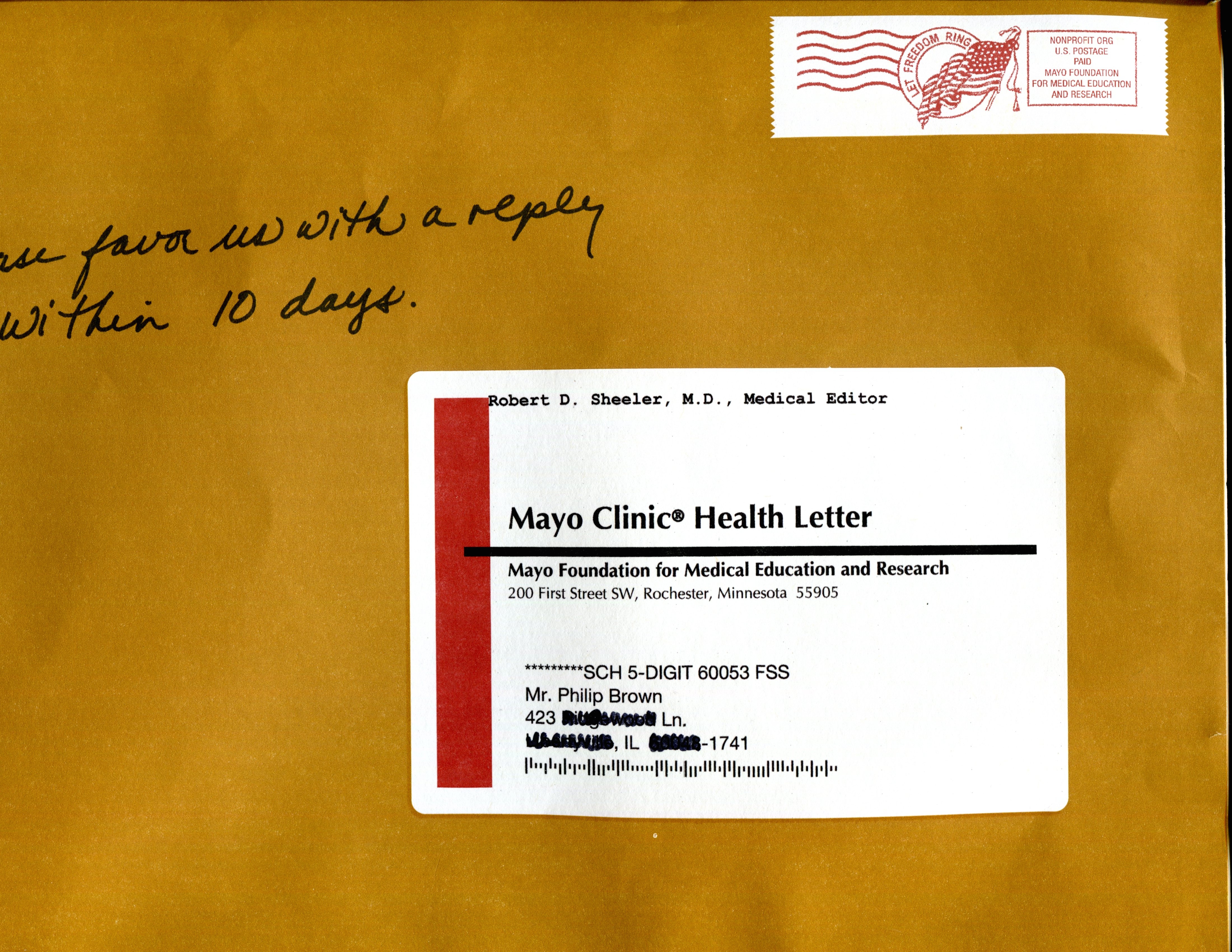
A Whopping Big Envelope

This one measures 10 x 14 inches.  Really??  Yes.   Why send a little #9 package when
Mayo OE

The envelope becomes the carrier for all the other letters delivered that day.

you can bury the mail carrier with a doormat?   To reinforce the mailing’s impact, the paper stock is nearly cardboard–you could chip a tooth on it–and it’s printed to look like kraft paper.

Creating the kraft look is just the beginning though. The address label is not real, but it is varnished to look like it, and as a special touch, this mass-produced kit has a postage meter label, except–that’s printed too.  The overall presentation says to the reader: “you need to open this now”.

My immediate reaction is:

1.   The Mayo accountants are taking blood pressure tests on both arms in the cafeteria, jabbing at their adding machines, looking for answers.

2.   USPS Postmaster Donahoe is toting up his winnings on this over-sized Flat mail piece.

Long On Words

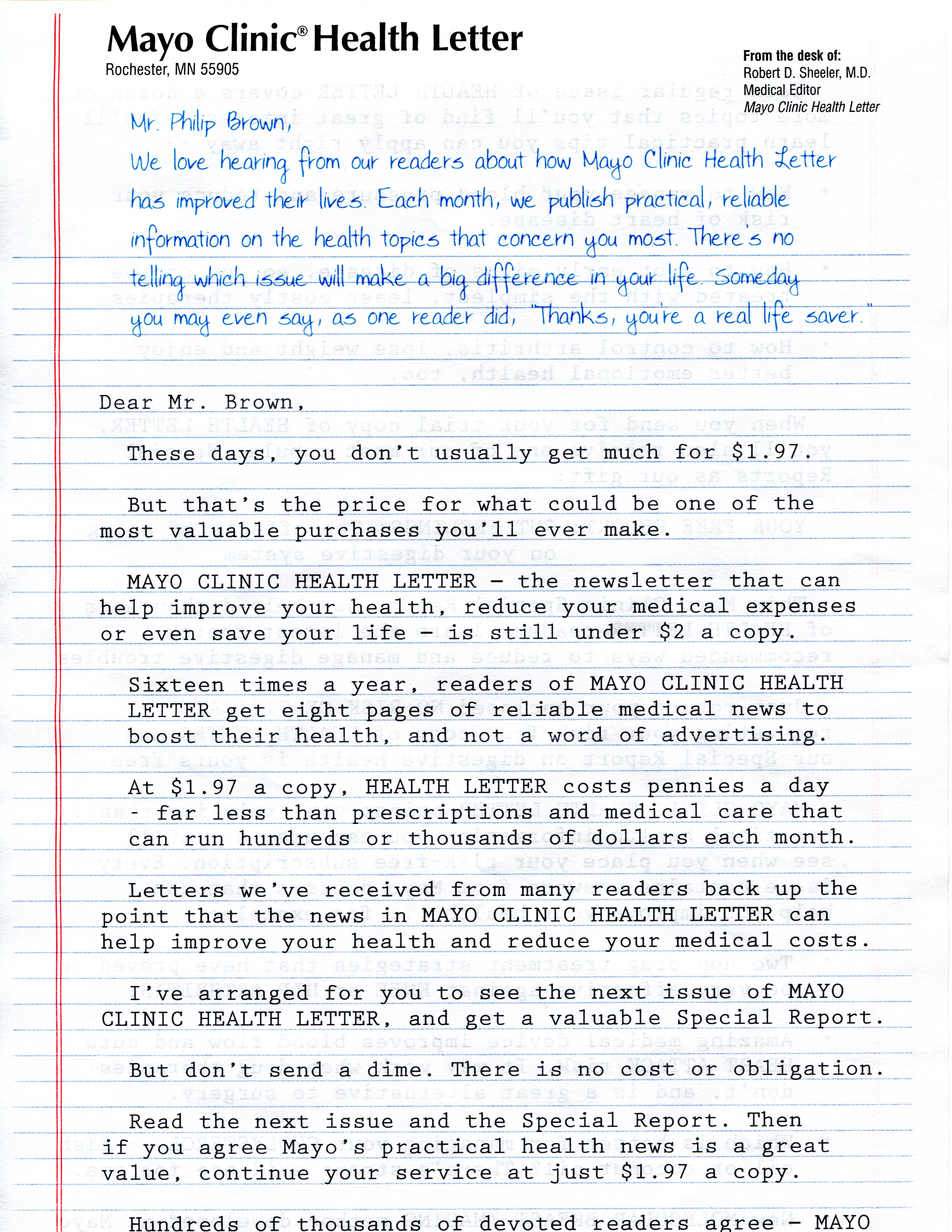
The extravagance continues inside.   I ripped open the zipper on the envelope to pull out the letter. 8 pages!   That’s four, 8-1/2 by 12-inch
The letter: a lifetime of Tweets.

The letter: a lifetime of Tweets.

sheets, printed front and back.  For you attention-deficient followers, that’s about 198 Tweets.   The CFO is banging out numbers to see how much waste was incurred by using 16-point type instead of 10-point.    Not to mention typing the letter on lined pages!

Nobody reads letters.  Well just about nobody.  Right?

Canary Yellow Reply Envelope

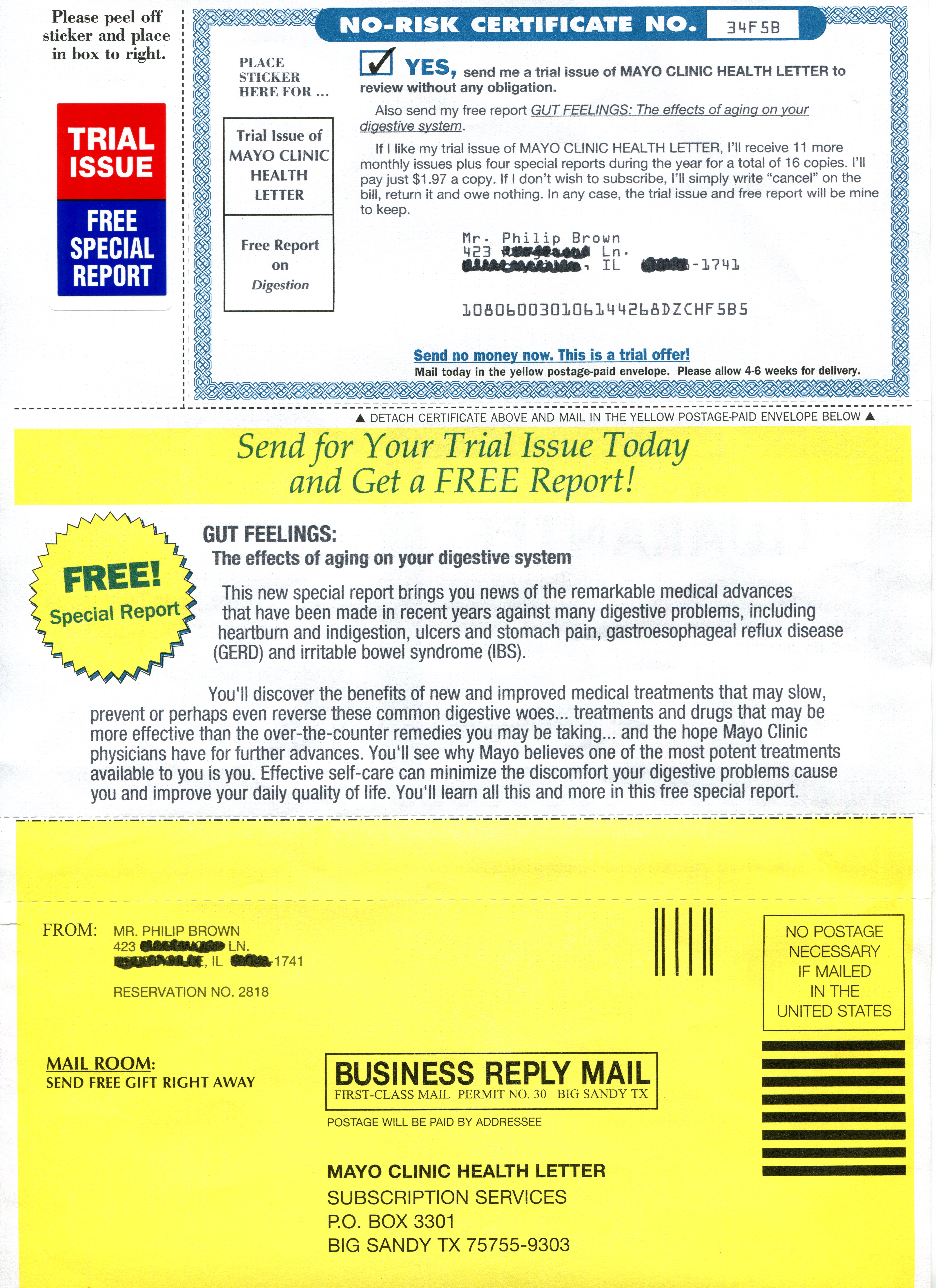
Subtlety doesn’t work in direct mail, even for Mayo.   We can’t just hide stuff in white reply envelopes when we can tell the world we probably have an urgent itch in a better-left-unmentionable place.   So there it is– a large bangtail order form I send back in this shout-it-out yellow BRE.
Yellow BREs never get mislaid.

Yellow BREs never get mislaid. And they get action, too.
 

Stickers-just to keep it tactile.

Stickers-just to keep it tactile.

Stickers!

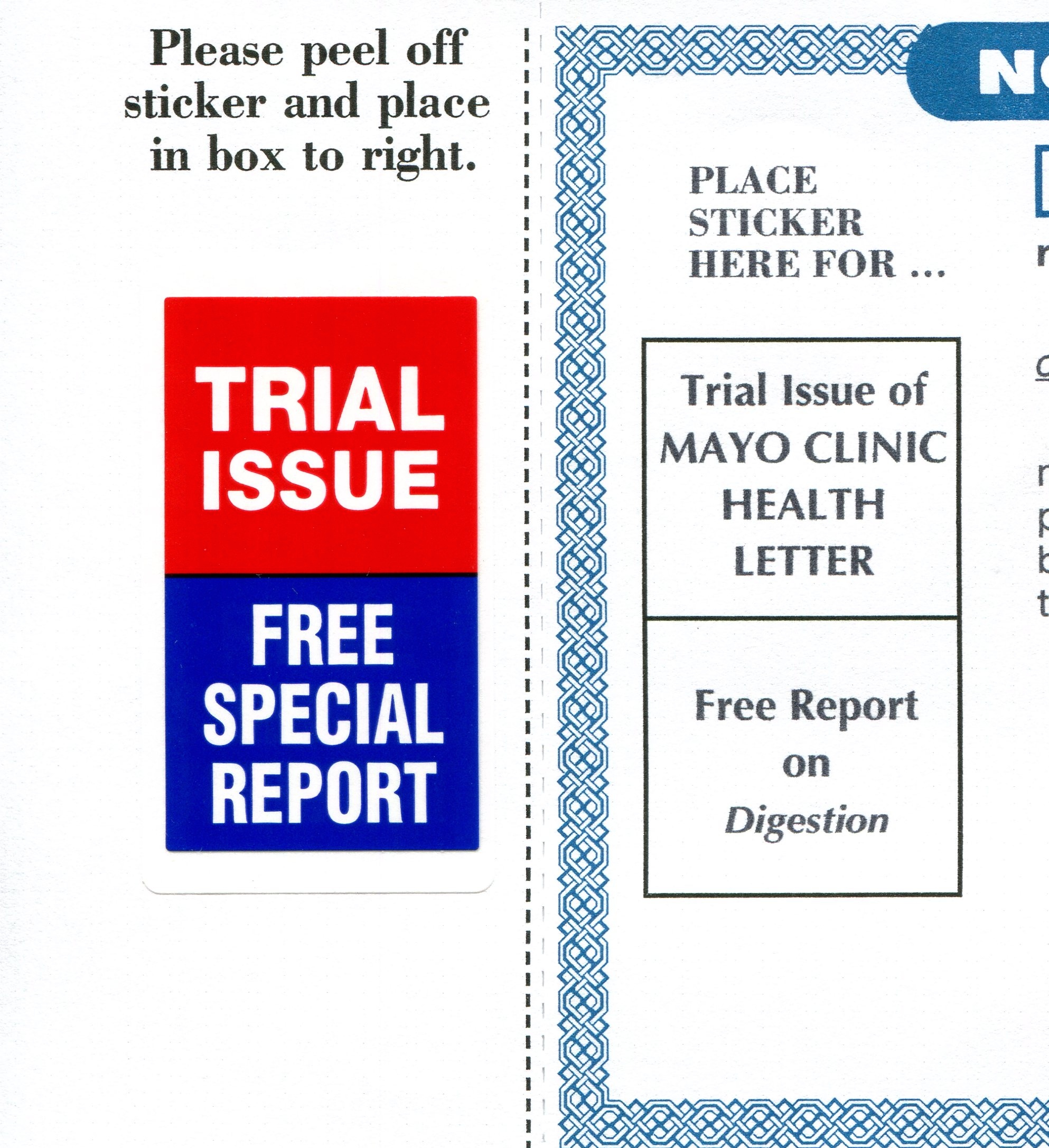
The ad agency downtown would never place a sticky label in a mail piece.   How corny.   Yet Mayo does this prominently and proudly, knowing that we can’t resist the temptation.  Does anyone really need to peel a “trial issue” label and stick it on the order form?   Of course we do.  There’s a sense of decisiveness and approval connected to the action, just like updating your car plate ever year.

It’s All About Me

What is irritatingly attractive is Mayo’s continual pandering to my ego.   They have hijacked my name.  Of course, they have it on the envelope, but it’s also on the letter.   And at the top of the letter is a handwritten note addressed to me.   Wow!
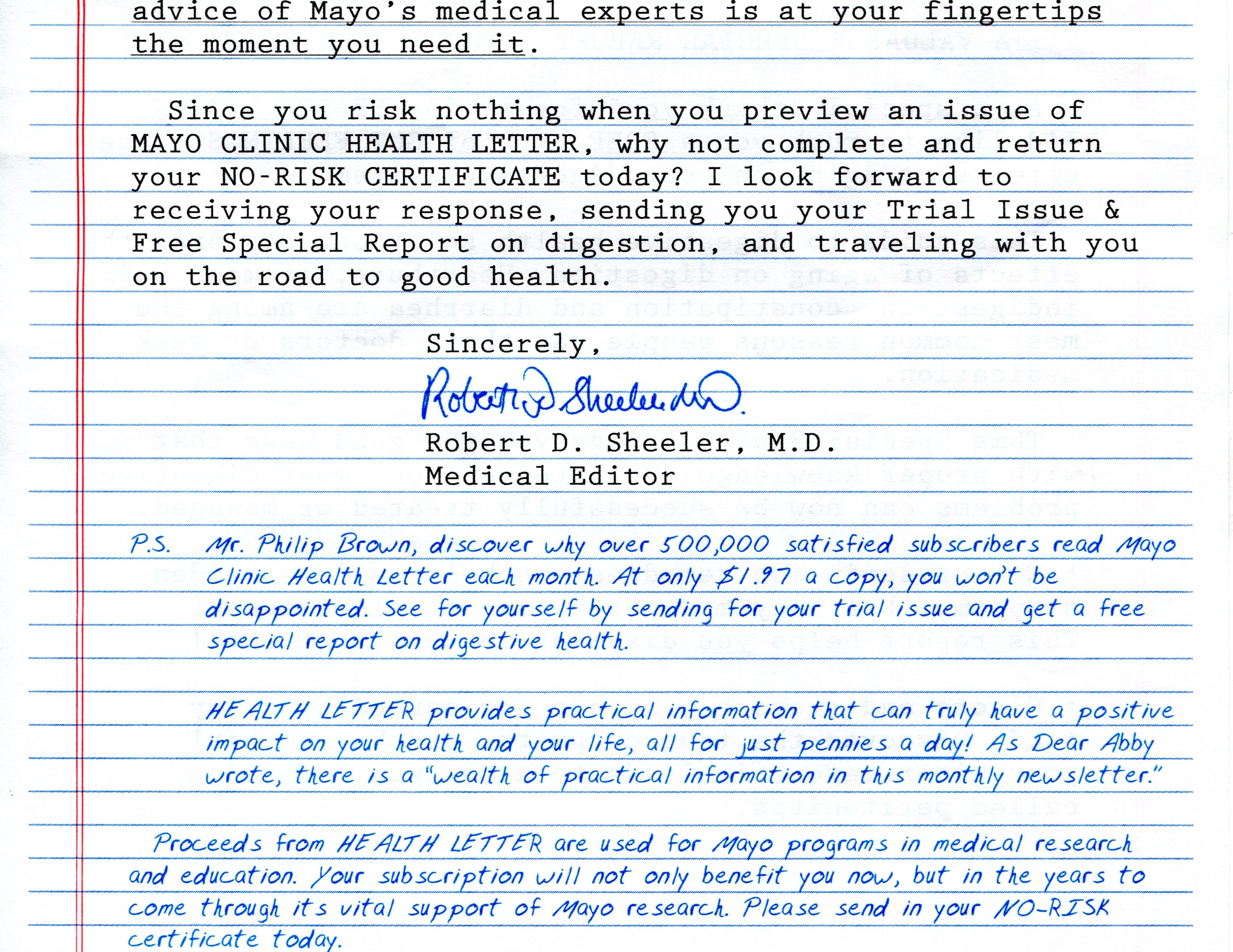
The P.S.--after 8 pages, there's still more to say!

The P.S.–even after 8 pages, there’s still more to say!

Again on page 8, up to which, yes, I read, there’s a P.S.  Also written to me.

As expected, the order form has my name, but they slapped it on the flaming yellow BRE just for good measure.

The Story Continues

To dispel any last doubts about the Mayo brothers, they have also included a brochure on the Mayo Clinic just in case I had been hiding in a duck blind too long.   Plus a Post-It note stuck onto the letter quoting readers who bragged about how the newsletter fixed their swollen joints, their riled digestion and unbending digits.

The family story fills in the cracks.

The family story fills in the cracks.

It’s About Making The Numbers

Any cognoscente in the advertising world would roll their eyes at this piece and grab another canapé off the awards dinner banquet table.   Mayo is not going to win a trophy any time soon.

That is because they are too busy depositing checks at the bank.    This package works because it takes enormous advantage of our curiosity.   If you are in the right demographic, you can’t ignore it.

Here are the numbers as I see them.  I have not confirmed with Mayo, but then again, they didn’t ask me either.

It's going to run into money!

It’s going to run into money!

List and production costs have to be at least $350/m. Postage for this Flat, $200/m.   This could be a 55-cent package, all-in.   By the way, while you thought the accountants might have been turning into jelly at that number, it is more likely they are quietly smiling while they top up the USPS Caps account.

Now, response rates.   1% is pretty much the norm, but this gargantuan kit, which includes a gift, could pull a 2% response, which again, I have not confirmed with Mayo.   At 2%, a 55-cent kit delivers a $27.50 acquisition cost. ($0.55/2% = $27.50).  Large, but actually about half of what any credit card sub would cost.   In any event, they wouldn’t do it if it didn’t work.

The Final Number

Medicine aside, Mayo still needs to return a positive cash flow, a.k.a. profit.   An annual subscription to this newsletter is basically $32.00.  Assuming a contribution of $8.00 per sub, Mayo needs to keep the average reader for 3-1/2 years to pay back the $27.50 acquisition cost.

But maybe not.  Because while these 50-year to 80-year-olds, approximately 500,000 of them, are perusing their newsletter, they are also biting on additional offers for Mayo’s entire library of publications. Enough to fill all the waiting rooms in Fort Myers, Miami and Scottsdale for years.

Even if the Mayo Clinic Health Letter program only breaks even, it is the gateway to a flood of peripheral revenues.

Mastering a standout program like the Mayo Clinic Health Letter didn’t happen over night.   These savvy marketers have tested into the present format.   In fact, it could be a test too.

But the numbers are still rewarding, if formidable.  And that’s where the guts come in.


Thanks for reading along on this.  Please let me know you liked it.  And share, too!


Standard
direct mail, Marketing, Media

Tempting The Fates: 21 Ways To Miss A Mail Date

Just taking the time to share a thought or two while rushing to the airport.   My apologies to all my faithful readers who wonder why they have to scan this post.   But I was a direct mail guy, and the tangled webs of direct mail production may well be a metaphor for life in general.

Calendar-date-circledFor mailers, timelines are tight, the post office has rules, and nobody sees your see emergency as their emergency.   The laws of physics trump all wishes to the contrary. This catechism of faux pas are all reminders of actual events.


How To Miss The Mail Date And Likely Disappear Into A Black Hole

1.   Start late.   The corollary: take up the wacky idea by your boss to be in the mail by Easter.

2.   Assume that three weeks is 21 days.   It is actually 15.

3.   Skip the research: the offer is so powerful only a knucklehead could goof it up.

4.   Pull in the Creative folks with a “team-building” challenge: just give them the offer and let them work out the rest.

5.   Demand copy, comps and layout before you settle on the budget.

6.   Demonstrate your economic intuition: estimate the numbers, response, cost, sales.  Don’t be scared by the unknowns; you are a visionary risk taker.   Guess!

7.    Lean on your list provider.   Maintain project secrecy.   Ask for competitor ideas.

8.    Once Creative gives you format design, get your Printer to price it.   Ask for competitor ideas.

designs-envelope-clean

9.    New Printer specs!  Get Creative to revamp copy.   Be firm with the deadline.  No dilly dallying, this is a mega opportunity.

10.   Flex your muscles. Go out to bid on print anyway.  Don’t tip your hand to the competition. Quantities should be secret.  Vague drop date.

11.    Don’t bug your lettershop with production schedule questions.

12.   A Power day for you!   Bless the newly found low-bid printer with their first order.   Advise impending drop date.  Quantities may go up.   Or down.

messy-desk

13.   Delay approving final art.   Experience has taught you that something could change later!

14.   You are a team player.  After rushing  final art approval, pass to Legal to keep them in the loop. (Noseyparkers!)

15.   Marketing brainstorm: boss adds a new version for a paper test.  No problem!

16.   Hold off approving printer’s proofs until Legal edits are changed on press.

17.    Advise the lettershop: a split run over two weeks.   Re-run list for goofy, inflexible postal demands.

18.    Ask your list house for more names.   Your boss wants to add his parents to the seed list.  No problem!

19.    Play hardball: hold off postage deposits with the USPS.

20.   Get proactive: advise your inbound phone center of the impending promotion.   Set up a separate meeting with the website folks.

21.    Share your wisdom with the new trainee: test the phone number.    When a “telephone dating service” answers, ask if you may borrow their number while your promotion runs.

I am sure that none of these instances have ever occurred in your career.  Lucky you!

I have to go now as there is an unaccountably stupid, long, glacially slow line-up in airport security today.

Be sociable! Share!

Standard
direct mail, Marketing

Are You For Real?

SantaLetterText-776x1024“You have to write letters to get them,” said my 5th grade teacher as she drilled us on formatting.    What a drag.    At the uncomfortable age of 10 we had no one to write, let alone anything to say.

So it’s ironic that over half a century later I exit from a successful business which is all about writing good letters.

In direct mail, the letter is the backbone of building a personal relationship.  Avid consumers are enchanted by letters from their favorite gardener, doctor, hunter, dress maker, shopper, financier, teacher, traveller and coin buff  frothing over the latest gadget, find, or technique.

It’s no wonder direct mail grew astronomically through the back half of last century and into this one.    We were guaranteed to receive a letter at least once or twice a week with important news from somebody we knew, and who knew us, from far away, like Terre Haute, Fort Wayne, Franklin Center, Troy, West Babylon or Battle Creek.

But the bloom pales, if it doesn’t fall right off the rose if we discover that the writer doesn’t exist.    I was stunned when I learned that Readers Digest’s Carolyn Davis was just a beautification project — a makeover from “CD” for the Credit Department.

Betty Crocker in the Witness Protection Program

Betty Crocker in the Witness Protection Program

Carolyn was just my first commercial heartbreak.    I only recently learned that Betty Crocker, the lady who guided my mother through countless birthday cakes and blueberry muffins is a complete phony.   Never existed.    Isn’t even an anagram for an NSA operative named Cory Berckett… clandestinely stealing philo recipes while posing as a dishwasher.

Martha Logan modeled on Beth Bailey McLean

Martha Logan modeled on Beth Bailey McLean

The charade continues.   Martha Logan, who managed the Swift meat kitchen for a generation never existed, though at least she was a pen name for the real Beth Bailey McLean.

Ms. McLean was born in Superior Wisconsin in 1892 and knew her bacon.   But Swift’s ad agency apparently wasn’t satisfied with her creds.  They invented their own version of Martha Logan to broadcast from the Swift radio studios on Chicago’s WLS.

The Radio Martha Logan

The Radio Martha Logan

This new Martha had a photo portrait, and was reared and educated in Illinois, homeland of a long tradition of phonies.

Still, there’s one more fictional character, Beatrice Cooke.

Beatrice Cooke, queen of cream.

Beatrice Cooke, queen of cream.

She was the majordomo for Beatrice Foods, formerly the Beatrice Creamery Company, founded in 1894 in no, don’t say it, Beatrice, Nebraska.  That’s right, there never was a whiff of a Beatrice in that company unless she was lactating in a stable outside.   Adding the final insult, Beatrice moved to Iowa in 1905.

Which brings me to a quandary today.   On impulse, I made a donation to Wikipedia.   Totally guilt-ridden, I felt better after giving them a measly $10.    In response, I received a Thank You letter from Sue Gardner, executive director of Wikimedia Foundation.

Well, this wasn’t a Thank You letter.   It was a THANK YOU letter.  555 words, 14 paragraphs, 49 lines and 3337 keystrokes.   I winced in embarrassment.   Imagine dropping a few pennies into the Salvation Army bucket, and the bell ringer chases you down the crowded street crying thanks, before tackling you around the knees and blubbering all over your $900 cashmere wool coat.

scroogeMs. Gardner saw my paltry $10 funding the sum total of all world knowledge sought by countless individuals, and she began to describe the dire circumstances of each of them.

She concluded: “On behalf of the Wikimedia Foundation and the half-a-billion other Wikipedia readers around the world: thank you.”   

This was a “loaves and fishes” moment.   I did not guess my $10 would go that far.

Truly though, her letter did its job.   I have to return to Wikipedia, and I will no doubt double down on my charity.

But now I wonder– is she really there?

https://donate.wikimedia.org

Standard
Economics

A Nickel For Your Thoughts

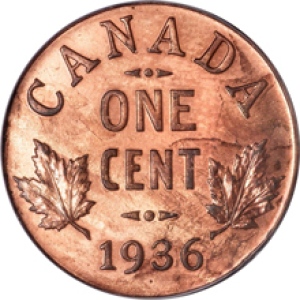
penny-1936-7877445Our neighbor nation to the north– those hardy, conscientious folks who are the first line of defense against the arctic chill lost a battle this past spring.    The Canadian penny was removed from the endangered species list, and officially extinguished, i.e.. it is extinct.

The argument against its survival was that it cost more than it was worth.  Which is a stunning confession to be made by any government official anywhere.

But there you have it.   The upside is that every child in the nation will now learn the important arithmetic of rounding up and down to the nearest five cents.   There is the clever, political subtlety that the Canadian government did not eliminate “cents”.  It is still legal to use a cent: talk about it, write it, or include it in important bank interest statements.   Retailers can still charge you cents, but you will pay according to nickels.  The penny is the ghost on the sales counter that haunts all transactions.   Everyone senses its presence, but it can’t be seen.

The move has rocked the net worth of the country.   According to the Royal Canadian Mint, there are 35 billion pennies at large in Canada.    About $10 per person.    Turns out there are nearly 19,000 tons of pennies stashed away in cans, desk drawers, pants pockets and chesterfields which have been devalued by a factor of two.   You thought you had a jar of $12 bucks in pennies?  Nonsense.   You have enough copper and zinc for a Venti Frappuccino.  

Where this new found economy takes us, is to another government agency in on the conspiracy: the post office.    Canada Post has announced its new plan to modernize and overhaul the postal system.   This includes raising the price of a single first class stamp to $1.00.    A buck!  Unless you purchase stamps in bulk, when you will only have to pay 85-cents.    See how that works?   No pennies!!

lady letterbox

Compounding this elaborate pricing strategy is the plan to curtail household delivery.   Before long, Canada’s mail will be delivered to a community box at the end of your street.   This will precipitate two additional behaviors.  First, neighbors will have to speak to each other when they visit the box.  Second, they can remove the riveted, burnished steel “No Junk Mail” signs from their doorsteps.

junk.letterbox

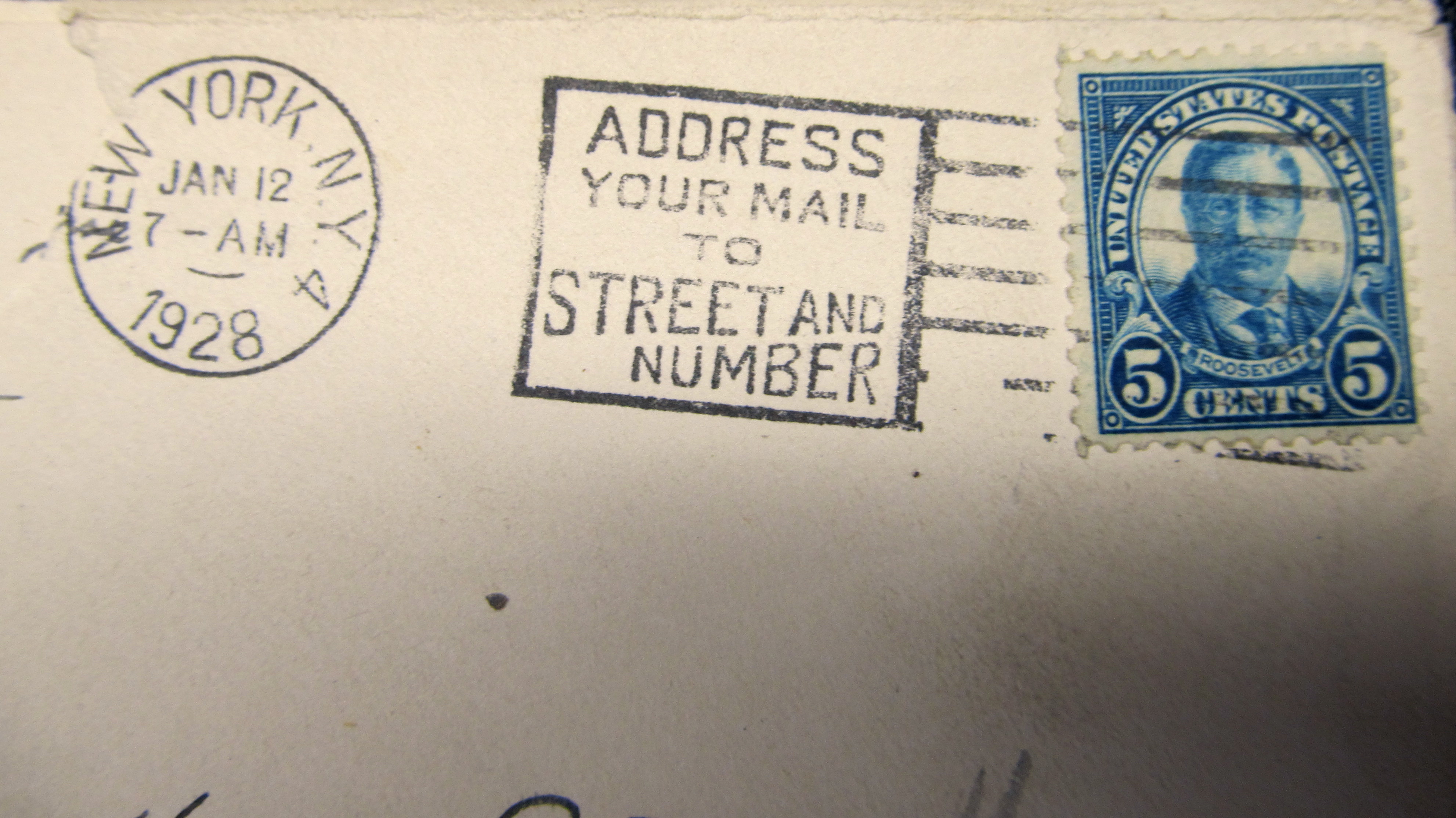
Truthfully, the United States Postal Service has a similar history of thriftiness.   They too decided that the customer should share in the work of delivering the mail.   In 1928 they thrust the responsibility of addressing onto the back of the writer!   No longer was it acceptable to merely place your aunt’s name on the envelope.   The USPS unilaterally demanded a street address and number.   Another typical example of  heavy-handed government.  Added to that insult was the price of a stamp: 3 cents.

IMG_6200And if you couldn’t find the pennies, you had to round up to a nickel.

Standard
direct mail, Marketing

DAV Makes The Numbers

I just received a mailing from the Disabled American Veterans, whose organization I frequently support.

DAV's Mailing to Past Donors

DAV’s Mailing to Past Donors

The mailing piece is illustrative of the investment DAV makes to raise money for their many services provided to America’s injured war vets.  If you have never received a DAV piece, you have not seen the abundance of gift stuff frequently mailed to potential as well as loyal donors: greeting card sets, bookmarks, calendars, and beautifully crafted address labels.   There’s nothing “junky” about a DAV appeal letter.

IMG_6191

46 cents postage, courtesy of DAV

What struck me about this recent letter was the inclusion of a reply envelope which was already paid with 46-cents of stamps.

Claiming austerity, most fundraisers ask you to provide your own postage.  Instead, DAV pays the bill.   Does it seem contradictory to you?   Or does it make perfect sense?   My guess is that providing the postage is a tactic to increase response, not necessarily the gift amount.   In other words, if a donor normally gives $10, the prepaid return postage tactic doesn’t get more dollars per donor, but it gets more donors: those folks who won’t allow 46 cents to go to waste.  And it’s unlikely many stamps get steamed off.

But here is where it gets interesting: what direct mail manager is willing to put their job on the line by suggesting they add 46 cents to the cost of every fundraising letter they send out the door.   “Are you nuts, or just plain stupid??” suggests their boss, popping TUMS once a minute.

“Riskophilic” may be the proper term.    Daring.  Or canny.  A little bit of math may reveal the truth.

You can look at DAV’s 2012 annual report which shows some numbers worth bragging about.  They earned $97 million in direct mail donations at a cost of $32 million.   Basically, for every dollar spent in direct mail they received 3 dollars in return.   The 3:1 ratio is pretty consistent every year, and by the way, their fundraising cost is only 19% of all their expenses, which is quite acceptable.

Anyway.  The letter I received had 5 Christmas cards and envelopes, a disclosure sheet, a letter, outer envelope and reply envelope.   With outgoing postage, I figure the kit was worth 75 cents in the mail.  $750/m.    Add an additional 46 cents, and you are at $1.21 for one piece of mail.   Multiply that by 100,000 and you have college tuition at Northwestern.

However: increase your cost by 60% and you need to increase revenues by 60%, to keep that 3:1 ratio.   Sounds challenging?   Just about miraculous is how I would define it.   You don’t get swings like that.  But the beauty of direct mail is that you can test it both ways, with and without the extra stamps.   Clearly, the test proved  positive, in a good way, so the DAV is keeping the USPS afloat while making money for its vets.

There’s more at work though.   That crazy manager also has another equation in his or her head.   It answers the question: how much revenue with every piece mailed?   If each piece costs $1.21, then each piece must earn $3.63 in donations.  3:1, right?    But only if DAV gets 100% of the people to respond.   What if only 15% of the people respond?   Then a $3.63 donation won’t cover the ratio.     Now the gift changes, and here’s the revealing equation: $3.63 divided by 15% response.   $3.63/15% = $24.20.   The average donation must be $24.20.

IMG_6190

The “ask” starts at $7.00.

Hmmm.  Look at the donation form on the letter.   DAV is asking for “$7… $10… $15…  or more”.  Whoa!   What if everyone just gives $7 dollars?    Well, again, this is what gets tested, and DAV is pretty confident that a $7 gift is acceptable.   My hunch is that if each gift is at least $7.00, DAV just about breaks even.   How’s that figured? Well, divide the piece cost by 15% response.   $1.21/15% = $8.07 average gift required to break even.  $7.00 is close.

Fortunately, my bet is that people give a lot more.   Without having any direct knowledge of DAV’s results, I can only guess that the scenario is something like what I have described.    And if it is anywhere close, DAV has some very good writers, and some very generous donors.    And some very deserving vets.

A salute to all of them!

Standard
direct mail, Marketing

DM: Cheaper By The Gallon

junk-mailIs it possible today that any direct mail we get is still worthy of the moniker, “junk mail”? Once upon a time it seemed that mailbox was overflowing with incredible stuff. But after the shenanigans of the 70s–no, not junk food; and in the 80s.. no, not junk bonds — that government and the USPS put the brakes on junk mail. Mean time, reputable cataloguers, mail order companies, insurance, fundraisers, retailers and publishers had raised the art to a science.
Today, there is a legitimacy hurdle so high for any direct mail business, that to clear it, you have to be very, very good. And what is that screen?  Economy.

110601-eggies

A typical all-in cost for a direct mail letter is around 30-50 cents a piece.   Compare that to 39-cents a pound for bananas.    Mail a 100 letters, and you can find the $30-$50 bucks in your back pocket. Mail a thousand, and give up your iPad. But mail 100,000 and you give up your new car. Mail a million pieces, and you have just mortgaged your home, or a boatload of bananas. That’s why direct mail is hardly junk. It is very expensive, and without this expense, it won’t work.  Time to re-think that Eggies-by-mail deal.

So who thinks it is junk? The persnickety consumer, of course. And why? Because they don’t want whatever is being sold that day.

The reality is that on any day, we consumers are suspicious, and very tight-fisted. I bet we only surrender to an unsolicited sales pitch about 2% of the time, regardless of medium: mail, phone, in person, on TV, radio, or email.  I do  admit caving for the Eggies, which for the record are a physical impossibility. The chickens had it right from the beginning.

IMG_5632
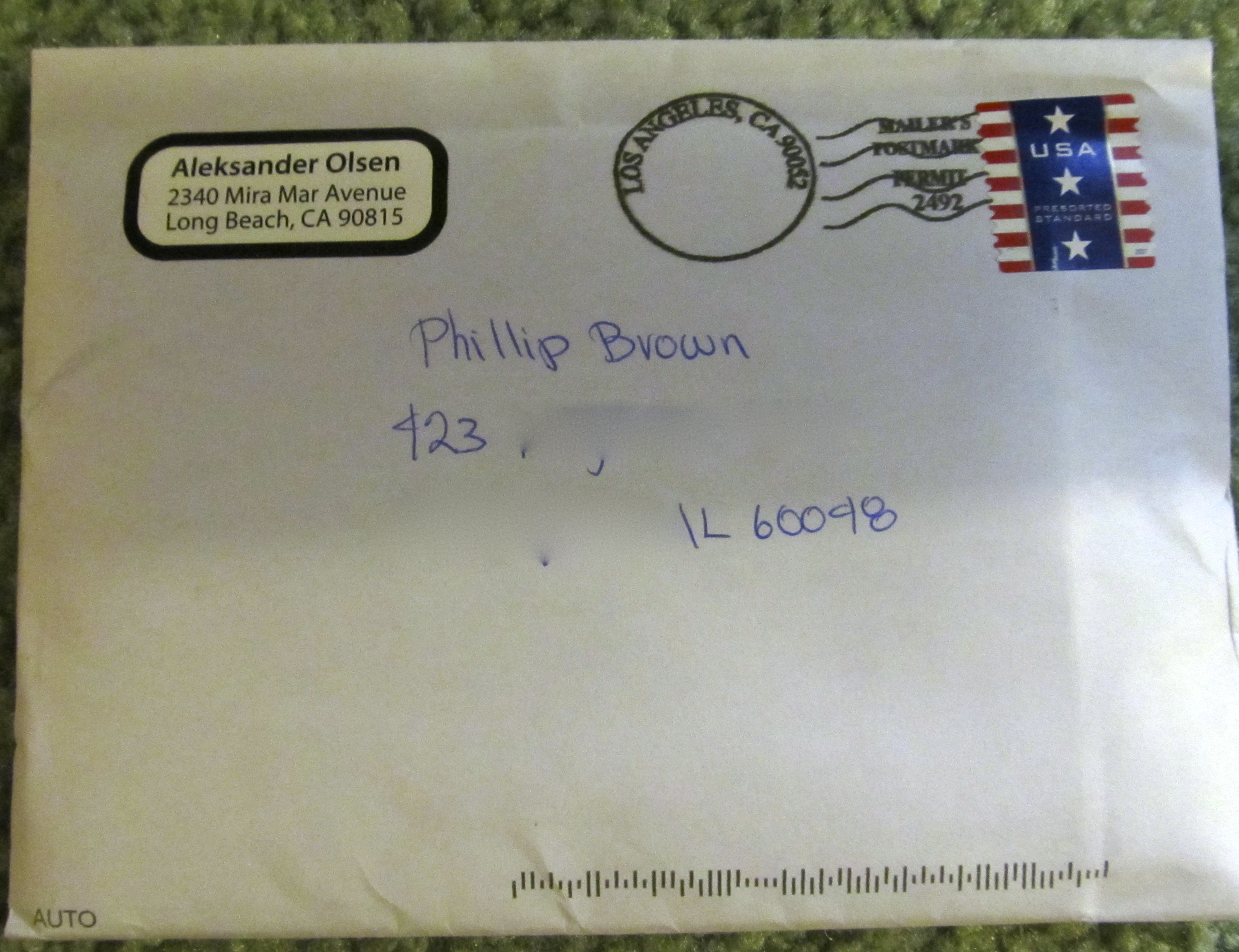
Which leads me to a piece I received earlier this summer. A mauve-colored, hand-addressed and stamped envelope, complete with a foil return address sticker. My antennae are up.   Would this be a well-wishing note from a long forgotten contact? A wedding invitation? Birth announcement? A request for money from a relative? All of the above?

No. Inside the envelope was a short note from the desk of Aleksander Olsen advising on the merits of a certain skin creme. Despite the tracks and furrows that criss-cross my shrine-like body, I was not hooked. Perhaps if his credenza had written, I might have been swayed.

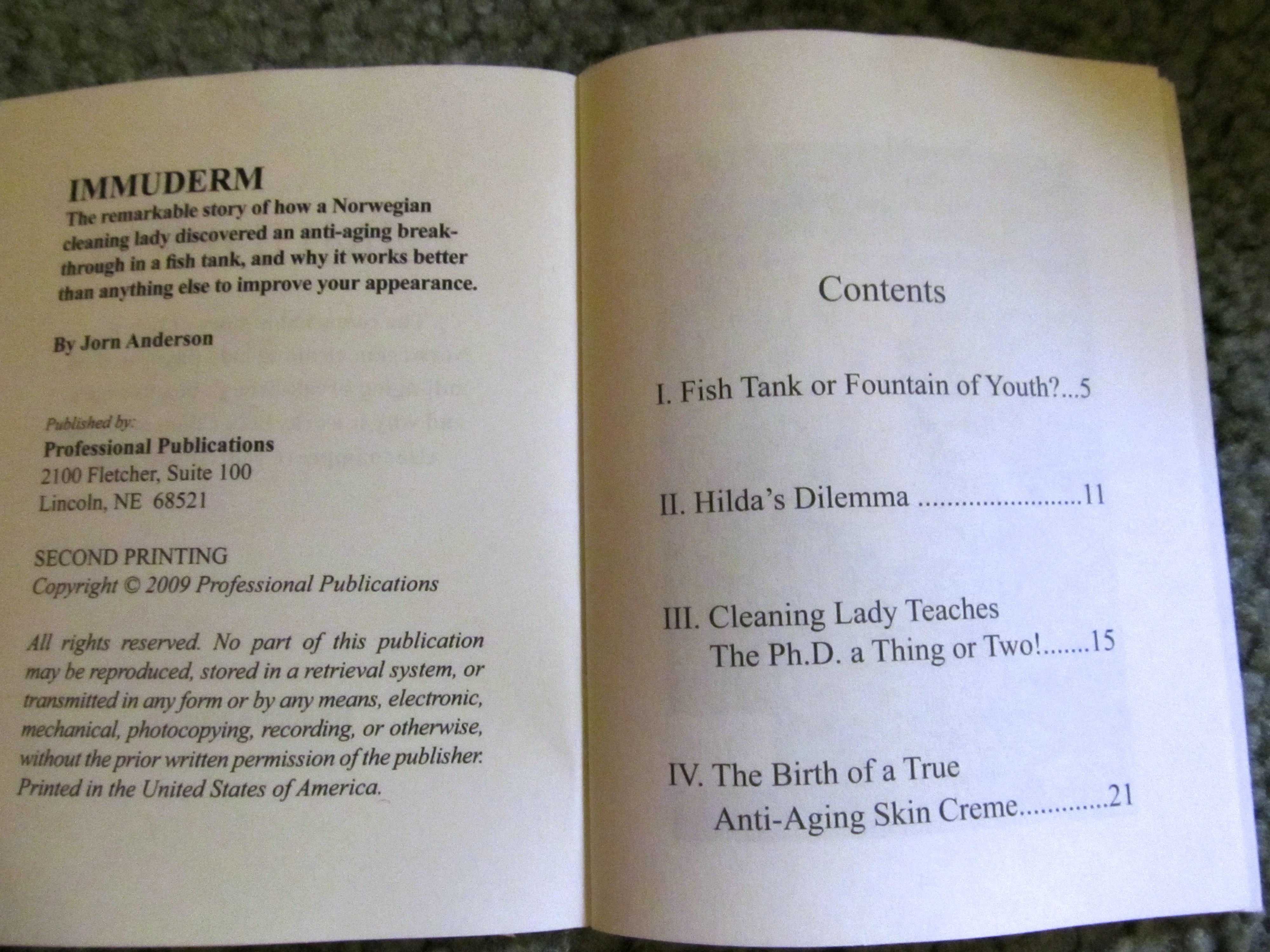
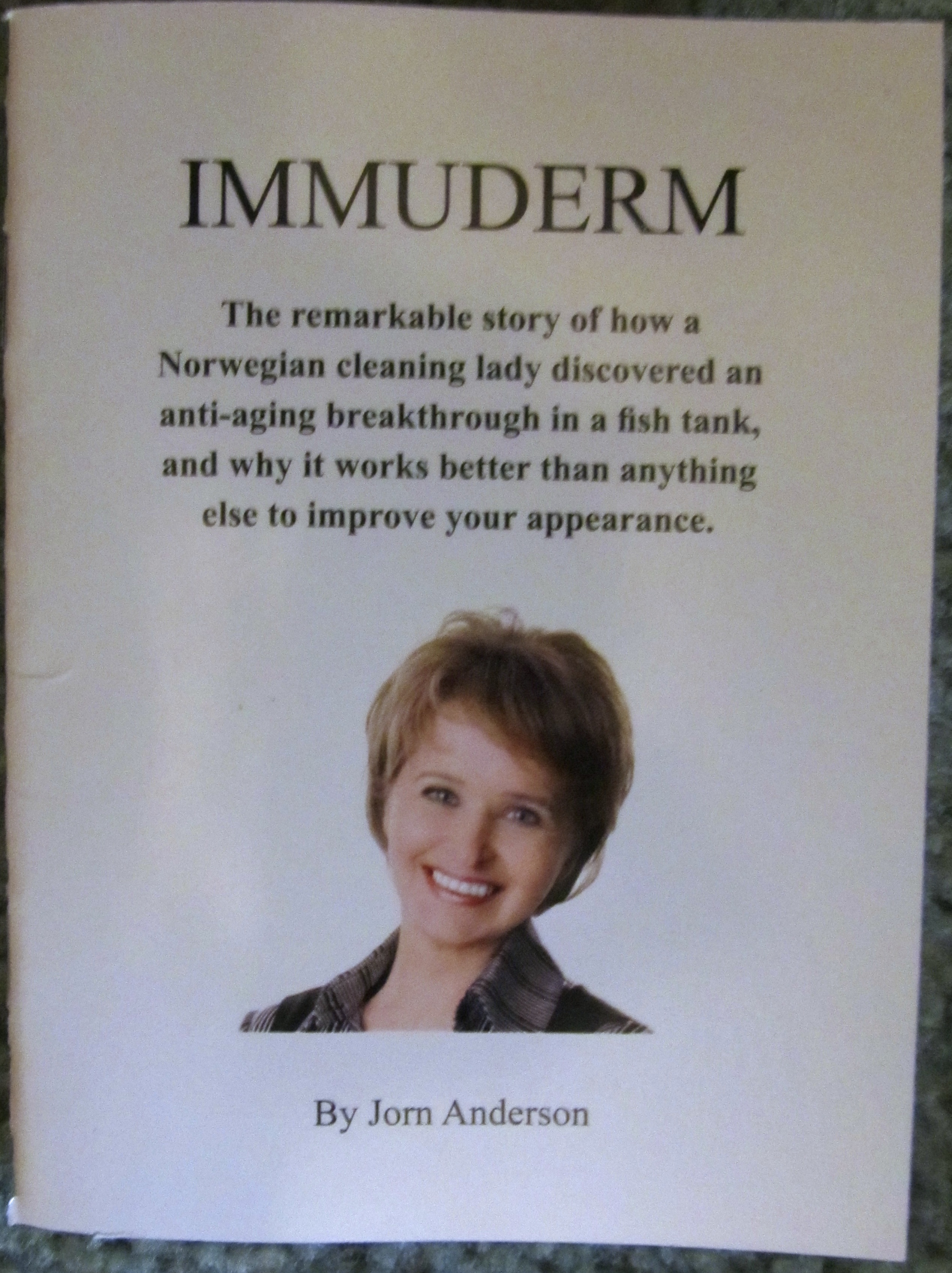
But Olsen’s desk also sent me a 32-page booklet, and it is a work of art.
IMG_5586
It is the tale of Hilda, a Norwegian cleaning lady, who, like her entire countryfolk has a crick in her neck from living on the side of a mountain overlooking icebergs in the North Sea. It turns out that she cleans fish tanks in Norway. If you haven’t been to Norway yet, fish is the main protein staple.   Hilda’s job would be similar to that of a stable cleaner on a Kansas beef farm.    Actually, I have never been to Kansas so I am only guessing on that.

In any event, the booklet unfolds a page-turning saga about Hilda’s travails in the tanks. Every evening at home, as she washes up for a night out on the town, she discovers under the layers of fish elixir a fresher, tighter, more supple Hilda.   She has reversed the hands of time!   The story introduces a series of sub plots, so spoiler alert, let me just say that she looks great, smells great, and I can too for just $60 on a tube the size of a shrimp.  Well maybe a lobster tail.

IMG_5587

The thing is, as obscure as this offer is, I don’t consider it miss-applied.   I have the money.   I certainly could use some air-brushing.    And who doesn’t have a secret wish to smell like a school of herring?   I wonder if Hilda has a cat.

So to my point: Mr Olsen’s desk probably holds a business plan that reveals  the path to riches selling oil of tank scrapings to prunes like me.    This is hardly a junk mail enterprise.

But it sounds fishy.

Standard
direct mail, Marketing

Turning Someday Into Now

What would be your reaction to mailing a hundred or so wedding invitations, and only 2 or 3 people show up?   After celebrating with champagne, a direct mailer would happily plot through the night about doing it again tomorrow.   And maybe bumping up the appetizers a bit.

the-godfather

Every good offer adds an incentive.

The challenge of direct marketing is to create the irresistible offer.    On a Don Corleone level if possible, but within the USPS regs.   The closest I can think of is the IRS: “Tell us how much money you have left and we will take it.”   Their mailbox overfloweth.

The thing is, all the targeting, the overlays, clustering, time-stamping and regression analysis can get you to the right person at the peak of their tumescent desires, yet, they don’t commit.  Why?

MW 2.30

Long after the grapefruit is gone, you can still treasure the free spoon.

It’s the offer, or course.  More to the point, it’s the added incentive offer that pushes the buyer over.

For instance: you may like the idea of four monthly $25 shipments of 15 ruby grapefruit, but you don’t budge.

Then, they throw in a set of 4 serrated, stainless steel grapefruit spoons and you can’t dial fast enough.    Or the showercap company that bowls you over with a “Fast Fifty” deal promising a Mystery Gift to the speediest responders.

That’s how to convert “someday” into “now”.   By the way, serrated spoons are impossible to use on a grapefruit, but once an idea has taken hold…

And give the IRS credit too.   They have learned how to move you from:  “I dream about some day when I will file my return” to  “Jiminy, I gotta do that right now!”

Their incentive offer–jail time!

I recently received a direct mail offer from a funeral service company.   Sorry, “Memorialization Service” company.   A discreet letter promoting the many benefits of cremation.

It is a ticklish subject only made comfortable to discuss, thanks to poet Robert Service.    He penned ‘The Cremation of Sam McGee’ so Johnny Cash could recite it to us.

Anyway, the company offers me a free booklet to help me make up my mind.   Am I reaching for my pen?     I don’t think so.

cremation

“I took the bill-me-later option!”

But then, they throw in the dealmaker: “WIN a pre-paid cremation.  Return this card etc…   Last month’s winner is…”,  and they go on to identify by name, one lucky fellow who can now pack his bags with confidence.

I won’t call it a barn burner, but it certainly ups the offer.

Still I was a little curious over the difference between winning a free cremation, versus a pre-paid cremation.  Does that mean I forfeit the bill-me-later option?

And then I wondered too, is this transferrable?    Say I was hit by lightning.   Will they do me like a twice-baked potato?

And then, if I did win, how do they break the news?   Did the lucky mope who won last month get told immediately, or is he waking each morning  wondering if today’s the day?     Will it be a knock on the door from the prize committee chairman himself?

“I have good news and bad news, Mr. Brown.”

grim_reaper_cartoon

So I have not quite tipped into the “now” column yet for the cremation offer.

But wait, there IS more!    Way down in the fine print on the reply form–tiny mouse type– is the statement: “Vermont residents may omit return postage.”

There it is!      The final component of the irresistible offer.

Vermont is beautiful in the fall.  I am packing now.

Standard
direct mail, Education, Science

Measuring Up

Eratosthenes is a giant for me.  Let me explain why.  Just yesterday we received a generous direct mail offer of a trip around the world if we would subscribe to a new credit card. I am sure that’s what they meant, because they promised 25,000 miles on our favorite airline.

I immediately opened our atlas to plan a possible itinerary with our new found gift. That’s when I realized the brilliance of this scheme. You see, leaving O’Hare Field and traveling in an easterly direction for 25,000 miles would mean I would be landing at, yes, O’Hare Field.  No need to leave at all!

Which brings me to the real point: 25,000 is a darn nice number to describe the earth’s circumference. It’s easy to remember, and best of all, it’s miles, not kilometers. Or hectares, or microns or centipedes.

Of course, the ancient Greeks measured the earth’s circumference in “stadia”. Without getting wordy, let’s just say that the measure was related to athletic competitions and stadiums, and was around 500 feet. For instance, “I bet that minotaur will eat the slave before he’s run 500 feet around the stadium.”

Anyway. What is fascinating is that Eratosthenes calculated the earth’s circumference back in 240BC.

eratosthenes 2

One summer solstice, at high noon, he was staring down a well in Aswan, Egypt.

For you geography buffs, Aswan is located on the Tropic of Cancer. The sun was directly overhead, and he noted that there was no shadow on the walls of the well.

ancient well

The germ of an idea came to him.   He already knew the earth was round, and concluded that a well several thousand “stadia” away would have a shadow, due to the curvature of the earth. So a year later, at noon on summer solstice, he told an associate to get to the well in Alexandria which was way to the north.

diagram of circumference

Sure enough, the well cast a prominent shadow, and in fact, it was 7.2 degrees off perpendicular.

Now stick with me on this. Alexandria was 500 miles to the north, or a lot of stadia for you classicists. Because that distance created a 7.2 degree tilt, a full circle of 360 degrees would be 50 times as much (50 x 7.2), or 25,000 miles for Eratosthenes. Turns out he was only off by 2%!

And 2,300 years later– we still get lost going to the post office with GPS.

The icing on the cake here is that Eratosthenes knew there were exactly 5,000 “stadia” between the two cities. How? Because he had measured this countless times by riding a camel between them.

antique saddle

You don’t see that kind of persistence any more. Nor such compassion for his ride. Writing his memoirs, he confessed “I needed to give Falafel a break after these journeys, so I would dismount, and go on foot outside the city gates.”

It turns out Eratosthenes preferred to speak in miles, too, explaining: “I’d walk a mile for a camel.”

So: I am back to my mailbox looking for a new offer. I have not given up on the 25,000-mile pitch. But will I need a saddle?

Camel_PB

Standard